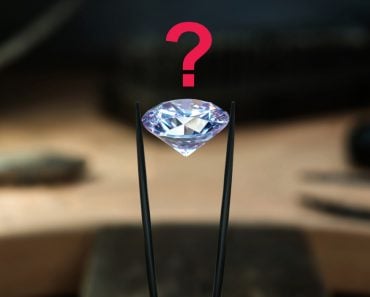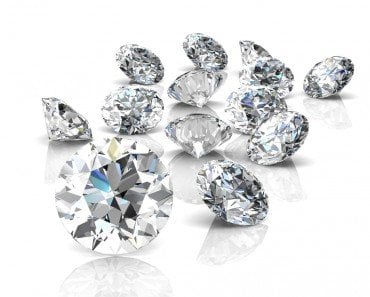
Theoretically, diamonds will last forever. Chemically, they won’t. Graphite is a more stable form of carbon, so a diamond would eventually transform into graphite… but there’s more to the story than that.
The origin of the word “diamond” comes from the Greek word adamas, which means “unconquerable, invincible.” First discovered sometime in the 4th century B.C.E., some of the most valuable diamonds in the world have been dated, and found to be formed 100 million to even billions of years ago. To possess these eternal diamonds, humans have resorted to nothing short of treachery (see: blood diamonds of Africa).
All this blood and glory for a shiny rock… that isn’t actually unconquerable or invincible.
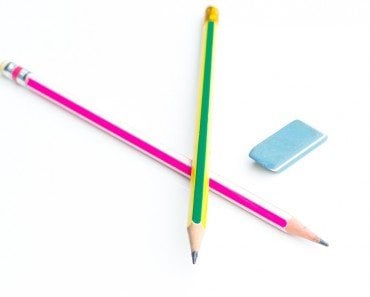
Yes, diamonds are not forever. Instead, they can transform into the coolest mundane object imaginable – graphite. Yes, the same graphite that’s found in your pencil.
On the other hand, diamonds can simply burn to carbon dioxide.
So, why would diamond covert to graphite or burn? And how long can a diamond really last?
However, don’t expose diamonds to high pressures if you want to convert them to graphite. Diamonds are more stable under high pressure than graphite, which is how they’re formed in the Earth’s mantle (and even on some asteroids!). However, under certain conditions, diamonds might convert to graphite even under high pressure.
How Long Do Diamonds Last?
Considering what we explained above, the diamond on your engagement ring or in the Queen’s of England’s crown will likely last forever.
However, if you’re using your diamond as a tool to cut or grind things, especially things made of iron, then you might want to pay attention.
The part of the diamond in contact with the iron (or whatever else the diamond is cutting) might get heated enough to convert into graphite. If even tiny bits of the diamond turns into graphite every time you cut something, the diamond will, eventually, completely turn into graphite.
Or, you could simply burn a diamond with as little as a magnifying glass and the sun. Two people, naturalist Giuseppe Averani and medic Cipriano Targioni of Florence, in 1694, did just that. They took quite a large magnifying glass and focused sunlight onto a diamond—only to watch the stone disappear before their eyes!

Knowing how easily manipulable a diamond is, and how little separates a precious diamond from the graphite in our pencils, should make us reevaluate what we deem valuable and treasured in this world!
References (click to expand)
- (1964, January 21). A study of the transformation of diamond to graphite. Proceedings of the Royal Society of London. Series A. Mathematical and Physical Sciences. The Royal Society.
- Gogotsi, Y. G., Kailer, A., & Nickel, K. G. (1999, October). Transformation of diamond to graphite. Nature. Springer Science and Business Media LLC.
- Diamond - Molecule of the Month. bris.ac.uk
- Occelli, F., Loubeyre, P., & LeToullec, R. (2003, February 2). Properties of diamond under hydrostatic pressures up to 140 GPa. Nature Materials. Springer Science and Business Media LLC.
- Narulkar, R., Bukkapatnam, S., Raff, L. M., & Komanduri, R. (2009, April). Graphitization as a precursor to wear of diamond in machining pure iron: A molecular dynamics investigation. Computational Materials Science. Elsevier BV.