
Table of Contents (click to expand)
The Elephant’s Foot is the nickname for a roughly two-tonne mass of corium (solidified molten reactor fuel mixed with concrete, sand and steel) that pooled in a basement room below Chernobyl reactor 4 after the April 1986 disaster. Discovered by a Kurchatov Institute team in December 1986, it initially emitted around 10,000 roentgen per hour - a lethal dose in under five minutes - and has since decayed to roughly 100 R/h.
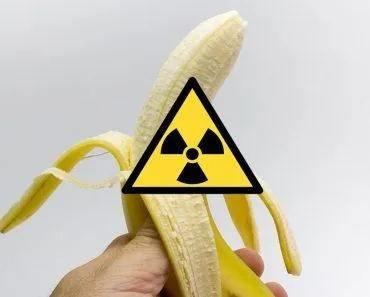
Remember the last time you ate a banana? You were exposed to 0.1μSv (0.0001mSv) of radiation. A single chest X-ray gives about 0.2 mSv of radiation. Fortunately, these levels of radiation are entirely harmless to the human body.

What if I told you that there exists a single item that is more radioactive than radium? Elephant’s foot: the world’s most deadly radioactive substance, which can kill within minutes.
The Elephant’s Foot has little to do with the foot of an actual elephant. It is a nickname given to the solidified pile of radioactive lava or corium that oozed down the nuclear reactor at Chernobyl.
But what created this deadly mass of lava? And how much radiation will hit you if you touch the Elephant’s Foot?
How Did The Chernobyl Catastrophe Happen?
A series of unfortunate events led us to experience one of the worst man-made catastrophes of all time. In the early hours of April 26th, 1986, the world saw a nightmare come to life with an explosion at the Chernobyl nuclear power plant. The citizens of Pripyat woke up to a thunderous boom at around 1:23 AM local time and felt their homes shudder. They gazed out their window to see what had happened and saw an iridescent flame rising from Unit No. 4 of the nuclear plant.
While conducting a routine test, a power surge to the reactor caused a domino effect that ultimately led to the Chernobyl catastrophe.
The power surge increased the reactor core’s temperature. The uranium control rods that were meant to manage such a situation cracked, as they were inserted in the core too late. As the heat and power continued to rise, the water used to cool the control rods turned into steam. The enormous pressure generated by the steam caused the reactor to rupture, which was followed by two massive explosions.
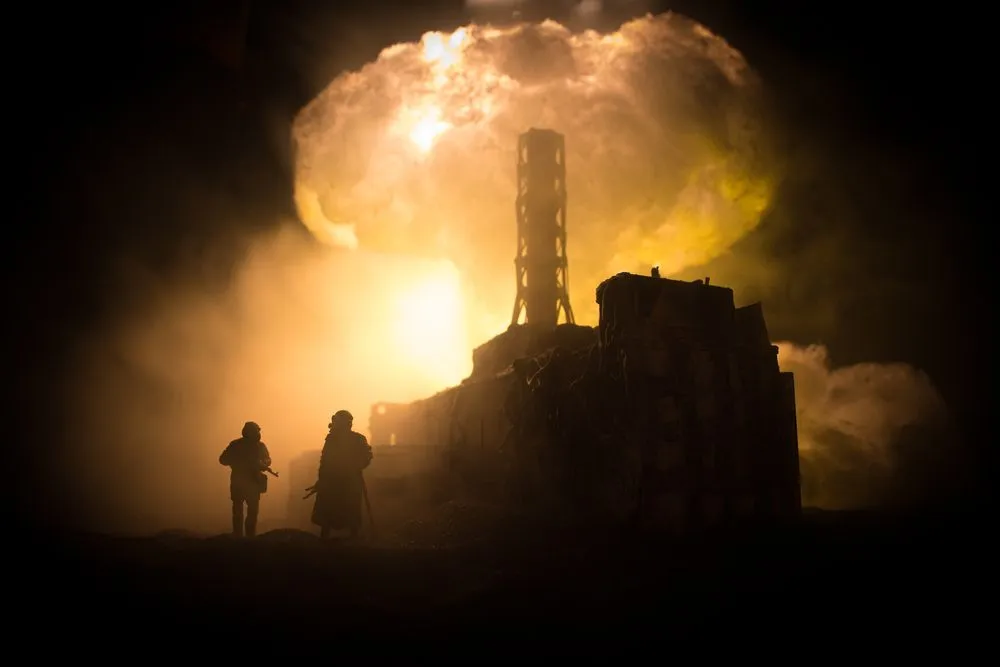
The explosion belched out pieces of broken core material and radionuclides that lingered in the atmosphere for over ten days. While most of the radioactive elements were dispersed into the surroundings, some melted down the core in the form of lava.
If you want to know more about the Chernobyl nuclear disaster, you can watch HBO’s Chernobyl. It might not be scientifically spot on, but it does paint a ghastly picture of what happened, as well as the dramatic aftermath.
The Elephant’s Foot
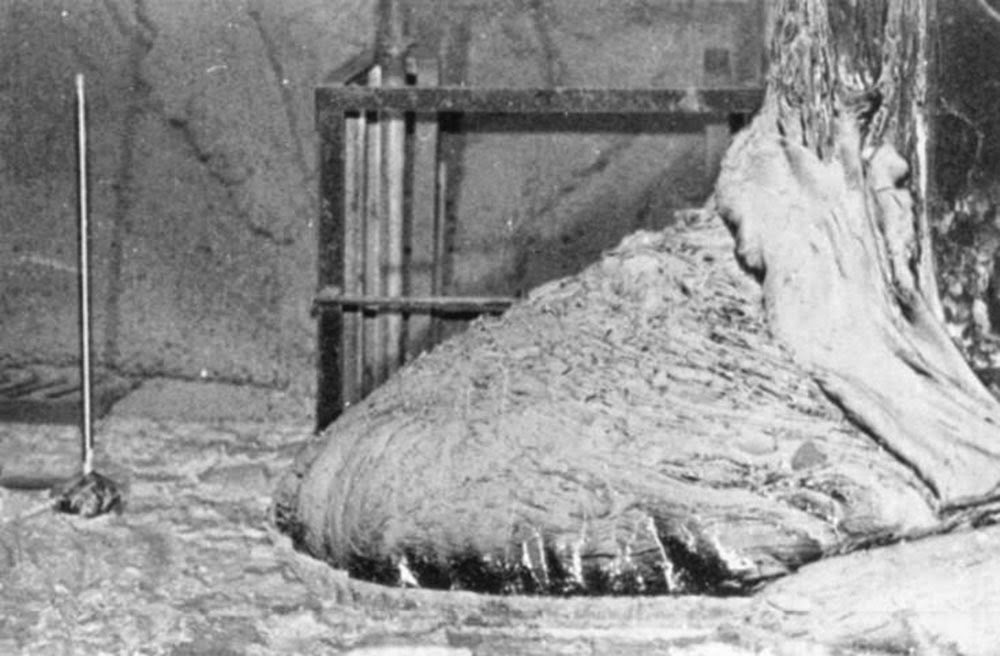
In December 1986, a team of scientists from the Kurchatov Institute found a massive globular formation made of a mysterious substance in a steam-distribution corridor beneath Reactor 4. The mass must have flowed from somewhere above and solidified into a black glassy lump. Since it was half as tall as a man, weighing about two tonnes and most importantly, looked like an elephant’s foot, the researchers cleverly named it the Elephant’s Foot.
It may be difficult to believe that the harmless-looking pile of solidified lava is one of the most deadly things in the world, but trust me… it has the potential to ensure an agonizing death for anyone who stands near it for 5 minutes.
When it was first measured in late 1986, the Elephant’s Foot was emitting roughly 10,000 roentgen per hour. If you were to stand right next to it for an hour at that intensity, you would absorb roughly 80 sieverts of radiation - the equivalent of around 400,000 chest X-rays, and many times the dose needed to kill you. Decades of radioactive decay have since dropped the surface dose to about 100 R/h, which is still wildly unsafe but no longer instantly fatal. And yet, you can see a researcher taking photographs in the picture below
How Did It Form?
The Elephant’s Foot was just a fraction of the radioactive lava that formed inside the reactor a few minutes after the onset of the accident.
The formation of the Elephant’s Foot began within a half hour of the explosion. First, the zirconium (zircaloy) cladding around the fuel rods melted, reaching a temperature of over 1,850 degrees Celsius. It then turned into a hot metal soup as it dissolved the uranium dioxide pellets. It then slowly gulped parts of the reactor vessel: stainless steel, serpentinite, graphite, and melted concrete.
The experts working on the Elephant’s Foot took a few images of the radioactive mass. One such photograph is linked here.
This hot radioactive soup containing around 135 tons of uranium began to burn a hole through the 1200-ton biological shield and the steel structure supporting the reactor vessel. The pipes in the reactor provided a convenient path for the radioactive lava to flow through the building. It burnt through three floors of the reactor building, eventually ending up in the basement.
The Photograph
The photograph was taken in 1996 and the person standing next to the lethal elephant’s foot is Artur Korneyev, a radiation specialist whose job was to locate the fuel inside the plant and determine the radiation level. He continued to make repeated visits to the Elephant’s Foot well into his sixties before being barred from the site, and is reported to have died in 2022.
Later on, researchers would take pictures of the radioactive lava from a safe distance with the help of workers (the so-called “liquidators”) who would attach a camera on wheels and push it towards the Elephant’s Foot.
To study this mysterious mass the experts needed to collect samples for further analysis, but the mass seemed indestructible. They used drills and axes to break the substance apart, but to no avail. Finally, they were able to break a fragment of the surface by firing at it with a rifle.
Chemical Composition Of The Elephant’s Foot
The Elephant’s Foot is a glassy, ceramic-like mass dominated by silicate glass with embedded inclusions. Its main constituents are:
- Silicon dioxide (the largest component, formed from melted sand, concrete and serpentinite)
- Uranium dioxide (from the reactor fuel)
- Zirconium oxide (from molten fuel-rod cladding)
- Iron, calcium, aluminum, magnesium and potassium oxides, plus dissolved stainless steel from the reactor vessel
Apart from the Elephant’s Foot, the researchers came across many more similar solidified lava flows inside the ruins of reactor four. Each mass had solidified into uncanny shapes, and were therefore given nicknames like The Drop, the Icicle, the Stalagmite and the Heap.
In these solidified masses of radioactive lava, they also identified a previously unknown crystalline phase that they named Chernobylite, a uranium-doped zirconium silicate that forms tiny black-to-yellow crystals visible only under an electron microscope (it is not, despite a persistent online myth, a glowing blue substance).
Conclusion
The Elephant’s Foot remains active even today. Radioactive radiation may be invisible, but at high doses it causes unimaginable harm to humans. Radioactive substances produce ionizing radiation, which can damage our genetic material. The radiation from the Elephant’s Foot can make a person sick within a few seconds. On the day of the Chernobyl disaster, 134 first responders suffered from acute radiation sickness, of which 28 died within three months.
References (click to expand)
- Midnight in Chernobyl | Book by Adam Higginbotham. Simon & Schuster
- The Definitive History of the Chernobyl Catastrophe - Routledge. Routledge
- Burakov, B. E., Anderson, E. B., Shabalev, S. I., Strykanova, E. E., Ushakov, S. V., Trotabas, M., … Duco, J. (1996). The Behavior of Nuclear Fuel in First Days of the Chernobyl Accident. MRS Proceedings. Springer Science and Business Media LLC.
- The Elephants Foot of Chernobyl - Stanford University. Stanford University

.jpg)