ATM card PINs are usually 4 digits long because a 4-digit number is far easier to remember than a 6- or 7-digit one. A short PIN is, in principle, more vulnerable to guessing, but the 3-attempt card-lockout enforced by every ATM keeps brute-force attacks impractical, so banks treat the convenience-vs-risk tradeoff as worth it.
Unless you’ve been living under a rock, you surely have a bank account. And these days, that is synonymous with having an ‘ATM card’ or a debit/credit card. As you already know, in order to use such cards in ATMs or at POS (point of sale) terminals in grocery stores or supermarkets, you have to authenticate it using a unique 4-digit number known as a PIN (Personal Identification Number).
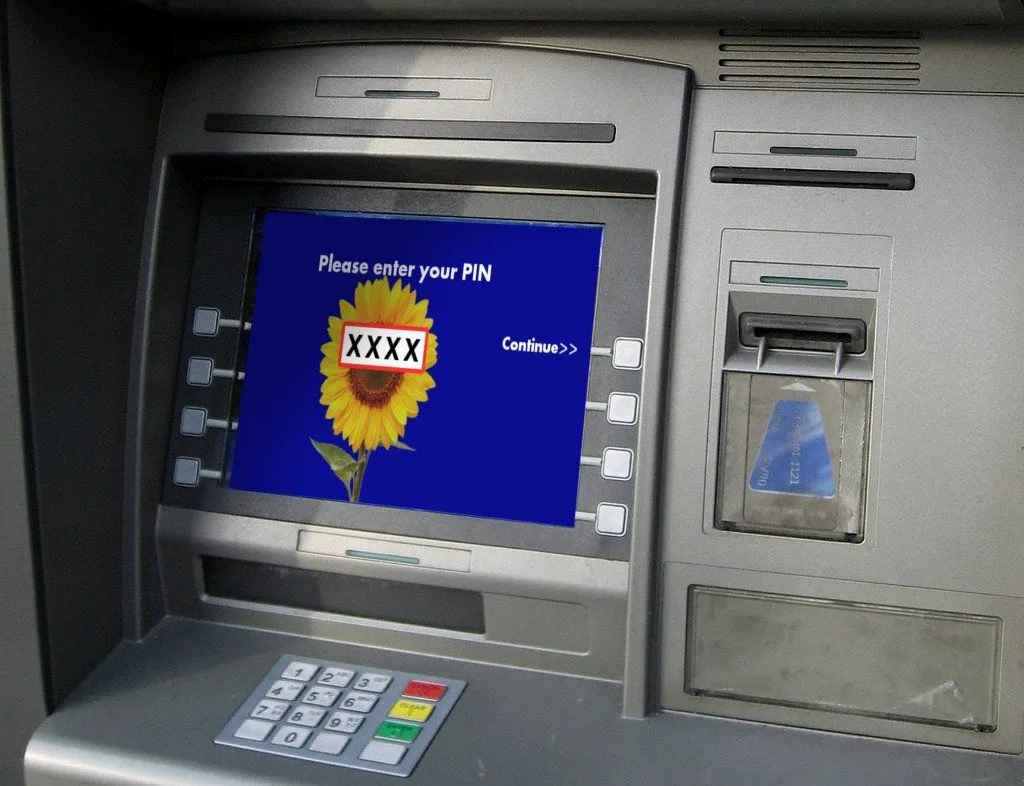
You have almost certainly observed another rather interesting thing about these PINs – the fact that they are usually just 4 digits in length. One would expect that the card PIN, which protects your entire bank account, and, in turn, stores your hard-earned money, would be much more complicated… but it’s not!
On the other hand, the numerous accounts that you have on the Internet usually urge you or even compel you to choose hard-to-guess passwords that consist of various special characters.
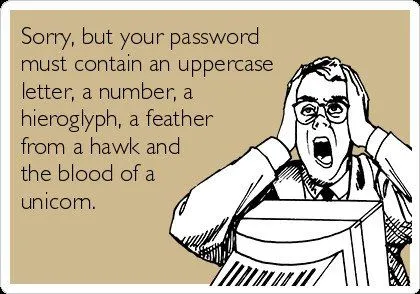
In fact, if you have access to the ‘Internet banking’ feature of the very same account, you’d know that the bank website makes it mandatory for you to choose a password that consists of at least one numeric digit and a special character. Also, many banks go a step further and make it mandatory for you to change your passwords every 2-3 months! Clearly, banks want to make sure that you choose a very ‘intelligent’ password for your online account, so why are most ATM card PINs (usually) just 4 digits long?
Methods Of Authentication
The major forms/techniques of security revolve around these three things: something you are, something you know and something you have.
In some places, you are granted/denied access to highly confidential areas following a retinal scan. Retinal tests, like fingerprint tests, tongue-print tests etc. fall under the realm of biometrics (something you are).
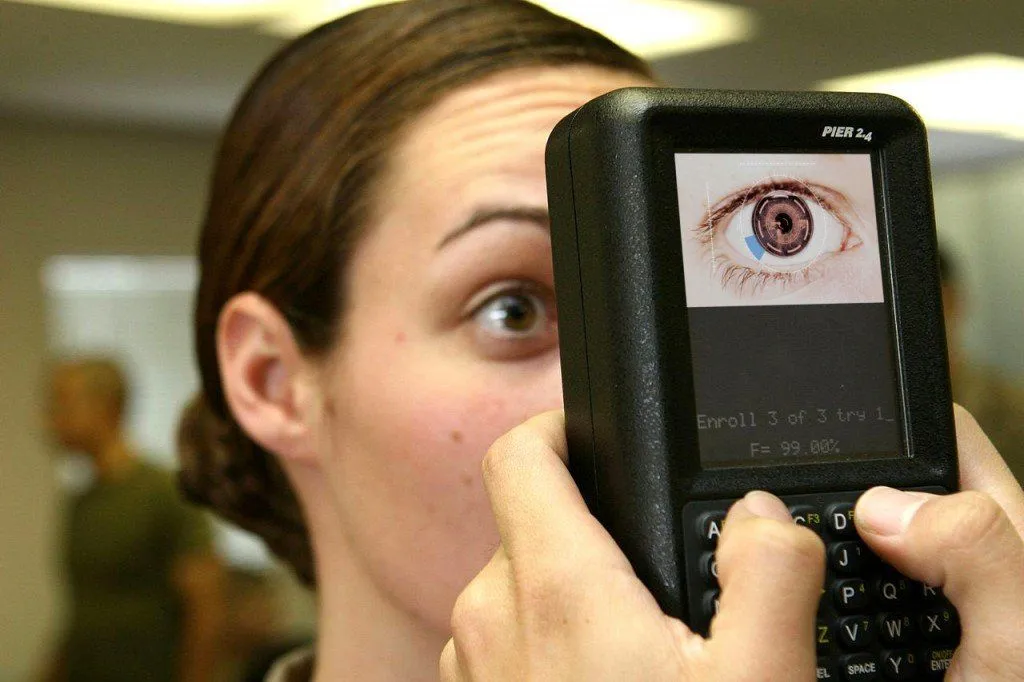
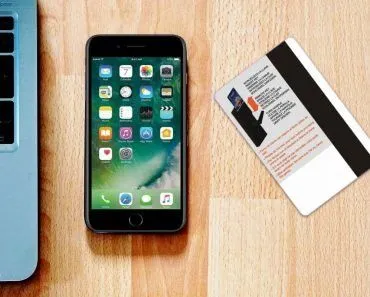
Similarly, the passwords to your online accounts fall under ‘something you know’. Finally, an ATM card comes under the category of ‘something you have’.
When you have an ATM card and its PIN with you, you check two of those three types of security, i.e. ‘something you have’ (the card itself) and ‘something you know’ (the PIN). Therefore, banks and financial institutions allow you to have just a 4-digit PIN, as it’s comparatively easier to remember than a 6- or 7-digit one. However, it also makes the PIN (a little) more vulnerable to attempts of brute forcing, but that’s a tradeoff between convenience and a limited threat.
Brute Forcing ATM PINs
Brute forcing is an attempt to determine a password by systematically trying every possible combination of characters until the correct one comes up. For a 4-digit numeric PIN, that means just 10,000 possibilities (0000 to 9999), which a computer could rip through in milliseconds.
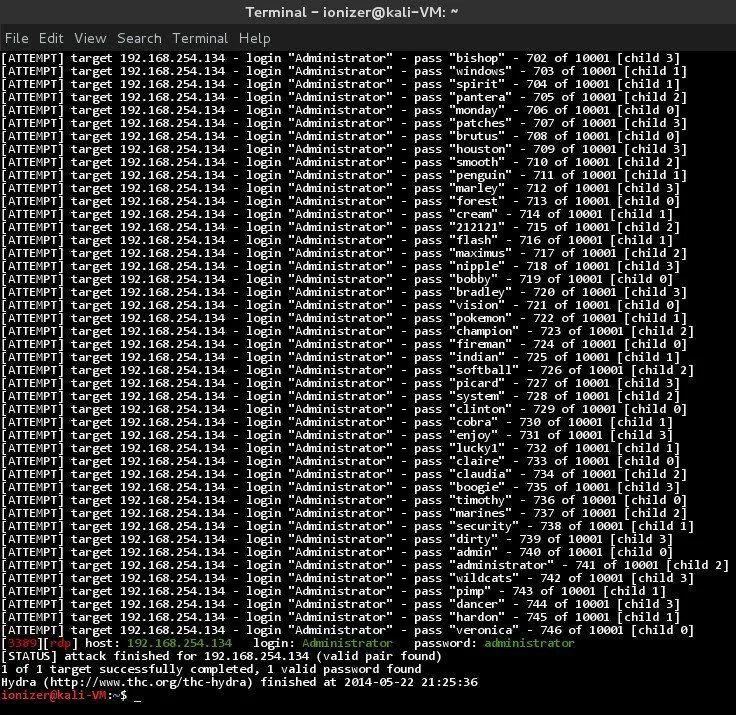
Brute forcing in the case of ATM PINs would mean that a hacker would try combinations like 0000, 0001, 0002, 0003 and so on. They could also try the most commonly used PINs first, like 1234, 4321, 2222, 9999 etc. until they arrive at the right combination and hit the jackpot (pun intended).
Why ATM PINs Are (Relatively) Safe Against Brute Forcing?
Fortunately for ATM-card users, banks set a hard limit on how many times you can enter an incorrect PIN. Under the global EMV / ISO 9564 standard, the default is 3 attempts: after a third wrong PIN in a row, the card is blocked (sometimes just for the day, sometimes until you visit the branch to reset it). Some issuers allow 4 or 5 tries, but no major bank lets attackers try indefinitely.
This means that a person would first have to have your card, and they would then get only 3 attempts to gain access to your account. Although tools do exist that make brute forcing relatively easier than what it appears on the surface, for an average person (who somehow got their hands on your card), determining your 4-digit PIN through pure guessing is very, very unlikely.
That’s why banking institutions allow their ATM PINs to be just 4 digits in length. However, it doesn’t mean that you should choose a 4-digit PIN. The more digits you add to your PIN, the safer it gets (although it becomes a little harder to remember too). For that reason, some banks, particularly in parts of Europe (Switzerland is a notable example), issue 5- or 6-digit PINs by default, but the global norm is still 4. The ISO 9564 standard, which governs PIN security, allows anywhere from 4 to 12 digits while recommending issuers not exceed 6.
What Are The Most Common (And Least Common) 4-Digit PINs?
If a thief only gets three guesses, their smartest move is to try the PINs that people actually pick, and it turns out that we humans are painfully predictable. In 2012, data analyst Nick Berry of DataGenetics crunched roughly 3.4 million leaked 4-digit codes and found that a single combination, 1234, accounted for nearly 11% of them. Add 1111 (about 6%) and 0000 (about 2%), and just three codes covered almost a fifth of the entire pile. The 20 most popular PINs together made up close to 27% of the lot.

The patterns are easy to spot once you know what to look for: repeated digits (1111, 2222), doubled pairs (1212, 6969), straight runs (1234, 4321) and, above all, dates. Anything beginning with “19” spikes hard on the distribution, because so many people reach for a birth year. A Cambridge University study led by Joseph Bonneau put a number on that risk: a thief who simply tries a stolen wallet owner’s birthday can expect to unlock a card roughly once for every 11 to 18 wallets, depending on whether the bank blocks obvious weak PINs.
And the least-guessed code in that 3.4-million-strong dataset? It was 8068, which turned up just 25 times. Ironically, now that the number has been quoted in article after article, it is arguably no safer than any other, which is a neat reminder of why you should never borrow your “random” PIN from a list. The strongest 4-digit PIN is simply one that is not a date, not a repeated pattern, not a shape traced on the keypad, and not anything a stranger could guess from the contents of your wallet.
Where Is The 4-Digit PIN On A Debit Card?
This is one of the most common questions people ask about their cards, and the answer tends to surprise them: your 4-digit PIN is not printed anywhere on the card. There is no hidden panel and no fine print on the back. That is completely deliberate. If the PIN were stamped on the plastic, then anyone who found or stole the card would have instant access to your account, which would defeat the entire purpose of having a PIN in the first place.

So where does the PIN come from? You either set it yourself (at an ATM, or through your bank’s app or website), or the bank issues it to you separately from the card, typically in a sealed mailer or by secure message, so that the card and its PIN never travel together. Either way, it lives only in your memory and the bank’s protected systems, and never on the card.
It also helps to know what the PIN is not. The long 16-digit string across the front is your card number, and the 3-digit code on the back (Visa and Mastercard call it the CVV or security code; American Express prints a 4-digit code on the front) is a separate value used for online and phone purchases. Chase, for one, notes that this security code is “distinct from your PIN.” So when a checkout screen asks you to “enter your 4-digit card PIN,” it means the secret number you chose or received, not anything printed on the plastic in front of you.
John Shepherd-Barron
The British inventor John Shepherd-Barron is widely credited with deploying the world’s first cash-dispensing machine, the De La Rue Automatic Cash System, which went live at a Barclays branch in Enfield, north London, on 27 June 1967. He’s the name most often attached to the “invention of the ATM”, though it’s really a shared honour: Scottish engineer James Goodfellow filed the patent for the PIN-and-magnetic-card combination we still use today (UK Patent No. 1,197,183, May 1966), and American inventor Luther Simjian had built an earlier deposit-only Bankograph back in 1939. Shepherd-Barron just got there first with a working cash machine.

Initially, Shepherd-Barron proposed 6-digit PINs (he wanted to use his old army serial number), but when he tested the idea on his wife Caroline, she told him that the longest string of numbers she could reliably remember was 4. He switched to 4 digits, ATMs caught on, and the rest is history. The story comes from Shepherd-Barron himself and is more anecdote than archival fact, but the convergence is hard to argue with: Goodfellow’s independent design also landed on a short numeric PIN, and 4 digits soon became the world standard.
References (click to expand)
- Blocking Brute Force Attacks - System Administration Database - www.cs.virginia.edu
- James Goodfellow — inventor of the PIN. Wikipedia.
- Automated teller machine. Encyclopaedia Britannica.
- ISO 9564-1:2017 — Personal Identification Number (PIN) management and security. International Organization for Standardization.
- A Birthday Present Every Eleven Wallets? The Security of Customer-Chosen Banking PINs. Bonneau, Preibusch & Anderson (2012), Springer.
- “1234” and Birthdays Are the Most Common PINs. Schneier on Security.
- What To Know About a Debit Card PIN. Chase.
- Password Complexity Standard - Information Technology. The University of Florida
- Password Security. The University of Arizona
- How can I make my password secure? | Connect Help | Washington University in St. Louis - connecthelp.wustl.edu:80