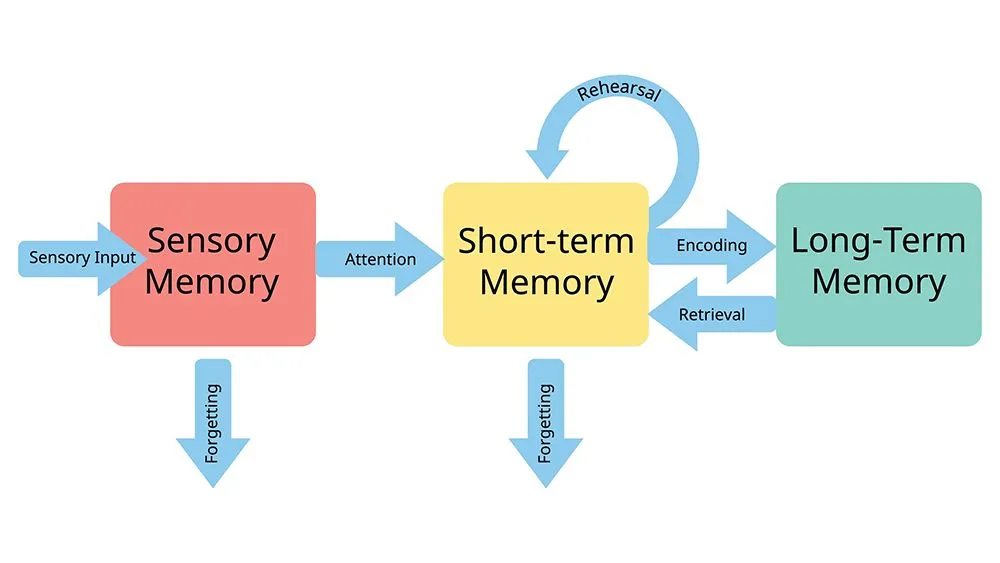
Memory is formed in three main steps: encoding, storage and retrieval. Memories can either be short-term memories or long-term memories. Important information is stored in the brain via physical and chemical changes, with the strengthening or weakening of connections between neurons reflecting new memories. They’re initially formed in the hippocampus, and then transferred to cortical regions for long-term storage.
Have you ever wondered what life would be like if you couldn’t remember? Sure, you could forget that bad breakup or the time you called your teacher ‘mom’, but it would wreak havoc in your daily life. Imagine preparing for an exam if you couldn’t remember anything at all. It would be a nightmare to wake up to the consequences every morning.
The truth is that memory is crucial for adaptive survival. You can remember past experiences and (hopefully) learn from them.
However, the act of remembering is a complex process. While you may vividly recall childhood experiences, you might struggle to remember what you had for breakfast 2 days ago.
Several factors influence how strong a memory will be. Consequently, some memories are stored for a lifetime, while others last for only up to a few seconds. Let’s take a closer look at the process of memory to understand the factors that influence its formation and recall.
The Three Stages Of Memory
Scientifically, memory is described as the psychological process of acquiring, organizing, storing, and eventually retrieving information. There are three main steps to memory processing:
- Encoding. This is the first stage and refers to the process through which information is taken in, perceived, and altered to “fit” into storage. Comparable to how a librarian categorizes books to make the process of locating them easier, encoding ensures data is organized and altered to be stored effectively.
- Storage. Following encoding, the brain determines the significance of information and decides how long to retain it. Memory is divided into short-term and long-term categories, with short-term memories lasting up to 30 seconds and long-term memories capable of indefinite storage.
- Retrieval. Lastly, the process of accessing the stored information to recall your memories when needed is defined as retrieval.
What Do Memories Look Like?
When we consider memory, we often conceptualize it as a process, rather than a tangible entity, but does it have a physical presence?
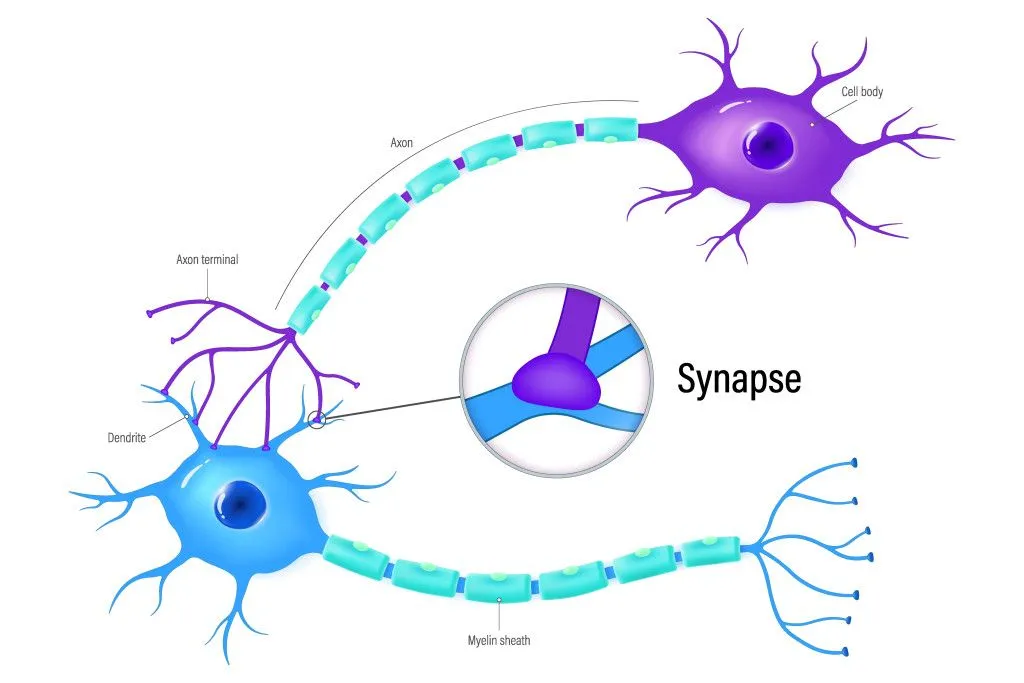
Research indicates that memory manifests in physical or chemical changes during learning. These alterations include changes in the connections between neurons, with the formation of new memories leading to structural adjustments in neuronal networks, such as strengthening some synapses while weakening others.
However, where do these changes occur in the brain? In other words, which brain regions harbor memories?
Where Are Memories Stored?
The case of Henry Molaison, a patient who underwent brain surgery in 1953 to control severe epileptic seizures, provided early insights for neuroscientists regarding memory storage. After neurosurgeon William Scoville performed a bilateral medial temporal lobectomy, Molaison developed severe anterograde amnesia. He could no longer form new long-term declarative memories (facts and events), but his short-term memory remained intact, and he could still learn new motor skills like mirror-tracing. He also retained most of his older memories from before the surgery. Scientists then concluded that learning and memory can be tied to distinct brain regions, and that different *types* of memory are handled by different systems.
The brain regions removed during surgery were the medial temporal lobe structures on both sides — most of the hippocampus, the amygdala, and the surrounding entorhinal and parahippocampal cortices. This pointed toward the fact that the hippocampus and its neighboring regions are involved in forming new memories.
However, since the patient could recall older events, it indicated that memories, though initially formed in the hippocampus, are eventually transferred to other brain regions for longer-term storage. Subsequent research revealed that these memories are transferred to cortical regions, where they are stored for extended periods, and that this process can take up to several days.
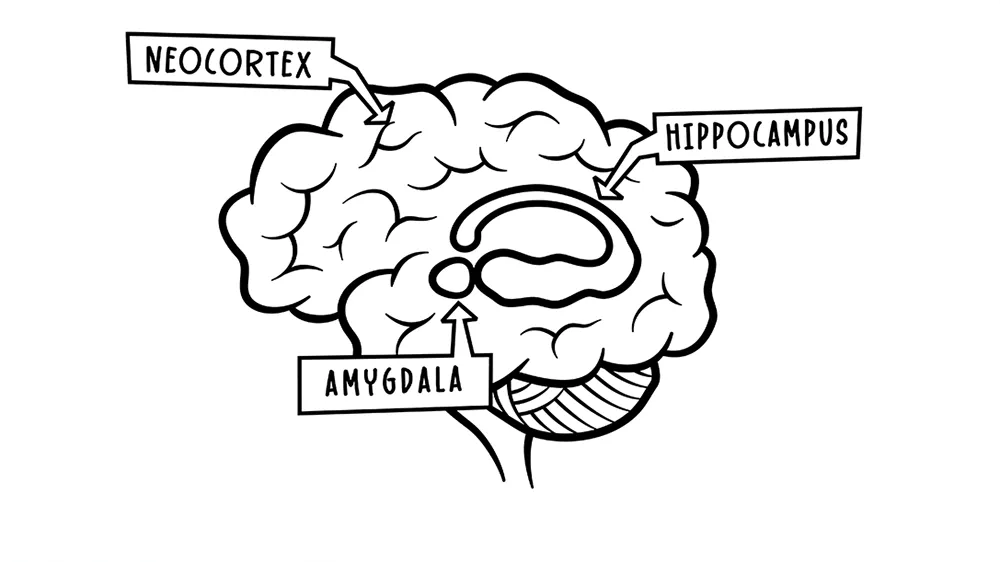
We later discovered that the amygdala imbues memories with emotions, thus strengthening our memories. From this, scientists concluded that the interaction between three brain regions—the hippocampus, cortex, and amygdala—is pivotal in determining the longevity of memories.
Molecular Basis Of Memory Strengthening
Even with these new revelations, scientists remained puzzled regarding the strengthening of memories.
The process of memory storage in the cortex takes up to several days, but the proteins required to form memories have a short half-life and usually break down after less than an hour. How does memory then “mature” after the proteins required to make it disappear?
A 2023 study published in Neuron answered this question. The researchers, led by Robert Singer’s lab at Albert Einstein College of Medicine, focused on a protein called Arc (activity-regulated cytoskeleton-associated protein), which is critical for long-term memory. They found that a single stimulus to a neuron triggers repeated cycles of Arc gene transcription: newly made Arc protein feeds back on its own gene to reignite transcription, producing wave after wave of the short-lived protein. The result is a steady supply of Arc that lasts long enough to lock the memory in.
The proteins produced then accumulated at certain “hot spots” at the synapse (a connection between two neurons) and cemented the memory. At this stage, the memory is considered fixated or stored.
The Fragile Nature Of Memories
Before memories are stored in the cortex, they undergo a process called consolidation. Short-term memories require strengthening and stabilization before transitioning to long-term storage. Once consolidated, the memory is securely stored for the long term.
During the period between encoding and storage, the memories are fragile and susceptible to disruptions. These disruptions, whether pharmacological (induced by drugs), behavioral or molecular, can lead to weakened or incomplete memory formation. This interference may hinder memory retrieval and affect long-term retention. However, once stored without interference, memories become resilient and can be effectively recalled.
Retrieval Of Memory
Retrieving a memory involves accessing stored information. Our brain employs distinct circuits for memory formation and retrieval. Scientists once presumed the same neuronal circuit would activate during both. However, work from Susumu Tonegawa’s lab at MIT, published in Cell in 2017, revealed otherwise: memory formation in mice uses a direct CA1 → entorhinal cortex pathway in the hippocampus, while retrieval routes through an indirect detour via the dorsal subiculum before reaching the same output.
Moreover, short-term memory (STM) and long-term memory (LTM) also differ in their retrieval processes. STM relies on the sequential order of events, while LTM often relies on associations formed by the brain. For instance, hearing a familiar song can evoke memories of when you frequently listened to it, recalling emotions and details from that time.

Similar to the consolidation phase, retrieving a memory makes the memory vulnerable to disruptions. However, this vulnerability is crucial, as it enables the brain to reconstruct memories, while incorporating encoding information from recent experiences. In other words, your brain is updating the memory!
References (click to expand)
- How Memory Works | Derek Bok Center, Harvard University.
- Josselyn, S. A., & Tonegawa, S. (2020, January 3). Memory engrams: Recalling the past and imagining the future. Science. American Association for the Advancement of Science (AAAS).
- The Curious Case of Patient H.M..
- How are Strong Memories Formed? News-Medical.
- Das, S., Lituma, P. J., Castillo, P. E., & Singer, R. H. (2023, July). Maintenance of a short-lived protein required for long-term memory involves cycles of transcription and local translation. Neuron. Elsevier BV.
- Einstein Researchers Discover How Long-Lasting ....
- Bisaz, R., Travaglia, A., & Alberini, C. M. (2014). The Neurobiological Bases of Memory Formation: From Physiological Conditions to Psychopathology. Psychopathology. S. Karger AG.
- Memory formation and recall are very different processes.