Table of Contents (click to expand)
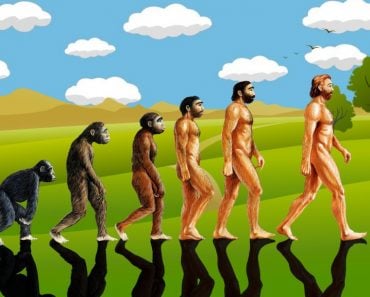
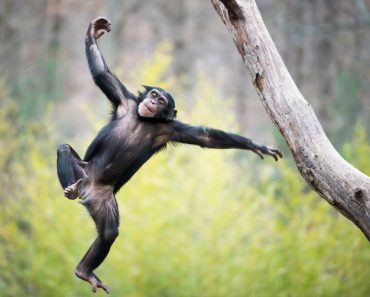
The Sahelanthropus Tchadensis is the earliest known ancestor of the Homo Sapiens, dating back to 7 million years ago. Since then, there has been a gradual evolution leading up to the modern day Homo Sapiens. Some of the notable steps in this evolution include the development of bipedalism (walking on two legs), the reduction in size of canine teeth, the increase in brain size, and the development of arboreal capabilities (the ability to swing from trees).
The world is approximately 4.5 billion years old, and Homo sapiens have been around for about 200,000-300,000 years of that. Obviously, we have evolved quite a bit since the most primitive apes. Humans and chimpanzees shared a common lineage up until approximately 7-13 million years ago. After our last shared ancestor, one line branched off into beings that were bipedal, i.e., walked on 2 legs, rather than quadrupedal, i.e., walking on 4 limbs.
Before attempting to establish a timeline of the events and changes that led to the formation of ‘us’, we must understand that establishing an exact date is impossible. It’s not like we can just walk up to ancient people and ask them for their life history, and they didn’t exactly maintain records either. So how do we do it? The simple answer – fossils. Scientists use fossils and relics to date these different ancestors’ history and create a timeline of our evolution. It is important to remember here that whenever new information comes to light, and with the further progression of science, timelines may change to better explain and accommodate all of our findings. This is why most estimates have a broad window, ranging from a couple thousand years to a few million years.
Keeping this in mind, let’s try to understand the timeline of evolution for modern humans.
Modern humans are scientifically called Homo sapiens. Homo is the genus and sapiens is the species. Homo sapiens are the only members of the Homo genus that are currently alive, and we have obviously come a long way from our four-legged brothers. From the trees, they came down to the land, and gradually began walking on all four limbs. Further evolution resulted in features like grasping big toes, shorter arms, etc. and eventually resulted in the form that you see in the mirror every day.
Recommended Video for you:
Sahelanthropus tchadensis
This species lived about 7 million years ago, and had characteristics of both chimpanzees and humans. From reconstructions of their heads, it can be seen that they look very ape-like. Also, while evidence suggests that they walked upright on 2 feet, there is not enough clarity on that matter. However, they are majorly accepted as the oldest species of hominids. Hominids are members of the Hominidae family, which is the family to which humans belong. Sahelanthropus tchadensis also had a small brain, closer in size to that of the chimpanzee.
Homo neanderthalensis are the closest species to us as modern humans. They lived about 400,000 to 40,000 years ago and closely resembled us in appearance. They wore clothes, lived in shelters and had relatively sophisticated tools. They hunted regularly, and also consumed plants. Evidence suggests that they would bury their dead, often even giving offerings of flowers. They also made ornaments. All the H. neanderthalensis fossils have been discovered in Europe.
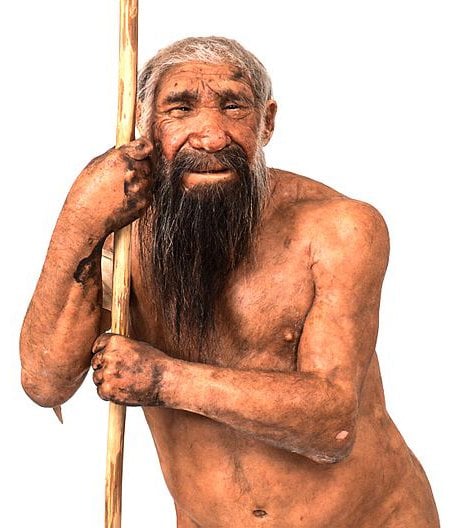
There is another species in this genus, known as the Denisovans. They still haven’t been classified properly, but they seem to have existed around the time of H. neanderthalensis. There is also evidence that suggests there was interbreeding within these groups, which led to variations.
According to current estimates, Homo sapiens arose about 300,000 years ago. The best way to establish a rough idea of their appearance would be to simply look in the mirror.
A number of these species existed at the same time, because the appearance of a new species did not mean the immediate extinction of the previous ones. As we have seen in the case of the Denisovans, Neanderthals and Homo sapiens, there was also interbreeding between them. According to some scientists, this is the cause behind the variations between the different races currently existing on Earth. That being said, there are still plenty of unanswered questions about our ancestors, as well as discrepancies in the timeline. Time estimates are constantly changing, so please don’t hold me responsible, it depends on which source you trust! In time, however, hopefully we can get more concrete answers to the fascinating questions of our origin!