Table of Contents (click to expand)
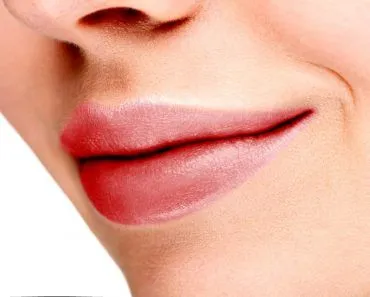
Cheek dimples are caused by a harmless anatomical variation: the zygomaticus major muscle (which pulls the corner of the mouth back when you smile) develops in two parts instead of one. The skin tethered to it tucks inward when you smile, leaving a dent. Anatomically the dimple is called fovea buccalis, and it tends to run in families, although no single "dimple gene" has been identified.
What Are Dimples?
A dimple — sometimes called by its old Latin name gelasin, from gelasinus meaning "laughing," and more formally called fovea buccalis in anatomy — is a small, visible indentation on the skin. Any dimple, regardless of its location, is the result of a harmless variation in the structure of an underlying muscle, connective tissue, or bone.
Other than its unoriginal and trite plot, what is highly conspicuous about the film Ghosts of Girlfriends Past are the dimples of its protagonists. Jennifer Garner’s beauty is adorned by her sinking dimples, while Matthew McConaughey’s infidelities are pardoned by women as soon as he flaunts his characteristic nonchalant smile.

Similarly, rationality goes out the window when Brad Pitt, Tom Cruise, Cameron Diaz, Bradley Cooper, Carey Mulligan, Miranda Kerr or Cheryl Cole walk into any scene. This is true for countless men and women, not just in Hollywood, but all around the world. However, you might be shocked to find out that these much-coveted dents are actually a small anatomical quirk (not a defect or a disorder, just a normal variation in how the face is wired up).

What Causes Dimples?
A dimple, or as it is formally called — gelasin — is a visible indentation anywhere on the skin. Although the most prominently identified and adored dimples are those on the cheeks, they can occur almost anywhere on the body, such as on shoulders and on backs just above the buttocks.
Coming in second after the cheek dimple is a dimple on the chin, or as they are popularly called, a cleft chin, which has gained a healthy share of fondness and is equally ubiquitous in Hollywood – Ben Affleck, Ewan McGregor, Matt Damon, Emily Blunt, Sandra Bullock and Peter Griffin from Family Guy are just a few who exhibit a dimpled chin.

Any dimple, regardless of its location, is the result of a variation in the structure of body tissue, a muscle, or connective tissue. However, this article will only explain what causes the most common forms – cheek and chin dimples.
Fovea Buccalis And Zygomaticus Major
Cheek dimples are technically known as fovea buccalis. They occur in both sexes, although most population studies report them slightly more often in women than in men, and overall prevalence varies a lot (roughly 12–37% depending on the population studied). They are a genetic variation, not a deformity: a certain facial muscle simply develops in an unusual shape during embryonic development. The muscle in question is responsible for stretching or pulling our lips back into the corners when we smile. It runs diagonally beneath the cheek and is called the zygomaticus major.
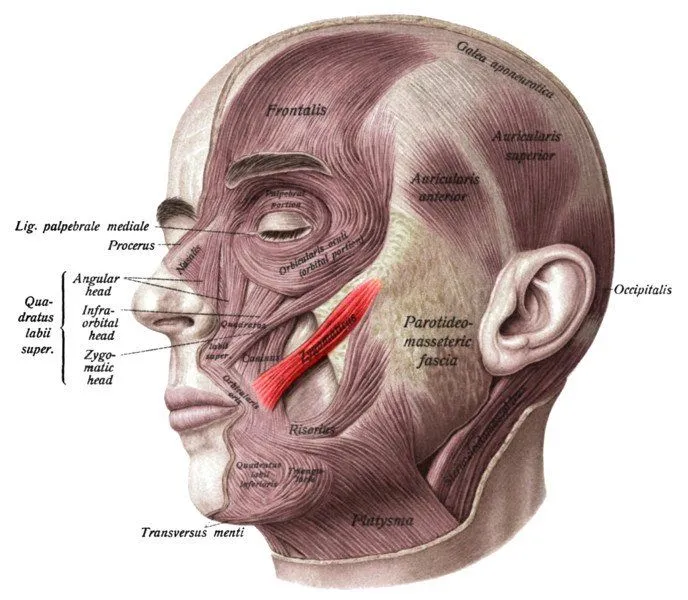
In a 1998 cadaver study by anatomist Joel Pessa and colleagues, the zygomaticus major was found to be split into two bundles (a "double" or bifid muscle) in roughly a third of faces examined. One bundle sits above the corner of the mouth and the other below it. The two are separated by a tiny gap, with the inferior bundle attaching directly into the overlying skin. When someone with this variation pulls the muscle into a smile, that anchored patch of skin gets tugged inward, sculpting a dimple and a truly adorable grin.
On the other hand, chin clefts or fovea mentalis have nothing to do with muscles. Chin dimples are usually the result of an incomplete fusion of the two halves of the jaw bone at the mandibular symphysis, leaving a small gap or groove between them. This too happens during embryonic development. Just like the formation of a cheek dimple, the skin simply assumes the shape of the atypical structure on which it grows.

Are Dimples A Deformity, Disease, Or Birth Defect?
If you have searched for dimples online, you have probably tripped over a worrying word or two: deformity, defect, even disorder. So let us set the record straight. A dimple is none of those things. Medically, a cheek dimple is filed under benign anatomical variation, the same harmless drawer that holds a widow’s peak or attached earlobes. The U.S. National Library of Medicine’s MedlinePlus describes it plainly as “an anomaly of the muscle that causes a dent in the cheek,” and the word anomaly there means a structural quirk, not a sickness.

The confusion is understandable. Because the split zygomaticus major takes shape while you are still in the womb, dimples are occasionally and mistakenly labelled a birth defect. They are not. As Healthline’s medical reviewers note, cheek dimples “don’t have any negative health effects,” need no treatment, and carry no associated illness. Nobody has ever fallen ill from a dimple.
So if a relative insists your dimples are a “muscle defect”, you can smile straight back (dent and all) and tell them it is simply one of the many ways a perfectly healthy face can be wired.
How Common Are Dimples?
Dimples feel rare because they stand out, but they are more widespread than you might guess, and the exact figure depends heavily on where you look. Across different populations, the reported prevalence of cheek dimples swings from roughly 12% to 37%. A survey of more than 2,300 people found that about 37% had cheek dimples, while a study of 1,462 people in Sullia, India, recorded a far lower 8.3%. There is no single worldwide number, only a broad band that shifts with ancestry and with the way each study counts a dimple.
A couple of patterns do hold up across studies, though. Dimples turn up slightly more often in women than in men, and a single dimple is more common than a matching pair. In the Sullia study, roughly 73% of dimpled faces carried a dimple on just one cheek, while only about 27% had them on both. So a lone dimple is not lopsided or unusual at all (it is actually the typical case).
“Lucky” People
Previously, this fortuitous quirk was taught as a clean dominant trait, which meant that if both of your parents were dimpled, you were certain to inherit it as well. If one parent had dimples, the chance of passing them to the “lucky” next generation was around 50%. The modern picture is messier: no specific "dimple gene" has actually been pinned down, and inheritance is better described as irregularly dominant with incomplete penetrance, meaning you might not inherit dimples even if both parents have them.
However, despite being endowed with them at birth, the longevity of dimples might not be guaranteed. While the majority of dimples are permanent, some of them are transient. These captivating dents may be observed prominently in childhood, but they can gradually disappear on the verge of adulthood as the muscles stretch and span with age. One doesn’t have to necessarily inherit them either – a spontaneous mutation could cause them without any nudge from parents.
The question remains, what evolutionary purpose do they serve? You may have noticed the effect on facial appeal that dimples foster tends to manifest the cute and adorable youthfulness that we often associate with babies. People speculate that this charm coerces parents to nurture their babies even more effectively than they normally would (big eyes are another feature that beguiles parents into excessive nurturing).
Secondly, growing up with dimples could be a huge bonus. When they adorn an individual’s face, they may consequently encourage his or her chances of mating, thus ensuring that they make more angelic, dimpled faces. Seriously, just look at Cheryl Cole or Miranda Kerr!
References (click to expand)
- Pessa JE, et al. (1998). Double or bifid zygomaticus major muscle: anatomy, incidence, and clinical correlation. Clinical Anatomy, 11(5), 310–313.
- Are dimples determined by genetics? MedlinePlus Genetics. U.S. National Library of Medicine.
- Why Do We Have Dimples? | Office for Science and Society. McGill University
- Zygomaticus major muscle - Wikipedia. Wikipedia
- Cheek Dimples: How They Form, and How to Get Them. Healthline.
- Chalathadka M, et al. (2019). Evaluation of Prevalence and Morphology of Dimple among Population of Sullia Taluk. Journal of Cutaneous and Aesthetic Surgery, 12(4), 227–230.