A tan is the skin's defense response to ultraviolet (UV) damage. UV light injures the DNA in skin cells, and special pigment cells called melanocytes respond by producing more melanin, which absorbs further UV and shields the cell's DNA from more damage. UVA quickly darkens the melanin you already have, while UVB triggers the slower, longer-lasting production of fresh pigment.
Laying out on a beach without a care in the world sounds incredibly relaxing to spend a summer’s day. But fall asleep with the sun beating down on you for hours, and there’s a good chance you’ll wake up a different color than when you first laid down!
Our beauty standards have made a tan the epitome of laid-back beauty, but some of us can’t tan. While the person lying next to you may brown into a bronze god, you may get a painful red sunburn. Why is there a difference? And why do we tan at all?
Well, the short answer is that tanning is our body’s way to protect ourselves from the sun’s harm.
Sunlight And Radiation
During your relaxing day at the beach, you probably don’t feel like you’re being bombarded by radiation, but that is precisely what sunlight is! In addition to visible light and heat, three types of ultraviolet radiation come from sunlight: UVA, UVB, and UVC. We can ignore UVC radiation, as it never reaches our skin and is largely absorbed by the atmosphere.
Your tan keeps developing days after you’ve been out in the sun. Melanin synthesis can peak nearly 10 days after the initial tan.
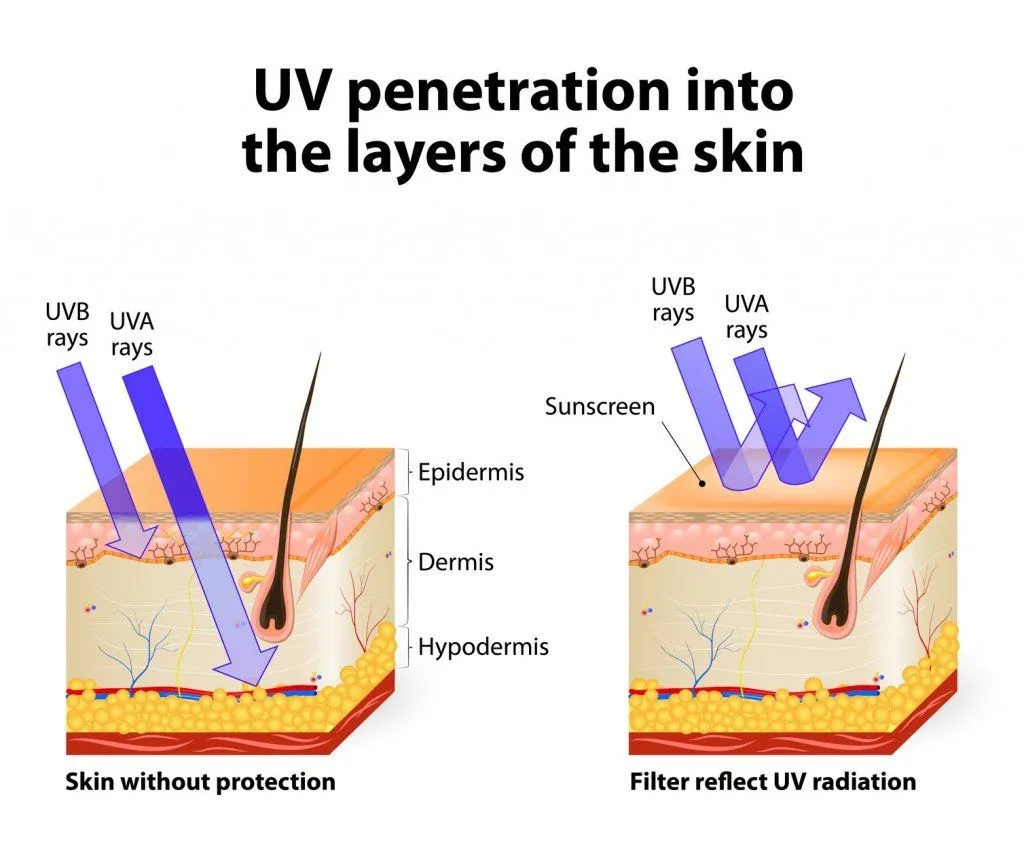
However, when UVA and UVB radiation reaches our skin, it has various effects. UVA radiation is much more common and isn’t filtered out by our planet’s ozone layer. We are exposed to UVA rays throughout our lives, as they can even penetrate clouds and atmospheric gases. When UVA radiation strikes our skin, it immediately engages the melanocytes (the pigment cells in our skin), causing a release of the melanin they have already stored, resulting in what we know of as a “tan”.
UVA radiation penetrates deeper into the skin and can damage skin cells in the epidermis, leading to various types of skin cancer.
UVB radiation is slightly different and only penetrates the top few layers of the skin. It's the main driver of sunburn and the main contributor to basal cell and squamous cell carcinomas. Both UVA and UVB raise melanoma risk, though, so neither should be treated as safe.
DNA Damage: The Struggle Is Real
Melanin is the evolutionary answer to this radiation onslaught. It protects the body from UV damage.
When UVA radiation penetrates the skin, it causes the existing melanin to darken but does not stimulate the production of more melanin. The color change resulting from UVA radiation is due to the oxidation of melanin. However, this is not a long-lasting color change, and the “tan” from UVA rays will usually fade in a few days.
The damage caused by UVB rays stimulates melanogenesis, the body’s natural response to radiation. This type of tan will be much longer lasting, and protects your skin from further radiation damage, as the melanin produced will absorb that radiation. UVB radiation can typically be blocked by sunscreen, whereas UVA rays are more difficult to protect against; fortunately, natural and synthetic fibers (clothing) have been shown to protect against the majority of UVA rays.
The melanin produced and released by melanocytes comes in two pigment forms: eumelanin (brown) and phaeomelanin (yellow and red). Depending on a combination of your hair color, skin tone, race, genetics, and previous exposure to sunlight, the production levels of these two pigments may be different. For example, a fair-skinned Irishman with red hair may produce less eumelanin than phaeomelanin, making it almost impossible for him to get a “tan” in the traditional sense. On the other hand, a Mediterranean woman with dark hair and an olive-skinned complexion may tan very easily, as her melanocytes produce more eumelanin than phaeomelanin.
Lighter-skinned people initially suffer from sunburn and then develop a tan. They lack enough eumelanin to darken their skin immediately, but over the next week, increased melanin production will produce a tan.
Which Layer Of The Skin Is Responsible For Tanning?
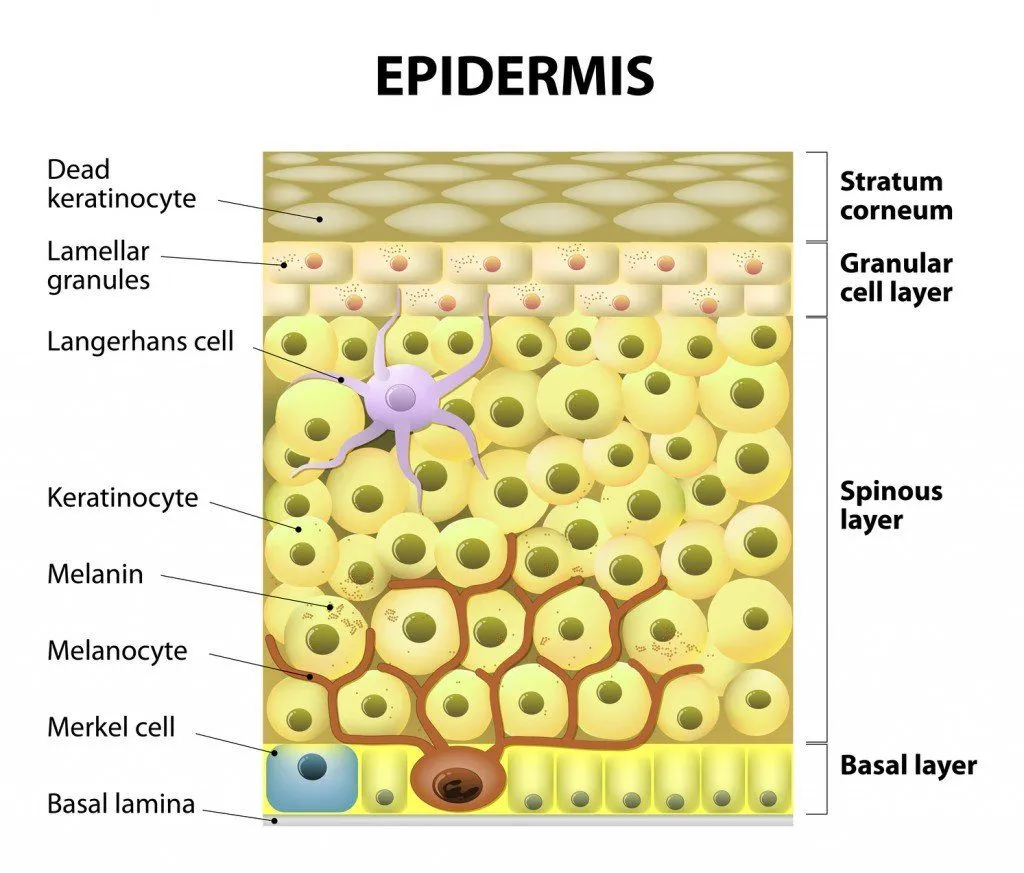
Your skin's outer sheet, the epidermis, is itself a stack of sub-layers. The one that does the tanning sits right at the bottom: the stratum basale, also called the basal layer, the deepest layer of the epidermis where it meets the dermis underneath. This is where the melanin-making cells, the melanocytes, live.

Even though the melanocytes themselves stay anchored down in the basal layer, the color doesn't stay put. Each melanocyte reaches up with long, branch-like arms (dendrites) and hands off packets of melanin to roughly 36 of the keratinocytes around it, the everyday skin cells that make up most of the epidermis. This one-melanocyte-plus-its-keratinocytes team is known as the epidermal melanin unit.
Here's the clever part. Inside each keratinocyte, that delivered melanin doesn't scatter randomly. It piles up on the sunny side of the cell's nucleus, forming a little parasol called a supranuclear cap that physically shields the cell's DNA from incoming UV. So when your skin darkens, you're really seeing melanin being mass-produced in the basal layer and then pushed upward and outward through the epidermis, parking itself over millions of cell nuclei.
Does A Tan Actually Protect You From The Sun?
It's tempting to think a tan is the body's built-in sunscreen, so a "base tan" before vacation must keep you safe. The science says otherwise, and the numbers are sobering. A tan you build up from sun exposure (a facultative tan) is estimated to provide a sun protection factor of only about 2 to 4. The melanin response triggered by UVB is reckoned at roughly SPF 3.
To put that in perspective, the U.S. Surgeon General notes that a base tan offers an SPF of 3 or less, and dermatologists are blunt about it. Yale's David Leffell has called that level of protection "completely meaningless" against real sun exposure, especially when health authorities recommend SPF 30 or higher. An SPF 3 tan lets through about a third of the burning UV; an SPF 30 sunscreen lets through roughly 1/30.
There's a deeper catch, too. A tan is not a shield you put on; it is the receipt for damage already done. The pigment only ramps up after UV has reached your skin cells and injured their DNA, which is exactly the harm that drives premature aging and skin cancer risk over time. So a darker tan literally means more accumulated UV damage, not more safety. Natural pigmentation does help, but even in the darkest skin the measured protection is only about 10 to 15 times that of having no melanin at all. The takeaway: a tan is a poor substitute for sunscreen, shade, and clothing.
Sunscreen Helps Protect You From The Sun
To protect the skin from UV damage (and the skin cancer risk that comes with it), sunscreen helps. Sunscreens are labeled with an SPF (Sun Protection Factor), and you can now find products from SPF 15 all the way up to SPF 100, though the U.S. FDA only formally validates ratings up to SPF 50+. Despite a common shorthand, SPF measures the dose of UVB needed to redden sunscreen-covered skin compared to bare skin (not strictly "time to burn"). An SPF 30 sunscreen, applied generously, lets through about 1/30 of the UVB; SPF 50 lets through 1/50. Look for a "broad-spectrum" label to make sure it filters UVA as well as UVB.