Table of Contents (click to expand)
Six animals that go on the offensive to defend themselves: skunks (sulfur-thiol spray), exploding ants (rupture their own bodies to splatter sticky toxin), golden poison frogs (skin laced with batrachotoxin, one of the deadliest natural toxins), bombardier beetles (~100 °C chemical spray from an abdominal reactor), giant squid (grapple sperm whales with toothed-suckered arms), and Texas horned lizards (squirt blood from their eyes).
This is one of the most popular sayings when it comes to dealing with real things in life. Particularly in sports-related activities and wars, this is heard time and time again. Quite aptly, this phrase means that to survive an imminent threat or attack, the best chance one has is to mount a good attack themselves first, in order to gain an upper hand in the situation.
It seems that this saying applies not only humans, but to other creatures too, with whom we share our existence on the planet.
Let’s take a look at a few creatures that have some truly fascinating ways to ward off predators and life-threatening situations.
Skunk
Almost everyone is familiar with these foul-smelling creatures. Even slight contact with a skunk means a long time in the bathroom, scrubbing your clothes and skin to eliminate the stench. Skunks aim a spray from a pair of well-developed scent glands near the tail, releasing a cocktail of sulfur-based thiols and thioacetates that can hit a target up to about 3 meters (10 feet) away and be detected by humans more than a kilometer downwind. Most predators get the message after one encounter and leave skunks alone for life.
The Exploding Ant
Yes, exploding ants are a real thing. The Southeast Asian ant Colobopsis saundersi (and a handful of related species) practices what entomologists call autothysis, literally self-sacrifice: when a worker is grabbed by an attacker, it violently contracts its abdominal muscles until its body wall ruptures, splattering a sticky, toxic yellow goo stored in massively enlarged mandibular glands all over the assailant. The ant dies in the process, but the colony lives to forage another day.
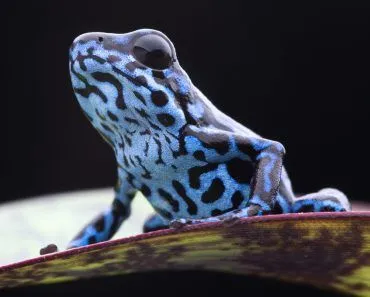
Golden Poison Frog
The golden poison frog (Phyllobates terribilis), native to the rainforests of Colombia, may be the most lethally toxic vertebrate on the planet. Its skin secretes batrachotoxin, a steroidal alkaloid that locks open the body’s sodium channels and causes paralysis and cardiac arrest. A single adult frog, only about 5 cm (2 inches) long, carries enough toxin to kill an estimated 10 to 20 humans. Indigenous Emberá hunters traditionally used the secretion to tip blowgun darts, giving rise to the name “poison-dart frog.”
Bombardier Beetle
Bombardier beetles (subfamily Brachininae) carry a tiny chemical reactor in their abdomen. When threatened, they mix hydroquinones with hydrogen peroxide in a reinforced reaction chamber lined with catalytic enzymes, triggering a violent exothermic reaction. The result is a pulsed spray of boiling-hot, irritating benzoquinones, ejected at close to 100 °C (212 °F) with audible pops at the end of the beetle’s abdomen. They can aim the jet in almost any direction. It is one of the most dramatic chemical defenses in the animal kingdom.
Giant Squid
The giant squid (Architeuthis dux), one of the largest invertebrates on Earth, can grow to around 13 meters (43 feet) including its long tentacles. Sperm whales are among its few known predators, and despite the lopsided size match, sperm whales often surface with circular sucker scars across their heads and flanks, evidence that the squid does not go quietly. When attacked, giant squid grapple back with their two long, club-tipped tentacles and eight muscular arms (each lined with rows of toothed suckers), while releasing a cloud of ink to confuse the attacker before darting off.
Horned Lizard
Horned lizards are mainly found in North America, and the largest of them are the Texas horned lizards.
These lizards are capable of raising the blood pressure around the area of their eyes, so when they feel threatened by a predator (especially a canine like a coyote or fox), they raise the blood pressure to such a limit that their eyes squirt a jet of blood. But wait, there’s more: the blood is mixed with chemicals that taste foul to canids and can be very painful to be hit with. Quite interestingly, these lizards are capable of firing up almost one-third of their total blood volume in defense.
Spitting Cobra
Some animals do not even need to land a bite to win a fight. Spitting cobras, a group of species spread across Africa and Asia (including the red spitting cobra, Naja pallida, and the black-necked spitting cobra, Naja nigricollis), have turned venom into a long-range weapon. When a larger animal looms over them, they rear up and squeeze the muscles around their venom glands, firing a fine spray out of forward-facing holes in their fangs. Depending on the size of the snake, that jet can travel roughly 1.2 to 2.4 meters (4 to 8 feet) and is aimed squarely at the threat's eyes.

What makes this so effective is the aim. A study published in The Journal of Experimental Biology found that spitting cobras track their target's face and even anticipate where its head is moving, reacting to a sudden head movement in about 208 milliseconds and adjusting their spray to compensate. The whole burst lasts under 50 milliseconds, during which the snake rapidly oscillates its head to scatter venom across a wider area, hitting at least one eye with roughly 90% accuracy on a single spit. On skin the venom does little, but on the cornea it causes searing pain and, if it is not washed out quickly, possible blindness. Crucially, this is a purely defensive trick: a spitting cobra spits to escape something bigger, and saves a true bite for prey it intends to eat. (If you have ever wondered why this counts as a venom and not a poison, see our explainer on venom versus poison.)
Sea Cucumber
The sea cucumber looks about as harmless as an animal can: a soft, sausage-shaped echinoderm trundling along the seafloor. Yet several species have one of the strangest counterattacks in the ocean. When a fish or crab harasses them, certain sea cucumbers (in the family Holothuriidae) contract their body wall so hard that the cloaca tears open and they shoot out a tangle of white threads called Cuvierian tubules from their rear end.

As seawater rushes into them, these threads can stretch to around 20 times their original length in seconds and turn instantly sticky on contact, gripping firmly in under ten seconds. The result is a sprawling, gluey net that entangles and immobilizes small fish, crabs, and even predatory starfish while the sea cucumber quietly detaches and crawls away. For good measure, the tubules and body wall of many species are laced with holothurin, a soapy, toxic saponin that makes the would-be predator regret the encounter. A 2023 genome study in PNAS traced the glue to amyloid-like, spider-silk-style proteins, and best of all, the sea cucumber simply regrows the discarded tubules over the following weeks. This is the real phenomenon behind the popular claim that sea cucumbers "shoot their guts" at attackers.
After seeing all these creatures and learning about their unique abilities, it is hard to deny that “offense is the best defense.” In other words, if you want to stay safe, you had better be ready to mount your own attacks! (Of course, going on the attack is only one playbook. Plenty of animals survive by faking weakness instead, as we cover in why some animals play dead.)
References (click to expand)
- Skunk - Wikipedia.
- Colobopsis saundersi.
- Golden poison frog.
- Giant squid.
- Horned lizard. Wikipedia
- Bombardier beetle. Wikipedia
- Spitting cobra. Wikipedia
- Target tracking during venom ‘spitting’ by cobras. The Journal of Experimental Biology, PMC (NIH).
- Cuvierian tubules. Wikipedia
- Sea cucumber Cuvierian organ defense (PNAS genome study). Science News.