Table of Contents (click to expand)
Yes, many sharks can change color. Great whites shift between lighter and darker gray within hours through hormone-driven skin cells, cookie cutter and kitefin sharks glow with bioluminescence, and zebra sharks even swap stripes for spots as they age. Most shark coloration, though, is fixed camouflage tuned to their habitat.
Being in the presence of a shark can be quite intimidating. A very conventional idea is that they can instill fear in their prey, and they often live up to that reputation. You’ll find that sharks can keep you at the edge of your seat when they star in the thriller genre of movies, but research on these creatures has shown that they have a much deeper level of subtlety to them.
Swimming with a shark might feel like being in a time capsule to the past, because these incredible organisms have been around for about 400 million years, with the earliest shark-like scales appearing roughly 450 million years ago. As some of Earth’s earliest jawed vertebrate predators, sharks have outlasted several mass extinctions and the dinosaurs.
Trick Of The Light
The bodies of sharks tend to counter-shade in order to blend with murky and dark blue waters of the deep sea. Well-known sharks like the Great White shark (Carcharodon carcharias), Bull shark (Carcharhinus leucas) and Bronze whalers (Carcharhinus brachyurus) are decked out in neutral grays to go with their creamy underbellies.

While some sharks may play it safe with their color scheme, others like to jazz it up. Stripes and spots line their skin, and as impressive as this may look, these patterns help the sharks blend into the background, especially when they’re preying close to the ocean floor, with plenty of substrates.
The broadnose shark has learned to mimic its surroundings so well that it’s pretty hard to spot it along sandy or rocky shores, which are its frequent hunting grounds.
The wobbegongs that inhabit Australian coral reefs, will go to great lengths to remain as unobtrusive as they can. Not only do their bodies glint with shades of yellow, green and brown, but their skin is accessorized with protrusions and rings. This dress-up acts like a decoy to lure in prey that might be in the vicinity of the coral. It’s almost impossible for them to see a wobbegong camouflaged on their home turf.

Now that we’ve established how coloration of the shark’s body can be paramount to its predatory nature, let’s see if any of these species can switch their colors to adapt to the different environments in which they lurk.
‘Shady’ Sharks
When shark observers take out their boats to sea, they often see the same shark appearing lighter in the morning and darker on the same afternoon. Upon photographing these breaching sharks and comparing their shades with color boards, observers attributed these changes in the shark’s skin color to hormones.
The skin cells or melanocytes of these sharks contract, changing to a lighter shade when they’re doused in adrenaline, while a melanocyte stimulating hormone caused their dispersal, giving them a darker shade. Great white sharks change colors to blend into brightly lit surface waters where they hunt for seals.

Light Show By The Cookie Cutter
By day, these sharks are an unimpressive color of tan, but by night, they pull out their big guns, luring in close-by creatures to snag a bite. But if they’re so pale, what attracts their prey to them? A built-in light system is quite the trick. Being one of the rare sharks to showcase bioluminescence, they light up their bellies, giving it a green glow.
The light-emitting organs that the cookie cutter shark employs are called photophores. However, these don’t glow in just any random shape; they’re strategically placed on its body, such that a puny fish-shaped area remains shadowed. This then acts like bait, and when a predator spots its “meal”, and approaches it, the sneaky shark turns the tables, taking a cookie-shaped chunk of meat out of the predator-turned-prey, as its prize. What’s left is a round wound on the victim. A classic case of hit-and-run!

Glow-in-the-dark
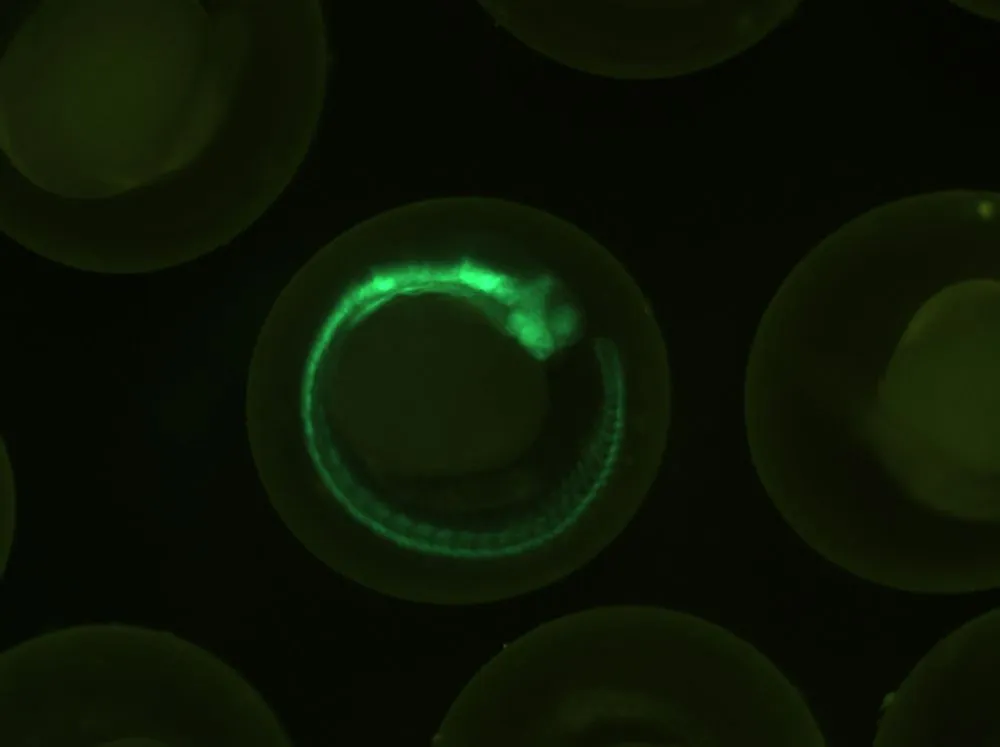
Some sharks can be either be bioluminescent (make their own light) or biofluorescent (transform their light), while others can be neither or both. This property depends on the layer of the ocean where they reside. If they call the deep waters their home, they don’t have access to the sun’s photons and have to make their own light. Of the 540 species of sharks in the ocean, about 11% can produce light. If they live in the shallows, they can use sunlight to change colors by contracting their skin cells.
Sharks and stingrays are among 200+ marine species known to show biofluorescence, absorbing the blue light that reaches deep water and re-emitting it as bright green. In many marine animals this trick uses green fluorescent protein (GFP), but the swell shark and chain catshark do it differently: their skin glow is produced by a family of brominated tryptophan–kynurenine metabolites, and their eyes are tuned to pick up the green signal that other species miss.
The largest known bioluminescent vertebrate is the kitefin shark, which can grow to nearly 1.8 meters (about 5 ft 11 in). Sporting large gaping eyes and dark tanned skin, it’s impossible to spot as it cruises the deep ocean, but when its belly lights up, it’s hard to miss the blue light show.

Viper dogfishes might be one of the smaller species of sharks, but they’ll scare the living daylights out of you! Their black exterior and pointy teeth are beast-like. However, this doesn’t make them unattractive, because when it’s time to attract a mate or attack their prey, the photophores on their undersides light up. Pretty deceptive!
Aging Gracefully
One species of shark not only changes its color, but also its pattern, as it ages. Zebra sharks are zebra-striped as juveniles and leopard-spotted as adults. Until 1823, the two stages were classified as separate species. The juvenile stripes are thought to be a form of Batesian mimicry: the pup’s banded pattern resembles a venomous banded sea krait (sea snake), which discourages would-be predators from getting too close.
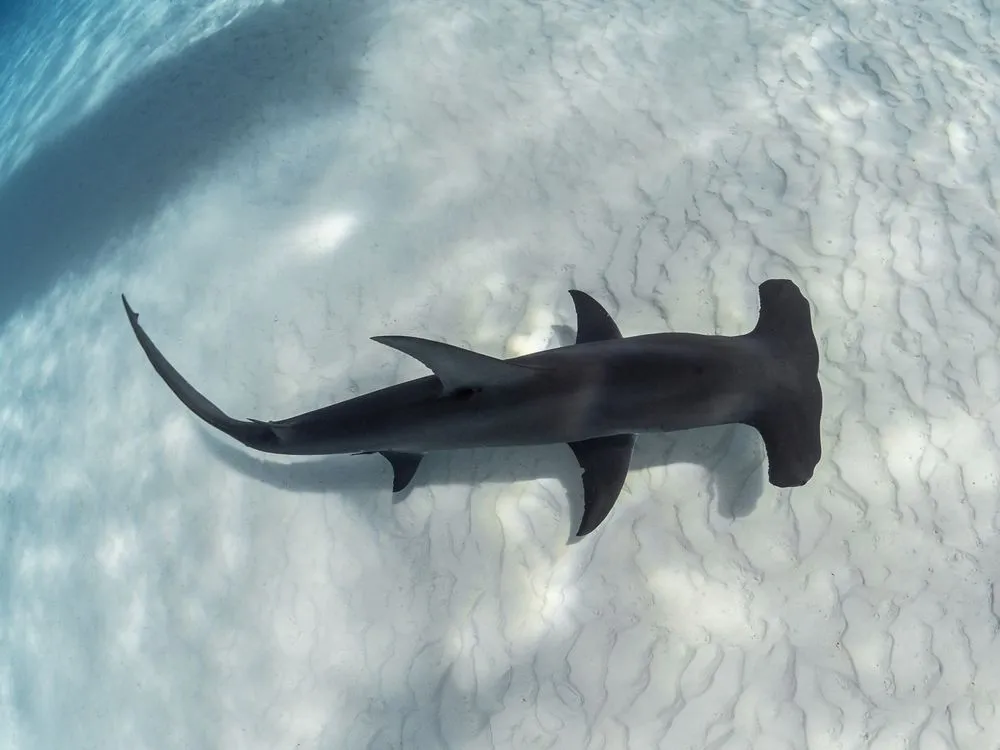
Hammerhead shark pups are born with shades of black with white-tipped fins, but as they grow and add small fish and shellfish to their diet, their skin starts to darken on the bottom and remains light on top, which enables them to camouflage like a chameleon! What’s more, hammerheads can actually get a tan, and are one of the only fish known to get a sunburn.
Conclusion
Sharks are intelligent and tactical when it comes to predation and finding mates. Although shark attacks can be vicious, their manner of approaching prey has shown us that there is also a subtle and gentle side to these fierce giants. Research on sharks helps us understand how they always manage to stay atop their food chains and fit into ecosystems so seamlessly.
Now you know why there are hardly any survivors in Deep Blue Sea or The Meg. They just never saw the sharks coming!
References (click to expand)
- Fossil Shark Basics – Discover Fishes - Florida Museum. The Florida Museum of Natural History
- Bull Shark – Discover Fishes. Florida Museum of Natural History
- Zebra Shark – Discover Fishes. Florida Museum of Natural History
- Duchatelet, L., Claes, J. M., Delroisse, J., Flammang, P., & Mallefet, J. (2021, December 17). Glow on Sharks: State of the Art on Bioluminescence Research. Oceans. MDPI AG.
- Giant squid and glow-in-the-dark sharks surprise scientists. NIWA (National Institute of Water and Atmospheric Research)
- Photophore Distribution and Enzymatic Diversity Within the Photogenic Integument of the Cookie-Cutter Shark Isistius brasiliensis. Frontiers in Marine Science (2021)
- Tasselled Wobbegong – Discover Fishes. Florida Museum of Natural History
- Great white sharks may change their color to sneak up on prey. National Geographic
- Mallefet, J. et al. (2021). Bioluminescence of the Largest Luminous Vertebrate, the Kitefin Shark, Dalatias licha. Frontiers in Marine Science.
- Park, H. B. et al. (2019). Bright Green Biofluorescence in Sharks Derives from Bromo-Kynurenine Metabolism. iScience / PubMed Central.
- Shark evolution: a 450 million year timeline. Natural History Museum (London).