By 1926, wolves had been wiped out of Yellowstone National Park. Elk numbers exploded, willows and aspens were stripped bare, beavers nearly vanished, and in some valleys streams cut deeper and shifted course. After 31 wolves were brought back in 1995–1996, the story was that everything reversed. The science today is more complicated: wolves matter, but they are only one of several factors driving the change.
The food chain and trophic cascade are two phenomena that we learn about in school. Though we may dedicate their definitions to memory, we’re never told of real-time consequences to the food web in real life.
One such cascade has played out in Yellowstone National Park, in the United States. A federal predator-eradication program that ran into 1926 wiped wolves out of the park, and over the following decades parts of the landscape (including some streams) shifted in ways that biologists later traced back to that single decision. The connection is intriguing, because wolves, as terrestrial carnivores, have nothing obvious to do with rivers.
So, what happened here?
What Is A Trophic Cascade?
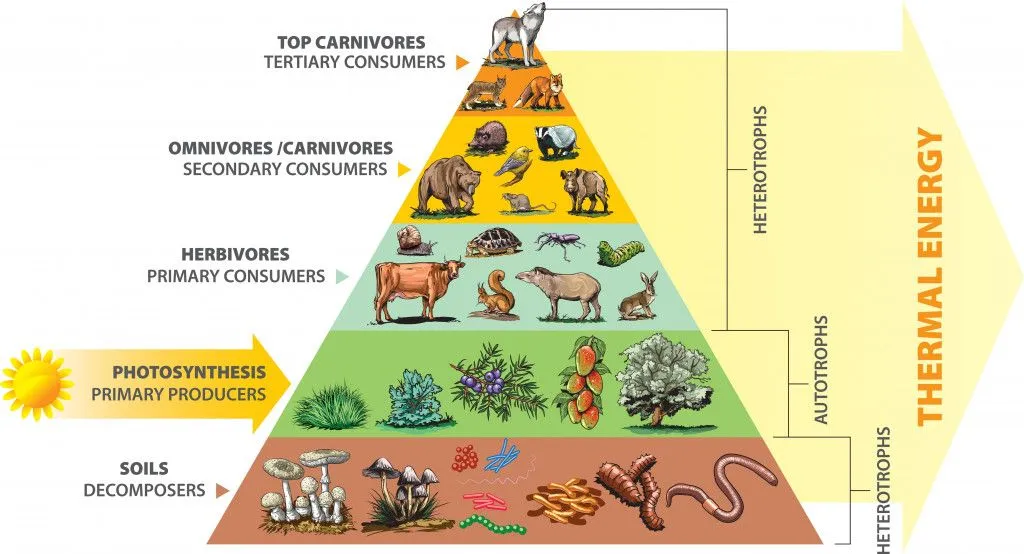
The food chain is the order in which living things are dependent on one another for the transfer of food and energy. Disrupting the food chain can lead to a hypothesized trophic cascade. It takes time for a trophic cascade to play out, but one clear case is what happened in Yellowstone National Park.
Once grey wolves (which occupied the top of the food chain) were removed, the species below them in the food web were freed from a major source of predation. Populations swelled, natural resources were over-used, and the full extent of the damage took roughly seven decades to be properly recognized.
What Happened When The Wolves Disappeared?
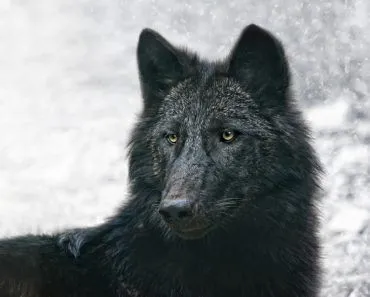
The wolf extermination program was the local end of a national push, driven by ranchers’ concerns about livestock losses and a broader idea (popular at the time) that predators were "vermin." The last two known wolves inside Yellowstone — a pair of pups near Soda Butte Creek — were killed by park rangers in 1926. Wolves are among the park’s top carnivores, preying primarily on elk (wapiti deer).
With the park’s wolves gone, elk lost their main predator and their numbers climbed. By the second half of the twentieth century, the northern range was carrying tens of thousands of elk for long stretches of the year.
That weight of herbivores put more strain on the vegetation, and the park’s grasses and saplings were heavily browsed. The loss of riverbank willows, aspens, and cottonwoods was especially pronounced, since elk had both food and water within a few steps of the banks. Other species also suffered: scavengers no longer got the year-round supply of carrion that wolves had reliably left behind.
Why Did Beavers Leave Too?
The park had also once held a thriving population of beavers. Beavers feed mainly on the inner bark (cambium), young stems, and leaves of willow and aspen, exactly the trees that elk were now eating into the ground around streams.
With those trees stripped from the riverbanks, beavers ran out of building material and food. By the mid-1990s, only a single beaver colony was left on Yellowstone’s northern range, and with them went one of nature’s greatest engineering marvels: the beaver dam. By holding back water, beaver dams saturate the surrounding soil, raise the water table, and keep moisture available to streamside vegetation even when there’s no rain.
And Thus, The River Changed Its Course!
Without the deep willow and aspen roots holding banks together, and without beaver dams to slow the water down, sediment was easier to wash away. Seasonal floods cut deeper, banks slumped, and on some streams in the northern range the channels widened and shifted into new positions over the decades that followed.
A change in a river’s course is not just an aesthetic one. It lowers the water table along the old channel, which alters which plants can grow there, and it changes how animals move from one side of the valley to the other.
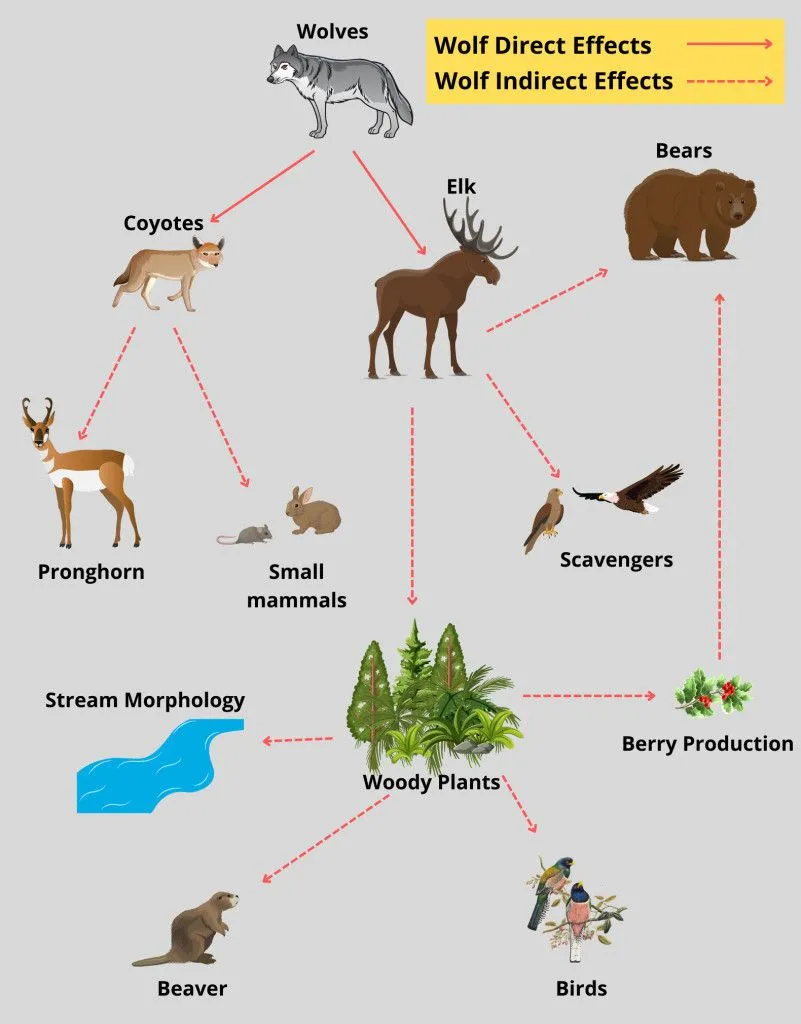
So a story that began with the removal of a single species at the top of the food chain rippled all the way down: more elk, less streamside vegetation, fewer beavers, lost dams, eroding banks, and in some places, rivers that no longer ran where they used to.
We Reintroduced The Wolves. What Happened?
Decades after scientists worked out what the missing wolves had set in motion, the predators were brought back. 31 grey wolves were trapped in Canada and released into Yellowstone in two batches: 14 in 1995 and 17 in 1996. It was the first time wolves had run in the park in 69 years.
The wolves began preying on the abundant elk. The popular telling of what followed is that the surviving elk also became too nervous to spend long stretches in risky places like open river bottoms (the so-called "landscape of fear"), which let willows and aspens regrow along the banks.
Beavers, in turn, recolonized parts of the northern range, complex dams reappeared on some streams, and where the dams went up the water table rose and bank erosion slowed. As a result of reintroducing the top predator in the food chain, the headline went, the entire ecosystem was on the mend.
Was The Story Really That Simple?
The "wolves changed rivers" narrative is a beautiful one, and the early evidence for it (assembled by ecologists William Ripple and Robert Beschta) made a real impression on both scientists and the public. Over the last several years, though, a growing body of long-term work has pushed back on the simplest version of the story.
Three findings in particular have complicated the picture:
- The "landscape of fear" is weaker than advertised. A multi-year tracking study led by Kohl, MacNulty, Kauffman and colleagues found that elk in Yellowstone simply use risky areas when wolves aren’t actively hunting there. They don’t appear to be living in a constant state of dread that reshapes their feeding patterns.
- Wolves aren’t the only thing knocking elk down. Cougars and grizzlies, severe drought years, and (especially) human hunting outside the park have all reduced elk numbers since the mid-1990s. Recent analyses argue that this combined reduction in elk density, not fear of wolves, is what is letting riverside vegetation come back where it does.
- Willows and streams haven’t fully recovered. A 20-year experimental study by N. Thompson Hobbs and colleagues (2024) found that even after three decades of wolves, many incised streams on the northern range haven’t bounced back. The water table has dropped too far for willows to regrow without beaver dams, and the dams won’t reliably come back without willows. The system seems stuck in an alternative stable state that a single species (no matter how charismatic) can’t pull it out of.
None of this means wolves don’t matter. They clearly do. But the honest current picture is messier than "bring back the wolves and the rivers heal themselves." Wolves are one important factor in a recovery that is patchy, slow, and driven by climate, hydrology, multiple predators, human hunting, and beavers all at once.
Conclusion
Does this imply that substituting wolves for elk will solve the problem? No.
Wolves can be part of the problem too. As flexible predators, wolves prey on beavers and other animals that live and thrive on riverbank vegetation. Too many predators, including the wolves themselves, could also change the course of rivers.
Nature’s processes are far more complex than any single-species story can capture, and the Yellowstone "cascade" is a case in point: the original removal really did set off chain reactions, the reintroduction really did help, and yet the recovery has not been the clean, full reversal that the popular telling implies. Scientists are still picking apart which variables matter most for restoring the park’s northern range to something like its earlier form.
Scientists admit that they still don’t understand all the factors that are causing the park’s surroundings to change, and as always, there is still a lot to learn!
References (click to expand)
- How Wolves Change Rivers | Beaty Biodiversity Museum. The University of British Columbia
- Wolf Reintroduction Timeline. Greater Yellowstone Coalition
- Hobbs, N. T., et al. (2024). Does restoring apex predators to food webs restore ecosystems? Large-scale, long-term experimental evidence from Yellowstone National Park. Ecological Monographs.
- Brice, E. M., Larsen, E. J., & MacNulty, D. R. (2025). Demographic and behavioral mechanisms of the wolf-elk-aspen trophic cascade in northern Yellowstone. Ecological Monographs.
- Kohl, M. T., et al. (2018). Diel predator activity drives a dynamic landscape of fear in Yellowstone wolves and elk. Journal of Animal Ecology.
- Gable, T. D., Johnson-Bice, S. M., Homkes, A. T., Windels, S. K., & Bump, J. K. (2020, November 13). Outsized effect of predation: Wolves alter wetland creation and recolonization by killing ecosystem engineers. Science Advances. American Association for the Advancement of Science (AAAS).
- (2006) River channel dynamics following extirpation of wolves in .... Oregon State University
- Ripple, W. J., & Beschta, R. L. (2012, January). Trophic cascades in Yellowstone: The first 15years after wolf reintroduction. Biological Conservation. Elsevier BV.