Table of Contents (click to expand)
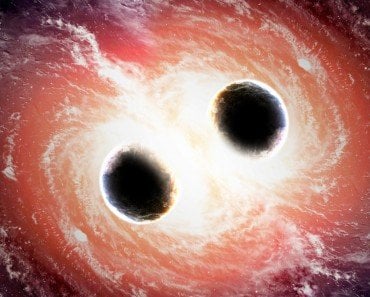
Black holes emit what’s called Hawking Radiation which if properly harnessed can generate enough electricity to power an interstellar ship!
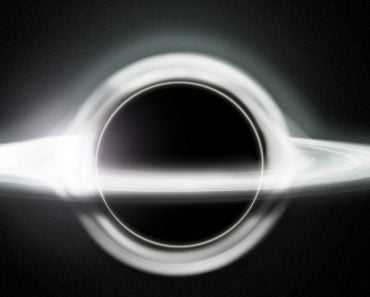
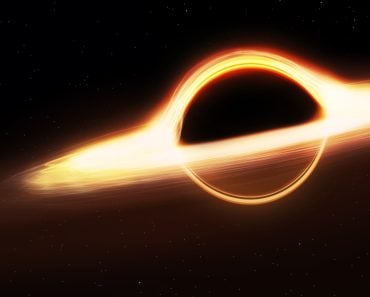
Ever since theoretical physicist John Wheeler coined the term “black hole” during his 1967 talk at the NASA Goddard Institute of Space Studies, these celestial objects have made a permanent home in pop culture and science fiction. From Star Trek to Interstellar and everything in between, black holes have become ingrained in scientific folklore.
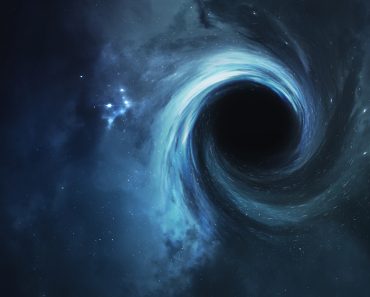
However, while movies, comics and TV shows have made global audiences familiar with black holes, very few actually understand it. There is a lot more to black holes than just being large holes in space that are devoid of light. Theoretically, they can also be used as an energy source. Perhaps, they could even be a source powerful enough to fuel an interstellar ship. In fact, before scientists even began to consider the possibility, renowned science fiction author Arthur C. Clarke already had a black hole-powered starship in his story, Imperial Earth. However, before we tumble further down this rabbit hole, let’s try to better understand the concept of a black hole.
To be suitable, this black hole would have to be small enough to expel a significant amount of radiation, yet large enough that it does not immediately vaporize. We would have to establish a Goldilocks size of a black hole to be able to effectively use it as a power source. According to Hawking, we would need some kind of black hole generator, possibly created using gamma ray lasers and a spherical shield, to house this generator and the black hole itself. If we are able to accomplish this, we could generate enough energy to power our cities for generations.
What Is A Black Hole Starship?
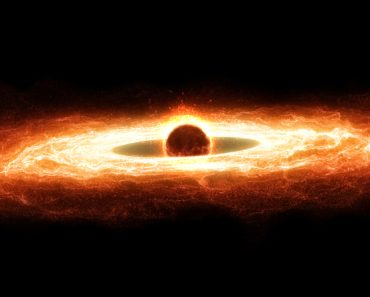
One of the most ambitious ideas for an interstellar starship in the scientific community is a black hole starship. Specifically, this would be a starship equipped with a ‘Kugelblitz Schwarzschild’ (SK) drive. Basically, it would be an engine with a tiny black hole at the centre of it, lending it incredibly powerful thrust.

Theoretically, an SK drive would trap the Hawking Radiation being emitted from the decay of the black hole and convert it to energy that would propel the star ship forward at nearly 10% the speed of light. Each black hole wouldn’t last for very long, owing to their small size and rapid decay, so the ship would come equipped with gamma ray lasers to produce black holes ‘on-demand’.
Yes, technically, a black hole-powered spaceship isn’t outside the realm of possibility. Once technology catches up with our ambitious theories, we might be able to leave Earth behind and bravely go where no one has gone before!
References (click to expand)
- J Wall. What Is a Black Hole? - NASA. The National Aeronautics and Space Administration
- Kugelblitz! Powering a Starship With a Black Hole - Space.com. Space.com
- Crane, L., & Westmoreland, S. (2009). Are Black Hole Starships Possible (Version 1). arXiv.
- Hawking Radiation - UCR Math. The University of California, Riverside
- ALL QUICK FACTS - Hubble Space Telescope. The Hubble Space Telescope