Table of Contents (click to expand)
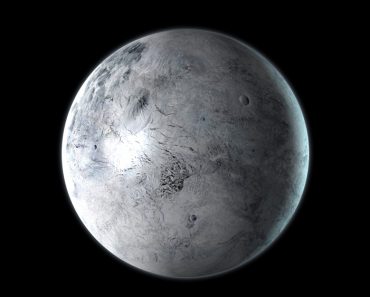
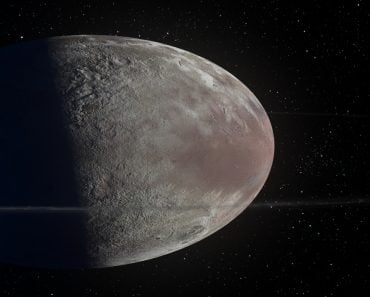
The reason why Pluto is not considered a planet anymore is because it does not satisfy the third requirement of being a planet, which is that it must have “cleared the neighborhood” of its orbit. This means that a planet must be the basic dominant gravitational body in its orbit, and Pluto is not. There are many objects similar to Pluto in and around its orbit, and Pluto is only about 0.07 times the mass of other objects in its orbit. In comparison, Earth has 1.7 million times the mass of other objects in its orbit.
A planet has to be the basic dominant gravitational body in its orbit, Pluto fails to meet this criteria, as there are many objects similar to Pluto in and around its orbit. Pluto is only about 0.07 times the mass of other objects in its orbit.
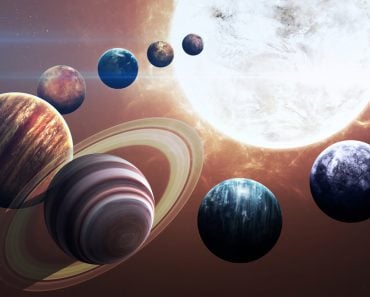
My (Mercury) Very (Venus) Educated (Earth) Mother (Mars) Just (Jupiter) Showed (Saturn) Us (Uranus) Nine (Neptune) Planets (Pluto). This rhyme helped countless middle school kids, including me, learn the names of the nine planets in our solar system, as well as their order in our solar system!
While Pluto may not be a planet anymore, its discovery has helped astronomers know more about our solar system and the region outside it. Therefore, it’s unlikely that our beloved Pluto will be forgotten anytime soon. In fact, NASA has launched a space craft named “New Horizions” that will study the dwarf planet Pluto. It was launched on January 19, 2006, and is expected to fly by Pluto on July 14, 2015.