Table of Contents (click to expand)
Lack of access to menstrual products, education on periods, and waste management all affect how women tackle their periods. Not having proper systems in place affects their participation in the economy and exacerbates existing inequalities.
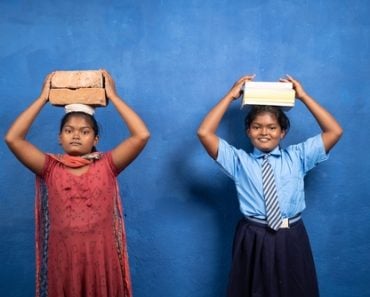
Imagine having to choose between spending a certain amount of money on home/school supplies versus buying a few sanitary pads EVERY MONTH. Imagine having to skip school again because there’s no washroom for you to go to and change your sanitary pad.
Many experts have found that most physical health risks linked to urinary tract infections and reproductive health result from the practices a woman must adopt during her menstrual cycle or period.
This is the reality that an estimated 500 million women face every month, as per the latest World Bank statistic. The statistics for developing nations are staggering in this regard. For instance, in India, 70% of reproductive diseases in women are caused by poor menstrual hygiene. Women often use dirty rags as a substitute for sanitary pads.
Added to this is the shame, as women must find ways to hide this rag, wash it and dry it—to ensure that no one knows they are menstruating.
The statistics get daunting depending on the number of people living below the poverty line in a country, as it involves tough choices, such as buying a bag of wheat versus buying a sanitary pad.
Recommended Video for you:
Period Poverty
The lack of access to menstrual products (tampons/pads/cups), hygiene facilities, education, and waste management comprises the whole gamut of what experts have recently termed period poverty.
As global citizens, we have come a long way in understanding and improving access to menstrual products compared to 100 years ago, but we still have a long way to go.
Eliminating period poverty is further under threat now due to COVID–19. There is increasing violence and challenges to access education and affordable healthcare that has reassigned a lower priority to eliminating period poverty. This shift has disproportionality hit young women, and in some countries, initiatives have taken a backseat in light of other priorities.
Finally, policies need to focus not just on improving access to these products by reducing taxes. Access must encompass improving the availability of menstrual products in public places, and access to clean toilets.
A collective effort must be put into educating girls and boys about the relevant aspects of menstrual cycles. Women must also be educated on the various products used and healthy practices that need to be adopted during menstruation.
References (click to expand)
- Menstrual Health and Hygiene - World Bank. The World Bank
- Bobel, C., Winkler, I. T., Fahs, B., Hasson, K. A., Kissling, E. A., & Roberts, T.-A. (Eds.). (2020). The Palgrave Handbook of Critical Menstruation Studies. (C. Bobel, I. T. Winkler, B. Fahs, K. A. Hasson, E. A. Kissling, & T.-A. Roberts, Eds.), []. Springer Singapore.
- Even in the U.S., poor women often can't afford tampons, pads. Reuters
- Period Products Act comes into force - gov.scot. The Scottish Government