Table of Contents (click to expand)
Spartans fought in the Greek hoplite phalanx: tightly packed ranks of heavy infantry, locked behind overlapping bronze and wood shields with long spears jutting out over the top. Each soldier had been hardened from the age of 7 by the agoge, the Spartan military upbringing, and trained to hold the line and move as one. The result was a formation almost no rival could break, until the Thebans cracked it at the Battle of Leuctra in 371 BC.
When you think back through history, there are many legendary empires and fighting forces, usually led by brilliant commanders and revered for their ferocity in battle. From the Vikings and the Mongols to the Roman Legion and Samurai warriors, we are fascinated by incredible fighting cultures. Perhaps more impressive than any other warrior culture, the Spartans remain respected as the greatest fighters the world has ever known.
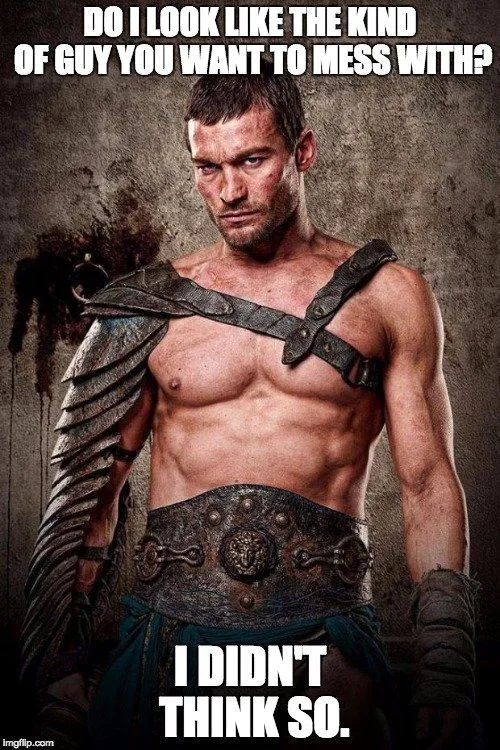
This leads to an obvious question…. what made them so great? Well, an obsession with war and military-mindedness that pervaded every aspect of Spartan life is the easiest explanation, but there’s a bit more to it than that…
The Spartan War Machine
One effective method of developing the greatest fighters is to focus your entire culture around supporting the military. According to a famous story told by Plutarch (writing roughly 600 years after the fact), newborn Spartan boys were inspected by the elders, and any judged “ill-born and deformed” were left to die at the Apothetai pit on Mount Taygetus. Modern scholars treat this largely as legend: no earlier source corroborates it, and a 2007 excavation of the supposed pit by Theodoros Pitsios found only adult remains, consistent with the disposal of criminals. What is well-attested is that at the age of 7, Spartan boys were taken from their homes and entered the state-run military upbringing called the agoge.
For the next twenty years or more, the young men of Sparta were trained in military history, tactics, strategy and fighting skills. Sparta’s warlike nature, particularly against its neighboring city-states of Greece, meant that they were in a perpetual state of preparedness, so a constant supply of talented, devoted soldiers was essential.
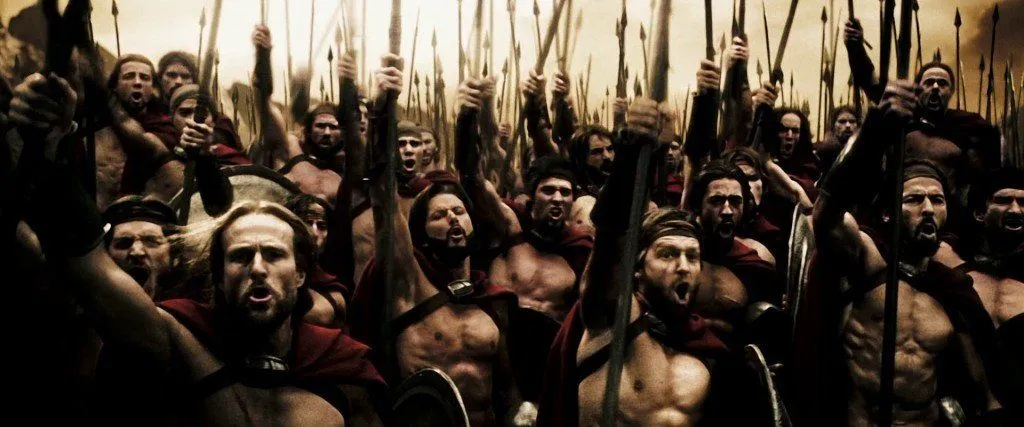
Those young men who didn’t pass the agoge by the age of thirty would not be made full citizens (Spartiates) of the Spartan state, and would not be granted land in exchange for their military service. After more than two decades of training, if a man became a full citizen of Sparta, he could take up no other profession or trade that would distract him from his sole responsibility as a warrior. This made the core of Sparta’s army the sort of muscled near-gods popularly depicted in movies such as 300.
This unique social structure meant that being a soldier was the only way to participate in the state and earn respect. Two other classes of citizens also existed. Perioeci were non-citizens who lived nearby and supported the Spartan war effort in other ways, as merchants, craftsmen and other infrastructural roles. Helots were state-owned serfs, and represented the majority of the population. Everything in the Spartan culture existed to serve and strengthen the military might of the city-state. However, that doesn’t fully explain Sparta’s incredibly successful military history.
Tricks Of The Spartan Army
Not only were their warriors incredibly well-trained, but they were also disciplined and taught to fight in a united group. There was no room for an “every man for himself” mentality. Most Greek city-states utilized the phalanx formation, which consisted of an undefined group of men in a tight, rectangular formation, and covered thoroughly with large shields on every side.
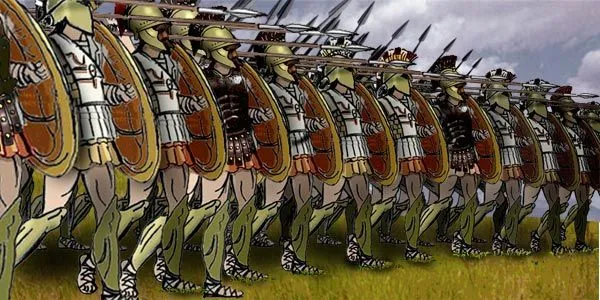
These phalanxes would work as a cohesive group, where spear-wielders would position their spears over the tight line of large shields, making forward assaults on the formation very deadly. If any man in the phalanx line fell, he would be immediately replaced by another from behind.
This wasn’t a unique strategy in ancient Greece, but Spartan strength and discipline made their phalanxes particularly unbreakable, until the Theban general Epaminondas finally cracked one at the Battle of Leuctra in 371 BC by stacking his own left wing fifty ranks deep. Spartiate numbers swung wildly across the centuries: around 8,000 full citizens at the height of Persian-war Sparta (480 BC), with 5,000 fighting at Plataea, but barely 1,000 by Leuctra. Whatever their size, the army was further subdivided into smaller messes and units that learned to work and fight as a single body.
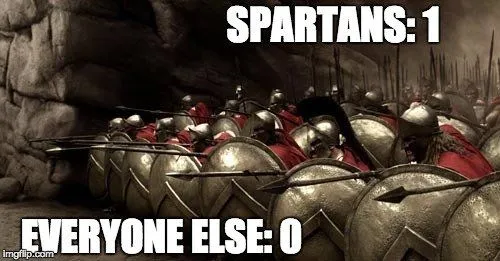
This efficient system helped Sparta defend against its many enemies by sending trusted groups of fighters to eliminate threats, without having to dedicate too many troops and weakening the defenses elsewhere.
While strategy was a crucial element of Spartan military success, honor and nobility were also crucial aspects of their philosophy. For that reason, guerrilla fighting tactics and other approaches to victory were looked down upon, as they were seen as ignoble. In Spartan society, only two types of people were allowed to have gravestones, women who died during childbirth and men who fell in battle. Facing your enemy and overcoming them through strength and savvy was the Spartan way, and no technique was better than the phalanx to do that.
Tools Of The Spartan Trade
In terms of weapons and equipment, Spartan battle gear evolved gradually over time. Greek heavy infantrymen were called hoplites, after the word hopla (their arms and equipment as a kit); the round shield they carried was actually called the aspis, even though pop history often calls it the “hoplon”. Each hoplite was covered by a bronze breastplate, a helmet equipped with cheek guards, greaves and shin armor. The shield itself was made of bronze and wood, and protected warriors from chin to knee.
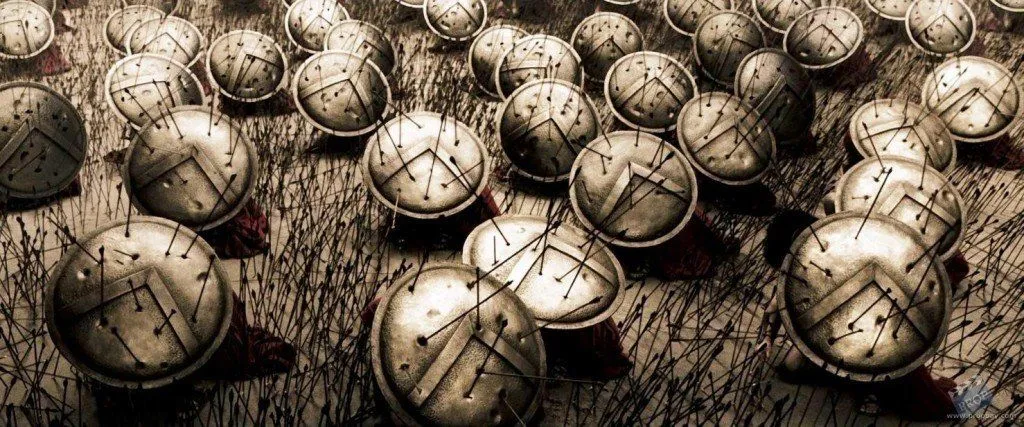
As for weapons, Spartans preferred the use of spears, called doru, which had a spearhead at one end and a spike at the other. Each soldier also carried a short sword, called a xiphos, which had a slightly curved blade and helped Spartans fight in close combat situations. Unlike many other Greek city-states, Spartan xiphos were about 25% shorter, giving them more flexibility and success in their phalanx formations. A different type of sword, a kopis, was used by some Spartans, and this particularly brutal, short sword was employed for hacking violently and quickly at enemies. Many Spartan warriors also bore javelins to pierce the armor of approaching enemies. Or sometimes, their faces, as you can see in this clip from Zach Snyder’s cult classic, 300.
Spartan Leadership, Loyalty And Legacy
With violence and strength being such critical elements of the society, it is a wonder that there weren’t more violent uprisings or coups. However, as mentioned earlier, Spartan warriors were not only taught how to fight, but also imbued with a sense of honor and devotion to their city-state. Their individual accomplishments did not matter, only their role in the greater achievements of the Spartan state were considered important.
Furthermore, with enemies pressing in from every side, both foreign powers and other Grecian city-states, Spartans had to be uni-directional in their mindset, and the strict rigidity of hierarchy and social structure kept soldiers and citizens alike in line.
The legends of Spartan military might will surely persist, and while some of their exploits have reached Herculean standards, much of the admiration for Spartan military might is well-deserved. At the Battle of Thermopylae in 480 BC, Leonidas and his three hundred Spartans (plus a few thousand allies) were ultimately overwhelmed and the pass fell, but their three-day stand against Xerxes’s vastly larger army became the defining symbol of Greek resistance. The Persian invasion was finally stopped at sea at Salamis later that same year, and then crushed on land at Plataea in 479 BC, when Spartans again led the Greek line. Given Greece’s key role as the birthplace of western society, Spartan heroics on the battlefield are something we should still respect to this day.
References (click to expand)
- Sparta: Definition, Greece & Peloponnesian War - HISTORY. History
- Agoge - Wikipedia. Wikipedia
- Battle of Leuctra (371 BC). Encyclopaedia Britannica.
- Battle of Thermopylae (480 BC). Encyclopaedia Britannica.
- Perioeci - Wikipedia. Wikipedia
- Spartan army - Wikipedia. Wikipedia
- Spartan Military. ancientmilitary.com
- Phalanx - Wikipedia. Wikipedia