Table of Contents (click to expand)
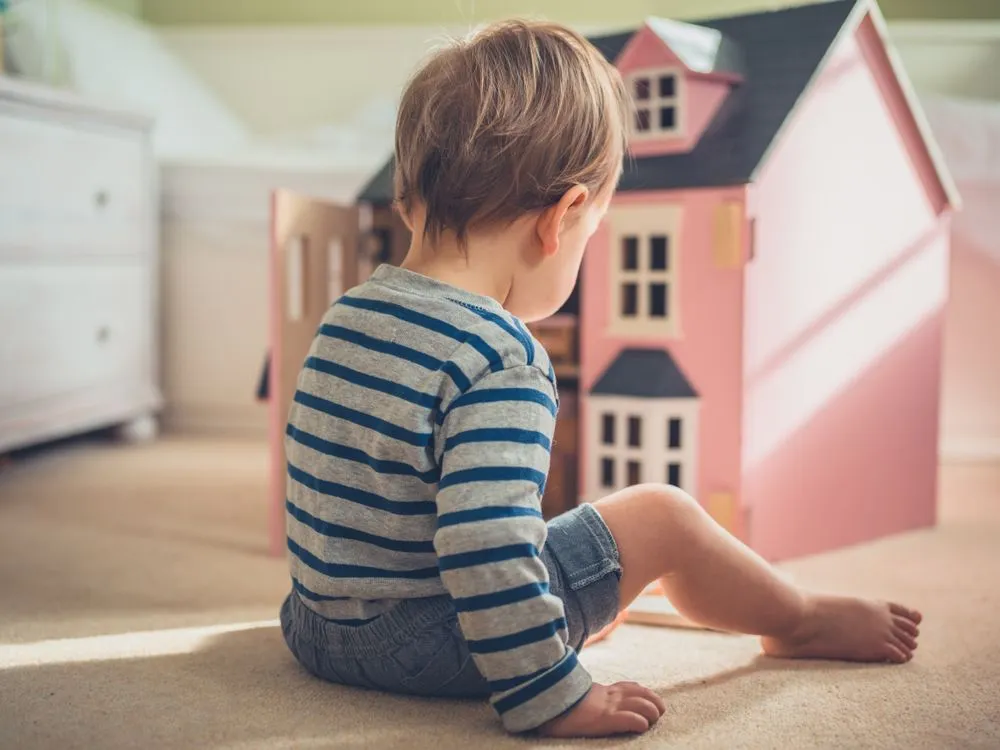
Boys are often steered away from dolls because of long-standing gender stereotypes that label dolls as feminine. These stereotypes are reinforced by toy marketing, color-coded aisles, and the people in a child's life. Research shows gendered toy preferences appear as early as 18 months and become robust by age 3, but they are not innate; they are heavily shaped by what adults hand children and how toys are marketed.
While there aren’t any hard and fast rules regarding parenting and the gender-influenced choices for your children, there are still some old modes of thinking that prevail. The belief that pink is for girls and blue is for boys remains deeply engrained, such that many parents are a bit hesitant when their child demands something outside the perceived gender norms.
This brings up the question: is it wrong to want our child to fit into gender norms? Not necessarily, but is it wrong to gradually steer them towards what is considered masculine and what is considered feminine? In the past, and sometimes to this day, why has it been considered shameful if a boy wants to play with dolls or when girls want to play with toy cars? Let’s dig deeper and find out…
What Are Stereotypes?
Stereotypes refer to holding oversimplified or over-generalized beliefs about a particular group in society. This group can be formed on the basis of sex, nationality, race, religion, culture, socioeconomic status etc.
Basically, anything and everything that has certain similarities is grouped and labelled in order for us to better understand the world around us. Think of it in this way; is it easier to find notes in your backpack when you have labelled files for science, history and geography, or is it better to keep them all in one file and search through the whole stack for one particular thing? This is how stereotyping helps, in theory.
While it does help us understand the world, it’s a lazy form of work by the mind that all humans do. Just because someone belongs to a particular nationality or religion does not mean that they will lack individual differences and unique qualities that sets them apart from the qualities of their most obvious label.

What Are Gender Stereotypes?
Gender stereotypes refer to the beliefs, behaviors and roles that are assigned to individuals based on their gender. This means that society predetermines how males and females ought to behave in society. Females are commonly stereotyped as overly emotional, while males are stereotyped as rational and competitive.
Due to this stereotype, men who display emotions of affection or tears are often humiliated because that’s not what the society considers to be a manly characteristic. In the same way, if a woman wants to enter the professions of law or business, she is not universally encouraged, as that is not what is expected from a woman!
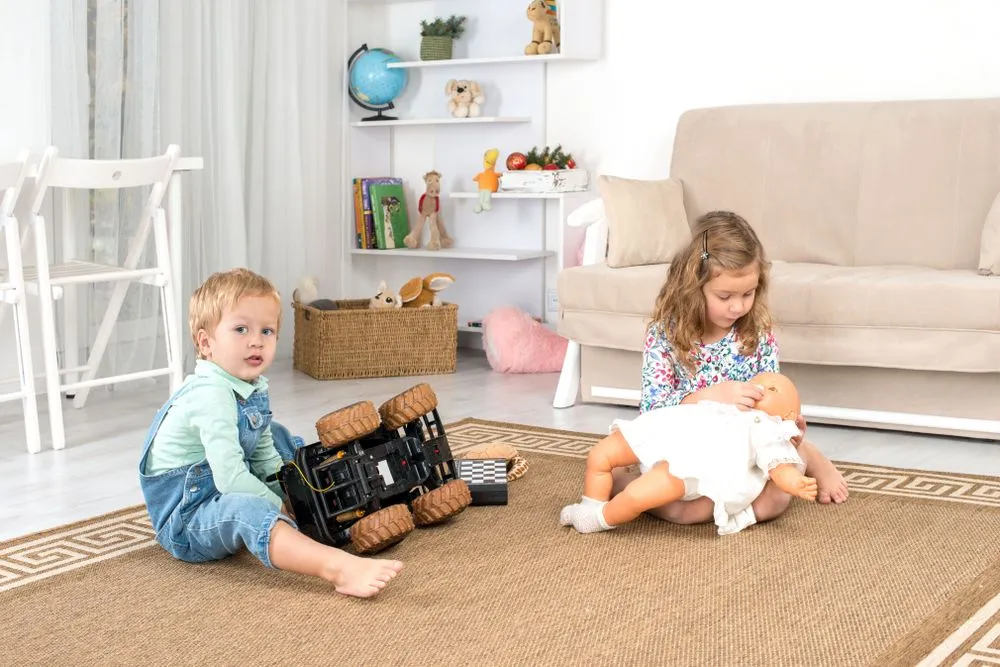
So how does this have any connection with boys not being allowed to play with dolls? Determining career paths based on gender norms is a much later stage of how gender stereotyping affects our lives. However, it starts as early as age 2 or 3, when children are taught to socialize based on gender norms, with things as small as parents telling them what toys are appropriate for their gender. Boys are given cars, superheroes, monsters and ‘manly’ things to play with. Girls are given dolls, kitchen sets, and craft sets to play with. However, if boys want to play with dolls, they’re often discouraged because of gender stereotypes. This early socialization builds the path to career choices, where women naturally take up nurturing roles and men become more ambitious and competitive.

Are Gender Stereotypes Innate In Children Or Are They Developed By Society?
As we all should know by now, there is a difference between gender and sex. Sex is a purely biological factor of being a male or female, depending on your reproductive parts. Gender, on the other hand, refers to the expected role that one is required to play as a male or female. It refers to the social roles attached to the sex of a person. This clearly indicates that gender stereotyping is not natural.
To show that such preferences are not entirely innate, developmental psychologists have tracked when these tastes actually emerge. Serbin and colleagues (2001) found that gender-typed visual preferences for toys appear as early as 18 months, and a large meta-analysis by Davis and Hines (2020) covering 75 studies confirmed that boys and girls show robust preferences for traditionally gender-typed toys, but with substantial overlap and with effects that are highly sensitive to how toys are presented. In other words: there is some biological signal, but socialization and marketing do a lot of the work that adults often credit to "nature."
Marketing Of Toys Perpetuating Gender Stereotypes?
Types Of Toys
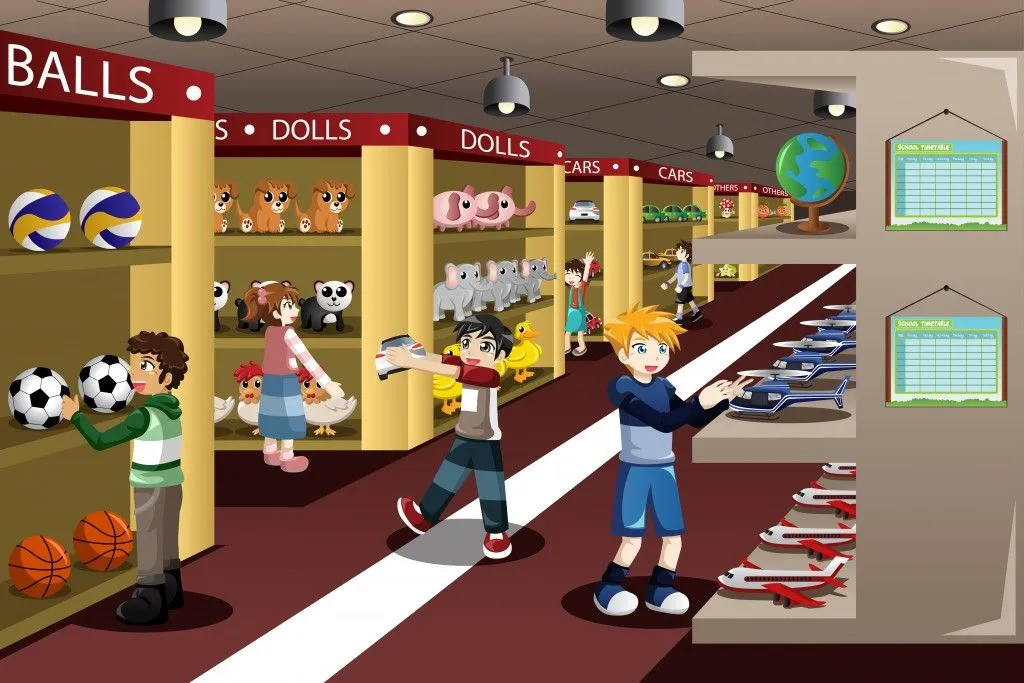
You will see the subtle (or outright and blatant) signs of gender-based marketing everywhere. Go to any toy store and you will find toys relating to construction, aggression, and action marketed towards boys, while toys related to grooming, appearance, and homemaking will be marketed towards girls.
This early distinction of toys being gender-specific impacts the long-term behavior deemed ‘appropriate’ for that gender. The UK-based parent campaign Let Toys Be Toys, which has been pushing back against gendered marketing since 2012, has documented just how lopsided this is: in its 2016 catalogue research, 97% of children shown with weapons or war toys were boys, while girls accounted for just 11% of children shown with vehicles. This also has an impact on boys displaying behaviors of aggression and control, which is ‘expected’ of them, whereas girls instead become passive and nurturing.
Colour Palettes
Apart from the category of toys showing gender bias, the colour palettes are also chosen very carefully by toy marketers. Bold colours are generally assigned for ‘boy toys’ and pastel and light colours are often marketed towards girls. A widely-cited study by Auster and Mansbach (2012) analysing the Disney Store website found that boys’-only toys were dominated by red, black, brown and grey, while girls’-only toys were overwhelmingly pink and purple. Since boys are stereotyped and encouraged for being dominating, the choice of bold colours like red and black reiterates that message; the pink-and-purple coding on the girls’ aisle does the opposite.

When children emerge from the womb, they have no idea what gender-based roles are expected of them. Any such beliefs are taught by society and this process begins with discrimination between choosing toys. This is when children start distinguishing each other based on their gender, but this is an outdated and foolish practice that should be eliminated. The marketing of toys should be gender-neutral, and we should gradually do away with this idea of pink vs. blue being the fundamental line upon which we define the complex and beautiful development of boys and girls.
Is It Actually Harmful For Boys To Play With Dolls?
For all the hand-wringing, the short answer from the people who actually study child development is no. The American Academy of Pediatrics, the leading US body of children's doctors, describes cross-gender play as a normal part of how children explore identity, and it encourages parents to offer every child a wide range of toys, baby dolls and action figures included. A boy cradling a doll is not a warning sign; it is simply a child doing what children do, which is rehearsing the world through play.

If anything, the research points in the opposite direction. Pretend play in general is linked to stronger empathy and social understanding: studies tie it to a more advanced "theory of mind" (grasping what other people are thinking and feeling), richer language, and better emotional self-regulation. Dolls are one of the classic props for exactly this kind of nurturing, role-playing pretend, whoever is holding them.
There is even brain-imaging evidence. A 2020 study from Cardiff University used functional near-infrared spectroscopy (fNIRS) to watch the brains of 33 children aged 4 to 8 as they played. Doll play, including when a child played alone, activated the posterior superior temporal sulcus (pSTS), a region involved in social processing and empathy, more than playing a game on a tablet did. Crucially, the researchers reported no difference between boys and girls; boys' brains showed the same social-processing benefit. A 2024 follow-up from the same lab, using a larger and more neurodiverse group of children, saw the same region light up during doll play. It is worth noting that the work was funded by Mattel, the company that makes Barbie, so it is best read as promising rather than the final word, but it lines up with decades of independent findings on the value of pretend play.
Boys Have Always Played With Dolls, We Just Renamed Them
Here is the twist that quietly undercuts the whole taboo: the idea that dolls are strictly a girls' toy is more a marketing decision than a fact of nature. Consider the most famously "manly" toy of the last century. When Hasbro launched G.I. Joe in 1964, it was a poseable, dressable figure of a soldier, which is to say, a doll. The company knew it, too. According to Smithsonian Magazine, Hasbro's president Merrill Hassenfeld ordered his sales force never to call the toy a doll in front of customers, and it was marketed instead as an "action figure." As the same article puts it bluntly, "G.I. Joe was a doll, of course."
So a boy pushing a superhero or a soldier figure around the carpet is, functionally, playing with a doll. He is doing the same imaginative, character-driven play that a child with a Barbie is doing; only the label on the box has been engineered to feel masculine. The old line that "boys play with soldiers, not dolls" is not biology talking. It is branding.
What's Changing? Gender-Neutral Toy Aisles And Cultural Shifts
The good news is that the wall between boy aisles and girl aisles is starting to crack. In 2015, Target became the first major US retailer to remove gendered signage from its toys and home aisles, after a viral complaint from a parent. Amazon, Toys"R"Us and several others have followed in various ways.
The biggest legal change came in 2021, when California passed Assembly Bill 1084. Effective 1 January 2024, it requires retailers in California with 500 or more employees to maintain a gender-neutral section for children's toys and childcare items, with fines of $250 for a first violation and $500 for repeats. It is the first US law of its kind.
Manufacturers have moved too, though less consistently. Mattel launched its gender-inclusive Creatable World dolls in 2019, designed so a child could style them as a boy, a girl, or neither; the line was a notable cultural moment, even though Mattel quietly paused new releases after 2021. The 2023 Barbie film, which earned over $1.4 billion worldwide, gave the world's most stereotyped doll a self-aware critique of gender roles, and helped relaunch grown-up conversations about who is "allowed" to play with what.
None of this means the stereotype is gone. Walk into most toy stores and you can still see pink and blue worlds neatly separated. But the cultural assumption that dolls are off-limits for boys is weaker today than it was even a decade ago, and a growing pile of research and policy is pushing in the other direction.
References (click to expand)
- Why it matters - Let Toys Be Toys. Let Toys Be Toys
- Children's toys: The backlash against pink and blue branding. BBC News
- Stereotypes - Gendered Innovations. Stanford University
- Gender stereotyped toys must be stopped, says women's rights charity. The Independent
- Toys for girls and boys show gender stereotypes at play. The University of Melbourne
- Serbin et al. (2001). Gender stereotyping in infancy. International Journal of Behavioral Development.
- Davis & Hines (2020). How large are gender differences in toy preferences? A meta-analysis. Archives of Sexual Behavior.
- California Assembly Bill 1084 (2021). Gender-neutral retail department for toys and childcare items.
- Auster, C. J., & Mansbach, C. S. (2012, June 26). The Gender Marketing of Toys: An Analysis of Color and Type of Toy on the Disney Store Website. Sex Roles. Springer Science and Business Media LLC.
- Hashmi, S., Vanderwert, R. E., Price, H. A., & Gerson, S. A. (2020). Exploring the Benefits of Doll Play Through Neuroscience. Frontiers in Human Neuroscience.
- Keating, J., Hashmi, S., Vanderwert, R. E., et al. (2024). Embracing neurodiversity in doll play. European Journal of Neuroscience.
- Keough, K. L. (2024). How Pretend Play Helps Children Build Skills. Child Mind Institute.
- Gender Identity Development in Children. HealthyChildren.org, American Academy of Pediatrics.
- Leibowitz, E. (2002). Macho in Miniature. Smithsonian Magazine.