Table of Contents (click to expand)
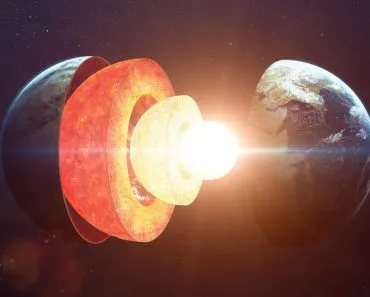
Mercury is a small, rocky (terrestrial) planet with an oversized iron-rich core that occupies roughly 85% of its radius and 55-60% of its volume - the highest core-to-planet ratio of any planet in the solar system. Above the core sits a thin silicate mantle (~300-400 km) and an even thinner crust (around 26 km), peppered with impact craters and ancient volcanic plains. By mass, Mercury is roughly 70% iron.
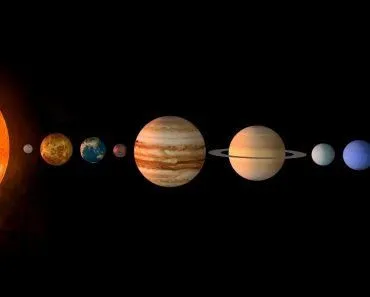
Our solar system is full of mysteries. The eight planets revolving around the sun are all very unique, yet still connected at a certain level. For instance, consider Earth and Mercury. Mercury is the smallest planet in the solar system, but its iron-rich core is enormous in relative terms, filling roughly 85% of the planet’s radius (only modestly smaller than Earth’s inner core, even though Earth itself dwarfs Mercury).
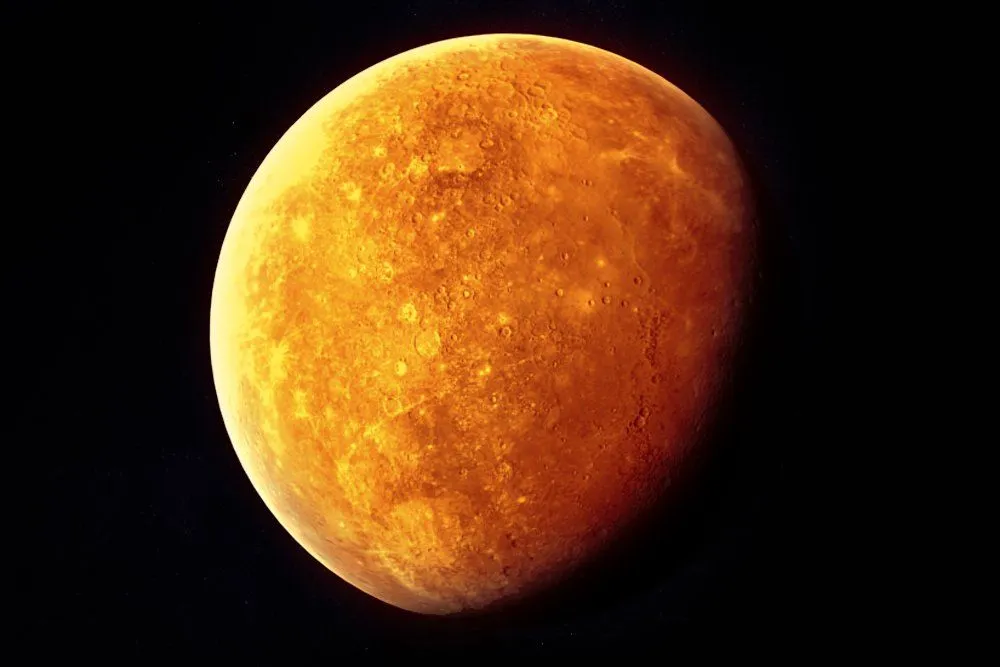
Similarly, the density of Mercury (5.427 grams per cubic centimeter) is quite similar to that of Earth, which makes scientists believe that Mercury has a composition similar to Earth. Given that, can studying Mercury help us better understand our own planet? Also, what is actually present inside that somewhat mysterious planet? You’ve come to the right place for these answers…
How Did We Learn About Mercury?
Mariner 10 was the first spacecraft to fly by Mercury. Launched by NASA on November 3, 1973, its main objective was to gather information about Mercury’s atmosphere and environment, and to analyze its gravity and spin rate. The spacecraft flew past Mercury a total of three times; its closest encounter with the planet was at a distance of just 327 km (203 miles). The next shuttle to visit Mercury relied heavily on the data generated by Mariner 10.
MESSENGER was another NASA spacecraft, launched in August 2004, which entered Mercury orbit on 18 March 2011 and spent the next four years circling the planet. The probe constructed the most detailed and accurate maps of Mercury to date and detected widespread carbon-rich material on the surface (most likely graphite), interpreted as remnants of an ancient primary crust. In April 2015, after running out of fuel, MESSENGER was intentionally crashed onto the surface, but it had already revealed many new truths about the composition of the planet.
The next mission, the joint ESA-JAXA BepiColombo, launched in October 2018 and completed its sixth and final Mercury flyby in January 2025; it is set to enter orbit around Mercury in November 2026, after which two orbiters (ESA’s MPO and JAXA’s Mio) will produce the first X-ray surface maps and high-resolution mineralogy of Mercury.
The interior of Mercury, like Earth, is divided into three distinct layers: the crust, the mantle and the core.
So, What Is Mercury Made Of?
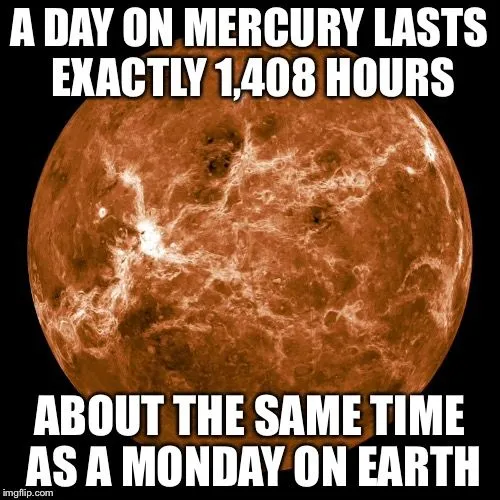
The outer core of Mercury is molten, just like the outer core of Earth, and is made of iron (Fe). Scientists once believed that even the inner core of the planet was molten, but the new analysis of data received from the Messenger proved otherwise. The inner core of the planet is solid, consisting of some silica rocks, but mostly iron. Mercury’s core contains more iron than any other major planet in the solar system. The metal composes roughly 70% of the planet’s total weight. This is why Mercury is so dense and heavy, and why its rotation speed is so slow. One day on Mercury is equivalent to 58 days on Earth. Geologists estimate that Mercury’s core occupies about 55% of its volume (on Earth, this proportion is 17%).
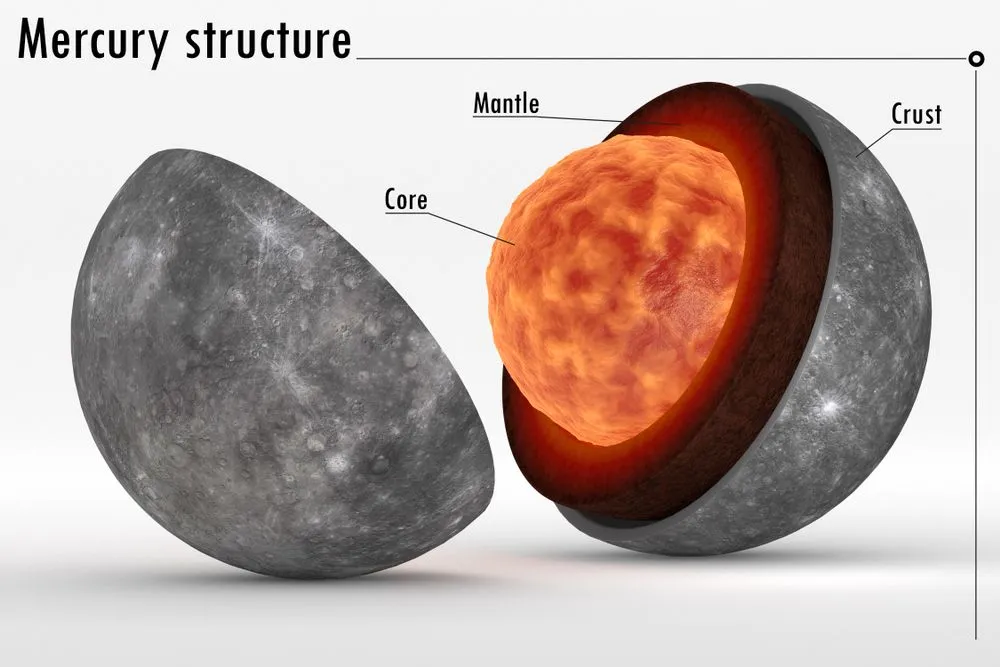
Above the core sits a silicate mantle roughly 300-400 km thick, made of silicates and metal-bearing minerals (including iron-rich phases). The crust of Mercury is thin but dense - a 2018 reanalysis of MESSENGER gravity and topography data by Michael Sori put the average crustal thickness at just 26 ± 11 km, an order of magnitude thinner than older estimates. The surface of this thin shell carries volcanic plains and craters that reveal a lot about the planet’s history.
Are There Volcanoes On Mercury?
Another fascinating fact about the geography of Mercury is the abundance of volcanoes on its surface. Volcanoes played a vital role in the formation of this planet. Images obtained by MESSENGER initially identified 51 pyroclastic deposits on the planet (later catalogues have expanded the count to more than 150 candidates). A pyroclastic flow is a flux of hot volcanic matter that leaves vents in the crust at a very high velocity. These flows, along with other fissures and vents, proved that the inner core of Mercury is a hot mix of silica and iron.
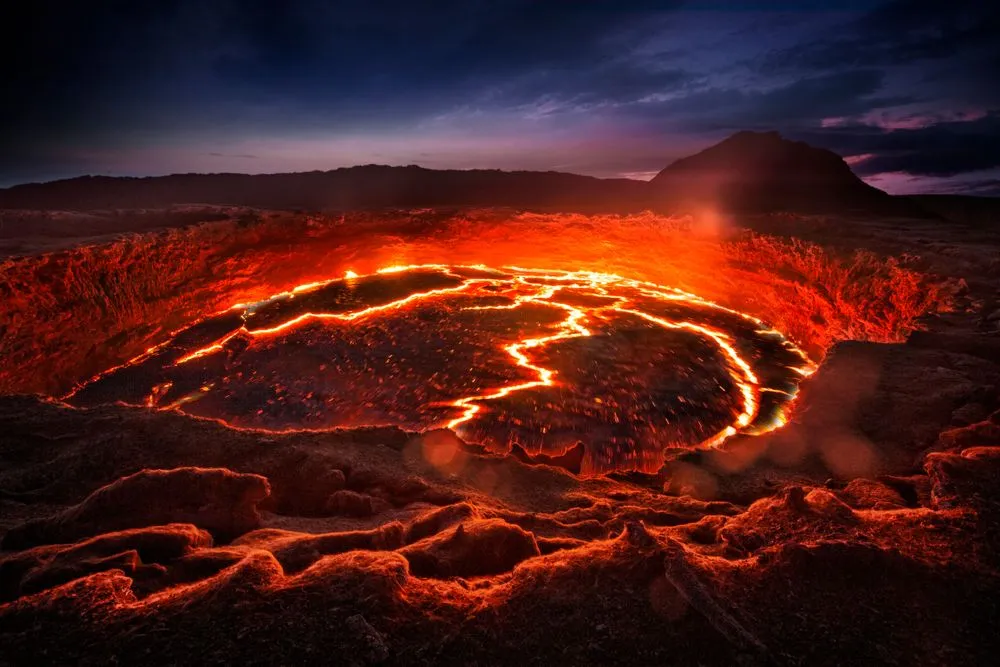
The fringes of Mercury’s smooth plains indicate that they were formed from solidified lava that flowed thousands of years ago. The images obtained by the Messenger shuttle suggested the presence of several low-profile shield volcanoes on the planet closest to the sun. A shield volcano is short in height (looks like a warrior’s shield place on the ground) and is composed of fluid lava flow oozing out from the inside of the planet.
Does Mercury Have Craters?
Hokusai is a rayed impact crater found on Mercury. A rayed crater is one that has fine radial streaks around it, which indicated that significant mass was ejected and thrown outwards during its formation. First observed at the Goldstone Observatory in 1991, this crater is named after Japanese artist Katsushika Hokusai.
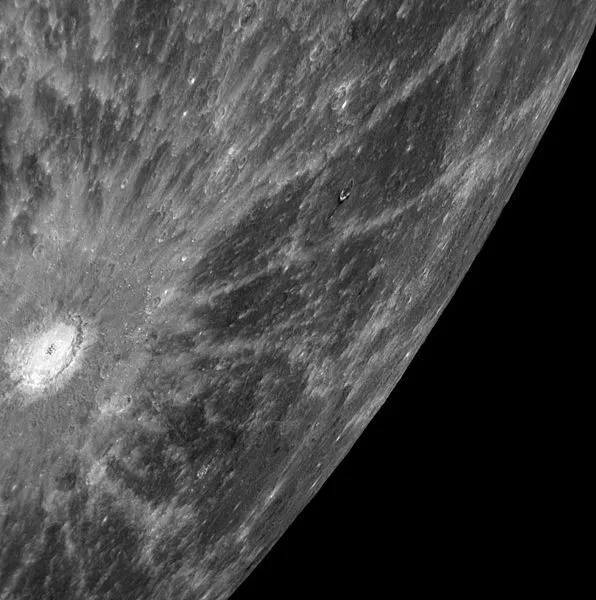
Debussy is another impact crater on Mercury, named after French composer Claude Debussy. It was first spotted in 1969 as a bright radar feature using the Goldstone radar antenna in California, then imaged in detail by MESSENGER in 2011 and officially named in 2010. The crater is about 80 km across and is just one of the many on the planet.
A Final Word
The Messenger mission was able to answer many questions regarding Mercury’s internal composition and surface, but many more intricacies remain to be discovered. Mercury has more than twice the amount of iron that Earth does, but how did this much iron end up on that planet? What about the potential presence of life? If the planet is so similar to Earth, there might be even more similarities that have yet to be discovered. Future missions into our solar system will definitely help us answer these exciting questions!