Table of Contents (click to expand)
- What Is Cosmological Redshift, And What Does It Do To Light?
- Does Redshifted Light Have Less Energy?
- Does The Energy Go Into Stretching Space?
- Does Redshifted Light Energy Become Gravitational Energy?
- Does A Photon Do Work On The Expanding Universe?
- Why Is Energy Conserved At All? Noether's Theorem
- What Is Still Conserved When Light Is Redshifted?
- If Redshift Loses Energy, Why Does Dark Energy Gain It?
- So, Where Does Light's Energy Go When It Is Cosmologically Redshifted?
Light from a distant galaxy arrives with its waves stretched longer, and longer waves carry less energy, so light stretched eight times over reaches us with one-eighth of the energy it started with. The missing energy does not go anywhere, because the universe has no grand total of energy for it to go missing from: energy only stays constant when the rules of physics work the same today as they did yesterday, and an expanding universe genuinely changes as it ages. Energy is still perfectly safe inside any small patch of space, which is why none of this changes anything on Earth.
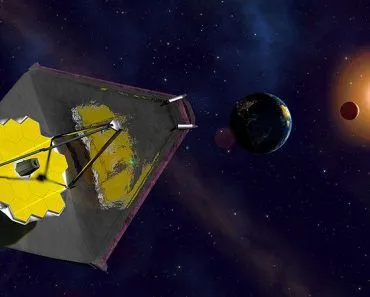
In July 2022, NASA released Webb's first deep field. It is a scrap of sky about the size of a grain of sand held at arm's length. It is packed with galaxies.
Light from those galaxies set out as visible and ultraviolet light. It arrived as infrared. The James Webb Space Telescope was built to see in infrared for exactly this reason.
Infrared light carries less energy than ultraviolet light. Quite a lot less. So a photon (that is just a single particle of light) left home 13 billion years ago and handed the telescope a fraction of what it set out with.
Energy is not supposed to just vanish. You have believed that since roughly the age of twelve, and your science teacher was not lying to you. So where did the rest of it go?
Go looking and you will find three confident answers, repeated everywhere. All three are wrong. The real one is stranger, and better.
What Is Cosmological Redshift, And What Does It Do To Light?
Start with the wave. Light travels as a wave, and a wave has crests. The distance between two neighboring crests is its wavelength, written λ (the Greek letter lambda).
Wavelength is what your eye reads as color. Long waves look red. Short waves look blue. Shorter still and you leave visible light behind, into ultraviolet, where your eye stops being consulted.
Here is the part that matters. Wavelength is energy. A stretched-out wave carries less energy than a scrunched-up one. NASA puts it simply: "Moving along the spectrum from long to short wavelengths, energy increases as the wavelength shortens." Short wave, lots of energy. Long wave, less energy. There is one tidy equation for it if you want one, E = hc / λ, where the h and the c are just fixed numbers that never change. Only λ ever moves.
Now bring in the universe. Light that crosses a huge stretch of space arrives with a longer wavelength than it started with. Astronomers call this cosmological redshift, and they keep score with a number called z.
The rule for z is easier than it looks. Add 1 to it, and that is how many times longer the wave got.
stretched wavelength = (1 + z) × original wavelength
So z = 1 means the wave doubled. z = 7 means it got eight times longer.
That is the whole toolkit. It is not a big toolkit. Stretch the wave, and you have lowered the energy. Hold on to that one sentence, because everything else here is an argument about it. The same stretching is also why the most distant galaxies race away from us so fast.

Does Redshifted Light Have Less Energy?
It does, and you can work it out yourself in three steps. Take a galaxy at z = 7, which Webb photographs regularly.
- Add 1 to z. That gives 8.
- So the wave arrives eight times longer than it left.
- Eight times longer means eight times less energy.
The photon shows up carrying one-eighth of what it set off with. Seven-eighths never makes it onto the invoice.
This is not some tiny effect you need fancy instruments to notice. The most stretched light we know of is the cosmic microwave background, the leftover glow of the young universe. It set out when everything was about 3,000 degrees above absolute zero, hot enough to shine like the surface of a star. NASA's COBE satellite measured what reaches us now: 2.725 degrees above absolute zero. Barely above nothing at all. Those waves got stretched about 1,100 times over.
Before going further, one tempting idea needs closing off. Maybe light just gets tired on a long trip and quietly loses energy, and space is not stretching at all.
It does not, and there is a clever way to catch it out. If space really is stretching, then distant events should also look slowed down, like a video played at half speed. Tired light predicts no slow motion at all. Astronomers checked by timing how long 1,504 exploding stars took to fade. The distant ones really did fade in slow motion, by almost exactly the amount stretching space predicts.
So the energy really is lower. Something has to explain the difference. There are three popular answers. Let us look at each of them.

Does The Energy Go Into Stretching Space?
This is the answer you meet first, and it usually arrives with a balloon diagram. Space itself expands. Dragging the light wave along costs energy, and the photon pays.
It is a lovely picture. The scientists who study this for a living cannot stand it.
To see why, you need one idea, and it is worth getting properly because the next section uses it too. Measuring something always means picking a starting point. Your desk is two meters from the window. The same desk is four meters from the door. Both are true. You just changed where you measured from, and the desk did not budge.
Physicists call those choices labels. Here is the thing about labels: nothing real ever depends on them. Your desk does not slide across the room because you switched to measuring from the door.
The expansion of the universe lives in the labels. Astronomers measure space with a ruler that grows as the universe grows, because it makes their math much easier. Smart choice. But a growing ruler is not a growing force. It cannot grab anything.
John Peacock wrote a whole textbook on cosmology, and he also wrote a paper mostly to complain about this explanation. He calls it "the 'expanding space' fallacy," which is a polite way of saying people have been fooled by their own ruler. His point is that expansion does nothing to things nearby. It does not tug on your desk, and it does not tug on a passing wave of light.
Here is the test that settles it. Zoom right in on one meter of the light's journey. In a patch that small, everything looks completely ordinary, with no stretching going on anywhere. And in that ordinary patch, nothing is pulling on the light. The rules for how light travels contain nothing that makes a wave grow longer.
So "expanding space" describes what we see. It does not cause it. Peacock's verdict on treating it as a real force is that the idea "is profoundly anti-relativistic." As insults in cosmology go, that one lands.

Does Redshifted Light Energy Become Gravitational Energy?
Answer two sounds smarter. The energy was not destroyed, it got handed over to gravity, the way a ball you throw upward trades speed for height.
The problem is that gravity's energy has no address.
For everything else in physics you can point at a spot and say how much energy is sitting right there. A stretched rubber band, a moving car, a hot cup of tea. Gravity refuses to play along. Ask where the gravitational energy is and physics gives you no straight answer.
And when physicists try anyway, the labels come back to bite. The physics FAQ at the University of California, Riverside, run by Michael Weiss and John Baez, spells out how badly it goes. Pick one set of labels and the math claims there is gravitational energy sitting in totally empty space, where obviously there is none. Pick a different set and the same energy "can be made zero at any chosen point."
Read that again. The energy you just said the photon handed to gravity can be made to disappear anywhere you like, just by measuring from somewhere else. Nothing real changed. Only the paperwork did.
So the experts treat this one as a matter of taste, not fact. Some are happy to say the light's energy became gravity's energy. Others say it is simply gone.
An answer that vanishes when you change your labels is not an answer. It is a filing system.
Does A Photon Do Work On The Expanding Universe?
Answer three gets closest to being right before it goes wrong.
You have met this idea before, probably without noticing. Press the plunger of a bicycle pump and the air inside gets warmer. Let a can of compressed air spray out and the can goes cold. Gas that expands loses energy, and gas that gets squeezed gains it. There is a proper equation for it, and physicists can write down a matching one for the whole universe as it grows.
Here is the good part: it works. The equation correctly predicts that light thins out faster than ordinary matter does as the universe expands. Matter just gets spread thinner, the same stuff sitting in more room. Light gets spread thinner and each individual wave loses energy on top of that. That second bit is exactly the stretching we have been talking about, and the math nails it.
So the answer sounds perfect. The universe expands, light does work like gas pushing a plunger, and the energy goes into the push.
Now find the plunger.
When gas expands it pushes on something: a piston, a balloon wall, the air outside. That is what doing work means. Something gets pushed. But the universe is not expanding into anything. There is no wall, no outside, nothing standing there receiving the push.
The math is right. The story is made up.
Why Is Energy Conserved At All? Noether's Theorem
So far the popular answers have been wrong for interesting reasons. Now the question gets its turn.
Nobody ever tells you why energy cannot vanish. It gets handed to you as a rule, like a law you are not allowed to question. But it does have a reason, and a mathematician named Emmy Noether worked it out in 1918.
Her discovery was this: every rule about something staying constant comes from something else staying boring.
That sounds like a joke. It is not. Think about what "boring" means here. Move your lab a mile east and the laws of physics are identical. Do your experiment next Tuesday instead of today and the laws are identical again. Nothing about physics cares where you are or when you are. Those are the boring bits.
Noether proved that each boring bit hands you a quantity that cannot change. Because physics is the same here as over there, momentum can never change. And because physics is the same today as it was yesterday, energy can never change.
Read that last one again, because everything hangs on it. Energy stays constant because yesterday and today run by identical rules.
Now look at our universe. It is expanding. It was smaller yesterday and it will be bigger tomorrow. Today genuinely is not the same as yesterday.
The boring bit is gone. And when the boring bit goes, so does the rule that came from it.
Sean Carroll, a cosmologist, says it about as bluntly as anyone: "back when you thought energy was conserved, there was a reason why you thought that, namely time-translation invariance." Fancy phrase, simple meaning. Yesterday matched today. In our universe, it does not.
So look again at the question we started with. "Where did the energy go?" quietly assumes the universe has a grand total of energy, that this total is a fixed number, and that the photon's missing share got subtracted from it.
There is no such number.

What Is Still Conserved When Light Is Redshifted?
At this point it is easy to panic and decide physics has sprung a leak. It has not, and your science teacher is still right. The first law of thermodynamics has not been cancelled.
The trick is that energy conservation comes in two sizes, and only the small one survives.
The small version: energy cannot appear or disappear inside any small patch of space. This one is rock solid, everywhere, always, no exceptions. It is why nothing here threatens your kettle, a rocket launch, or your chemistry homework. Every experiment humans have ever run happened inside a small patch.
The big version: add up all the energy in the entire universe and that grand total stays fixed. This is the one that fails.
And the reason is almost boringly practical. Adding things up means comparing them. To total the energy of the universe you would have to compare something measured here with something measured a billion light years away, in a part of space that has been stretching the whole time your measurement was travelling. There is no agreed way to line those two numbers up.
So the grand total never gets worked out at all. That is the part worth being precise about. The total is not defined and then broken. It was never defined in the first place.
Some imaginary universes would not have this problem. A universe sitting perfectly still would be fine, because nothing stretches while you measure. So would one that empties out into nothing far away, because that emptiness gives you a fixed thing to measure against. Ours is neither. It is expanding, and it looks much the same everywhere you go, so there is no still corner to anchor the sum.
That is the whole loophole. It is a fact about the shape of our universe, not a hole in anybody's knowledge.
If Redshift Loses Energy, Why Does Dark Energy Gain It?
There is a second half to this puzzle, and it is strange that almost nobody worries about it.
Empty space is not actually empty. It contains a faint amount of energy, called dark energy, and here is the peculiar part: every cubic meter of space holds the same amount of it. Always. Make more space, and you have simply made more dark energy.
As Carroll points out, the total then has nowhere to go but up. The universe grows, the amount per cubic meter stays put, so the grand total climbs, second after second, forever.
Nobody writes worried posts asking where all that new energy is coming from.
That reaction is the interesting bit. Energy going missing feels like theft, so we demand an explanation. Energy showing up free feels like a gift, so we pocket it and say nothing. They are the same fact seen from opposite ends. Once there is no fixed grand total, it is free to fall or to climb. If the photon's missing seven-eighths bothers you, the dark energy should bother you exactly as much.

So, Where Does Light's Energy Go When It Is Cosmologically Redshifted?
Nowhere. Not because it got destroyed, but because "where did it go" is a question about a grand total that was never there to take from.
There is one last way to see this, and it turns the whole thing from a technicality into something you already understand.
Two physicists, Bunn and Hogg, point out that this stretching is really just a huge pile of ordinary Doppler shifts, the same effect that drops the pitch of an ambulance siren as it races past you. Picture a long line of observers stretching from that distant galaxy all the way to your telescope, each one drifting slowly away from the one behind. Each sees the light as a little redder than the person before them did. Stack up billions of years of those tiny shifts and you get the full stretch.
Why does that help? Because you already accept this sort of thing without blinking.
Throw a ball on a moving train. To you, sitting on the train, it is a gentle toss. To someone on the platform watching the train fly past, that same ball is hurtling along with far more energy. Same ball, two completely different amounts of energy, and nobody calls it a crisis or demands to know where the extra came from.
Energy was never one fixed number floating out there in space. It has always been a number you measure from somewhere. The light we have been following was released by one observer and caught by another, and those two have been drifting apart for 13 billion years.
Physicists do still argue about how to word all this. Some insist energy really is conserved, if you define your terms carefully enough. That argument is real, and it is an argument about vocabulary. Nobody disagrees about what the light does, or about what the telescope reads.
Which brings us back to the oldest light there is. It set out glowing at 3,000 degrees and arrives barely above absolute zero, so faint that we needed a satellite to find it at all. That drop is not a theft and it is not a leak. It is simply what light does in a universe that is not the same today as it was yesterday. And that difference between yesterday and today is the very thing that made anyone expect energy to hold still in the first place. How fast our universe is expanding is a genuinely open question. This one is not. It is just a much better question than it first looks.

References (click to expand)
- Bunn, E. F. and Hogg, D. W., "The kinematic origin of the cosmological redshift," American Journal of Physics 77, 688-694 (2009)
- Peacock, J. A., "A diatribe on expanding space" (2008)
- Weiss, M. and Baez, J., "Is Energy Conserved in General Relativity?" University of California, Riverside Physics FAQ
- Carroll, S., "Energy Is Not Conserved" (2010)
- Trodden, M. and Carroll, S. M., "TASI Lectures: Introduction to Cosmology"
- White, R. M. T. et al. (Dark Energy Survey Collaboration), "Slow supernovae show cosmological time dilation out to z ~ 1," Monthly Notices of the Royal Astronomical Society
- Noether's theorems, in "Symmetry and Symmetry Breaking," Stanford Encyclopedia of Philosophy
- COBE Science, NASA
- Anatomy of an Electromagnetic Wave, NASA Science
- Why the microwave, ESA / Planck
- Cosmological Redshift, COSMOS, Swinburne University of Technology
- Infrared Astronomy, NASA Webb Science Explainers