Table of Contents (click to expand)
Walking through a pine forest feels refreshing because pine trees release volatile organic compounds called terpenes (mainly alpha-pinene, beta-pinene and limonene) into the air. Inhaling these terpenes has been shown to lower cortisol, blood pressure and heart rate, and to raise natural killer cell activity, all of which adds up to the calm, restored feeling at the heart of the Japanese practice of shinrin-yoku (forest bathing).
Remember that refreshing feeling of going out to pick out a Christmas tree? Is that just the ‘spirit of Christmas’ or something more… scientific?
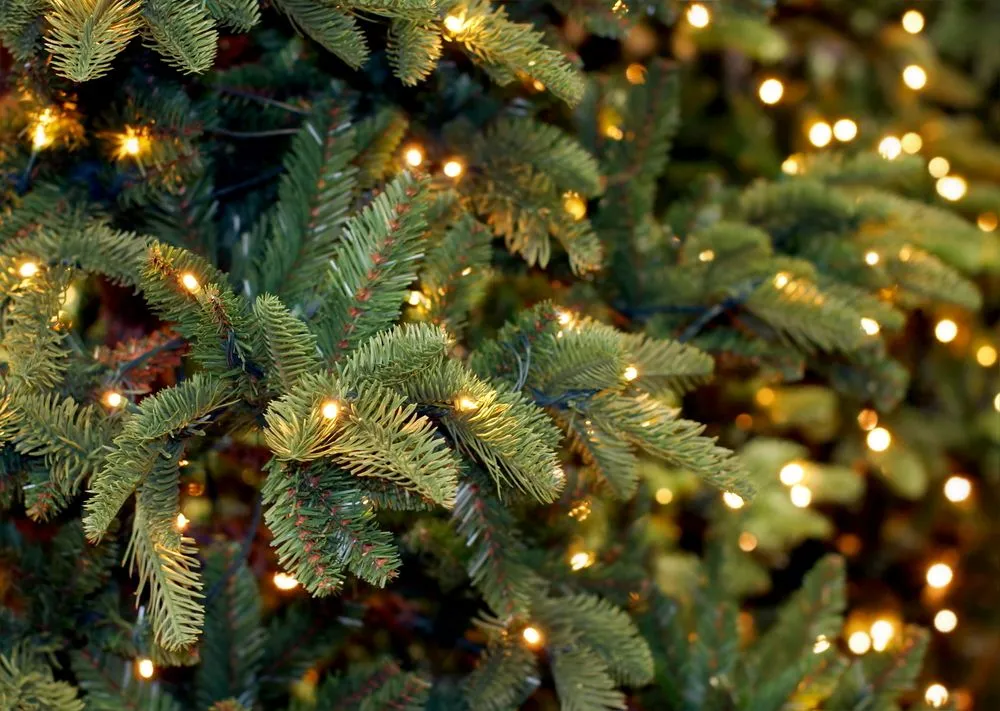
There’s no denying that a fresh pine scent wafting through the house is one of the best parts of Christmas, but did you know that what you’re smelling is one of the same aromatic terpenes you’ll also find in many full-spectrum cannabidiol (CBD) oils! You are smelling terpenes lingering in the air.
What Are Terpenes?
Terpenes are a group of naturally occurring organic compounds that are abundantly found in fruits, vegetables and flowers. They give plants their fragrance, taste and pigment. Unknowingly, we have tasted terpenes millions of times, whether it’s in a bite of mango or a fresh Caprese salad filled with tomato, basil and mozzarella.
Above all, terpenes are sought after for their medicinal applications. In 2013, researchers discovered that a certain class of terpenes called sesquiterpenes can be used to treat malaria, bacterial infections and migraines. Further studies have uncovered its application in wound healing and cardiovascular diseases.
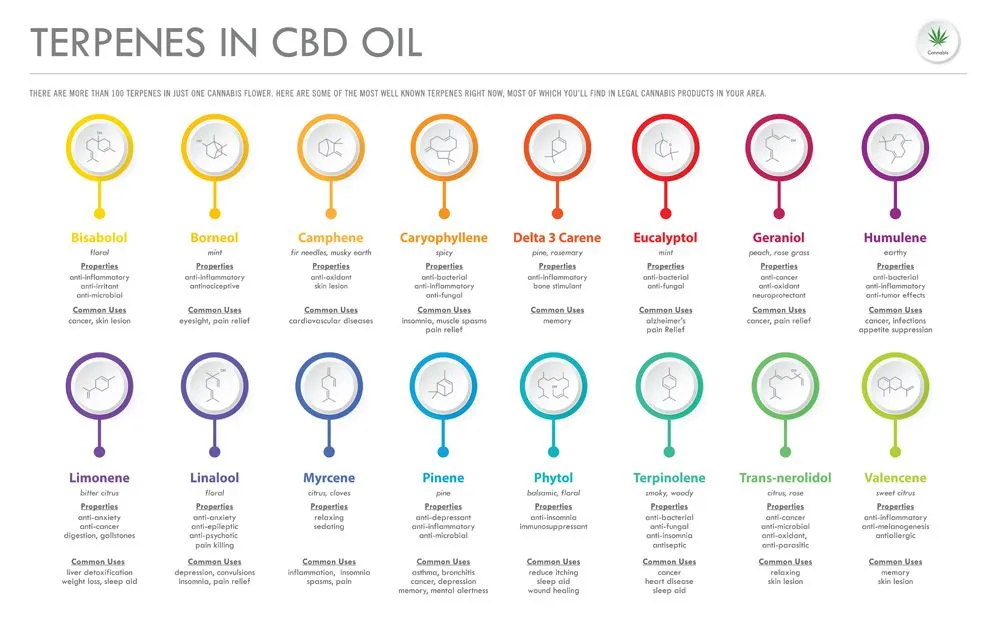
More than 150 different terpenes have been identified in the cannabis plant, and many of them carry over into full-spectrum CBD oils, where they shape aroma and may contribute to therapeutic effects. CBD is extracted from the hemp plant (a cousin of the cannabis plant) and by itself does not cause a ‘high’.
A report by the World Health Organization (WHO) Expert Committee on Drug Dependence states that there has been no sign of public health-related problems linked with the use of pure CBD and it exhibits no effects characteristic of any abuse or dependence potential. Hence, CBD has become an important medication for treating epilepsy, seizures, anxiety and different types of chronic pain.
Yet none of this really explains why a walk in a pine forest feels refreshing, right? Let’s dig deeper.
Which Terpenes Are Responsible For The Refreshing Pine Smell?
You know how you can smell a flower even before you get close to it? That’s because terpenes are evaporative, which means that due to their tiny structure, they can easily dissociate from the plant and into the surrounding environment. Similarly, you can smell pine trees in a forest or at home during Christmas.
Pinene
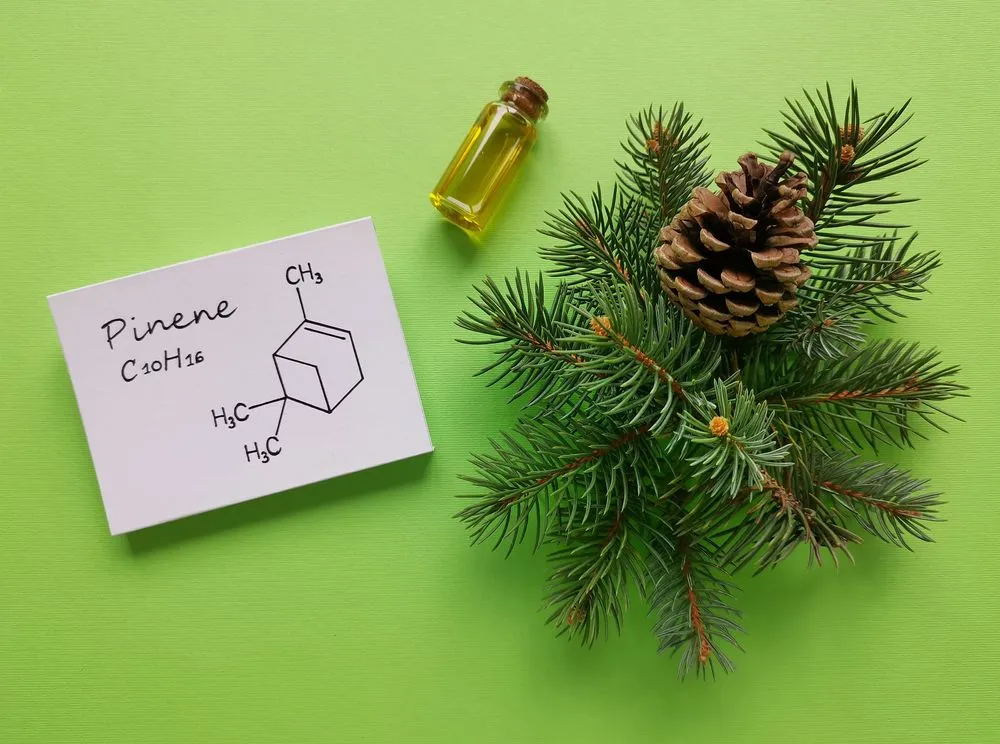
The exact terpene that gives this conifer the signature pine scent is called pinene. There are two types of pinene, alpha-pinene and beta-pinene. Alpha-pinene has shown anti-inflammatory activity in lab studies relating to bronchitis, chronic obstructive pulmonary disease, ear edema, skin inflammation, and osteoarthritis. Inhaled alpha-pinene also shows a mild bronchodilator effect in human volunteers and reduces airway inflammation in animal models, prompting research into its potential as an adjunct for respiratory conditions, though it is not an approved or guideline-recommended asthma treatment. It is one of the many terpenes that co-occur with CBD in cannabis-derived oils, and partly explains why full-spectrum CBD has been studied for reducing airway inflammation in allergic asthma.
Limonene
Limonene is another terpene released by pines (and, more abundantly, by citrus peel and by unrelated trees like Eucalyptus, which is a flowering plant in family Myrtaceae, not a true pine). You can find it in pine essential oils. It is a major constituent of both pine tree essential oils and cannabidiol, which comes as no surprise, considering that limonene gives off a citrusy scent. It’s no secret that citrus is nature’s very own packet of zen.
Research has shown that citrus scents have a positive effect on physical, mental, and spiritual wellbeing. However, the real ‘MVP’ here is limonene. Apart from reducing stress and anxiety, limonene also has anti-inflammatory properties, which have been confirmed in a study where it reduced allergic lung inflammation in mice.
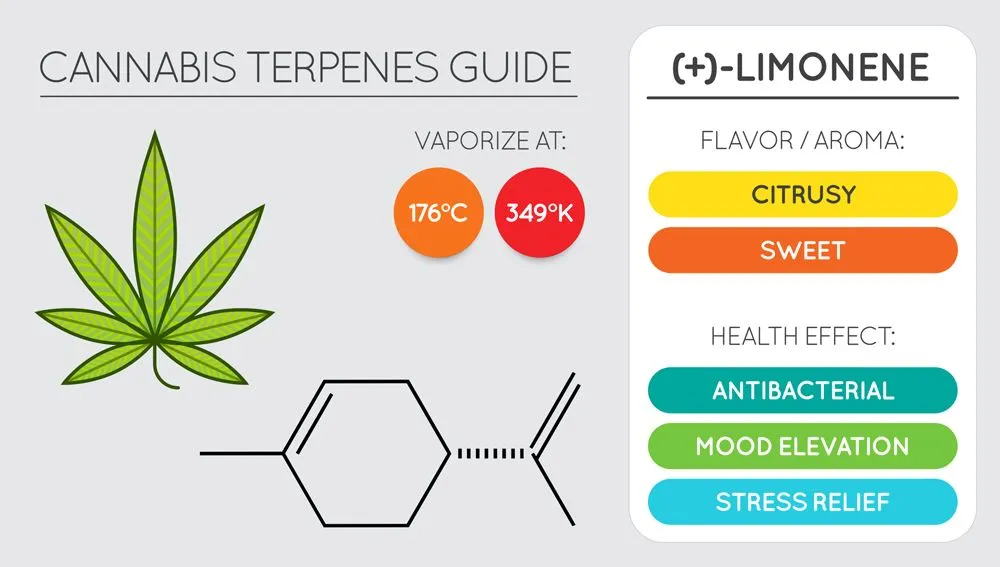
Hence, walking through a pine forest exposes you to some of the same aromatic terpenes found in cannabis-derived oils, although the doses and pharmacology are very different. Research on these forest ‘phytoncides’ suggests that even ambient exposure to them may help relax airways and dampen the stress response, leaving you feeling refreshed.
Interestingly, the therapeutic prowess of these terpenes is not limited to just battling inflammation. An in-depth study revealed that both alpha-pinene and beta-pinene possess a wide range of pharmacological activities. Both pinene varieties show antimicrobial, antibiotic and antimalarial properties. They have also gained popularity as anticonvulsants used to make anti-epileptic medications. In traditional Chinese Medicine, pine needle oil containing α-pinene is used as an anti-cancer agent.
Limonene is also being studied as an anti-cancer agent: a 2017 laboratory study found that a water extract from Korean pine cones, which contains a limonene derivative among other compounds, induced apoptosis in cultured human lung cancer cells (these are early in-vitro findings, not yet confirmed in animals or humans). In other cell-culture work, essential oils containing limonene have shown virucidal activity against herpes simplex virus-1, dengue virus type 2, and Junin virus, an early signal that has not yet translated into a clinical treatment.
What Does A Pine Forest Actually Smell Like?
We have named the molecules, but what does that unmistakable pine smell actually consist of? If you slow down and really pay attention on your next walk, the aroma is not a single note but a small chord of overlapping scents, each one a different compound your nose is picking apart in real time.

The backbone is the sharp, resinous, almost turpentine-like smell of alpha-pinene and beta-pinene. That is the note most of us picture the instant someone says ‘pine’. Layered over it is a cleaner, softer accent from an oxygenated compound called bornyl acetate, usually described as the fresh, clean pine odour. Because bornyl acetate is one of the compounds manufacturers reach for when they bottle ‘pine’ fragrances and air fresheners, our brains have learned to file that scent under ‘clean’, which is a big part of why a pine forest reads as refreshing rather than merely woody. Threaded through all of this is a faint citrus brightness from limonene, plus trace hints of myrcene, camphene and phellandrene that round out the smell.
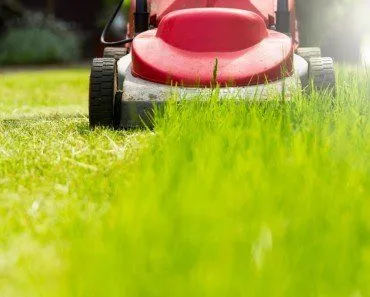
This is why words like fresh, green, sharp, resinous and slightly sweet all get used to describe the same tree, much as a lawn releases its own burst of volatile compounds when you catch that fresh-cut grass smell. The exact blend shifts from one species to the next, and even from a cool morning to a warm afternoon, because heat drives more of these volatile compounds out of the needles and bark. That is why a pine forest smells strongest on a sunny day.
Why Do Some Pine Trees Smell Like Vanilla Or Butterscotch?
Here is a twist that surprises most hikers: not every pine smells ‘piney’. Wander up to a mature ponderosa pine (Pinus ponderosa) or a Jeffrey pine (Pinus jeffreyi) on a warm afternoon, press your nose into a crack in the thick, orange, jigsaw-puzzle bark, and you are far more likely to catch vanilla or butterscotch than sharp turpentine. People have variously described it as vanilla, butterscotch, pineapple and even something close to sugary breakfast cereal.

So what is going on? These trees pack aromatic terpenes into their bark, and one popular explanation for the sweetness points to vanillin, the very molecule behind vanilla’s scent, which can form as lignin (the tough polymer that stiffens wood) breaks down. Warm sun heats the bark plates and coaxes these compounds into the air, which is why the scent is easiest to catch on hot days and on older trees with well-developed bark. Even so, naturalists happily admit that the exact recipe behind the vanilla-butterscotch note has never been fully pinned down.
The Jeffrey pine hides a second chemical surprise. Its resin is made almost entirely of n-heptane, a remarkably pure hydrocarbon that makes it a poor source of turpentine. That purity was so remarkable that n-heptane distilled from Jeffrey pine was chosen as the zero point of the octane rating scale used for petrol.
How Can Smelling Fragrances Improve Brain Health?
A study published in 2008 showed that smell can also influence our interpretation of emotions. Some participants were exposed to the smells of different plants while others were not. The group that was smelling the plants rated themselves as being higher in mood, alertness, and calmness compared to a control group. These results were not reproduced when artificial scents were used. This implied that natural scents can improve overall emotional functioning.
This is largely attributed to the fact that our olfactory system and emotional systems, such as the limbic system, interact in the brain.
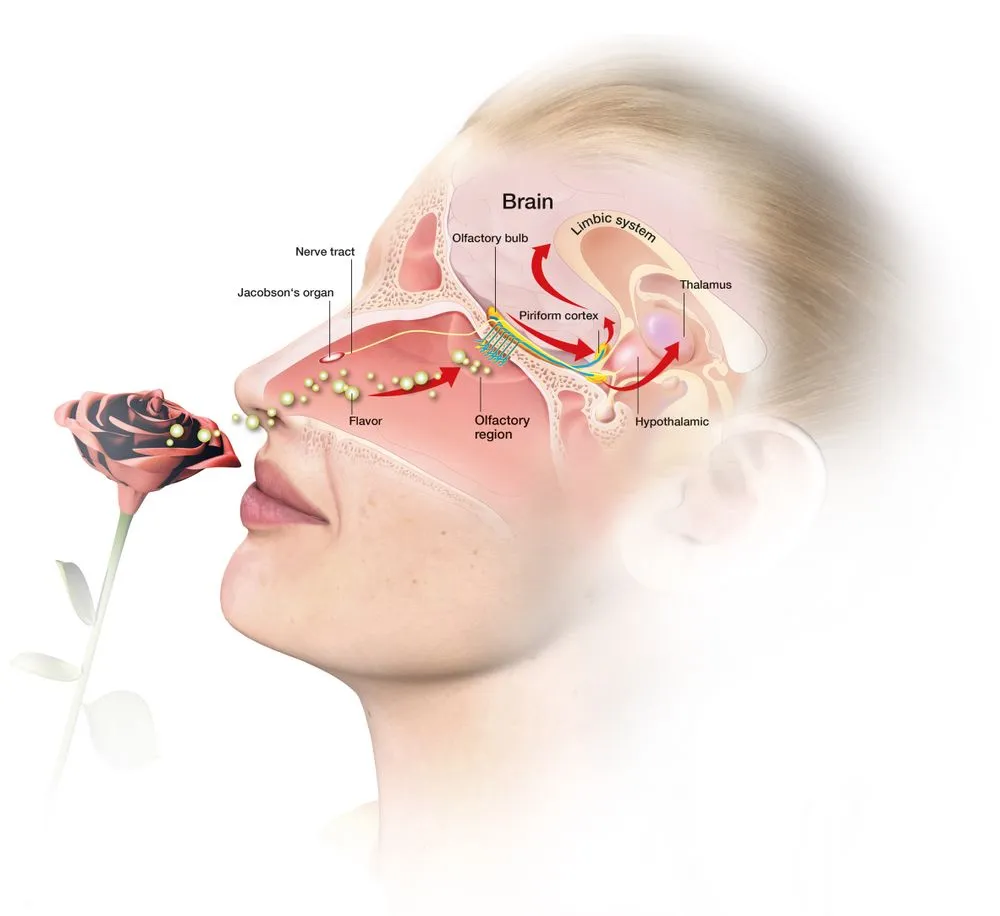
All of the above pieces of evidence support the benefits of forest bathing. Forest bathing was viewed largely as a fitness trend, but for some, it is a form of ‘ecotherapy’. Originating in Japan, where it is called shinrin–yoku, the term was coined in 1982 by Tomohide Akiyama, then director of the Japanese Forestry Agency, partly to encourage conservation and partly as an answer to rising urban stress. It is based on the idea, which is increasingly backed by evidence, that time spent in nature is good for our mind and body.

A simple walk in a forest unlocks all five senses. Nature enters through your ears, eyes, nose, mouth, hands and feet. It is a welcome respite from the city smog and dings of mobile phone notifications. Research has shown that shinrin-yoku lowers cortisol concentration, pulse rate and blood pressure, all of which are characteristics of low stress levels. It also slows down nerve activity, which is usually heightened in a city environment.
So, now we can confirm what a tiny part of ourselves already knew; a simple walk is a perfect antidote for all of the stress we accumulate throughout our days!
What Does It Mean If You Smell Pine When There Is None Around?
Some people catch a distinct pine scent when there is no tree, no cleaner and no candle anywhere nearby. Smelling something that is not physically present has a name: phantosmia, or an olfactory hallucination. It happens when the smell-processing pathway, running from the receptors in your nose to the olfactory regions of your brain, fires off a signal without a matching molecule in the air.
Phantom smells are often unpleasant, like smoke or burnt toast, but they can just as easily be pleasant ones such as pine or flowers, and they may show up in one nostril or both. Most cases are harmless and temporary, and common triggers include colds, sinus infections, nasal polyps and dental problems, all of which irritate the olfactory system. Less often, phantosmia is linked to migraines, head injuries, seizures or neurological conditions, which is why doctors suggest getting a persistent or one-sided phantom smell checked out rather than ignoring it.
There is also a gentler explanation for a fleeting ‘phantom’ pine note. Because scent is powerfully tied to memory through the limbic system, a stray cue can occasionally trigger a vivid recollection of a pine-scented Christmas or a forest walk, complete with the smell your brain expects to go with it.
References (click to expand)
- Cannabidiol (CBD): What we know and what we don't. Harvard Health Publishing. health.harvard.edu
- Li Q et al. (2006). Phytoncides (wood essential oils) induce human natural killer cell activity. PubMed
- Is forest bathing a panacea for mental health problems? Frontiers in Public Health (2025). frontiersin.org
- Salehi, B., Upadhyay, S., Erdogan Orhan, I., Kumar Jugran, A., L.D. Jayaweera, S., A. Dias, D., … Sharifi-Rad, J. (2019, November 14). Therapeutic Potential of α- and β-Pinene: A Miracle Gift of Nature. Biomolecules. MDPI AG.
- Cho, K. S., Lim, Y.-. ran ., Lee, K., Lee, J., Lee, J. H., & Lee, I.-S. (2017, April 15). Terpenes from Forests and Human Health. Toxicological Research. The Korean Society of Toxicology.
- Cox-Georgian, D., Ramadoss, N., Dona, C., & Basu, C. (2019). Therapeutic and Medicinal Uses of Terpenes. Medicinal Plants. Springer International Publishing.
- Park, B. J., Tsunetsugu, Y., Kasetani, T., Kagawa, T., & Miyazaki, Y. (2009, May 2). The physiological effects of Shinrin-yoku (taking in the forest atmosphere or forest bathing): evidence from field experiments in 24 forests across Japan. Environmental Health and Preventive Medicine. Springer Science and Business Media LLC.
- The Aroma of Christmas Trees. Compound Interest. compoundchem.com
- Pinus jeffreyi (Jeffrey pine). Wikipedia. en.wikipedia.org
- The Mysteries of the Ponderosa Pine. The Nature Conservancy. blog.nature.org
- Phantosmia (Olfactory Hallucinations). Cleveland Clinic. my.clevelandclinic.org
- Phantosmia: What causes olfactory hallucinations? Mayo Clinic. mayoclinic.org