Table of Contents (click to expand)
- Hydrogen Peroxide Facts
- Why Does Hydrogen Peroxide Foam?
- Why Does Hydrogen Peroxide Not Affect Healthy Skin?
- Does The Bubbling Mean My Wound Is Infected?
- Why Does Hydrogen Peroxide Sometimes Turn Skin White?
- How Can A Cell Produce Something That Destroys Its Own Membranes?
- Is Hydrogen Peroxide Safe?
- A Final Word
When hydrogen peroxide hits a fresh wound it foams because the enzyme catalase, released from damaged cells and red blood cells, instantly breaks the H2O2 into water and oxygen gas. The white bubbles you see are simply oxygen escaping. Intact skin has no exposed catalase, so the same liquid poured onto unbroken skin does not bubble.
Have you ever read the ingredients listed on a bottle of household disinfectant, chlorine-free bleach, or a packet of hair dye? You’ll find something common to all three – Hydrogen Peroxide.
Hydrogen peroxide has been used since 1920s as a mild antiseptic to clean some injuries and abrasions. When dabbed over a wound or cut, it leads to the formation of a white sizzling foam that covers the injury, providing protection from infection thanks to its anti-bacterial properties.
Have you ever wondered why hydrogen peroxide bubbles on our wounds when it is applied as an antiseptic, yet it doesn’t have the same reaction on a table or our hair when used as a disinfectant or hair dye? If this has ever tickled your curiosity, you’ve come to the right place.
Hydrogen Peroxide Facts
Hydrogen Peroxide is an inorganic chemical found abundantly in nature. Pure H2O2 is a clear liquid that is pale blue in color. It is the simplest known peroxide, the general term for any compound with a single covalent bond between two oxygen atoms.
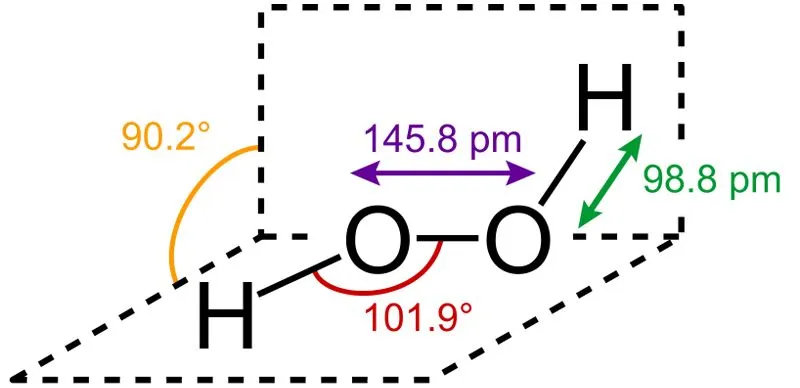
Hydrogen peroxide is a strong oxidizing and bleaching agent. Storage of hydrogen peroxide is also notably difficult, as it slowly decomposes in the presence of light. Therefore, it is stored in brown bottles that prevent light penetration, along with the help of some added stabilizers (chemicals that slow down the oxidation of H2O2).
Why Does Hydrogen Peroxide Foam?
Chemically, hydrogen peroxide (H2O2) is a compound composed of two hydrogen and two oxygen atoms. It reacts with an enzyme found in our body called Catalase, subsequently breaking down into water and oxygen.
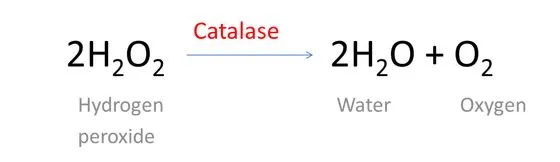
Enzymes are protein molecules with a specific shape that are used to speed certain chemical reactions. Catalase is found in almost every aerobic cell of the body, most concentrated in the liver and red blood cells, and is used to decompose certain chemicals produced during metabolism.
The dead cells and blood dissolve in the water and move up towards the surface, along with the oxygen, which bubbles out to give the wound a fizzy and foamy appearance. So long as there is a continuous supply of catalase, the reaction continues, and oxygen continues bubbling on the surface.
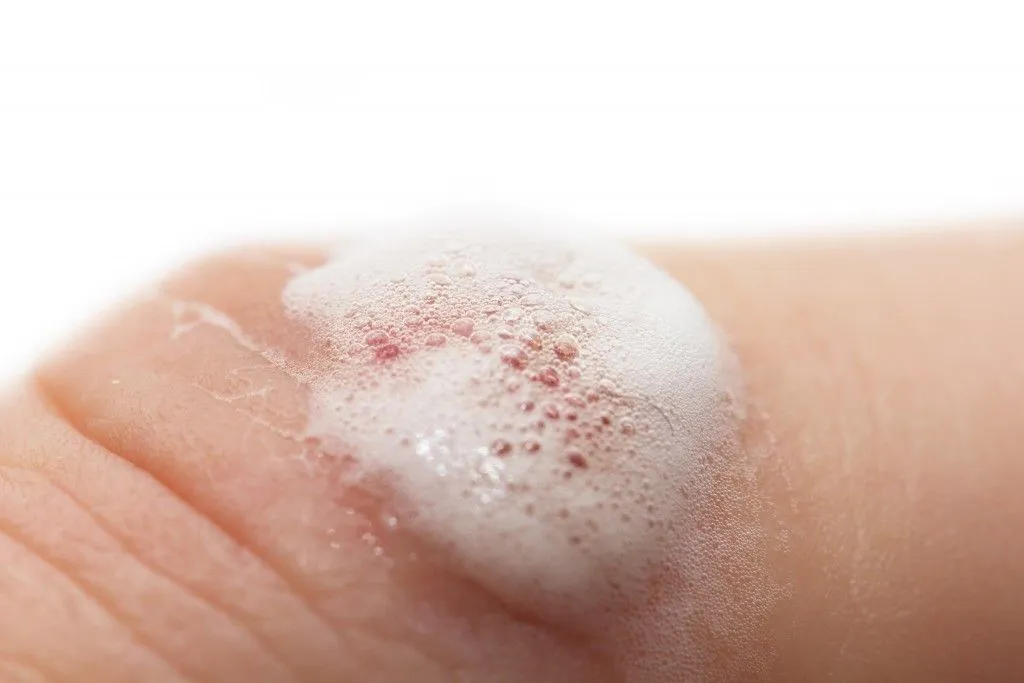
The foam persists for about 2 minutes (depending on the concentration of the peroxide), after which it starts to disappear due to the gradual destruction of the enzyme as the reaction proceeds. Catalase is an enzyme, meaning that it doesn’t take part in the chemical reaction, merely speeds it up. However, its presence is necessary for the reaction to begin in the first place.
Why Does Hydrogen Peroxide Not Affect Healthy Skin?
Catalase is found in nearly all aerobic cells of our body, with especially high concentrations in liver and red blood cells, and in many bacteria such as Staphylococcus aureus. However, only when the skin is cut or wounded will this enzyme be released and become available to react with. Unbroken skin does not contain catalase, so pouring hydrogen peroxide on smooth skin will yield no reaction.
An alternative reason for this might be the low shelf life of hydrogen peroxide. 3% hydrogen peroxide solution, which is generally used as a disinfectant, has a typical shelf life of 30 days once the seal has been broken. This means, if you don’t see bubbles form when the antiseptic is applied to a bloody cut or a wound, it might no longer be active.
Does The Bubbling Mean My Wound Is Infected?
A popular belief holds that the more a cut foams, the dirtier or more infected it must be, and that a wound which fizzes furiously is crawling with germs. It is an understandable assumption, but it is not true. The bubbling is really just a measure of how much catalase the peroxide runs into, and most of that catalase comes from your own blood and freshly damaged tissue cells, not from bacteria. A clean cut that is bleeding freely will foam just as dramatically as a grubby scrape, because both are releasing plenty of catalase.

It is true that some bacteria carry catalase of their own. Catalase-positive species such as Staphylococcus aureus add a little to the fizz, and microbiologists even use a drop of hydrogen peroxide as a quick "catalase test" to tell one group of bacteria from another. But the amount of foam on a wound simply cannot tell you whether an infection is present, because your own tissue is producing the bulk of it either way. In short, a vigorous fizz is not a diagnosis, and it does not mean the peroxide is busily wiping out an infection.
If you want to know whether a wound is genuinely infected, ignore the foam and watch for the signs clinicians actually rely on: spreading redness, warmth, swelling, throbbing pain that worsens over a day or two, pus or cloudy discharge, or a fever. Those deserve a doctor's attention. The harmless theatrics of a bubbling antiseptic do not, and health bodies like the Cleveland Clinic now advise washing minor cuts with soap and water rather than reaching for peroxide at all.
Why Does Hydrogen Peroxide Sometimes Turn Skin White?
Every now and then, a splash of hydrogen peroxide leaves behind a pale, blanched patch of skin that can be briefly alarming. That whitening comes from the very same reaction that makes the liquid foam. As catalase in the skin and in the tiny blood vessels below it tears the peroxide apart, it releases a burst of oxygen gas. Some of that oxygen forms microscopic bubbles right inside the superficial vascular bed, and those bubbles briefly plug the smallest blood vessels, an effect that a review in Cutaneous and Ocular Toxicology describes as capillary embolism. With blood pushed out of the capillaries at that spot, the skin loses its usual pink tint and turns white.
The effect is temporary and superficial. Once the trapped oxygen diffuses away, blood flows back into the capillaries and the normal color returns, typically within about half an hour. The blanching is sometimes accompanied by mild stinging or tingling, and it sits alongside erythema, burning and irritation on the list of transient skin reactions peroxide can cause. It is usually harmless on intact skin, but it is one more reason modern wound-care advice steers away from routinely dousing cuts in peroxide.
How Can A Cell Produce Something That Destroys Its Own Membranes?
Hydrogen peroxide is found in all living material. The white blood cells in our body naturally produce H2O2 to fight off bacteria and infections. Along with that, it’s also naturally synthesized in our body during various metabolic activities. If that’s the case, how do the cells prevent the gas from decomposing their own membranes?
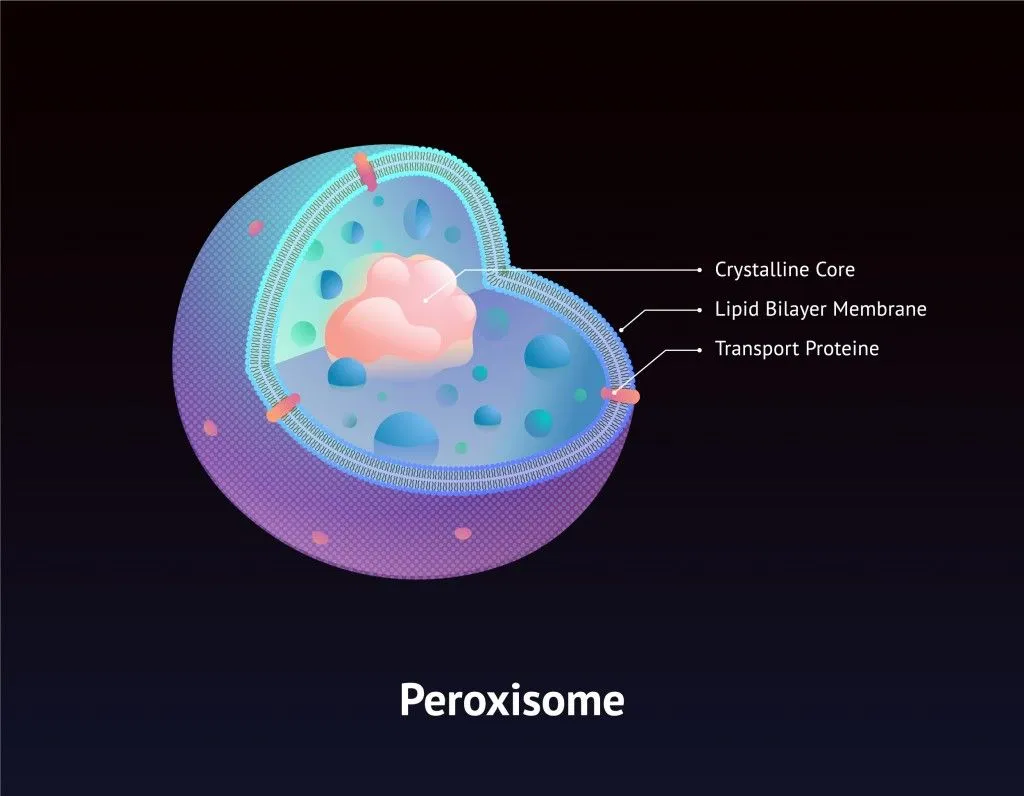
Fortunately, hydrogen peroxide is stored in specialized cell organelles called peroxisomes, which contain the enzyme catalase and thus instantaneously convert the hydrogen peroxide into oxygen and water before it can damage the rest of the cell. As a result of this efficiency, the cell wall and other cell organelles, never actually come into direct contact with this chemical.
Is Hydrogen Peroxide Safe?
Although hydrogen peroxide has various uses in different fields, it is still a hazardous chemical and leads to toxicity through three main mechanisms: corrosive damage, excessive oxidation and lipid peroxidation.
The oral intake of large quantities of hydrogen peroxide may irritate the gastrointestinal tract, along with causing other problems, such as nausea and vomiting. The excessive foaming that occurs when encountering certain cells may obstruct the respiratory tract or result in pulmonary aspiration.
Hydrogen peroxide may also cause unnecessary reactions on the skin that lead to inflammation, blistering, irritation and severe skin damage. Although it has been used as a disinfectant for decades, modern doctors often avoid its usage, as it may lead to unforeseen problems.
A Final Word
You might find the foam forming on your skin after the application of hydrogen peroxide to be amusing, but it does carry certain health risks. Foaming on the skin may not always indicate the destruction of bacteria, as hydrogen peroxide is equally capable of destroying healthy skin cells, depending on its concentration.
Modern wound-care guidance actually advises against routinely pouring hydrogen peroxide on cuts and scrapes. Lab studies (including a 2022 paper in Clinical and Experimental Dermatology) show 3% hydrogen peroxide is toxic to the skin fibroblasts and keratinocytes that have to rebuild the wound, and major clinics like Mayo Clinic now recommend simply rinsing minor cuts with cool running water and mild soap. So while hydrogen peroxide has a long history of being marketed as a skin disinfectant, it is best to skip it for wound care unless a clinician specifically tells you otherwise. If you still want to see the foaming reaction, try the classic experiment: slice a raw potato and drip a little peroxide over it. The catalase inside the potato produces an entertaining fizz.
References (click to expand)
- Beers, R. F., & Sizer, I. W. (1952). A spectrophotometric method for measuring the breakdown of hydrogen peroxide by catalase. The Journal of Biological Chemistry.
- Halliwell, B., Clement, M. V., & Long, L. H. (2000). Hydrogen peroxide in the human body. FEBS Letters.
- Hydrogen Peroxide: the body's best defence system. McGill Office for Science and Society.
- Rueda-Fernández, M. et al. (2022). Effect of the most common wound antiseptics on human skin fibroblasts. Clinical and Experimental Dermatology.
- Cuts and scrapes: First aid. Mayo Clinic.
- What Is Hydrogen Peroxide Good For? Cleveland Clinic.
- Chan, H. P., & Maibach, H. I. (2008). Hydrogen peroxide, blanching, and skin: an overview. Cutaneous and Ocular Toxicology.
- Mundi, N. et al. (2020). 33% hydrogen peroxide as a neoadjuvant treatment in the surgical excision of non-melanoma skin cancers: a case series. Journal of Otolaryngology - Head & Neck Surgery.
- Kapoor, P., & Kumar, S. (2023). Hydrogen peroxide in dermatology. Indian Journal of Dermatology, Venereology and Leprology.