Table of Contents (click to expand)
No, crop circles are not made by aliens. The scientific consensus is that they are human-made, created as hoaxes, art or advertising. In 1991, British pranksters Doug Bower and Dave Chorley confessed to making more than 200 of them since the late 1970s using only rope and wooden planks, and many circle-makers have since demonstrated the technique openly.
There are many weird things on this planet that certain people attribute to the presence of extraterrestrial activity, be it some sunken city off the coast of Florida, an imaginary triangle in the Atlantic, or a constant barrage of disappearing cows. Some of these might have more interesting explanations than others, but it’s really a moot point until these seemingly impossible events are debunked. For today, let’s look at crop circles.
What Are Crop Circles?
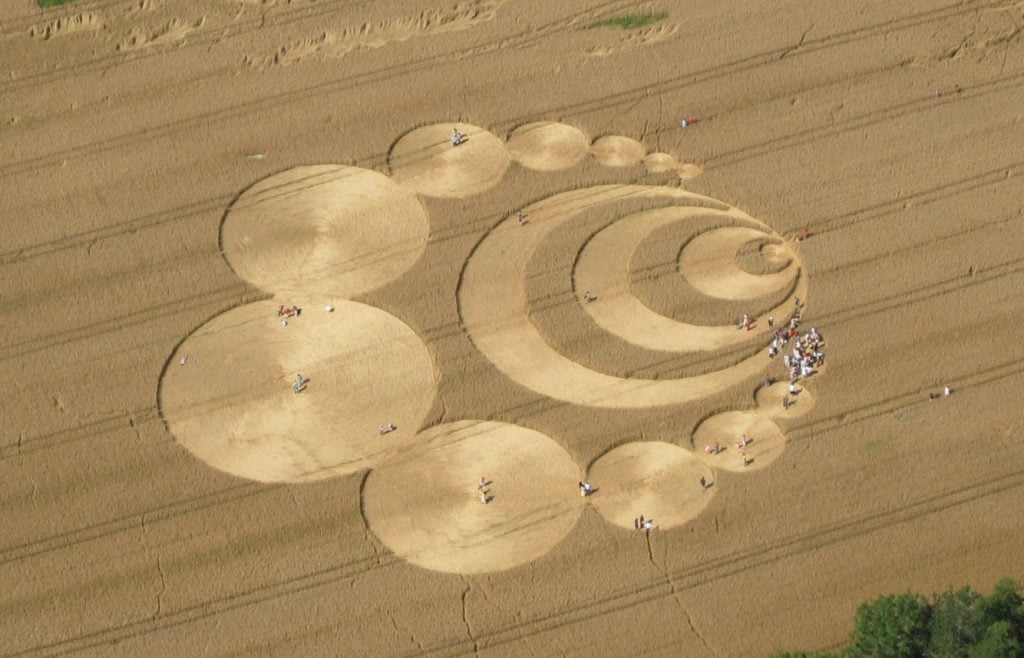
A Crop Circle is more than the handiwork of some disgruntled farmer. What it looks like is a pattern made on a field by flattening crops in a specific way. Usually, that crop is a cereal of some kind. The edges are often so clean that it looks like it was created with a machine. Although the stalks are bent, they are not damaged. Most of the time, the crop continues to grow as normal. Sometimes, the patterns are simple circles, but in other instances, they are elaborate designs consisting of several interconnecting geometric shapes. However, no… aliens were probably not using our planet to solve their geometry problems.
When Did We First Notice These?
The oldest image often linked to crop circles dates back to 1678 in Hertfordshire, England. A woodcut pamphlet called The Mowing-Devil: or, Strange News out of Hartford-shire tells of a farmer who refused to pay a laborer to mow his oats and swore the devil could do it instead. The next morning, the field was supposedly found neatly laid out in round shapes. That might have been believable, assuming the devil doesn’t have much else to do on a Saturday night besides turning a field into a discotheque. Skeptics note that the pamphlet describes the stalks as cut rather than flattened, so it is not really a crop circle in the modern sense.
The modern phenomenon took off in southern England in the late 1970s, and the term “crop circle” was coined in the early 1980s. Things came to a head in 1991, when two men from Southampton, Doug Bower and Dave Chorley, confessed that they had made more than 200 circles since the late 1970s using nothing more than rope, wooden planks and a wire sighting device. They said a 1966 report of a “saucer nest” of flattened reeds in Tully, Australia had given them the idea. To prove it, they made a circle in front of reporters, and a leading crop circle believer examined it and declared it genuine before the hoax was revealed.
Far from killing the trend, their confession set it loose. Circles soon appeared all over the world, and roughly 10,000 have now been documented, many in countries Bower and Chorley never visited.
Where Do They Come From?
People have tried to explain this weird phenomenon for years, but many of them still believe that the crop circles are indeed formed by Aliens, as though the circles are some sort of message from an advanced species telling us about something. Many Crop Circles were found near ancient or sacred sites, which boosted the belief of extraterrestrial activity. They have also been found near mounds of earth and stones raised over graves.
Supernatural? Nah… Probably Not.
Some paranormal advocates think that the patterns of the crop circles are so complex that they must be controlled by some entity. One of the proposed entities for this is Gaia (Primal Greek Goddess personifying the Earth), as a way of asking us to stop global warming and human pollution. There is also speculation that the crop circles have a relation to Ley Lines (apparent alignments of places of man-made or even supernatural significance in the geography or culture of an area).
Did Humans Make Them?
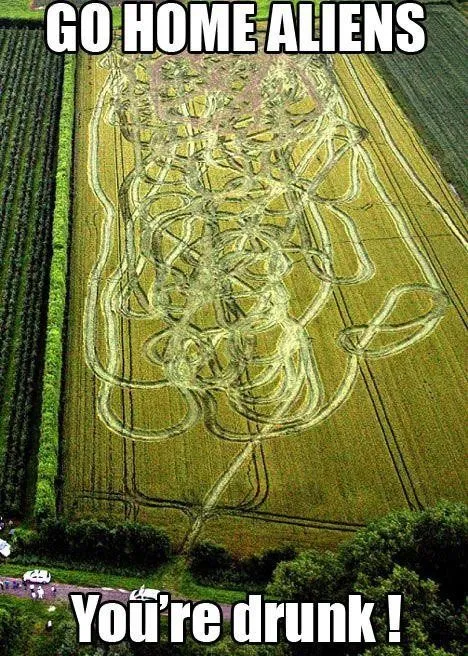
The scientific consensus on crop circles is that they are made by human beings as hoaxes, advertising or art. The best-known method is exactly what Doug Bower and Dave Chorley used: tie a rope to a board, stand on the board, and use the rope to drag and flatten the crop in a circle. A simple sighting device, such as a wire loop on a cap, keeps the lines straight. Skeptics point to several giveaways that betray a human hand, and there is no documented case of a crop circle ever being filmed forming on its own.
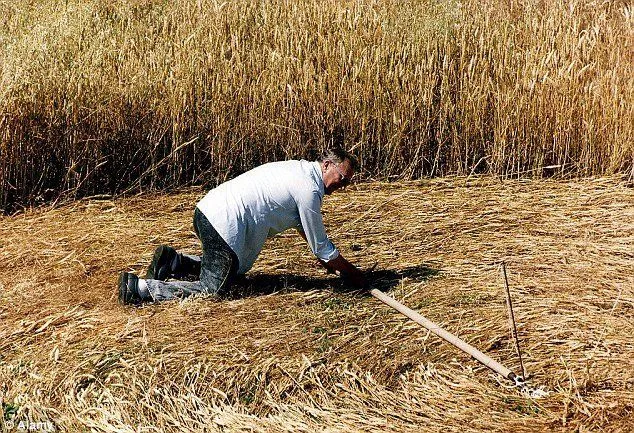
Many people have confessed to making crop circles, and when critics claimed that only “circles” could be natural, makers simply added straight lines and squares to prove the point. The most intricate modern formations are laid out with the help of GPS and lasers. One of the clearest tells is that circles are sometimes caught half-built, worked on in stages and photographed with their rings only partly laid down (see why some crop circles are found unfinished below). Aliens, presumably, would not run out of time before sunrise.
Did Nature Make Them?
It has also been suggested that crop circles might be the result of freak weather, like miniature tornadoes or ball lightning, but there is no evidence of a complex geometric pattern ever being produced this way. Seems like a stretch, but then again, some people still believe the Earth is flat!
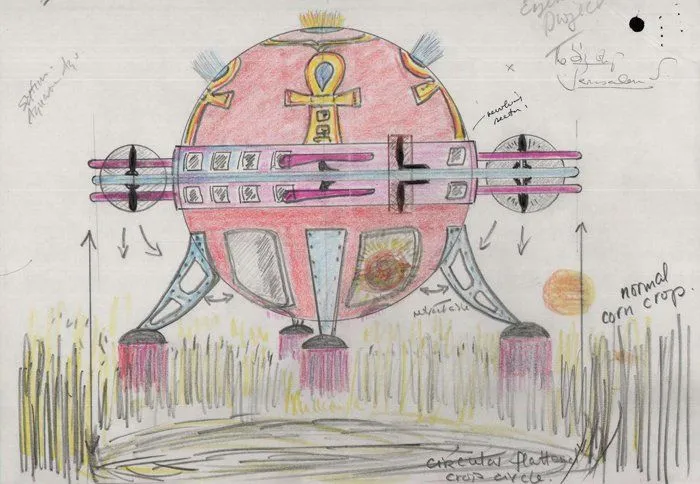
The main criticism that the ‘formation of crop circles by aliens’ believers face is the lack of evidence of these circles’ origins. While some are definitely known to be the work of pranksters, there have also been cases in which researchers declared crop circles to be ‘The Real Thing’, only to then be confronted by the people who created them.
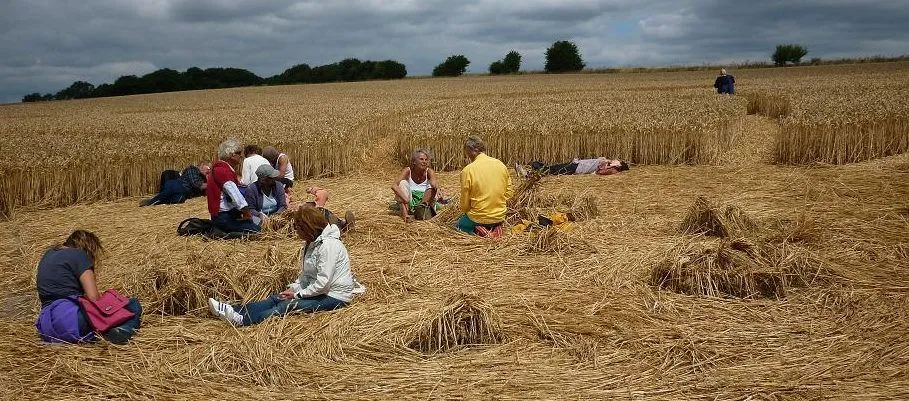
Most crop circle researchers admit that the vast majority of crop circles are created as hoaxes and pranks. However, they also claim that there’s a tiny remaining percentage that they can’t explain. The real problem is that (despite unproven claims by a few researchers that stalks found inside “real” crop circles show unusual characteristics), there is no reliable scientific way to distinguish “real” crop circles from man-made ones.
Perhaps one day we’ll discover that aliens wanted us to RSVP to their wedding after all. If that’s true, let’s just hope they don’t get upset after realizing what we prefer to waste our time on instead…

Why Are Some Crop Circles Found Unfinished?
Every so often a formation turns up only partly made, and these half-built cases are some of the most revealing evidence we have. The most-cited example dates to 2009. Writing in Physics World, physicist Richard Taylor, director of the Materials Science Institute at the University of Oregon, documented a large pictograph that required three consecutive nights to complete and laid out its stage-by-stage progression. Caught partway through that span, the formation was apparently left unfinished, with some of its circles only half made.

That detail matters more than it first appears. A weather vortex or a hovering spacecraft would have no reason to build a pattern in installments, stopping partway and resuming the following night. Human makers do, because a short summer night offers only a few hours of darkness, and an ambitious design can run out of time before sunrise. Work in the dark, come back the next night, and finish the job: that is exactly the rhythm the 2009 progression shows.
How often are crop circles discovered unfinished? There is no official tally, and genuinely abandoned formations are the exception rather than the rule, because most makers plan a design they can finish in a single night. When teams are watched at work, they move fast. Taylor notes that observers have seen crews implanting circles at a rate of about one a minute, and that today’s artists lean on computers, GPS equipment and lasers to map out their patterns with near-surveyor accuracy. An unfinished circle is simply what that human process looks like on the rare night the clock wins.