Table of Contents (click to expand)
- Why Is The Rocket Plume Lit Up When The Ground Is Still Dark?
- What Is The Space Jellyfish Plume Actually Made Of?
- Why Does The Rocket Exhaust Balloon Into A Giant Dome?
- Is The Bright Ball At The Top Of The Space Jellyfish An Explosion?
- Can A Rocket Plume Make Clouds Or Punch A Hole In The Sky?
- So, Why Do Rocket Launches At Dawn Or Dusk Leave A Glowing Space Jellyfish?
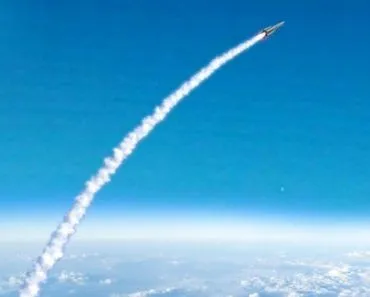
A rocket launched within about an hour of sunrise or sunset climbs out of Earth's shadow while the ground below is still dark, so its exhaust catches full sunlight high above the shadow and glows against a night sky. That exhaust, mostly water vapor and carbon dioxide, freezes into ice crystals in the thin, cold air and spreads sideways for kilometers because there is almost no air pressure up there to hold it in, which is what makes the jellyfish bell. The bright ball at the top is not an explosion but the sunlit plume of the upper stage's engine, with separate puffs from stage separation and the booster's return burns.
A good many people in Southern California have looked up and decided that a rocket was a UFO. The best-known case came on a Friday evening in December 2017. A Falcon 9 lifted off from Vandenberg carrying ten satellites for a phone network. The glowing thing it left behind was seen as far away as Arizona and Mexico. Plenty of onlookers took it for an alien craft or a bomb. SpaceX's boss poked fun at the panic on social media, which did not calm anyone down.
It keeps happening. Before dawn one morning in October 2026, another Falcon 9 left Cape Canaveral for the space station. A huge orange-and-blue jellyfish spread across the brightening East Coast sky. The nickname comes from SpaceX itself. Its Dragon mission director called it "the space jellyfish that's coming down after us."
Three things puzzle people who see one. Why is it lit up when it is still dark outside? Why does it swell into a bell instead of staying a thin line? And what is that bright ball at the top? The ball comes last.

Why Is The Rocket Plume Lit Up When The Ground Is Still Dark?
Stand outside half an hour before sunrise. The Sun is below your horizon, so you are standing in Earth's shadow, but the shadow has a top. Sunlight streams past overhead, just above a line that grazes the edge of the planet and carries on into space. Anything higher than that line is already in daylight. Mountain climbers know the effect: the peak catches the sunrise while the valley stays grey.
A rocket is the ultimate peak. Within minutes of liftoff it is higher than any mountain. If it climbs out of the shadow while you are still inside it, its exhaust blazes in full sunlight against a dark sky.
How tall is the shadow? That depends on how far the Sun sits below the horizon. The official twilight definitions mark three steps. At 6 degrees below the horizon, civil twilight ends. At 12 degrees, nautical twilight ends. At 18 degrees, astronomical twilight ends and the sky is as dark as it gets. For a Sun d degrees below the horizon, the top of the shadow straight above you sits at a height of:
h = R (1 ÷ cos d − 1)
where R is Earth's radius, about 6,371 km, and h is the height of the shadow's top. Walk it through:
- At 6 degrees, h works out to about 35 km.
- At 12 degrees, h is about 140 km. The sky looks dark, yet everything above that is in daylight.
- At 18 degrees, h is about 330 km, and most of a rocket's climb now happens in the dark.
The Sun climbs about one degree every four minutes. That makes the window roughly an hour, before sunrise or after sunset. One NASA picture records a launch 52 minutes before sunrise. That puts the Sun roughly 12 degrees down and the shadow's top around 140 km up. The upper stage was higher than that. Its plume caught the sunrise while everyone on the ground stayed in the dark.

What Is The Space Jellyfish Plume Actually Made Of?
Falcon 9 burns rocket-grade kerosene with liquid oxygen. The exhaust is mostly water vapor and carbon dioxide.
The plume sits in the mesosphere, the coldest layer of the atmosphere, where the air drops to about −90 °C. Water vapor dumped into air that cold freezes into tiny ice crystals. Tiny crystals scatter light in every direction, the way dust shows up in a flashlight beam. So the plume is a cloud of ice, floating above a dark planet, with the Sun shining on it. Of course it glows.
The lower parts of the plume get sunlight that has skimmed a long way through the thick lower air. That strips out the blue and leaves the oranges, the same reason a sunrise is red. The higher parts get cleaner light and stay white or blue.
The twisting tail is a wind map. The upper atmosphere has its own weather, with winds that change direction from one height to the next. Scientists release vapor trails from small rockets on purpose. Then they photograph how the winds pull them apart. A launch plume gets sheared the same way. Each kink in the corkscrew is a layer of air going its own way.

Why Does The Rocket Exhaust Balloon Into A Giant Dome?
Glow explains the brightness, not the shape. A plume near the ground is a tight column, while the same engine far above the air makes a shell tens of kilometers wide.
A rocket nozzle is a fixed piece of metal. The narrow throat chokes the flow. The flared bell beyond it sets how fast and at what pressure the exhaust leaves. Engineers pick that bell for one altitude. The exit pressure matches the outside air at only one design condition. A nozzle cannot change shape in flight, so it is right at one height and a bit wrong everywhere else.
Air pressure falls as you climb, because there is less and less air above you. At sea level, roughly one atmosphere of outside air pushes back on the jet and keeps it narrow. Up where the upper stage flies, there is almost nothing to push back. The exhaust leaves the nozzle at a pressure far higher than its surroundings. Engineers call this under-expanded. It keeps expanding after it leaves, fanning out sideways as well as backward. It does not stop until it has thinned to match the near-vacuum around it, which takes kilometers. The push on the rocket still comes from throwing gas out the back, which works just as well in a vacuum.
On a Falcon 9 the first stage shuts down about two and a half minutes in, at around 80 km. The stages separate seconds later. The single upper-stage engine then burns for about seven minutes, almost all of it above the shadow line. Everything it exhales spreads into a widening, sunlit shell, and that shell is the bell of the jellyfish.

Is The Bright Ball At The Top Of The Space Jellyfish An Explosion?
No, though a glowing sphere where a thin streak used to be is what a blast looks like in a film. What you are seeing is the upper stage's exhaust plume caught in sunlight. It is freshest and densest right behind the engine, and it thins out into the bell behind it. The rocket, for its part, is fine.
Other things flare up around the head. Local news once traced such flashes to stage separation and the booster's return. On a Falcon 9 the booster does not just fall away. It turns around and fires its engines to head back toward the coast. Minutes later it fires again to slow its re-entry, then a third time to land on a ship. Each burn is a fresh, sunlit puff of exhaust. In the twilight window every burn is lit, and nothing has gone wrong.

Can A Rocket Plume Make Clouds Or Punch A Hole In The Sky?
The plume fades within minutes, but the water does not vanish. Some of it ends up in the strangest clouds there are.
The highest clouds in the atmosphere are the noctilucent, or night-shining, clouds. They are wisps of ice about 80 km up that glow after dark for the same reason a plume does: they sit above Earth's shadow. They form when water freezes onto the smoke left by burnt-up meteors. They are mostly a polar, summer sight, and space shuttle launches showed that rockets can add to them. After one August launch, a plume of water vapor was tracked high over the Arctic the next day. A patch of these clouds appeared a week later, holding about as much water as the shuttle had dumped. Since then, their yearly ups and downs at mid-latitudes have tracked morning launches. Mornings are when the high winds blow north toward the poles.
Higher still is the ionosphere, the charged layer that carries our radio signals. Here the exhaust does something more dramatic. A Falcon 9 climbed steeply out of Vandenberg in August 2017. Its upper-stage exhaust reacted with the charged gas and opened a hole about 900 km across. The hole lost up to 70 percent of its free electrons for several hours. That is enough to nudge satellite navigation readings by around a meter. None of this is dangerous, and it heals within hours or days. But each launch delivers a large dose of water to a part of the sky that gets almost none. As launch cadence climbs, scientists are watching what that adds up to.

So, Why Do Rocket Launches At Dawn Or Dusk Leave A Glowing Space Jellyfish?
Put the three pieces together and the jellyfish builds itself.
Timing gives the light. Launch within an hour of sunrise or sunset. The rocket then leaves Earth's shadow while you stay inside it. Cold gives the body. The exhaust is mostly water, and the air it enters is far below freezing. That makes the plume a cloud of ice crystals, and ice scatters sunlight. Vacuum gives the shape. With no air pressure to hold it in, the exhaust spreads sideways for kilometers into a wide, sunlit bell. The bright head is the engine's freshest exhaust. The extra flashes are the booster flying itself home, and the twisted tail is the wind.
Even the way the jellyfish seems to dive toward the horizon is a trick of viewpoint. The rocket is not falling. It is tipping over to follow the curve of the Earth on its way to orbit. From where you stand, "over the horizon" and "down" look the same.
No two are alike, since the launch minute, the flight direction and the winds all have a say. Real jellyfish, as it happens, have been to space too. NASA flew some decades ago to see how they handled weightlessness. To see the other kind, check the next launch time against sunrise or sunset. Anything inside that hour is worth getting out of bed for.

References (click to expand)
- Launch Plume: SpaceX Jellyfish — NASA Astronomy Picture of the Day, March 19, 2026
- Rocket Launches Can Create Night-Shining Clouds Away from the Poles, NASA's AIM Mission Reveals — NASA
- Northern Mid-Latitude Mesospheric Cloud Frequencies Observed by AIM/CIPS: Interannual Variability Driven by Space Traffic — Earth and Space Science (2022)
- Polar mesospheric clouds formed from space shuttle exhaust — Geophysical Research Letters (2003)
- Antarctic mesospheric clouds formed from space shuttle exhaust — Geophysical Research Letters (2005)
- Gigantic Circular Shock Acoustic Waves in the Ionosphere Triggered by the Launch of FORMOSAT-5 Satellite — Space Weather (2018)
- Understanding the Effects of Anthropogenic Space Weather — Eos (AGU)
- Optical signature of an ionospheric hole — Geophysical Research Letters (1982)
- A sudden vanishing of the ionospheric F region due to the launch of Skylab — Journal of Geophysical Research (1975)
- Nozzle Design — NASA Glenn Research Center, Beginner's Guide to Aeronautics
- Rocket Thrust Equation — NASA Glenn Research Center, Beginner's Guide to Aeronautics
- Earth Atmosphere Model, Metric Units — NASA Glenn Research Center
- Scaling and Similitude in Single Nozzle Supersonic Retropropulsion Aerodynamics Interference — NASA Technical Reports Server
- The Mesosphere — UCAR Center for Science Education
- Ionosphere — NOAA Space Weather Prediction Center
- Rise, Set, and Twilight Definitions — U.S. Naval Observatory
- Earth Fact Sheet — NASA Space Science Data Coordinated Archive
- SpaceX CRS-6 Mission Press Kit — NASA
- NASA's SpaceX CRS-29 Countdown and Ascent Milestones — NASA
- Vapor Tracers — NASA Sounding Rockets
- Cosmic 'jellyfish' wows skywatchers after SpaceX launch — Space.com, Oct. 14, 2026
- See the 'Space Jellyfish' and Other Jaw-Dropping Views from SpaceX's Dragon Launch — Space.com, June 2018
- Watch the Falcon 9 Rocket Leave a Trail of Glowing Clouds in the Sky — Popular Mechanics
- Falcon 9 Iridium-4 Successfully Launched — DVIDS (U.S. Air Force)
- After successful SpaceX launch, rocket booster returns to light up Florida's sky — WKMG News 6