Table of Contents (click to expand)
- What Happens Inside Glass When Boiling Water Hits It?
- Which Part Of The Glass Jar Actually Breaks?
- How Big A Temperature Jump Can A Glass Jar Take?
- Why Did Pyrex Stop Being Borosilicate?
- Does Preheating A Glass Jar Help?
- Is Cooling A Glass Jar Worse Than Heating It?
- So, Why Does A Glass Jar Crack When You Pour In Boiling Water?
A glass jar cracks under boiling water because glass passes heat along slowly, so the inner skin heats up and tries to grow while the glass behind it is still cold and holds it back, and that tug-of-war stretches part of the wall, which is the one thing glass is bad at resisting. Ordinary jar glass reaches its benchmark strength at an instant jump of roughly 55 °C (about 100 °F), and a kettle poured into a room-temperature jar is an 80 °C jump, so a cold jar is a gamble rather than a sure thing. Preheating helps in direct proportion: warming the jar to 60 °C halves the jump and halves the stress, which is why canning guides say to keep jars hot until the moment they are filled.
The jar came out of the canner fine. It had spent most of an hour in boiling water. Months later it was pressed into cold-brew duty. Coffee grounds in the bottom, kettle over the top. It split around the base before the water reached the shoulder.
The jar had already met boiling water and shrugged it off. Same glass, same temperature, different ending. What changed was not the heat but the speed.
Heat alone does not break glass. A temperature change that outruns the glass does. Once you see how, warming your jars stops being folklore and becomes arithmetic.

What Happens Inside Glass When Boiling Water Hits It?
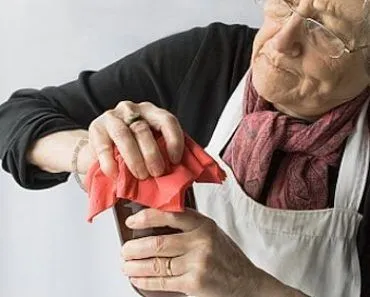
Warm almost anything and it grows a little, and glass is no exception. It is why hot water loosens a stuck metal lid. The lid grows faster than the jar around it. The growth is tiny, about nine millionths of the glass's length per degree.
Glass also passes heat along slowly. Boiling water inside a cold jar heats only the inner skin, to nearly 100 °C. The outer skin, a few millimeters away, is still at room temperature. For a second or two, one face is hot and the other is cold.
Think of the wall as a stack of thin sheets glued together. The inner sheet is hot and wants to be bigger. The sheets glued to it have not heard the news. They want to stay the size they are. Neither side can move freely, so they pull against each other. Engineers call that pull thermal stress. What causes it is the difference across the wall, not the heat itself.

That is why the jar survived the canner. It went into warm water and came to the boil with it. Every sheet in the stack warmed at one pace. No difference across the wall, no pull, no crack. Give the kettle-shocked jar a minute and the stress fades too, once the sheets agree on a temperature. The danger lives in the first seconds after the pour.
Which Part Of The Glass Jar Actually Breaks?
Glass has a lopsided personality. Squeeze it and it is formidable; stretch it and it gives up early. Its strength is set by tiny flaws in its surface. A stretching force can pull one open into a crack. Every jar has them, and steel wool and metal knives add more. A scratch is a crack that has not had its moment yet.
Which part gets stretched depends on the direction of the shock. A hot jar set on a wet stone counter cools from the outside in. The skin shrinks first while the warm middle holds it out. The skin is stretched, right where the scratches are.
A cold jar meeting boiling water is the mirror image. The skin grows first and is squeezed. The stretch moves inward to the cooler middle of the wall. A squeezed skin is the trick that makes tempered glass tough. While the surface is pushed together, its flaws stay shut. Heating is the kinder direction, which matters later.

How Big A Temperature Jump Can A Glass Jar Take?
For a sudden jump, the stress in the glass follows one short rule:
σ = αEΔT
Here σ (the Greek letter sigma) is the stress. α (alpha) is how much the glass grows per degree. E is its stiffness, or how hard it pushes back when deformed. ΔT (delta T) is the size of the jump. Set the stress equal to the strength of the glass, σf. Flip the rule around and you get the jump that breaks it:
ΔT = σf ÷ (αE)
Two materials scientists ran these numbers for the two kitchen glasses:
- Ordinary jar glass grows about nine millionths per degree. Its stiffness is about 68,000 MPa. Multiply them: each degree of instant jump adds about 0.6 MPa of stress.
- A standard benchmark for glass strength is 5,000 psi, about 34 MPa. Divide: 34 ÷ 0.6 is roughly 55 °C, a jump of about 100 °F.
- Borosilicate is the glass of lab beakers and the original Pyrex. It grows only three millionths per degree. It is a touch less stiff, at 62,000 MPa, so each degree adds about 0.2 MPa. That gives roughly 183 °C, about 330 °F.

A kettle poured into a room-temperature jar is an 80 °C jump, well past the first line. None of the authors' calculations suggested ordinary glass was likely to survive boiling water.
Yet jars survive it every day, and the rule explains why. It assumes the jump is instant. Real heat takes time to cross from water into glass. The difference across the wall never reaches its full size. Strength also varies from jar to jar. Some beat the benchmark, and the scratched ones fall short. A cold jar under a kettle is a bet with decent odds. It can also lose a few seconds late, because the stress peaks as the heat works inward. That is why the crack sometimes waits until you have turned your back.
Why Did Pyrex Stop Being Borosilicate?
Corning developed borosilicate to stop battery jars cracking. A Corning scientist, Jesse Littleton, took some sawn-off jar bottoms home. His wife baked pies in them. The cookware that followed was advertised as safe from oven to icebox.
Corning sold its consumer cookware business in the late 1990s. Pyrex-brand bakeware made for the US market has been soda-lime glass since then. Soda-lime is a close cousin of jam-jar glass, here with a strengthening heat treatment. Pyrex-brand cookware sold in Europe is still borosilicate. The scientists behind the numbers above tested new US dishes. The heat treatment, they found, had not raised thermal-shock resistance by much. They called the safety margin of soda-lime cookware in a kitchen borderline. The name on the dish tells you less than the continent you bought it on.

Does Preheating A Glass Jar Help?
Yes, in direct proportion, because the jump sits right there in the rule. Boiling water into a room-temperature jar is an 80 °C jump. Hot tap water first might bring the jar to 60 °C. Now the jump is 40 °C and the stress is half what it was. Nothing about the glass has changed; the starting line has moved.

This is the whole logic of home canning. The official guidance is to wash the jars and keep them warm until filled. Washington State's extension service is blunter. Jars must be kept hot until ready to fill. A thermal-shock break, it adds, shows as a crack around the base. The cold-brew jar went that way.

The rule runs in reverse too, and this is the half people forget. The guidance also warns against putting a hot jar on a cold surface. The cookware scientists cite a test with bakeware from a 450 °F oven. Set on a wet countertop, it shattered. A towel under a hot jar is not fussiness. It is the slow lane.
Why boil jars at all? Sterilizing one, the guide says, takes 10 minutes covered in boiling water. But the jars go into the canner first and come to the boil with the water. The jar is not toughened by its bath. It is brought up to speed.
Is Cooling A Glass Jar Worse Than Heating It?
Does a jar full of boiling water survive an ice bath better? It does the opposite.
Remember which direction stretches the skin: cooling does. A detailed analysis of a shocked glass plate found this at every speed of heat transfer. The peak stretch under sudden cooling is always higher than under sudden heating. For an instant jump, heating peaks at about 31% of the cooling value. Cooling is roughly three times as punishing, and it aims that punishment at the scratched outer skin. The model is a flat plate, so the exact factor will differ for a jar, but not the direction.

The boiling water inside toughens nothing. It sets the starting temperature at boiling point. So the drop into ice water is a 100 °C jump the wrong way.
A second question follows from the first. Does surviving one shock prove a jar can take the next? Not reliably. A proof test is a deliberate overload, and the US standards bureau once ran one on soda-lime glass. The test only guaranteed a minimum strength under dry conditions. When flaws grew during the test, "no assurances of a minimum strength can be given". Those were mechanical loads, not kettles, but the same logic applies. Kitchen shocks always involve water, and flaws can grow a little each time. New scratches arrive between uses, so yesterday's survival is a weak guarantee.
So, Why Does A Glass Jar Crack When You Pour In Boiling Water?
Because glass is slow. Boiling water heats the inner skin before the rest of the wall knows. The hot skin tries to grow, the cold glass refuses, and the pull stretches the wall. Glass tolerates a squeeze and resents a stretch. Its patience runs out at a flaw. Ordinary jar glass hits its benchmark strength at an instant jump near 55 °C. A kettle into a cold jar is well past that.
Preheating works because the stress rises in step with the jump. A jar warmed under the hot tap faces half the stress of a cold one. Heating squeezes the skin and is the gentler shock. Cooling stretches it and is harsher, by about three times in the extreme case. So a hot jar on a wet counter is riskier than a kettle into a warm one.
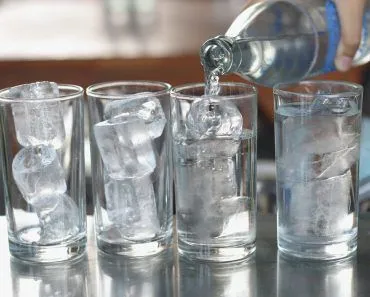
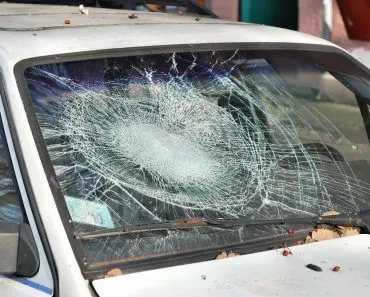
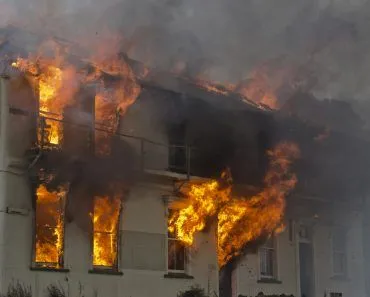
The physics is no different when ice cubes crack in a drink, a bottle splits in the freezer or windows break in a fire. The fix costs nothing. Run the jar under hot tap water first and pour slowly. Set anything hot on a dry towel or a wooden board, never on cold stone. The folded towel was never about neatness. It keeps the two faces of the glass at one temperature.
References (click to expand)
- Shattering glass cookware — R.C. Bradt and R.L. Martens, American Ceramic Society Bulletin 91(7), 2012 (full text hosted by the University of Notre Dame)
- The thermal shock resistance of solids — T.J. Lu and N.A. Fleck, Acta Materialia 46(13), 1998
- Physical and Mechanical Properties of Typical Soda Lime Float Glass, FM05-12 — National Glass Association
- Lecture 11: Thermal Expansion of Glasses, Optical and Photonic Glasses — Lehigh University
- Proof Testing of Ceramics: I. Experiment, NBSIR 79-1934 — National Bureau of Standards (NIST)
- Jar Breakage, Food Safety and Preservation — Washington State University Extension, Lewis County
- Do I need to pre-sterilize my jars before canning? — National Center for Home Food Preservation
- BOROFLOAT 33 technical details — SCHOTT
- SCHOTT BOROFLOAT 33 technical data sheet (hosted by Edmund Optics)
- Thermal Shock Resistance Of A Soda Lime Glass — British Glass knowledge base
- Thermal shock — Wikipedia (supplementary)