With access to water, a healthy adult can usually go about 30 to 60 days without food before the body shuts down. The IRA hunger striker Bobby Sands famously survived 66 days in 1981. Without water, however, the timeline collapses to roughly 3 to 4 days. Inside the body, the first 24 hours are powered by liver glycogen; after that the body enters ketosis and starts burning fat; only later does it begin consuming its own muscle to feed the brain.
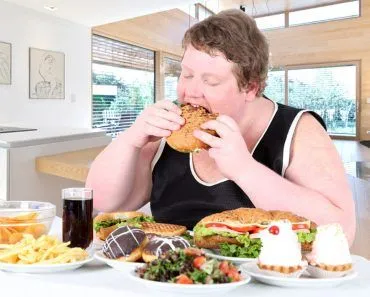
We’ve all had one of those days when we get too angry about something and decide to vent that anger on our food intake; either we go into a mode of uncontrolled binge eating or we don’t eat at all. Somehow, we always know that we won’t starve to death, as consciously or subconsciously, we know that there is a big fat pizza lying on the table in the other room.
However, have you ever wondered about the scenario of an extended period of non-eating? What would happen to your body if you were to stop eating altogether?
Smooth 6 Hours
This happens almost daily with most people. We have a meal, and then there is usually a gap of a few hours before we eat again. Although it’s said that this kind of habit is unhealthy and that one shouldn’t take long breaks between meals. But who actually listens to that?
For the first 4 to 6 hours after a meal, you are still running on glucose absorbed directly from food, and your body has no idea you have skipped the next one. Once that is used up, the liver starts breaking down its glycogen stores (a process called glycogenolysis) to maintain a steady blood sugar level. Hepatic glycogen typically lasts roughly 18 to 24 hours of fasting before it runs out.
About 20% of your resting energy is consumed by your brain (and a hefty 25% of all the glucose your body burns), which is a remarkable amount for a 1.4 kg organ. The rest fuels muscle tissue, internal organs, and red blood cells. Red blood cells are an interesting special case: they have no mitochondria, so they can only burn glucose via anaerobic glycolysis. They cannot use fat or ketones at all.
After 6 Hours: I’m Hungry!
After roughly 18 to 24 hours of fasting, the liver's glycogen reserves are nearly gone and the production of energy from glycogen can no longer keep up. By around the second or third day of fasting the body switches to another mechanism, called ketosis. This is also when most people start to feel properly hungry, weak, and a little agitated.
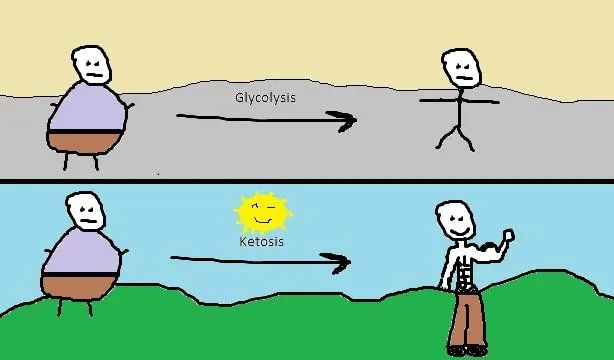
Ketosis is the state in which most of the body's energy supply comes from ketone bodies in the blood (this is distinct from glycolysis, the production of energy from glucose).
Since there is a limited amount of glucose now in the blood, the body has to depend on fat to produce energy. Fat is then broken down into fatty acids, but it’s not particularly easy.
The problem is that your brain cannot use the long-chain fatty acids that are produced in this way. Therefore, the brain being so smart, as we already know, it changes its approach a bit. It now uses the ketones present in your blood to keep you from meeting your maker.
During prolonged fasting, ketone bodies can supply up to about 60 to 70% of the brain's energy needs, with the remaining 30 to 40% still coming from glucose that the body must manufacture in the liver. Most of the rest of the body switches to burning fatty acids directly. The forced switch is hard on the brain, and cognitive functioning begins to slip.
‘I Need Glucose’, Said The Brain
The above measure is only temporary, as the brain still requires glucose to continue functioning. Beyond this, your mood and energy will suffer severely. This will be the time when you feel weak and unable to do many things, including both mental and physical tasks.
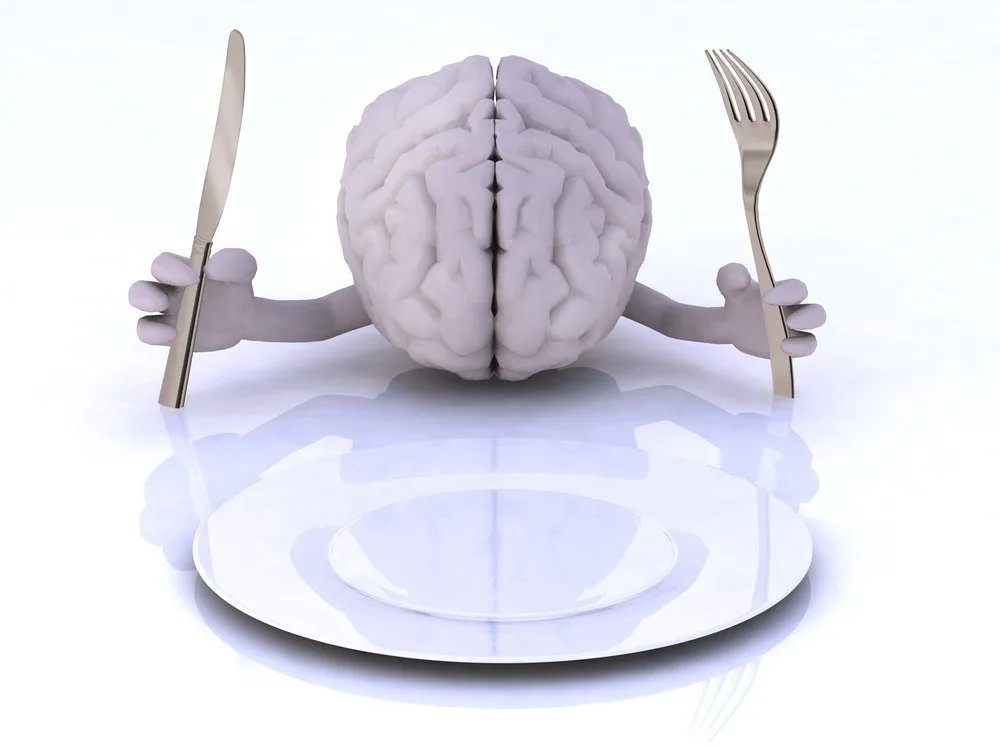
In order to produce glucose for energy, the body starts to use proteins stored in the body. Now, proteins are most commonly associated with one’s muscle mass, so you’re right to think that gobbling up your own protein will have a negative impact on your muscle mass. Proteins release amino acids, which can be converted into glucose; this is good news for brain, but extremely bad news for your body and physical appearance.
Such a rapid depletion of the body’s proteins will result in a weakening of the entire body, diminishing muscle mass, and decreased libido. In women, this can result in a total shutdown of the menstrual cycle.
The Final Days
Within a few days, the immune system will take a severe hit in the absence of important vitamins and minerals. Eventually, it will give up and the individual will become susceptible to many pathogens, illnesses, and eventually a complete breakdown.
In some cases, the body will continue to gobble up all the resources until there is no fat, muscle, or glucose reserves left in the body. Such people may die of heart attacks, due to severe tissue damage in the heart and other vital organs.
How Long Can Someone Live Without Food?
There is a wide range of survival times in starvation cases. The exact number depends on how much water one drinks, how much body fat one has at the start, and underlying health. With access to water, a healthy adult typically lasts 30 to 60 days without food before the body shuts down. The IRA hunger striker Bobby Sands famously survived 66 days in 1981 before dying; nine of his fellow strikers also died after 46 to 73 days. The 70-day mark cited in the hunger-strike medical literature is roughly the upper bound for healthy adults.
One important caveat: all of these numbers assume access to water. Without water, the body fails within about 3 to 4 days regardless of food intake, since dehydration causes catastrophic kidney and circulatory failure long before starvation does.
Why Do Some People Survive Longer Than Others?
You have probably noticed that these survival estimates come as a wide range rather than a single tidy number, and that is because no two bodies reach starvation with the same reserves. The biggest factor is simply how much fat you are carrying when the food runs out. Fat is the body's long-term fuel tank, so the more of it you begin with, the longer you can protect your muscle and vital organs before they are broken down for energy.

This is also where a striking difference between the sexes shows up. Reviews of famine and hunger-strike data suggest that a body mass index (BMI) of roughly 12 is about the lower limit for human survival. Men tend to reach a fatal threshold at a BMI of around 13, whereas women can survive down to about 11. The reason is that women naturally carry a larger share of body fat and mobilise it more readily, which conserves precious protein for longer.
Your metabolism has a say too. Rather than burning through its reserves at the usual pace, a starving body throttles back to buy time. In the famous Minnesota Starvation Experiment (1944-45), volunteers who lived on a semi-starvation diet of about 1,570 calories a day for 24 weeks lost roughly a quarter of their body weight, and their resting metabolism fell sharply as their bodies fought to conserve every last calorie. Add in age, hydration, and any underlying illness, and it becomes clearer why the ten IRA hunger strikers of 1981 died across a spread of 46 to 73 days rather than all together.
What Happens When You Start Eating Again?
Here is the twist that catches many people off guard: after a long stretch of starvation, one of the most dangerous moments can be the meal that ends it. Reintroducing food too quickly can trigger a potentially fatal condition called refeeding syndrome, a cluster of complications caused by sudden shifts in fluid and electrolytes when nutrition is restored too aggressively.

The mechanism is a cruel irony. During starvation the body runs mainly on fat and protein and quietly burns through its stores of minerals such as phosphate, potassium, and magnesium. The moment carbohydrates come flooding back, blood sugar rises and the body releases a surge of insulin, which drives those already-depleted minerals rushing into the cells. Blood phosphate can crash, the hallmark of refeeding syndrome, and because phosphate is essential for making the energy molecule ATP, the heart and lungs can suddenly struggle. The results can include dangerous heart-rhythm disturbances, respiratory failure, and even sudden death.
This is not a rare textbook curiosity. It was first noticed after the Second World War, when famine survivors and liberated prisoners of war unexpectedly fell ill once they were fed; one 1951 report found that around a fifth of prisoners of war who had been starved in captivity died suddenly after refeeding began. That is exactly why doctors reintroduce nutrition to severely starved patients slowly and under close monitoring, often starting with only a fraction of normal calories and topping up thiamine (vitamin B1), rather than letting them eat freely. In other words, breaking a genuine, prolonged starvation fast is a medical procedure, not a buffet.
So the next time you angrily skip dinner, spare a thought for the elegant, frantic chemistry working to keep you upright. Then go ahead and have that snack, and get some of those energy reserves back!
References (click to expand)
- Integration of Metabolism - www.tamu.edu
- Effect of starvation and very low calorie diets on protein .... United Nations University
- C CH —. Chapter 6 Starvation and Diabetes Mellitus - Rose-Hulman. Rose-Hulman Institute of Technology
- Food Intake and Starvation Induce Metabolic Changes - Biochemistry - NCBI Bookshelf - www.ncbi.nlm.nih.gov
- Elliott, B., Mina, M., & Ferrier, C. (2016, January). Complete and Voluntary Starvation of 50 Days. Clinical Medicine Insights: Case Reports. SAGE Publications.
- Refeeding Syndrome - StatPearls - NCBI Bookshelf
- The limits of human starvation - Emergency Nutrition Network
- Human energy metabolism during semistarvation and re-feeding - NCBI PMC