The sympathetic nervous system regulates many homeostatic mechanisms, including the “fight or flight” response. When you are suddenly faced with a dangerous situation, your body rapidly shifts from calm mode to excited mode. The most apparent and visible signs of this shift include the draining of your face’s color, your mouth drying out, and even your hands getting cold.
Your face turns pale in dangerous situations because your body starts sending blood from non-critical areas to where it’s needed the most when you’re faced with a fight-or-flight situation. So, if you see a dog chasing you, your face turns pale because your body immediately sends the blood to the parts of the body (such as legs and arms) where it’s needed to deal with the immediate threat.
Have you ever been in a situation where you knew that you were in some form of immediate danger?
Of course you have! Everyone has, and not just once, but dozens of times over the course of your life! To give you some idea of the kind of situations to which I am referring, here are a few hypothetical scenarios:
Situation 1: You’re walking down a deserted street in the wee hours of the morning, and suddenly you see a few men walking briskly behind you. They may be perfectly harmless, but you have this eerie feeling that they’re following you and might attack at any moment now. As a result, you pick up the pace or even start running.
Situation 2: You’re sitting in the audience when someone suddenly calls your name from the stage and asks you to come up and address the audience, sharing your opinion on new ways to maintain a robust national economy.
Situation 3: You wake up with a nasty hangover after a night of wild drinking. Rubbing your eyes, you head to the restroom to take a leak. While you’re relieving yourself, you see from the corner of your eye, sitting there in all its glory, a fully-grown tiger!
Well, I have to admit that the last scenario is very unlikely in ‘regular’ life, but far from impossible, particularly in a Hollywood movie… or Las Vegas!
The theme of all these scenarios is the same – anxiety, stress and fear, born from the suddenness and unpredictability of those events. In any such situation, we usually turn pale, but why exactly does that happen?
Sympathetic And Parasympathetic Nervous System
The human body has a single autonomic nervous system (it’s called ‘autonomic’ because we can’t voluntarily control it), and it has two branches: the sympathetic nervous system and the parasympathetic nervous system.
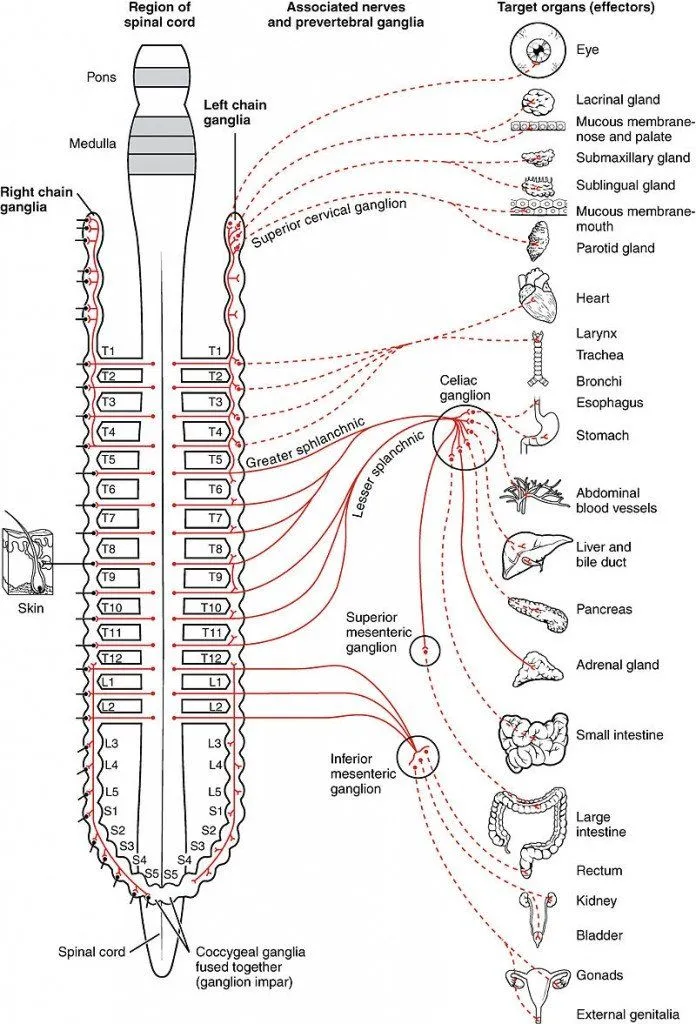
The sympathetic nervous system is responsible for regulating many homeostatic mechanisms in living organisms, including humans. However, it’s most commonly known for handling the hormonal and neuronal stress responses popularly known as the “fight or flight” response. While the sympathetic nervous system is constantly active at a basic level to maintain homeostasis (the state of steady and stable internal bodily conditions), it’s primary process is to stimulate the “fight or flight” response in the body.
In order to help you put this in perspective, consider this: the human body basically operates in two modes: calm mode and excited mode. It’s in calm mode when you’re sitting, lying down or doing perfectly normal, non-taxing, predictable activities, such as reading, eating etc. However, it transitions to the excited mode when you’re physically applying yourself, such as while lifting weights, sprinting and so on.
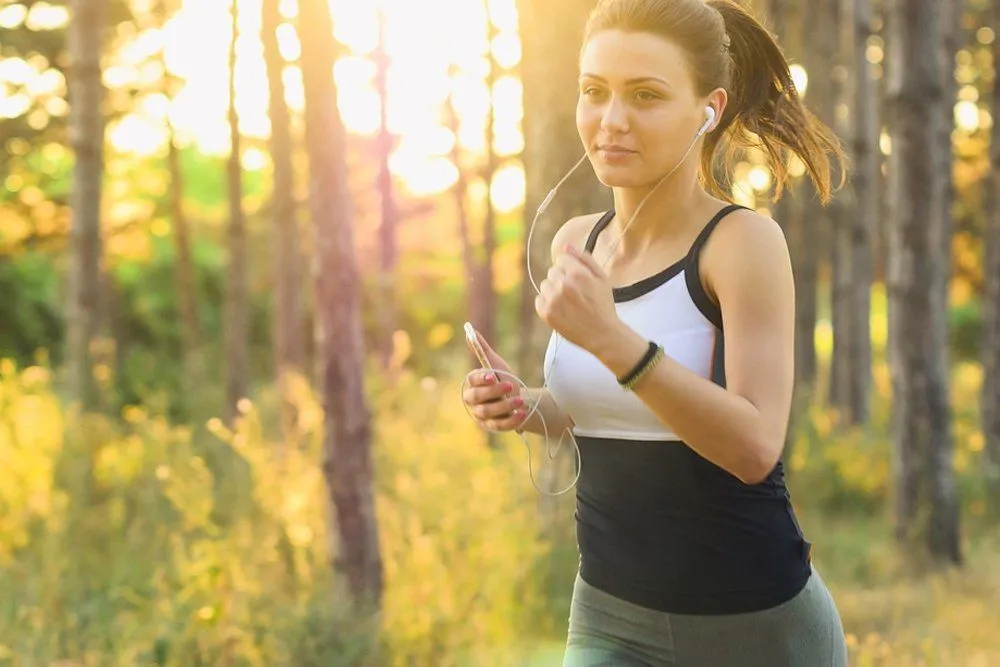
The mechanism of blood distribution throughout the body is different for each of these two modes.
Fight-or-flight Response
When you are suddenly faced with a dangerous, potentially harmful situation, your body rapidly shifts from calm mode to excited mode. Accordingly, the corresponding blood distribution mechanism kicks into action.
The most apparent and visible signs of this shift include the draining of your face’s color, your mouth drying out and even your hands getting cold, in some cases. This happens because, in order to deal with that immediate threat/risk, you don’t have much use of your usual ‘blushy’ face in that scenario; instead, what you need is as much force and strength as you can muster.
In order to make this happen, the sympathetic nervous system diverts blood flow to the large skeletal muscles in your arms and legs and temporarily reduces the blood supply to your skin and to organs and bodily processes that aren’t essential for facing that particular threat. The constriction of the tiny blood vessels in the skin of your face is what visibly drains the color from it. This is also why your mouth goes dry when you’re scared, because the fight-or-flight response slows down your digestion, which dries up the saliva in your mouth.

Dangerous situations trigger the fight-or-flight response in the body, the direct result of which is the release of the hormone adrenaline (epinephrine) into the bloodstream from the adrenal medulla. The effect of this hormone is increased sweating, dry mouth, pupil dilation and pale skin.
Blood flow to the surface of the body is reduced, which is one of the main reasons why your face turns pale during a nervous or scary encounter with someone/something.
Can Anxiety Also Make You Look Pale?
You don’t actually need a tiger in the bathroom for any of this to happen. Anxiety borrows the same machinery. When you’re stuck waiting for a big medical test result, walking into a job interview, or scrolling through bad news at 2 a.m., your sympathetic nervous system can still throw the same switch (just a quieter, longer-running version of it). The skin vessels constrict, blood gets nudged away from your face, and you end up looking a little washed out in the mirror, even though there’s no immediate physical threat in sight.
The Cleveland Clinic actually lists “an emotional response like fear or shock” as a recognized cause of pallor, alongside more serious medical causes like anemia or low blood pressure. So if you tend to go pale before presentations or during panic attacks, you’re not imagining it: it’s your fight-or-flight system being a bit overeager. Persistent, anxiety-driven pallor that comes with dizziness, fatigue or breathlessness, however, is worth flagging to a doctor, since those symptoms can also point to underlying conditions that have nothing to do with stress.
Why Does "Pale As A Ghost" Mean You're Scared?
Here's a fun thing about language: the phrases we reach for when someone gets a fright aren't just poetic flourishes. "White as a sheet", "pale as a ghost" and "the color drained from his face" all describe the exact biology we've been talking about. Dictionaries define "white as a sheet" as looking very pale because of shock, fear or illness, and the expression has stuck around for centuries precisely because the change is real and visible to everyone in the room.

When the sympathetic nervous system fires, the small blood vessels just beneath the skin of your face constrict and pull blood away from the surface. With less blood near the top layer, the warm pink (or ruddy) tone genuinely fades, leaving the washed-out look those idioms capture. It's the same fight-or-flight wiring that can make us freeze in fear rather than run.
One caveat: "white" is a bit of a misnomer. Nobody actually turns paper-white. People with lighter complexions look bloodless and pale, while those with deeper skin tones tend to look grayish or ashen instead. The mechanism is identical; only the visible result shifts with your baseline skin tone. So the next time a horror-movie character goes "white as a ghost", you're really watching a centuries-old phrase describing a split-second burst of vasoconstriction.
Can Fear Actually Turn Your Hair White?
Legend has it that Marie Antoinette's hair turned white overnight before she was sent to the guillotine, and pop culture loves the idea that a single terrifying moment can blanch your hair on the spot. The overnight part is essentially a myth: the pigment in each strand is already locked in as the hair grows, and there's no mechanism to bleach finished hair in a matter of hours.

But the link between fear chemistry and going gray turns out to be real, and it runs through the very same fight-or-flight system that drains your face. In a 2020 study published in Nature, researchers from Ya-Chieh Hsu's lab at Harvard found, working with mice, that acute stress activates the sympathetic nerves wrapped around hair follicles, triggering a burst of the chemical messenger norepinephrine. That over-stimulates the melanocyte stem cells, the reservoir that supplies fresh pigment to new hair, forcing them all to switch on and convert at once. Within days the reserve is permanently emptied, and once those stem cells are gone, the hair that grows in afterward comes through without color.
So fear can't turn the hair already on your head white in an instant. But the same surge of sympathetic activity behind a pale, frightened face is, over the long run, tied to losing your color up top too. The pallor is temporary; the graying, unfortunately, is not.
References (click to expand)
- Physiology, Sympathetic Nervous System. StatPearls / NCBI Bookshelf.
- Neuroanatomy, Sympathetic Nervous System. StatPearls / NCBI Bookshelf.
- Neuroscience For Kids - Autonomic Nervous System. The University of Washington.
- Pallor (Paleness): Causes, Diagnosis, Treatment. Cleveland Clinic.
- (As) White As A Sheet. Cambridge Dictionary.
- Zhang, B. et al. Hyperactivation Of Sympathetic Nerves Drives Depletion Of Melanocyte Stem Cells. Nature (2020).
- How Stress Causes Gray Hair. NIH Research Matters.