Table of Contents (click to expand)
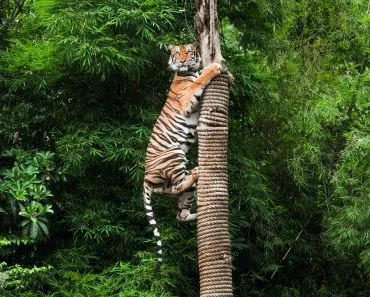
Different pupil shapes reflect an animal’s ecological niche. Horizontal slit pupils in grazing prey (sheep, goats, deer, horses) give a panoramic 320–340 degree field of view and stay level with the ground even when the head is lowered. Vertical slit pupils in small ambush predators (domestic cats, foxes, vipers, crocodiles) maximise vertical defocus blur for accurate close-range distance judgement, as Banks et al. showed in Science Advances (2015). Round pupils in tall, active hunters (lions, tigers, wolves, dogs, humans) are versatile in changing light, with less need for the specialised depth cues that slit pupils provide.
Have you ever wondered how the Eye of Sauron, the bad guy from the popular Lord of the Rings movie franchise, could extend his gaze over all of Middle Earth and create such havoc? It may have been because of that sinister, slit-shaped pupil of the flaming eye! I’m sure that the creators used the slit pupil for aesthetic purposes or to personify evil, but in reality, creatures on this planet have different pupil shapes for more reasons than aesthetics.

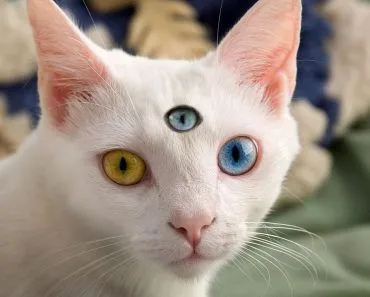
The common shape categories of eye pupils in the animal kingdom include circular, vertical and horizontal. An ecological advantage could be the reason why different shapes of pupils exist. Humans, birds, and big cats like lions, tigers and cougars have circular pupils, whereas smaller cats, snakes, and crocodiles have vertical slit pupils. Grazing animals, such as cattle, sheep and goats have horizontal slit pupils. To understand what advantage the shapes of pupils pose for an animal, we first need to understand the basic function of pupils.
The Pupil Chronicles
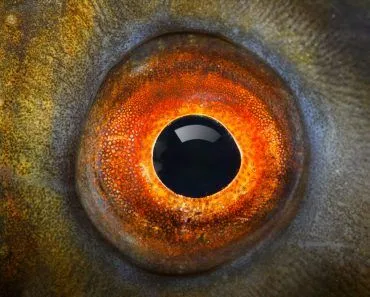
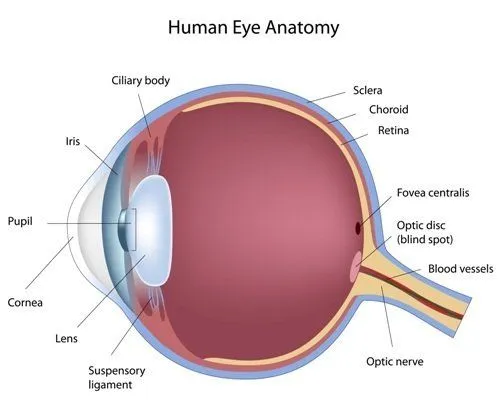
At the center of your eye is a colored globe called the iris. The black hole right at the center of the iris is called the pupil. The pupil takes in light, which helps to form an image on the retina at the back of the eye. The pupil and iris contract and expand in order to control the amount of light that falls on the retina. Under different lighting conditions, the pupil adjusts itself to maintain visibility. For example, in low lighting, the pupil expands to let in more light. Some animals are nocturnal, like owls, others are awake only during the day, and some are active both day and night, like cats. One reason that animals have different shaped pupils is to be able to see at their preferred time of day. However, it seems that controlling illumination levels is not the only reason for the difference in shape.
Another reason for modified shapes of pupils in different species is pure survival advantage. According to whether an animal is a predator or a prey, they need a visual system that aids them in their foraging activities. Each pupil shape has different attributes related to these two domains: illumination and ecological niche.
Circular Pupils
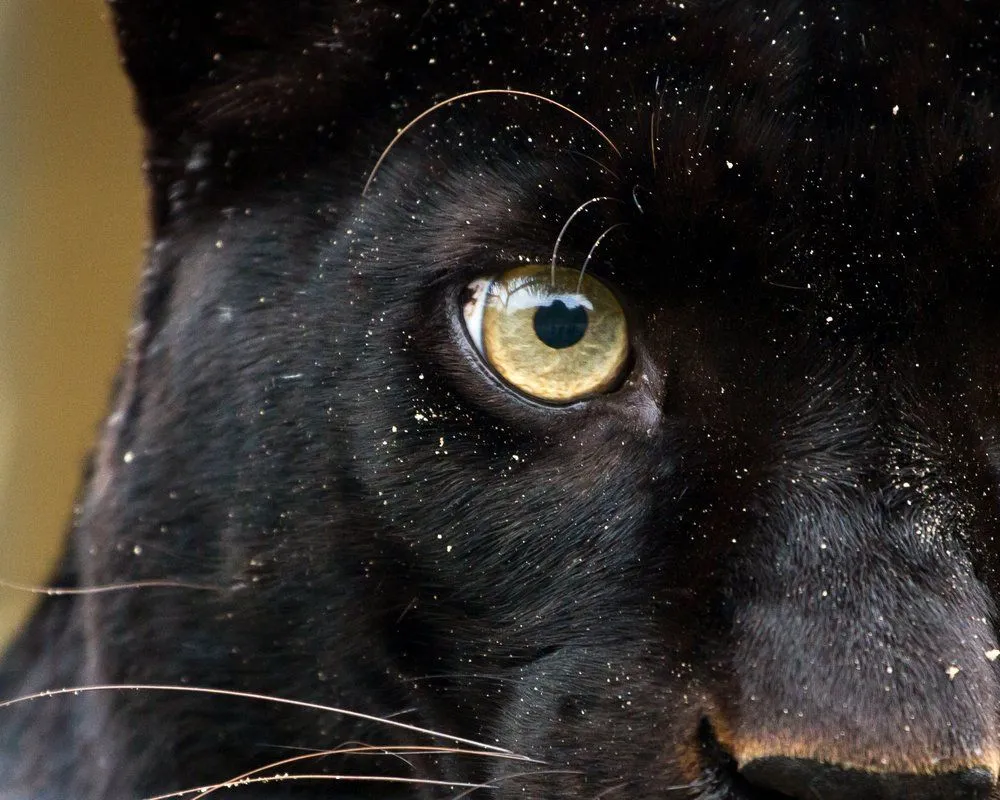
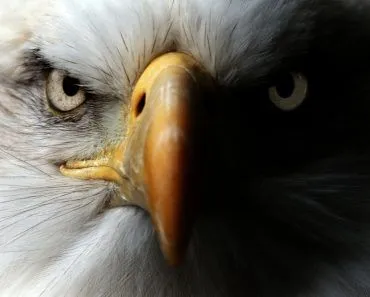
These are the normal circular holes we commonly see in the center of human irises. Since humans are typically daytime creatures and are not commonly exposed to the dark for extended periods, it is enough for us to have pupils that dilate and contract, allowing us to see at both bright and relatively low illumination levels. The minimal diameter of the human pupil is 2 to 4 mm, while the maximal diameter (dilation) is 3 to 8 mm. Other animals with circular pupils are also mostly predators, such as tigers, wolves, and dogs, who tend to hunt in low light conditions, but predominantly during the day. Also, these animals are preyed upon by other animals, so their visual systems do not need to be adapted to help them flee. The pupils of these animals, although circular, are still more powerful than human eyes, as they can contract and dilate more drastically than in humans. Healthy human pupils are uniformly round; the rare exceptions are medical conditions such as coloboma (a developmental gap in the iris that gives a keyhole shape), anisocoria (one pupil larger than the other), or trauma to the iris sphincter, which can leave a permanent oval pupil.
Vertical Pupils
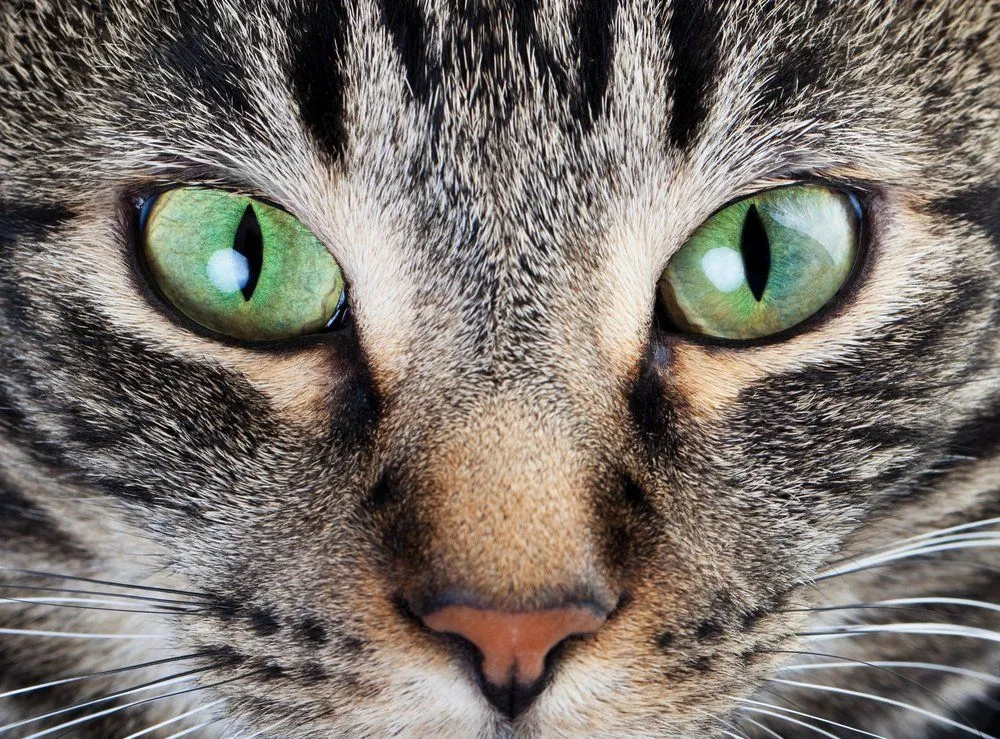
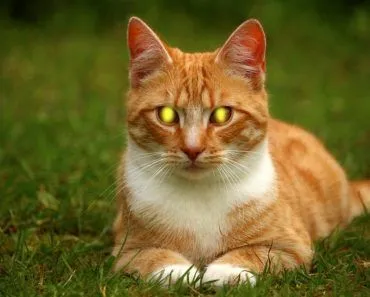
Elongated slit pupils afford a greater amount of dilation and contraction, due to the involvement of two additional muscles in these mechanisms that circular pupils do not possess. More flexibility helps animals with vertical pupils to see better in the dark, even with minimal amounts of illumination, as their pupils are able to significantly expand. They also prevent these animals from getting dazzled by bright lights, as their pupils can turn to narrow slits, greatly reducing the amount of light entering the eye. Such vertical slit pupils are commonly found among those animals whose hunting activities are restricted to very low levels of illumination. Nocturnal animals, such as cats, snakes, and foxes, possess these elongated pupils. Vertical pupils also increase the acuity of judging distances and reducing blur, which helps predators gauge the exact distance between them and their prey.
Rectangular Pupils
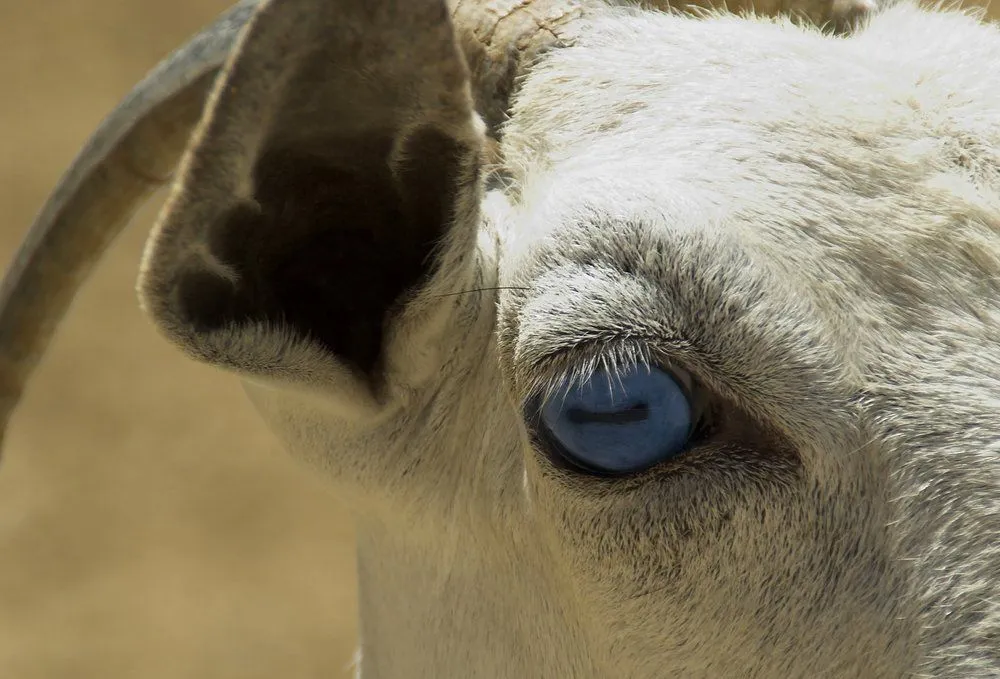
Most grazing or herbivorous animals, including deer, goats, and sheep, have almost square or rectangular slit pupils, and are also normally the animals that are preyed upon. They mostly have laterally placed eyes (on the sides of their head), which gives them panoramic vision. These rectangular pupils, along with the lateral placement of their eyes, gives these animals about a 320- to 340-degree field of vision, as compared to cats, who can only see about 200 degrees around, and humans, who can only see in a 180-degree field.
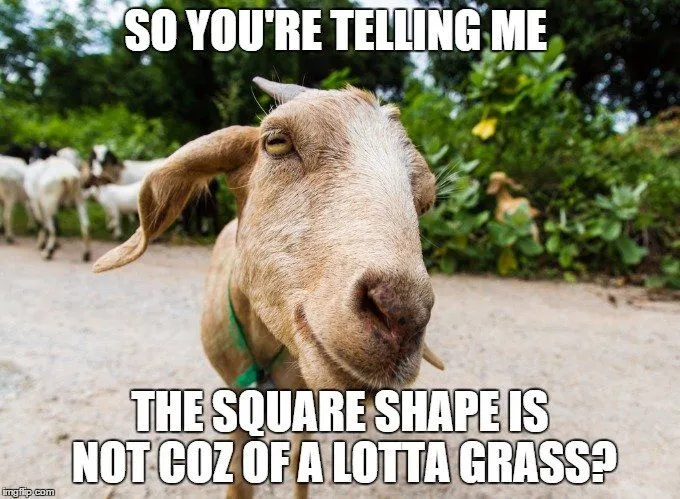
This particular orientation of the pupil is parallel to the ground and limits the amount of sunlight hitting the eye from above, thus preventing them from being blinded by light. These animals also need to see from the corners of their eyes to detect predators and quickly decide on a trajectory to take while fleeing, which is afforded by the rectangular shape. Eyes of grazing animals can rotate about 50 degrees, so the horizontal orientation parallel to the ground is maintained, even if they bend over in order to graze.
Why Don't Humans Have Slit Or Rectangular Pupils?
This is easily the question people ask most about pupil shape, and the answer falls straight out of the same ecological logic. When Banks and his colleagues surveyed 214 species of land animals for their 2015 Science Advances study, they found that round pupils belong overwhelmingly to tall animals that forage actively and hunt during the day. Humans fit that profile almost perfectly: we are large, upright, frontal-eyed and mostly active in daylight, so a simple round pupil that widens and narrows with the available light is really all we need.

The specialised tricks of a slit pupil would barely help us. A vertical slit's main pay-off is a depth cue called defocus blur, and the geometry of that cue works far better for an animal whose eyes sit close to the ground than for one whose eyes are well over a metre up. A tall creature like us judges distance mainly through stereopsis (the slight difference between the two eyes' views) and motion parallax, neither of which needs a slit. A horizontal, goat-like pupil would help even less, because it only earns its keep if the eye can counter-rotate to stay level with the ground while the head is lowered to graze. Since we neither ambush prey at ankle height nor feed with our heads down, evolution had no reason to give us anything more elaborate than a circle. About the only time a healthy human pupil stops being round is through injury or a developmental condition such as coloboma, as mentioned earlier.
Why Do Foxes And House Cats Have Slit Pupils While Wolves And Lions Have Round Ones?
If slit pupils were simply a badge worn by every predator, a wolf and a fox, both members of the dog family, would not disagree so obviously. The Berkeley and Durham team found that the real divide runs along how a predator hunts and, crucially, how tall it is. Vertical slit pupils cluster among ambush predators that lie in wait and strike at close range, and these turned out to be small, close-to-the-ground animals. Of the 65 frontal-eyed ambush predators in the survey, 44 had vertical pupils, and 36 of those stood less than 42 centimetres (about 16.5 inches) at the shoulder.

That is why the domestic cat and the fox, both low-slung close-range hunters, have slit pupils, while their taller relatives do not. The fox is the odd one out among dogs precisely because it hunts like a cat, pouncing on mice from a short distance, whereas wolves and coyotes run their prey down over open ground. Among the cats it is the same pattern: lions and tigers stand far taller and have round pupils, even though the house cat curled up beside them has vertical slits. The defocus-blur distance cue that a slit sharpens is geometrically most valuable for a short animal timing a pounce, so as a predator's shoulder height climbs, the benefit fades and a round pupil takes over. Sharp-eyed daytime hunters such as eagles skip slits altogether and lean on other visual specialisations instead.
Beyond Round, Vertical And Rectangular: Nature's Strangest Pupils
The three familiar shapes are not the end of the story. A few animals carry pupils so odd they look almost engineered. The cuttlefish is a favourite example: in dim water its pupil is a plain circle, but in bright light it clamps down into a wavy W. Marine biologists Mäthger, Hanlon and colleagues showed in a 2013 Vision Research paper that this W helps the animal cope with the lopsided lighting of shallow seas, where the view above is dazzlingly bright while the view below stays dim. The shape lets far more light in from the level horizon than from directly overhead, cutting glare from the surface so the dimmer lower half of the scene is not washed out.

Nocturnal geckos are every bit as strange. In a study published in the Journal of Vision in 2009, Roth and colleagues described how the helmet gecko's vertical pupil closes in daylight not into a single slit but into a vertical stack of separate pinholes. Paired with a lens built from concentric zones of different focusing power, this arrangement lets the gecko keep sharp images, and even tell colours apart, by starlight and moonlight, when human eyes are effectively colour-blind. Between the goat's letterbox slit, the cuttlefish's W and the gecko's row of pinholes, it is clear that nature truly takes an equal opportunity stance when it comes to the evolution of pupils.
References (click to expand)
- Banks, M. S., Sprague, W. W., Schmoll, J., Parnell, J. A. Q., & Love, G. D. (2015). Why do animal eyes have pupils of different shapes? Science Advances, 1(7), e1500391.
- Brischoux, F., Pizzatto, L., & Shine, R. (2010). Insights into the adaptive significance of vertical pupil shape in snakes. Journal of Evolutionary Biology.
- Walls, G. L. (1942). The Vertebrate Eye and Its Adaptive Radiation.
- Pupil (eye). Encyclopedia Britannica.
- Coloboma (developmental defects of the iris). StatPearls. NCBI Bookshelf.
- Sanders, R. (2015). Pupil shape linked to animals' place in ecological web. Berkeley News.
- Mäthger, L. M., Hanlon, R. T., Håkansson, J., & Nilsson, D.-E. (2013). The W-shaped pupil in cuttlefish (Sepia officinalis): Functions for improving horizontal vision. Vision Research, 83, 19-24.
- Roth, L. S. V., Lundström, L., Kelber, A., Kröger, R. H. H., & Unsbo, P. (2009). The pupils and optical systems of gecko eyes. Journal of Vision, 9(3):27.