Karl Marx argued that capitalism would destroy itself through its own internal contradictions. His two main predicted crises: the realization crisis (overproduction outruns demand, profits collapse) and the tendency of the rate of profit to fall (better machinery eventually erodes everyone’s margins as competitors copy it). He laid these out in Das Kapital (1867).
The time period of the 1920s to the early 1930s saw severe unemployment, economic depression, hyperinflation and global hysteria. This period is known as “The Great Depression”. The first world war, which ended in 1918, was a major reason behind the economic catastrophe that followed in many countries.
Since many countries were involved in the war, and not all of them were on the same side, the experience of economic crisis varies from country to country. Germany, for example, was hit first by hyperinflation in 1921–1923 and then again by the global Great Depression after 1929, while the United States’ downturn began with the Wall Street crash in October 1929.
To give you some idea of how bad the situation was, imagine that the currency of Germany in 1922 was the ‘mark’. In Germany at the end of 1922, one loaf of bread cost roughly 160 marks. By September 1923, that same loaf cost around 2 million marks. At the peak of hyperinflation in November 1923, one loaf of bread cost on the order of 200 billion marks (Source).
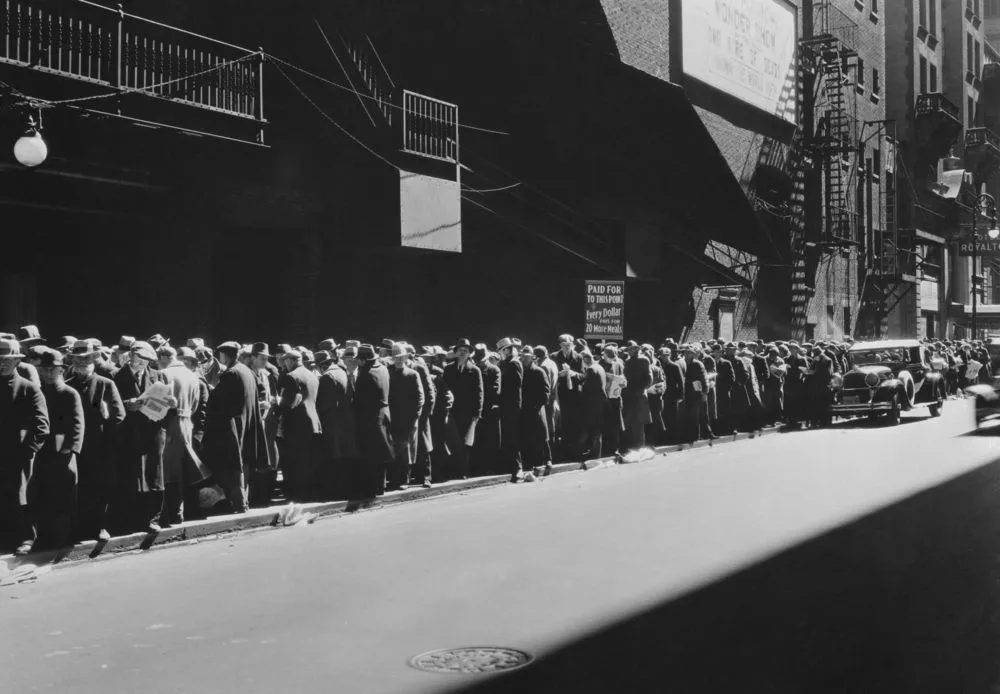
However, in the midst of all this turmoil, there were some people who were happier than ever. There was a section of people in society who saw all this turmoil as temporary, leading to something greater, something that they had believed in for a long time. These were the Marxists. The Marxists saw this severe depression as the end of capitalism, something Karl Marx had predicted in his writings in the 19th century. So… why did they believe that the Great Depression was the end? How had Marx predicted the end of capitalism?
Karl Marx
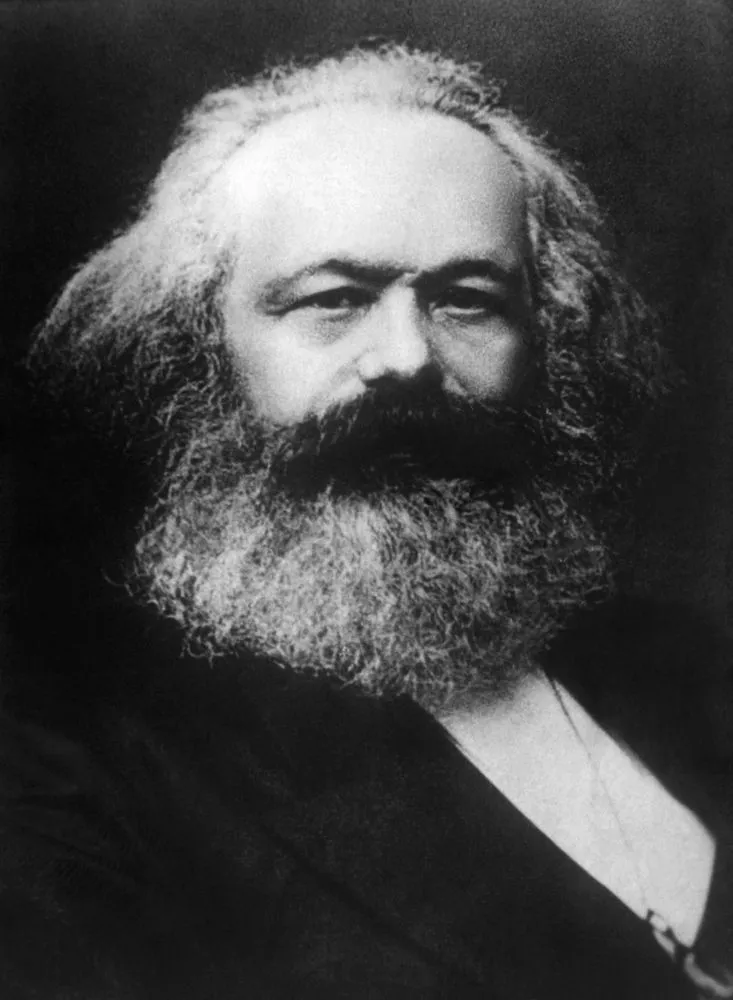
Karl Marx, as an author, went through two major phases in his life. The first was the idealistic, while the second was the materialistic. The idealistic phase is when Marx focused on human suffering, what capitalism as a structure does to society and how it creates a class divide etc. After this, Marx decided to analyze the economic workings of a capitalist system. It was in this phase, with his classics like Das Kapital, that he delivered some of his iconic phrases: “Capitalism will create its own fall“, due to the economic crises that any capitalist system would eventually suffer. The two major types of capitalist crises are:
- Realization Crisis
- Falling Rate of Profit
For the purpose of understanding these crises, let’s assume that you are an industrialist, and have a lot of money to invest in any field.
Realization Crisis
This crisis is also known as the crisis of demand.
Consider the example where you are an industrialist. Imagine that you’ve been working in the gold industry for a long time, and the profits are no longer large. Like any other investor, you will now be looking to invest in a market that is fairly new, has big returns and, and will have balance. What balance is this? The balance of supply and demand!
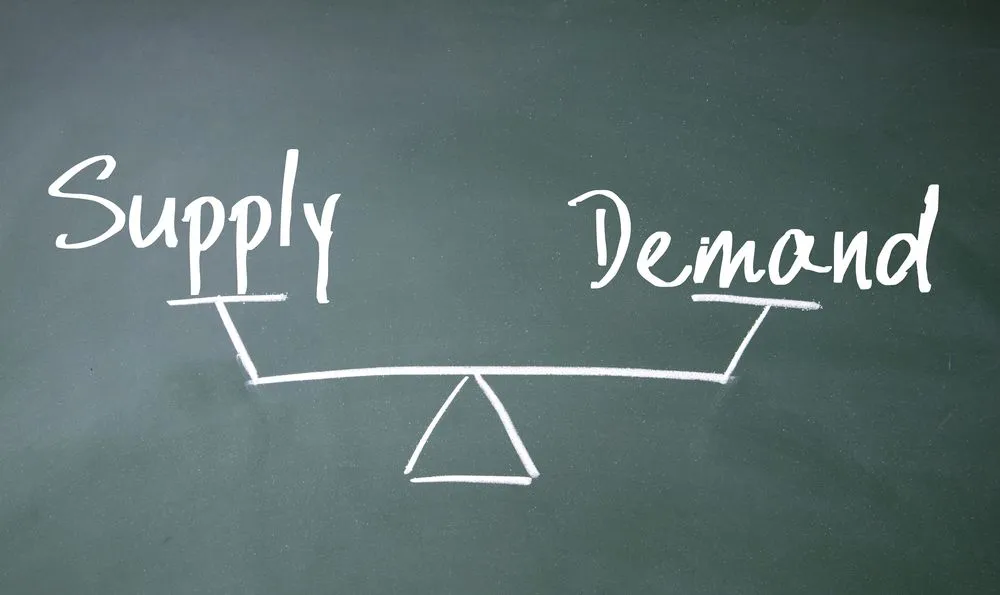
Once you enter a new market (provided that your product is successful), the demand for your product increases and you start getting big benefits. As the demand for your product increases, you increase the costs and slowly try to reap more benefits. The growing demand for your product puts your production in overdrive, so you keep producing more and more, thinking that there are always people that will want to buy the product. However, after a point, because of the expanding market, you increase prices slowly and the product gets more expensive. Due to the fact that your product is successful, people still try to buy it, but after a point, they can no longer afford your product.
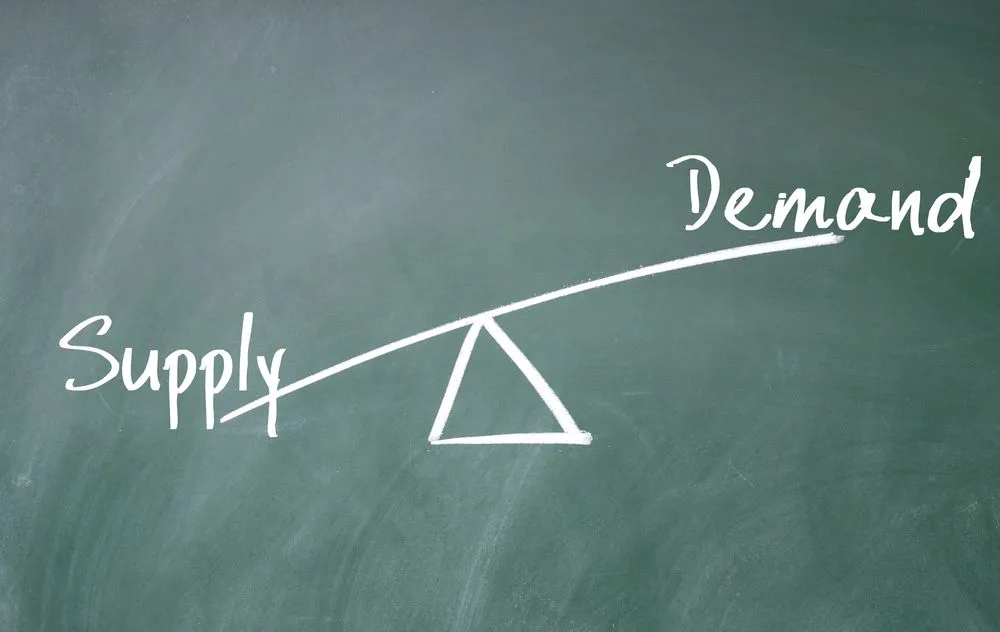
Economic Bubble Burst
A situation finally arises in which you keep producing your product, but there is no demand for it anymore. How does this happen? This can only happen when there is a separation between the laborers and consumers. The wages of the laborers will be lowered to exploit them to a maximum benefit. This phase, in which your production and benefits expand, is called an “economic bubble”. When the bubble bursts, the price of the product is exorbitant, there is too much of it, and nobody wants any of it!
Falling Rate Of Profit
Now, go back to the example where you are an industrialist. Let’s assume that upon leaving the gold industry, you decide to join the paper-making industry. The regular way would be to get the machinery and laborers, and then start up production. However, if you invest in better machinery at the first stage, that could change the game. If you have better machinery, your production will be much more efficient and you can achieve what is known as a “super profit”.

For a while, you will enjoy huge benefits. Eventually, your new machinery will be open to everyone, however, and everyone else will start using the same machinery as you. This will result in your profits dropping; eventually, the market will come to a grinding halt, until another set of “new machinery” is introduced in the market.
What Exactly Did Marx Predict Would Happen?
The two crises above are the engine, but Marx spelled out a fuller sequence of what he thought that engine would grind toward. In The Communist Manifesto (1848), and later in Das Kapital, he laid out a chain of predictions that build on one another.

- Capitalism never sits still. Marx wrote that the bourgeoisie “cannot exist without constantly revolutionising the instruments of production.” Every firm has to upgrade or die, so the whole system keeps churning through new machines and methods.
- Wealth piles up in fewer hands. As bigger firms swallow smaller ones, Marx expected the system to end up having “concentrated property in a few hands,” with ownership steadily narrowing.
- Society splits into two camps. He predicted the middle would hollow out and society would divide “into two great hostile camps,” the bourgeoisie (the owners) and the proletariat (the workers, who own nothing but their own labor). This is the two-group clash people often ask about.
- The workers grow and organize. As industry expands, Marx argued, “the proletariat not only increases in number; it becomes concentrated in greater masses,” packed into factories and cities where it can finally act together.
- The crises keep hitting. The realization crisis and the falling rate of profit return again and again, each one throwing more workers out of work and sharpening the divide.
- The system digs its own grave. Marx’s punchline was that the bourgeoisie produces “its own grave-diggers.” He believed the workers would eventually take over, ending private ownership of industry and replacing it with the classless, common-ownership order he called communism.
In Marx’s telling, none of this needed a villain. It followed, step by step, from capitalism simply doing what capitalism does.
Did Marx Actually Like Capitalism?
Here is the twist that surprises most people: in a way, yes. Marx was capitalism’s fiercest critic, but he was also one of its most impressed observers.

In the Manifesto, Marx and Engels write that the bourgeoisie, “during its rule of scarce one hundred years, has created more massive and more colossal productive forces than have all preceding generations together.” Railways, steamships, factories, the harnessing of chemistry and machinery: Marx saw capitalism as a genuinely revolutionary force that had hauled humanity out of the slow, fixed world of feudalism in barely a lifetime.
So why attack it? Because Marx separated what capitalism made from how it was arranged. As the Stanford Encyclopedia of Philosophy puts it, Marx “celebrates the bourgeoisie’s destruction of feudal relations,” and his disapproval of capitalism “is reserved for its social arrangements and not its material accomplishments.” He admired the wealth and hated the way it was split. In his view, capitalism was a necessary stage rather than a permanent one: it built the machines and the abundance that a fairer system could one day inherit. He wanted to move past capitalism, not back to whatever came before it.
Which Of Marx’s Predictions Came True, And Which Failed?
More than 150 years on, Marx’s scorecard is mixed, and this is where his critics push hardest.

The big miss: where the revolution happened. Marx expected the workers’ revolution to erupt first in the most advanced industrial countries, places like Britain and Germany, where the proletariat was largest. It did not. As Britannica notes, “contrary to Marx’s expectations, communist revolution would begin in economically backward countries, such as Russia,” a mostly agricultural nation in 1917 with a small industrial working class. China followed in 1949. The advanced capitalist West, where Marx was most confident, never had its Marxist revolution.
The second miss: workers did not get steadily poorer. Marx’s early writing implied wages would keep sinking toward bare survival. Instead, real wages across the industrial West rose over the following century. Marx himself softened the claim in his mature work, shifting to a “relative” version: workers might grow richer in absolute terms while still slipping further behind the owners.
What held up better. Capitalism has stayed crisis-prone, lurching through booms and busts from the Great Depression to the 2008 crash, much as Marx’s cyclical picture suggested. Ownership has concentrated into large corporations, and in many rich economies the share of income going to workers rather than owners has slipped in recent decades. Marx read the machinery of crisis and concentration broadly right; he got the timing, the location, and the final collapse wrong. So far, capitalism has proven far more adaptable than he expected, reinventing itself every time one of his crises has struck.
Conclusion
If you haven’t noticed already, these two crises keep taking place in an endless circle, and are closely linked to each other. The falling rate of profit is conditionally followed by the realization crisis. If the rate of profit has fallen in a certain market, and the industrialist chooses to enter a new market because of the stagnancy, an economic bubble created in the new market can cause the realization crisis to develop once again!
A very good example of the realization crisis was the real estate crash in the United States of America in 2008. When the Great Depression hit, Marxists thought that finally, the “realization” had hit and capitalism would be over. Often what critics say is that Marx “failed to predict the flexible nature of capitalism”.
When it fails at one end, it revives itself with another venture, and has continued living to this day, much to the disappointment of Marxists everywhere!