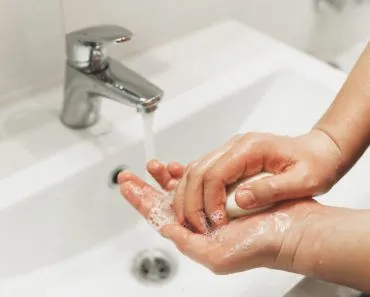
Yes, walking does crush and kill some bacteria, especially where your foot traps them against a hard surface. But most that die do so because the pressure separates them from their nutrient-rich surroundings, not from physical force. Either way, billions of others survive completely unharmed, so stomping is a useless way to sanitize a floor.
While walking, jogging or running, we typically try to make sure that we don’t step on any tiny creatures, like ants, that crawl on the ground. The act of stepping around or adjusting one’s stride upon encountering an insect feels like doing a good deed, and it actually is! Admittedly, we do a good job at saving many little critters from our giant feet.
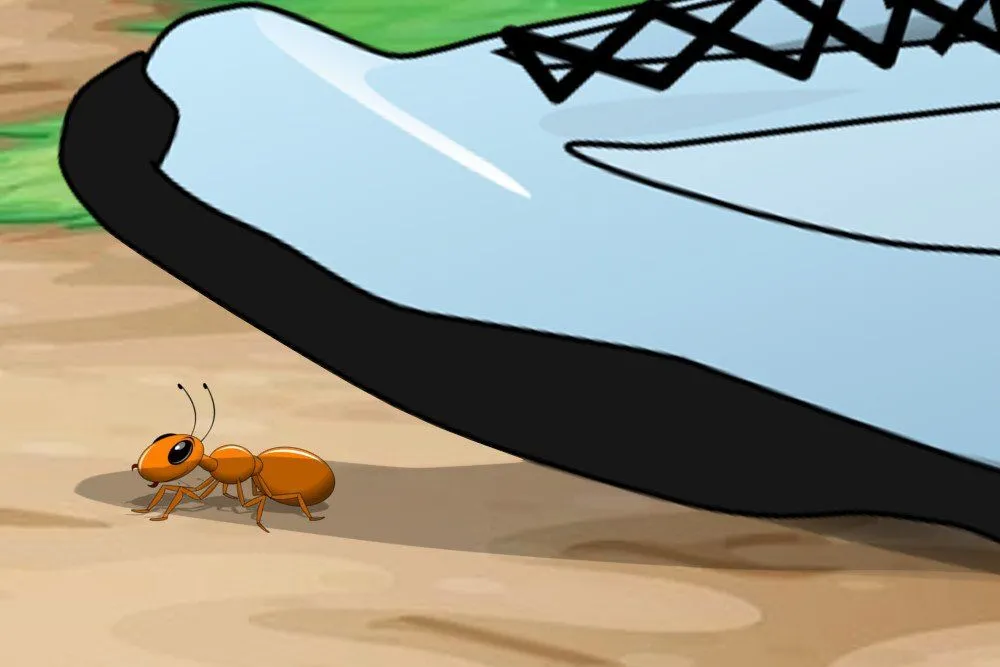
But what about tinier insects, as in organisms that are way smaller than ants? Have you ever thought about other organisms, like bacteria and viruses, that you can’t see with the naked eye?
You know that those little microorganisms are practically everywhere, right? On your sleeve, on the handle of the door, on your smartphone and, of course, on the ground (along with practically everywhere else). Have you ever thought about what happens when you take a ‘regular’ step on the ground? Are you crushing bacteria and similarly small life forms through this absolutely innocent everyday act?
Before we answer that, let’s begin by tackling a more basic concept…
How Big Are Bacteria?
You might remember reading in your biology textbooks that bacteria are really, really small, but how small are they in reality?
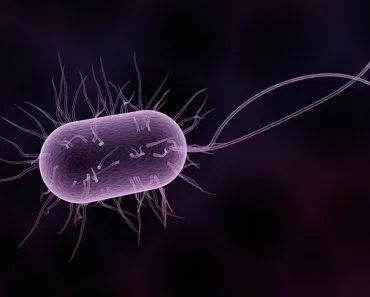
Most common bacteria are 5-10 microns long and 1-2 microns in diameter. For the uninitiated, 1 micron is equal to 1/10,000th of a centimeter and 1/1,000,000th of a meter. Obviously, bacteria are extremely tiny.
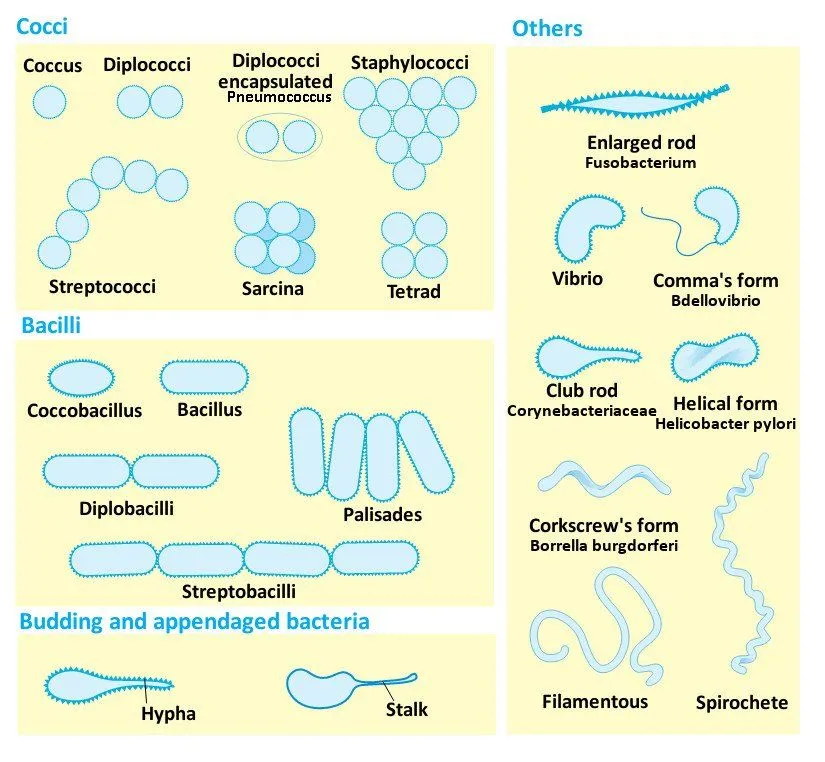
Furthermore, bacteria come in different shapes and sizes. Some are spherical (known as cocci), some are rod-shaped (bacilli), some are like spirals (spirilla) and so on.
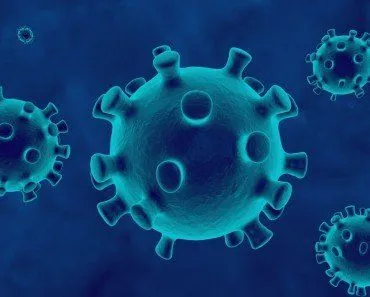
Viruses, on the other hand, are even smaller than bacteria and are also virtually everywhere. In other words, they are just as likely to be crushed by human feet as bacteria.
Can You Crush Bacteria With Your Hands Or Feet?
Technically, yes, you can crush bacteria by stepping on them, but this answer is far from complete.
As you can imagine, it’s awfully difficult to purposely crush bacteria, thanks to how incredibly small they are. Having said that, you can certainly kill bacteria by crushing them, or more specifically, applying a great deal of pressure to them.
In fact, killing bacteria in this manner is actually a thing; it’s used in a food preservation process called pascalization. Also referred to as high pressure processing (HPP) or bridgmanization, it’s a technique for preserving food wherein the product is subjected to very high pressures, resulting in the inactivation (or ‘death’) of certain bacteria and microorganisms present in the product.
Pressures on the order of 600 MPa (about 87,000 psi) render foodborne pathogens and spoilage microorganisms inactive, without significantly changing the nutritional value of the product. Note that pascalization does not render food completely sterile, but it does significantly extend its shelf life.
Foot Vs. Bacteria
All cells, including bacteria, are basically just blobs of salty water contained in an oily bubble (oversimplification alert!); you can basically say that bacteria live in a ‘goop’ (which scientists like to call the ‘extracellular matrix’).
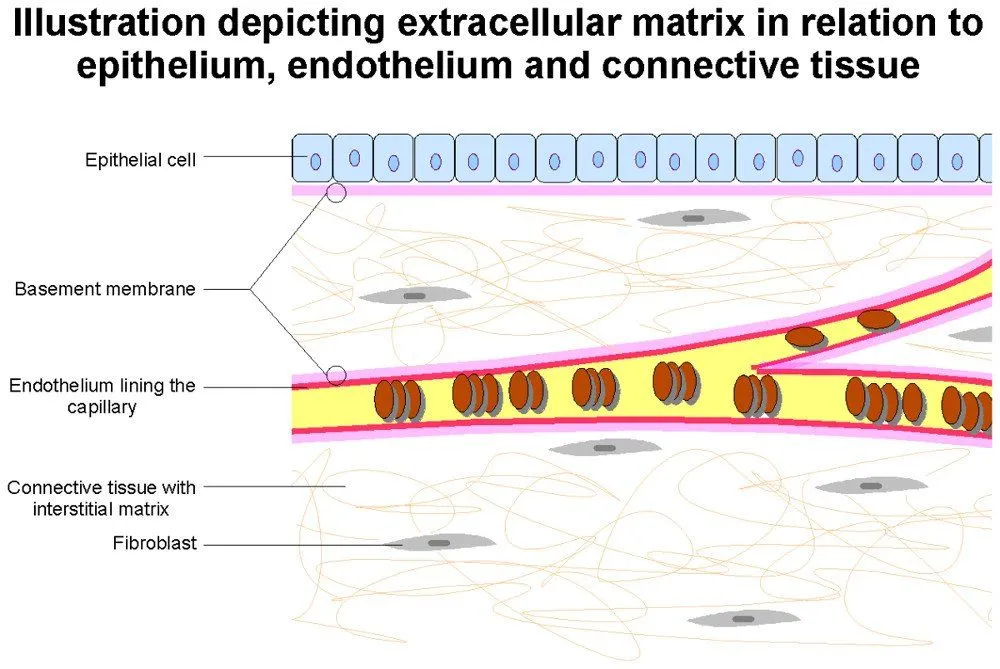
The extracellular matrix, or ECM, is just a cluster of extracellular molecules secreted by cells that provides biochemical and structural support to the surrounding cells.
Another point that you should note is that what appears to you (with the naked eye) as a smooth, flat surface is almost always a rather rough surface from a microscopic perspective. Most objects (including the human foot) are also dotted with numerous valleys and cavities, all of which are large enough for thousands of bacteria to hide in.
Thus, when you step on something as small as a bacterial cell, you invariably also step on the extracellular matrix. However, with such a huge amount of pressure that your foot exerts when you step on the floor, some of that ‘goop’ will simply move into small cavities on the floor and become trapped. In such cavities, the local pressure gets very high, which means that you could kill some bacteria.
However, most bacteria do not die by getting physically harmed in this way; they die because they get separated from their extracellular matrix, the nutrient environment in which they were growing and were totally dependent on to sustain their ‘lives’.
To conclude, yes, you could kill a large colony of bacteria if you used a perfectly smooth surface and pressed it really hard against another perfectly smooth surface. And as we explained above, perfect conditions aren’t essential; we kill bacteria all the time by crushing them with our feet while walking or running.
Even so, that still leaves billions of other bacteria and viruses absolutely unharmed and capable of thriving.
Using brute force to kill bacteria, therefore, is not something that (most) people do.
Stomping around in your house in a bid to sanitize or sterilize your floor is a bad idea, and honestly, you don’t want your family to see you and think you’ve lost your mind.
Do Ants Die When You Step On Them?
We opened this article by praising the little sidestep you do to avoid squashing an ant. So here is a slightly uncomfortable question: if you had trodden on it, would the ant have died anyway? Annoyingly, the honest answer is "it depends." Plant your full weight deliberately on an ant against a hard, flat floor and yes, you will almost certainly kill it. But a casual step on rough or uneven ground very often leaves the ant unharmed, scurrying off as though nothing happened.

Part of the reason is that ants are astonishingly tough for their size. When engineers at Ohio State University spun anesthetized Allegheny mound ants (Formica exsectoides) in a centrifuge, the neck joint only began to stretch at around 350 times the ant's body weight, and it did not tear the head from the body until the force reached roughly 3,400 to 5,000 times body weight.
That armor, though, is not really what saves an ant from your shoe. A person weighs tens of kilograms while an ant weighs only a few milligrams, so a single footstep delivers far more than 5,000 times the insect's weight. What actually rescues it is the same microscopic roughness we described for bacteria: the sole of your shoe and the ground are riddled with treads, ridges and tiny valleys, and an ant is small enough to end up tucked inside a gap where the crushing force never fully reaches it.
Being tiny is the whole trick. As a body gets bigger, its weight (which grows with volume) races ahead of its strength (which grows with cross-sectional area), a mismatch known as the square-cube law. It is why, as biologists at UC Berkeley explain, a scaled-up ant would simply buckle under its own mass. At an ant's real size that same rule works in reverse, making its exoskeleton phenomenally strong relative to how little it weighs. So your kind little detour is genuinely thoughtful, but plenty of ants would have walked away regardless.
What Actually Kills Bacteria, If Not Your Feet?
If stomping around the kitchen does not sanitize the floor, what does? This is where everyday language turns sloppy, so it helps to borrow the vocabulary that hospitals use. The U.S. Centers for Disease Control and Prevention (CDC) separates three ideas. Sanitizing simply lowers the number of germs to a level judged safe; under U.S. Environmental Protection Agency rules a sanitizer has to kill about 99.9% of the target bacteria, while a disinfectant must reach 99.999%. Disinfection destroys most or all disease-causing microbes on a surface, but it is not guaranteed to kill the toughest bacterial spores. Sterilization is the gold standard: it wipes out every form of microbial life, spores included.

So how are microbes actually killed? The most reliable weapon is heat. A laboratory autoclave bathes instruments in pressurized steam at about 121 °C (250 °F) for roughly 15 minutes. That moist heat works by denaturing and coagulating the proteins and enzymes a cell needs to survive, essentially cooking them solid the way heat turns a clear egg white opaque. Moist heat is far deadlier than dry heat, which is why steam does in minutes what a hot, dry oven needs much longer to achieve.
Chemistry does the rest. Disinfectants and antiseptics are "biocides," and each attacks microbes in its own way. Alcohols such as ethanol and isopropanol damage and rupture the cell membrane, though they cannot kill spores and so never truly sterilize. Chlorine bleach (sodium hypochlorite) is a powerful oxidizing agent that can destroy bacteria, viruses and even spores, while hydrogen peroxide becomes sporicidal at higher concentrations of roughly 10% to 30%. Notice the common thread: real disinfection relies on heat or chemistry that reaches every hidden crevice, not on brute force. Your foot, by contrast, only ever crushes the vanishing few microbes it happens to pin against a hard surface.
References (click to expand)
- Bacteria Overview - Ask A Biologist | - Arizona State University. Ask A Biologist
- Impact of High-Pressure Processing (HPP) on Listeria monocytogenes - An Overview of Challenges and Responses. PMC, NCBI.
- Schulz, H. N., & Jørgensen, B. B. (2001, October). Big Bacteria. Annual Review of Microbiology. Annual Reviews.
- How Big Is A Cell - Louisiana State University. Louisiana State University
- New processing Technology - msu.edu
- Biological Soil Crust - Canyonlands National Park (U.S. National Park Service) - www.nps.gov
- With Their Amazing Necks, Ants Don't Need ‘High Hopes’ to Do Heavy Lifting - Ohio State University
- Exoskeleton strength: Scaling setbacks - Understanding Evolution, University of California Berkeley
- Introduction, Methods, Definition of Terms - Centers for Disease Control and Prevention (CDC)
- Disinfectants - StatPearls, NCBI Bookshelf (National Library of Medicine)