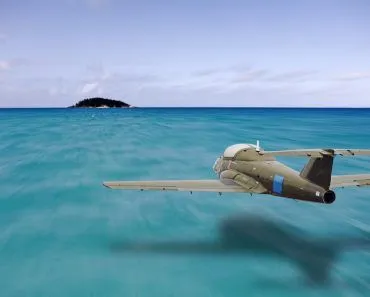
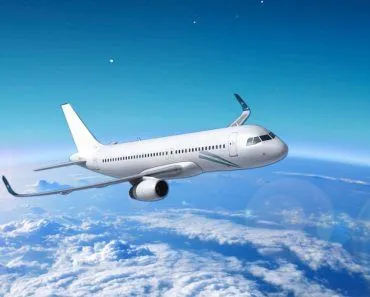
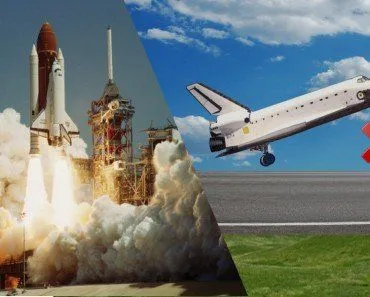
No, a regular airplane cannot fly into space. Commercial jets cruise around 30,000-42,000 feet (9-13 km); the boundary of space (the Karman line) is at 100 km, or roughly three times higher. Above ~50,000 feet the air is too thin for wings to generate lift and for jet engines to burn fuel, so an aircraft physically cannot continue climbing. Only rocket-powered vehicles can reach space.
Airplanes have been transporting millions of passengers every year since they were first deemed safe and became affordable for the masses. They fly you out of one airport and before you can eat the little tray of food and struggle through a quick nap, you just might find yourself in a different country, which can either be good or bad, depending on your intended destination.
Airplanes, especially commercial jets, fly really high in the sky. So high, in fact, that the only things visible to passengers are often fluffy cotton-like clouds. However, have you ever wondered how high commercial airplanes can fly? What if they continued to ascend into the sky? Could they ‘leave’ Earth and reach the blackness of ‘space’?
The Idea Of Airplanes Entering Space

If you sit down and seriously think about this idea for a moment, your practical self will almost instantly tell you that it must be impossible. If it weren’t, then people more actively involved in sending rockets into space must have obviously thought about the possibility of sending airplanes into space. The fact that we don’t see commercial jets shooting off into space seals the fate of this hypothesis.
To expound on it a little further, you should know that commercial jets usually fly at an altitude of 28,000-35,000 feet. However, that’s not the highest they can go. They can go a little higher, but most large passenger airplanes are not designed to go beyond 40,000 feet. One exception to this was the Concorde, a supersonic commercial jet whose maximum cruising altitude was 60,000 feet!
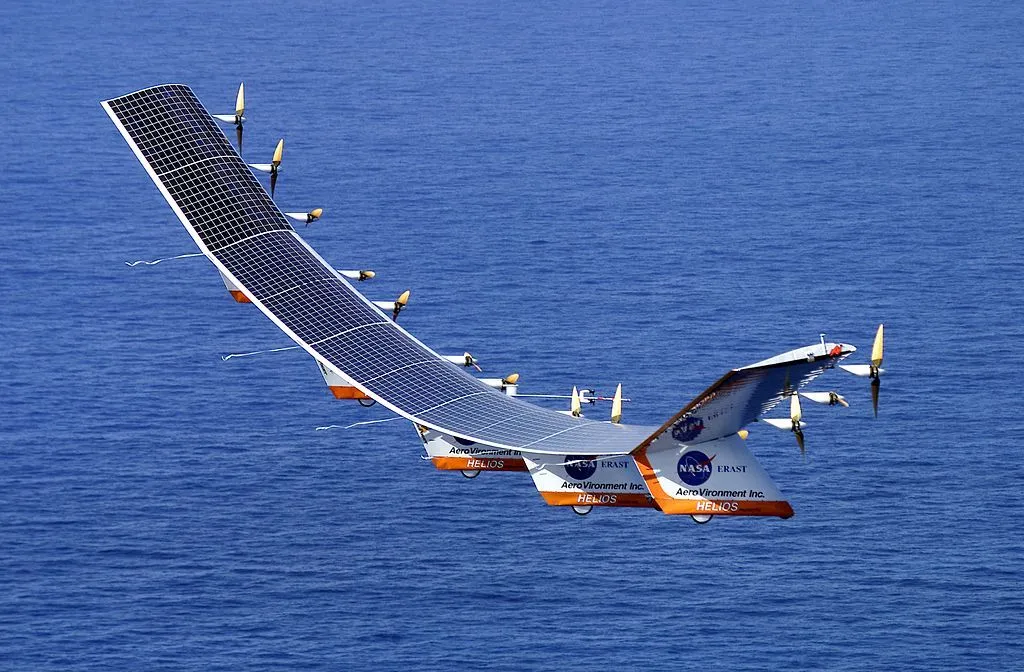
Then there was an unmanned solar-powered aircraft called Helios, designed by NASA's AeroVironment, that reached 96,863 feet in 2001, still the altitude record for any sustained-flight, non-rocket-powered aircraft. Its electric motors were driven entirely by solar cells, not jet engines, so its physics doesn't generalize to commercial aviation.
Minimum Distance To Space
If you continue going upwards in the sky, when do you enter in space? Well, the shortest distance to enter ‘space’ is 100 kilometers (62 miles); after you’ve traversed that far, only then can you expect to cross Earth’s boundary and enter suborbital space (provided that everything works as planned). As discussed above, airplanes can’t even think of going that high.
So, to answer the question in short, airplanes CAN’T go into space.

Sorry to disappoint you, but it’s the simple truth.
Now that we have the Yes/No part of the question covered, let’s move on to the why part…
Why Can’t Airplanes Go Into Space?
This limitation on airplanes is the result of two main reasons: the availability of fuel and the way airplanes are designed.
Airplanes are able to fly only because their large wings generate enough lift to keep them airborne. This lift, in airplanes, is generated by the way that air flows above and below the large wings, thus keeping the airplane in flight against the gravity of Earth. Essentially, it’s the air that makes an airplane fly; the engines just provide enough power to the airplane to keep it going against the aerodynamic drag.
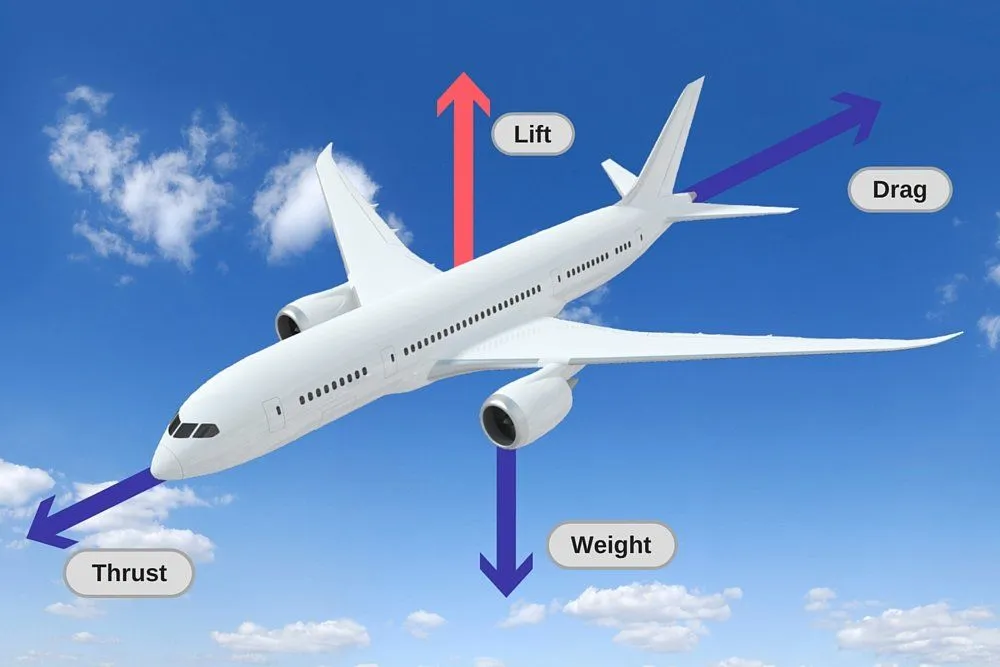
Given their critical dependence on air, the way airplanes operate in the sky is hugely influenced by the ‘quality’ of air. You see, as altitude increases, the density of air decreases – slowly at first, but rapidly after a certain height. In short, air becomes increasingly thinner with increasing altitude, until the point when there is no air at at all; it is (almost) a vacuum up there. Flying machines like airplanes and choppers need lift to stay airborne, which is generated by air. If there’s no air to begin with, how in God’s name could you think of flying an airplane at that altitude? This is why helicopters face such great difficulties while rescuing people stranded in high-altitude regions.
Consider this: even the spacecraft in the lowest Earth orbit, and therefore closest to the Earth, orbits at around 125 miles above the ground, which is far above a proper altitude to find quality air to fly an airplane.
This is why an airplane, however ambitious it might be, could never cross through its ‘comfort zone’ and risk entering the vast expanse of outer space.
How High Do Commercial Airplanes Actually Fly?
Space is off the table, but how high does your holiday flight actually climb? For most large passenger jets, the answer sits in a surprisingly narrow band. A typical Boeing 737 or Airbus A320 cruises somewhere between roughly 33,000 and 42,000 feet, which works out to about 10 to 13 km (10,000 to 12,800 m). The number you will hear most often is around 35,000 feet (about 10.7 km, or 6.6 miles) above the ground. That places the airplane firmly inside the troposphere and just brushing the bottom of the stratosphere.

So why this particular altitude, rather than higher or lower? It is a balancing act. Climb higher and the thinner air means less drag, so the jet sips far less fuel for the same speed. The cold, thin air up there also keeps the engines running efficiently, and cruising above roughly 35,000 feet lifts the aircraft over most of the weather (and the turbulence, storms, and clouds that come with it), since nearly all weather happens down in the troposphere. Go too high, though, and the air becomes so thin that the wings struggle to make enough lift and the engines can no longer gulp enough oxygen to burn fuel efficiently. The cruising altitude is essentially the sweet spot between those two pressures.
The highest a given airliner can legally climb is set by its service ceiling, the altitude at which it can barely still manage a slow climb. For most modern airliners that ceiling is around 41,000 to 43,000 feet (about 12.5 to 13 km). Airlines rarely fly right up against it, because a fully loaded jet simply cannot get that high until it has burned off enough fuel to lighten the load.
What Is The Highest-Flying Aircraft?
Commercial jets top out near 42,000 feet, but a few specialized aircraft fly far higher. The retired Concorde, the only supersonic airliner to carry paying passengers, cruised at up to 60,000 feet (about 18,300 m, or 18 km), high enough that passengers could see the curvature of the Earth.

Higher still are the reconnaissance aircraft. The Lockheed U-2 (and its NASA cousin, the ER-2) operates at altitudes up to around 70,000 feet (about 21,000 m, or 21 km), which NASA notes is above 99 percent of Earth's atmosphere. Its pilots have to wear full pressure suits, much like astronauts, because the air outside is far too thin to breathe. The all-time record holder for sustained, level flight is the Lockheed SR-71 Blackbird, a Mach 3.2 spy plane that NASA describes as still the world's fastest and highest-flying production aircraft. On 28 July 1976 an SR-71 set an absolute altitude record of 85,069 feet (25,929 m, or about 26 km) for an air-breathing aircraft, a mark that still stands today.
Even the mighty Blackbird, though, reached barely a quarter of the way to the Karman line at 100 km. The pattern is clear: no matter how exotic the aircraft, anything that relies on wings and air-breathing engines runs out of usable atmosphere long before space begins.
Can An Airplane Stop In Mid-Air?
Here is a question that puzzles a lot of curious travelers: if a plane can climb and descend, why can it not simply pause and hover in the sky like a helicopter? The short answer is that a fixed-wing airplane cannot stop in mid-air. To stay aloft, it has to keep moving forward through the air, and fairly quickly at that.
The reason comes straight back to lift. As NASA puts it plainly, "there must be motion between the object and the fluid: no motion, no lift." The amount of lift a wing produces depends on how fast air is flowing over it, so the slower the plane goes, the less lift those wings can generate. Drop below a certain speed, called the stall speed, and the wings can no longer hold the aircraft's weight. The airplane stops flying and begins to fall. For a large airliner that minimum flying speed is roughly 200 to 270 km/h (about 125 to 170 mph) depending on its weight and flap setting, which is precisely why planes need long runways to build up speed before they can leave the ground.
Helicopters and a handful of jump-jets like the F-35B can hover, but they cheat the problem in a different way. A helicopter's spinning rotor blades are really just wings whirling around in a circle, so they keep generating lift even when the aircraft itself is standing still in the air. An ordinary airplane has no such trick. So the next time a plane outside your window looks like it is hanging motionless against the clouds, it is an illusion of distance and matching speed; the aircraft is still racing forward at hundreds of kilometers per hour.
References (click to expand)
- Why can't an airplane just fly into space? Why do we need rockets? - spaceplace.nasa.gov
- Why Can't We Fly a Plane to Space? - NASA. The National Aeronautics and Space Administration
- How High Do Commercial Planes Fly? - www.reference.com
- How high can a (commercial or military) jet aircraft go?. physlink.com
- ER-2 High-Altitude Airborne Science Aircraft. NASA Armstrong Flight Research Center.
- NASA Armstrong Fact Sheet: SR-71 Blackbird. NASA.
- What Is Lift? Beginner's Guide to Aeronautics. NASA Glenn Research Center.
- Factors That Affect Lift. Beginner's Guide to Aeronautics. NASA Glenn Research Center.
- Karman line. Encyclopaedia Britannica.