Table of Contents (click to expand)
Traditional animal glue is made by boiling animal hides, bones, tendons, and connective tissue (usually leftovers from slaughterhouses or fish-processing plants) in water to extract collagen, which is then purified, thickened, and dried into sheets, blocks, or sticks. Modern synthetic glues use polymers like PVA (white school glue), epoxies, polyurethanes, and cyanoacrylates (super glue). Humans have been using adhesives for at least 200,000 years — Neanderthals used birch-bark tar long before Homo sapiens ever picked up a paintbrush.
Glue is something we have all dabbled with since we were toddlers. The gooey and sticky substances are used to stick and join things together. However, glue is just a small part of the adhesive family. The difference between glue and other adhesive substances is that glue comes from organic substances, whereas adhesives are mostly chemically manufactured. The discovery of glue, in fact, occurred back in ancient times.
The History Of Glue
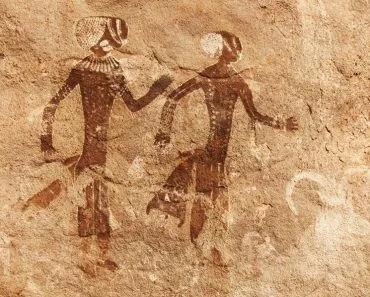
The earliest evidence of adhesive use comes from Neanderthals, not modern humans — stone tools hafted with birch-bark tar have been dated to at least 200,000 years ago in central Europe and Italy. Famous prehistoric paint sites like Lascaux in France (~17,000 BCE, painted by anatomically modern humans, not Neanderthals) also show that pigment binders — a form of natural glue — were used to make cave art last on damp cave walls. Another area where glue is famously used is in furniture making. Although there are plenty of techniques to fasten pieces of furniture together, glue is most commonly used as the permanent binding element. Almost all the great cabinetmakers—from the sixteenth century to the late nineteenth century—used glue in their furniture construction.
In the 1930s, the boom of the chemical and plastic industries led to the development of a wide range of adhesives. The advent of World War II led to the flourishing of this industry, paving the way for chemically engineered adhesives, such as neoprenes, epoxies, and acrylonitriles. Such adhesives were primarily used only by the military, and were not widely available to the general public for daily consumer use. It was only made available to the public in the late 1940s. Since the introduction of glue to the consumer market, many more highly specialized glues have been made. Even waterproof glue has been developed, as well as other highly specific glues, including glues used for the construction of space shuttles! Glues are also used in industries as a part of colloids. Colloids are added to liquids to cause the solid particles suspended in the liquid to separate so that they can be recovered, either to clean the liquid or process the solids.
Raw Materials And Manufacturing Process
The raw materials used for the production of glue might not be what you imagine. Manufacturers typically obtain bones and the tissues of animals from slaughterhouses, tanneries, and meat packing plants. Borden Company — a dairy company that famously made Elmer’s Glue — was once the world’s largest glue maker, though Borden filed for bankruptcy in 2001 and the global adhesives market today is dominated by companies like Henkel (Loctite) and 3M. The animal remains used as raw materials for the glue may include ears, tails, scraps of hiding or skin, scrapings from the fleshy sides of hides, tendons, bones and feet. Glue is not only made with animal products, but also with fish. The raw materials of fish glue include the bones, scales, heads and skins of fish from canneries and other processing plants.
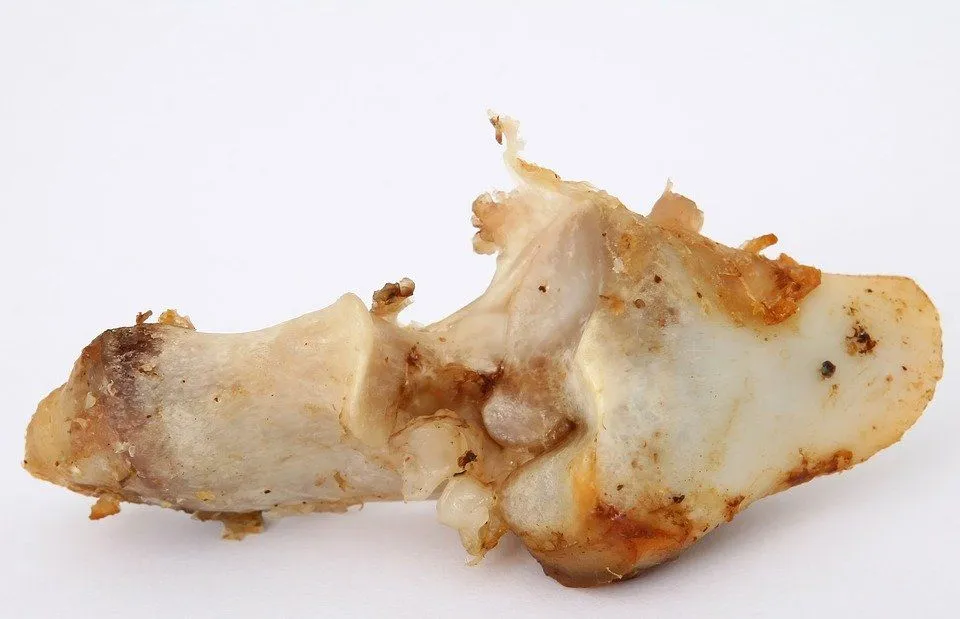
The manufacturing process of bone glue, hide glue, skin glue and fish glue only has slight variations between them. The process begins with the washing of the hide, skin, bones and other animal parts. This is done so that any impurities or dirty particles are washed away. After this, it is soaked in water to soften it. This softened and clean material is known as stock. The stock is then passed through a series of water baths where the concentration of lime is progressively increased. This ensures that the skin or the hide of the animal swells up and breaks down. The swollen hides and skin are then washed in a washing machine to remove the residual lime present on them. Any final traces of lime are removed with the help of acetic acid or hydrochloric acid. Finally, the stock is put into boiling hot water and stirred, a process known as “cooking” the glue. The cooking process is either done in open tanks or pressured autoclaves.
Cooking this mixture at the right temperature and duration ensures that the stock breaks down into glue. If the temperature or timing is inaccurate, the glue will not come out at industry standard quality. The ideal temperature for most glue is 70°C. After the cooking process is performed three or four times, with an increase in temperature or pressure with every successive step, the resultant liquid is referred to as glue liquor.
The glue liquor is removed after it is formed and then reheated once again to thicken it. When the material is cooled down, it looks like a jelly. This form of glue still has one drawback—it may contain impurities. To remove the impurities and make the glue clear, chemicals such as alum or acid are added. After that, egg albumen is also added. These chemicals are added because they make impurities precipitate to the bottom of the glue. Apart from chemical processes, mechanical processes can also be employed. One may purify the glue with mechanical filters, paper filters or bone chars.
To make the glue into various forms, such as brown, white and clear glue, additives must be added. Some of the common additives are Sulfurous acid, phosphoric acid, or alum. To produce school-grade glue, Zinc Oxide is added. At this point, the glue is a weak, runny liquid. Its concentration is increased by placing it in vacuum evaporators and dried via several methods. The glue can be chilled into either sheets or blocks, and then suspended on nets to dry and become even more concentrated. After that, these are poured into different tubes, containers and sticks for commercial use. Glues have played an essential role in history, and will also play a pivotal role in the future. Glues are now taking over other bonding methods, such as stapling, stitching and other forms of fastening things together. It may be easy to overlook the significance of glue, but it truly does help to keep the world together!
What Is Glue Made Of Today?
If you reach into a drawer today, the glue you pull out is almost never made from animal bones. Most modern glues are synthetic polymers, which are long, repeating chains of molecules suspended in a liquid or packed into a stick. What sits inside the bottle simply depends on the job the glue is meant to do.

The familiar white school glue (the kind sold under names like Elmer's) is mostly polyvinyl acetate, or PVA. PVA is a plastic built from a small building block called vinyl acetate, and in the bottle it floats as tiny particles dispersed in water, which is why the glue looks milky and white. When you spread it out, the water soaks into the paper or wood and evaporates into the air, leaving the PVA particles to knit together into a clear, flexible film. That is also why white glue dries clear and takes its time to set, since you are essentially waiting for the water to leave.
Super glue is a completely different animal. Its active ingredient is a runny liquid called cyanoacrylate (usually ethyl cyanoacrylate), and unlike white glue it does not dry by losing water. It sets by reacting with moisture. Almost every surface, and the air itself, carries a thin, invisible film of water, and the hydroxide ions in that water trigger the cyanoacrylate molecules to link into long, tough chains within seconds. That is why super glue bonds skin so alarmingly fast, and why an open tube can harden if you leave the cap off.
Epoxies work differently again. They arrive as two parts, a resin and a hardener, that do almost nothing on their own; once you mix them, a chemical reaction locks them together into a rigid, cross-linked network that is prized for its strength. Solid glue sticks, meanwhile, are typically a water-soluble polymer such as polyvinylpyrrolidone held in a soap-like solid so the stick glides on and washes off easily. The common thread is that almost every modern glue is a polymer that starts out soft or liquid and then hardens in place.
How Does Glue Actually Stick?
Making glue is only half the story. The more puzzling question is why a thin smear of goo can hold two solid objects together at all. The answer comes down to two forces with confusingly similar names: adhesion and cohesion. Adhesion is the attraction between the glue and the surface it clings to, while cohesion is the glue holding on to itself. A good bond needs both. If cohesion fails, the glue splits down the middle; if adhesion fails, it peels cleanly off the surface.
Part of the grip is simply mechanical. Surfaces that look perfectly smooth are, up close, full of tiny pits, pores, and scratches. A liquid glue flows into those crevices and then hardens, physically interlocking with the surface like thousands of microscopic hooks. This is why roughening a surface with sandpaper often helps a joint hold, and why a glue has to be fluid enough to wet the surface before it sets.

The rest of the grip is molecular. Once the glue spreads into an ultra-thin layer pressed right up against the surface, weak intermolecular attractions called van der Waals forces come into play, joined by stronger chemical bonds in some adhesives. Any single one of these attractions is vanishingly small, but a thin film of glue touches the surface across an enormous number of molecules, and all those tiny forces add up to a surprisingly strong hold. It also explains why glue works best in a thin layer: a thick, sloppy blob has more glue clinging to itself than to the two surfaces you are trying to join.
References (click to expand)
- (2000) A History of Fish Glue as an Artist's Material. The American Institute for Conservation
- What are the basic forces behind tape and glue?. The MIT School of Engineering
- Animal glue - Wikipedia
- Polyvinyl acetate - Wikipedia
- Cyanoacrylate - Wikipedia
- Adhesion - Wikipedia
- Whey protein/polyvinylpyrrolidone based glue sticks. BioResources (2012)