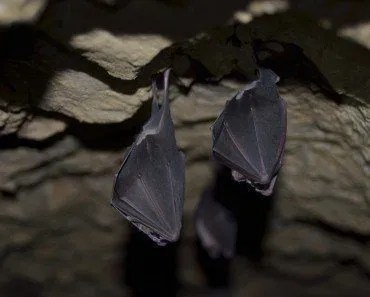
The stable temperature and humidity in caves, a lack of human contact, and long-lasting painting materials have combined to allow many ancient cave paintings to survive in nearly pristine condition.
Imagine walking through the Iberian peninsula, in modern-day Spain, and stumbling across a hidden cave entrance. Overcoming your fears, you click your flashlight to life and slip into the unknown. Little do you know that more than 60,000 years ago, a prehistoric artist entered that same cave to leave one of the earliest examples of human art. Deep in the sheltered recess of the cave, as you shine your flashlight on the scene, you note that it is remarkably clear and well-preserved.
We see such examples of ancient cave art preserved all over the world, from the caves of Lascaux to a 51,200-year-old painted hunting scene in Leang Karampuang cave in Sulawesi, Indonesia (re-dated in 2024 and currently the oldest known figurative art). The question is: how did such cave paintings survive for tens of thousands of years, when other signs of early civilizations have been lost to the sands of time?
The History Of Cave Paintings
The first cave paintings weren’t discovered until the end of the 19th century, and the claims that they were from Paleolithic times weren’t believed, since this ran so contrary to previous anthropological beliefs about early humans and their cognitive abilities. A steady stream of additional discoveries in the 20th century confirmed that early humans were more expressive and capable than previously believed.
Throughout France and Spain, a number of exciting discoveries brought more attention to this field, and cave paintings have become critical lenses into the history of Neanderthals and modern man. More than 150 sites in these two countries alone have provided invaluable insight to the past. The majority of the cave paintings that have been discovered depict symbols and animals, sometimes boasting hundreds of images in the same cave. This gives a clear picture into some of the fauna present at the time these paintings were made, as well as the level of sophistication and symbolic language of prehistoric man.

Lascaux Caves
The Lascaux Caves, discovered in 1940, held the title of the oldest known cave paintings, dating roughly 17,000 years in age. However, in recent years, the timeline has been flung much farther back, with exciting discoveries in Borneo (dating approximately 40,000-52,000 years old), Sulawesi (a narrative scene dated to at least 51,200 years), the Nawarla Gabarnmang shelter in Australia (at least 28,000 years old) and the Iberian peninsula (~64,000 years old, attributed to Neanderthals). The global search for cave paintings continues, as each new discovery brings new revelations into a history that is otherwise nearly invisible.
Famous Examples Of Cave Paintings Around The World
When people picture prehistoric art, a handful of remarkable sites tend to come to mind, scattered across nearly every inhabited continent. If you are looking for examples of cave paintings and rock art worth knowing, these are some of the most celebrated in the world:

- Lascaux (Dordogne, southwestern France): Often called the “prehistoric Sistine Chapel,” its galleries of horses, aurochs, deer and giant bulls are roughly 17,000 years old. Discovered in 1940, the cave was later closed to the public to protect the art.
- Altamira (Cantabria, northern Spain): Famous for a polychrome ceiling crowded with bison, the cave holds paintings that reach back as far as around 36,000 years. It is a UNESCO World Heritage Site and was sealed to visitors after their breath, and later mold, began to damage the pigments.
- Chauvet (Ardèche, southern France): Home to some of the oldest figurative art known, with lions, rhinos and horses dated to roughly 30,000 to 33,000 years ago. Discovered in 1994, it was kept sealed from the start and added to the UNESCO World Heritage list in 2014.
- Cueva de las Manos (Santa Cruz, Argentina): The “Cave of the Hands” is covered in hundreds of stenciled handprints, with art dated between roughly 7,300 BC and 700 AD. It too is a UNESCO World Heritage Site.
- Bhimbetka rock shelters (central India): More than 600 shelters preserve paintings spanning from the Mesolithic period onward, earning the complex UNESCO World Heritage status.
- Leang Karampuang (Sulawesi, Indonesia): A painted hunting scene here has been dated to at least 51,200 years, making it the oldest known figurative art found anywhere so far.
Why Did Early Humans Paint On Cave Walls?
Preservation explains how the art survived, but it doesn’t tell us why prehistoric people crawled deep into cold, dark caves to make it in the first place. There is no single agreed answer, and researchers have proposed several overlapping ideas.

The oldest interpretation is hunting magic. Because animals dominate the walls, and some are shown pierced by spears, many early scholars argued the paintings were part of a ritual meant to secure control over the species that people depended on for food. Painting a successful hunt, the thinking goes, might help bring one about.
A more recent and influential idea is shamanism. Archaeologist David Lewis-Williams, drawing on his study of San rock art in southern Africa, proposed that much cave art records visions seen during trance. He noted that the geometric patterns found in many caves resemble the shapes people report seeing in altered states of consciousness, and that the sensory-deprived depths of a cave are an ideal place to slip into such a state.
Other researchers read the art as information and identity: a way to record the local animals, pass on knowledge, or mark territory between groups. The once-popular notion that it was simply “art for art’s sake” has largely been set aside. With thousands of years and hundreds of sites involved, the honest answer is that cave art probably served more than one purpose.
The Nature Of Cave Paintings
As we all know, nature is the most gradually destructive and creative force on the planet. Take a look at the Grand Canyon or the smoothly weathered tops of the Appalachian Mountains and you will see the evidence of this insistent power. For this reason, the remains of ancient civilizations and early man are difficult, if not impossible, to find and study. Tools, structural foundations, artifacts and remains gradually break down and disappear, particularly after tens of thousands of years.
Science Of Their Resilience
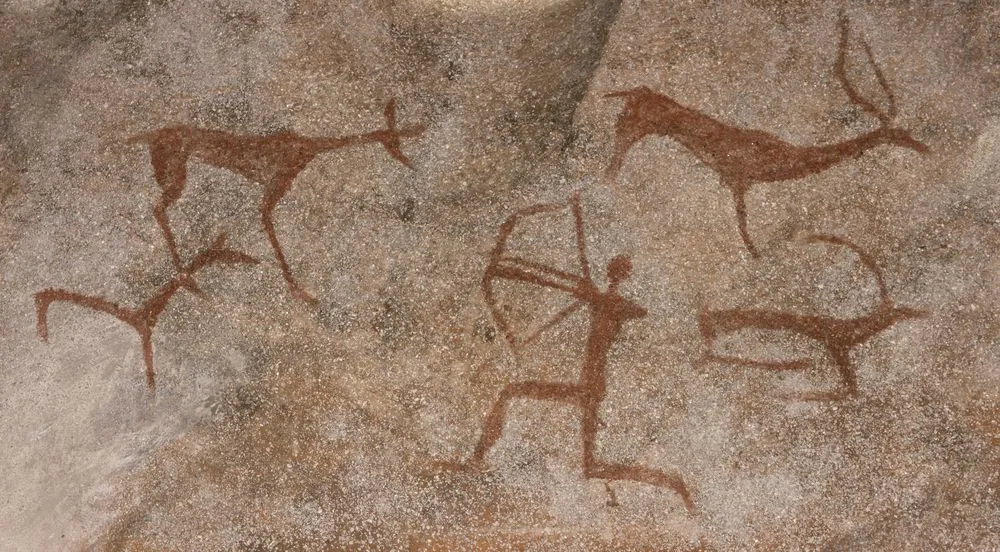
However, cave paintings are uniquely able to defend against the ravages of time. To begin with, the paints used by these early artists were mineral in nature: red and yellow ochres are essentially iron oxide pigments (red ochre is dominated by hematite, yellow by goethite). This pigment could be mixed with charcoal or burned bones, and thickened into a paint with animal fat or other natural oils. These pigments were not available everywhere, and likely had to be sought out, and were likely considered valuable. Due to the discovery of pigments and paints near burial and religious sites, it is suggested that such paintings were often ceremonial or sacred in nature. The pigments themselves, such as iron oxide and carbon black (charcoal), are highly resistant to fading, unless exposed to fire or chemicals.
In some cases of limestone caves, there is also a process known as rainwater seeping, in which water seeping through the cracks of the rock will form a bicarbonate layer or coating, which effectively glazes the paintings on the wall, allowing them to retain their surprisingly vivid hues thousands of years later.
Perhaps the most important factor in preserving these paintings is their removal from the elements. Caves that aren’t subject to water level changes or structural fluctuation from tectonic movement/volcanic activity are very stable places. The temperature and humidity are well-regulated and change minimally across long time spans. Erosion and corrosion are simply not threats in a closed-off cave, which has allowed these cave paintings to exist without decay!
Petroglyphs: How Do Rock Carvings Last So Long?
Not all ancient rock art is painted. Alongside painted images, which are known as pictographs, prehistoric people also made petroglyphs, figures that are carved, pecked or scratched directly into the rock rather than added on top of it as a layer of paint.

In many deserts, artists created petroglyphs by chipping through desert varnish, a dark patina of clay minerals stained by iron and manganese oxides that slowly builds up on exposed rock. Cutting through this coating reveals the lighter stone underneath, so the image stands out sharply against the dark background.
This is a big part of why petroglyphs can last so long. Because the carving is the rock, rather than a fragile film of pigment resting on the surface, it cannot fade or flake the way a painting can. Only physical erosion or breakage can erase it, which is why petroglyphs often survive out in the open, while delicate pictographs tend to endure only where a cave or overhang shelters them. Over thousands of years, the freshly exposed surface even begins to re-varnish, a slow process called repatination that can help protect the carving and gives researchers a rough way to estimate its age.
The Destructive Nature Of Discovery
The final factor that has allowed these cave paintings to survive since prehistoric times is the absence of humans. Some of these caves may have been uninhabited or untouched for millennia; once a tribe or group left the region and their artistic efforts behind, it may have never been occupied again! As we have seen in countless examples, human beings are notoriously destructive once we find something beautiful. The over-commercialization of certain national parks in the United States comes to mind, as do the astronomic prices some people pay to summit Everest in supreme comfort, leaving their trash behind for others to clean.

The Lascaux Caves, mentioned above, experienced precisely this type of detrimental fame; at the peak of its tourist draw, more than 100,000 people were visiting these legendary caves every year. The millions of camera flashes and the exhalations of carbon dioxide within the enclosed space were proving destructive to the paintings, so the cave was eventually sealed off. A replica of the cave walls was erected instead. Many other caves and archaeologically valuable sites around the world have imposed similar restrictions on tourists in order to preserve the integrity of this previous history.
A Final Word
Ancient cave paintings are remarkable windows to the past, but they are also delicate pieces of art that can easily be compromised. While isolation from nature (and humans) and the resilient pigments and tools they were made with have kept these cave paintings safe for millennia, it is important that humanity’s eagerness to study and enjoy these relics doesn’t end up destroying them in the process!
References (click to expand)
- Hradil, D., Grygar, T., Hradilová, J., & Bezdička, P. (2003, April). Clay and iron oxide pigments in the history of painting. Applied Clay Science. Elsevier BV.
- (1982) The "Archaeology of Lascaux Cave - jstor. JSTOR
- Aubert, M., Setiawan, P., Oktaviana, A. A., Brumm, A., Sulistyarto, P. H., Saptomo, E. W., … Brand, H. E. A. (2018, November 7). Palaeolithic cave art in Borneo. Nature. Springer Science and Business Media LLC.
- Cartwright, M. Paleolithic Cave Art. World History Encyclopedia.
- How Were Petroglyphs, Pictographs, and Inscriptions Made? U.S. National Park Service.
- Desert Varnish. U.S. National Park Service.
- Cave of Altamira. Wikipedia.