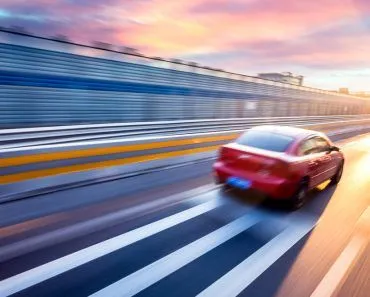
Phantom traffic jams appear when a single driver brakes unnecessarily in dense highway traffic, and the slowdown propagates backwards as a self-sustaining wave (a jamiton) that can stretch for hundreds of meters, even though there’s no accident, exit, or police car to explain it. They’re caused by natural wave dynamics in closely-spaced traffic, not by any one obstacle.
For anyone who has ever done their share of highway driving, it can be a relaxing (and sometimes boring) way to travel. However, in the highways and freeways around cities, driving is a bit more interactive than it can be while driving through empty hours of cornfields. Traffic jams and crowded highways, particularly during peak commute and travel times, are annoying realities that we all have to deal with. Thousands of automotive accidents happen around the world every day, so getting stuck in traffic is something we all have to accept.

However, there are occasionally traffic jams or slowdowns in the flow of driving that seem to occur for no reason at all. One moment you’re sailing down the fast lane, and the next you’re leaning on the brakes as traffic around you slows to a crawl. When you finally get moving again, there isn’t an accident scene or a watchful police car anywhere in sight! So what causes these mysterious traffic jams?
What Is A Phantom Traffic Jam?
A phantom traffic jam is any slowdown in traffic that occurs without a clear reason, i.e., there are no accidents, speed traps, reckless drivers, construction or a crowded exit ramp to force the general mass of drivers to brake. More formally, these traffic phenomena are known as jamitons. While these are quite frustrating, they are also quite fascinating, and demonstrate the connectivity and dynamic properties of highway driving.
Believe it or not, a phantom traffic jam that slows down multiple lanes of traffic might be caused by a single driver unnecessarily slamming on their brakes. Perhaps the individual was irresponsibly checking their phone and saw a flash of movement that caused them to instinctively brake. Or perhaps they saw an irregularity in the road and slowed down before realizing it was only a trick of the light on an oil slick. When highway driving is smooth, and the road is somewhat crowded, drivers tend to creep up on one another, sometimes leaving only a car length or two between themselves and the car they’re trailing.

Ripple Effect
If the lead driver then brakes suddenly, the car behind will have to quickly depress their own brakes, as will the car behind them, causing a ripple effect that can slow down dozens of cars. Even if the lead car only tapped their brakes for a moment, and then resumed their movement forward, the rippling of braking cars may stretch for hundreds of meters. Each car behind will be required to slow a bit more dramatically, until the pace of all the cars can once more get up to speed.
The more severe the braking (i.e., slamming on the brakes and decreasing from 65mph to a nearly complete stop), will make the “jamiton” even more severe. This isn’t even restricted to individual lanes, since experienced and attentive drivers are trained to predict when traffic will slow by the appearance of lights ahead of them. Seeing the brake lights of cars in other lanes ripple to life may also lead to preemptive braking in drivers. This can spread the slowdown across the entire breadth of the highway, while also moving upstream along the highway, creating a phantom traffic jam!
What Exactly Is A Jamiton?
You may have noticed that scientists have a pet name for these self-created snarls: the jamiton. The word is a blend of “jam” and “soliton,” the term physicists use for a solitary wave that holds itself together as it travels. The name was popularized by a team of applied mathematicians at MIT (Morris Flynn, Aslan Kasimov, Jean-Christophe Nave, Rodolfo Rosales and Benjamin Seibold), who in 2009 decided to treat a stream of cars much like a flowing fluid.
When they wrote down the equations for that flow, they were struck by how closely the mathematics resembled the equations for detonation waves, the shock fronts thrown off by explosions. The crucial idea is that traffic has a critical density. Below it, a stray tap of the brakes simply fades away, because careful, anticipatory driving irons the disturbance out. Above it, the destabilizing tendency of drivers to slow down in tight quarters, made worse by human reaction time, overpowers that caution, and the tiny wobble grows instead of shrinking. It then locks into a self-sustaining wave with a sharp jump in car density at its front and a gradual thinning behind it, exactly like a rolling detonation. That traveling wave is the jamiton, and once it exists it can outlive the driver who started it, marching through fresh cars long after the original brake tap is forgotten.
Why Does A Phantom Traffic Jam Move Backwards?
Here is the genuinely strange part: while every car in a phantom jam keeps rolling forwards, the jam itself creeps backwards, against the direction of travel. The cleanest proof came from a 2008 experiment led by physicist Yuki Sugiyama at Nagoya University. His team asked drivers to circle a 230-meter (about 750-foot) track at a steady 30 km/h (roughly 19 mph), evenly spaced, with no junctions, no traffic lights and nothing whatsoever to get in the way.

For a little while the cars flowed smoothly, but because no human holds a speed perfectly, faint differences in spacing crept in. Within about a minute those differences had amplified into a real stop-and-go cluster, and that cluster slid backwards around the loop even as the cars themselves kept driving forward. The tipping point was remarkably sharp: with fewer than 22 cars on the track the wobbles smoothed themselves out, but at 22 or more a jam reliably appeared, the critical density in action.
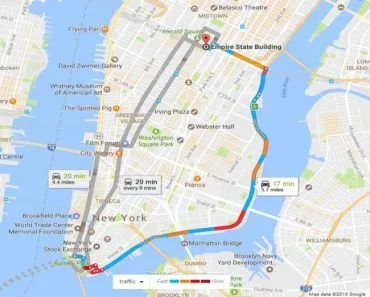
On actual motorways these backward-marching jam waves roll along at roughly 20 km/h (about 12 mph), which is why a navigation service like Google Maps can paint a stubborn red streak across a stretch of road with no crash or roadwork behind it. It also explains why you can inch through a phantom jam, finally reach the front, and find no obstacle at all: the snarl you were sitting in had long since drifted upstream from wherever some distracted driver first touched the brakes.
Ways To Avoid Phantom Traffic Jam
You have almost certainly experienced this phenomenon, even if you didn’t realize it at the time, but believe it or not, you can also do your part to help prevent these traffic jams!
Avoid Tailgating
Tailgating means driving dangerously close to the car ahead of you; this is often done to encourage a slow car to move out of the passing lane, but is also practiced by aggressive or irresponsible drivers in normal traffic. Tailgating reduces the distance between you and the car ahead; when that car applies the brakes, it requires the tailgating driver to forcefully apply their own to avoid rear-ending the lead car. As mentioned above, this forceful application of the brakes is what can lead to irritating phantom traffic jams.
A Better Driving Etiquette
A much better way to drive is to find a median point between the car both in front of and behind you. Without spending too much time checking your mirrors, try to position your car equidistant from the other two nearest cars in your lane. This way, if the driver ahead brakes, you can gently and briefly apply the brakes to remain behind him at a safe distance. Or you can simply take your foot off the accelerator and begin to coast, which may prevent the rippling effect from happening at all. If you are diligent in your driving and avoid tailgating behavior, you can single-handedly prevent a phantom traffic jam that could have affected hundreds of other drivers!

Another good strategy to avoid a slowdown is to pay attention to your lane. While a significant slowdown is usually signaled by the outer lanes slowing down in a staggered pattern, this doesn’t mean that your lane is definitely going to slow down. As soon as you see brake lights appearing ahead, but not in your lane, stay attentive and responsive to your leading cars, but don’t preemptively brake. Being a good driver is a delicate dance of defensive driving and experience, although you should always err on the side of caution!
A Final Word
Those drivers who commute every day on the same highways probably witness hundreds of phantom traffic jams every year. However, now that you understand how quickly these “jamitons” can be formed, and how interconnected every driver on the road truly is, you can do your part to prevent these time-wasting hangups on the highways of life.
References (click to expand)
- Phantom Traffic Jams: What Causes Mysterious Highway ....
- Kurtze, D. A., & Hong, D. C. (1995, July 1). Traffic jams, granular flow, and soliton selection. Physical Review E. American Physical Society (APS).
- The mathematics of 'phantom' traffic jams. MIT News
- Phantom Traffic Jams and Traveling Jamitons. MIT Department of Mathematics
- Flynn, M. R., et al. (2009). Self-sustained nonlinear waves in traffic flow. Physical Review E.
- Sugiyama, Y., et al. (2008). Traffic jams without bottlenecks. New Journal of Physics.