Table of Contents (click to expand)
Wet clothes look darker because water fills the tiny air pockets between fabric fibers. Once it’s in there, light bouncing back out gets trapped by total internal reflection at the water-air interface and ricochets back into the fabric, where some of it is absorbed. Less light returns to your eye, so the color reads darker, even though the fabric’s actual pigment hasn’t changed at all.
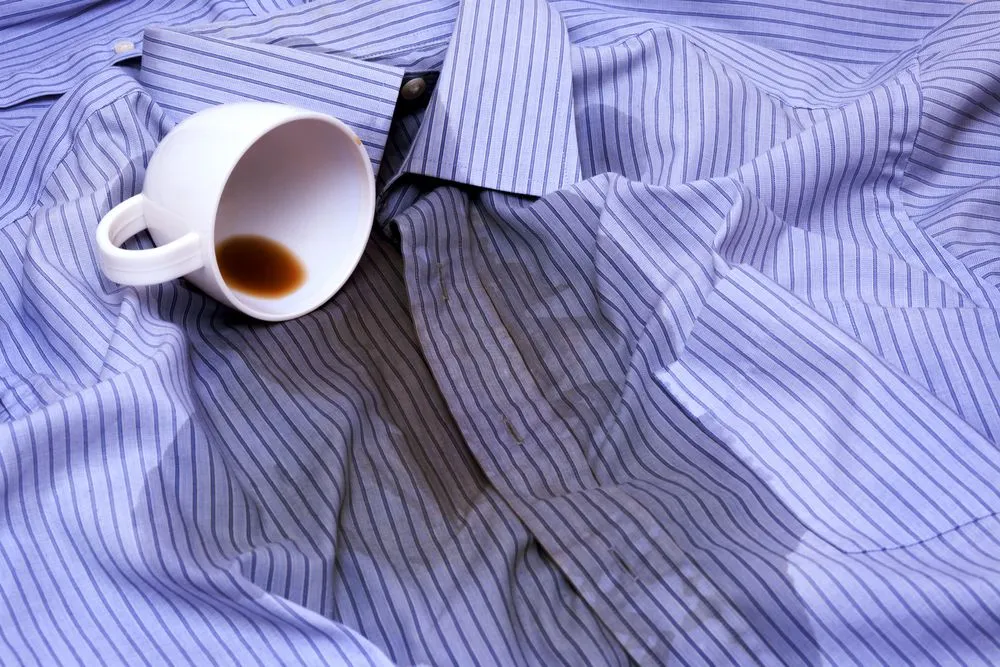
Have you ever spilled water in your lap right before having to present at a big meeting? Or perhaps you’ve felt your underarms start to sweat in the middle of a date that seems to be going well? In both of these situations, and plenty of other ones, you’ve likely noticed that fabrics and cloth tend to darken in color when they get wet! It would certainly be nice if moisture didn’t change the color of our clothes so noticeably, but it’s an unavoidable part of life. The question is, why do things appear darker when they get wet?
How We Perceive Color
Before we can understand the nuances of material colors changing based on the presence of moisture, we should take a quick refresher on how colors are perceived in the first place. When light from the sun streams into our atmosphere and strikes a field of grass, we perceive that grass to be green because the light energy is only partially absorbed.
The grass will absorb wavelengths of light in the blue, red, yellow and orange range of the electromagnetic spectrum, but it will reflect green light wavelengths (560-520nm). Thus, the light that bounces back from the grass is taken in by our eyes, where it hits the cone cells in our retina, and is translated visually to green grass!
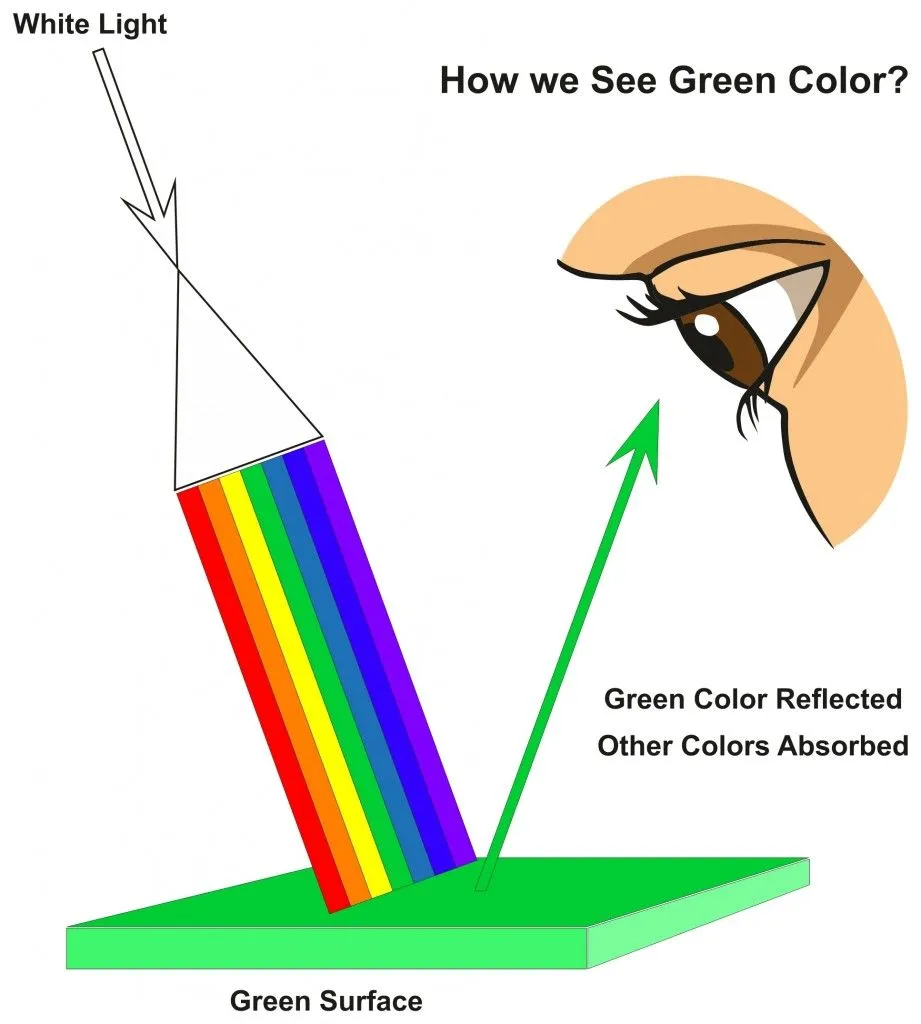
This is the case with everything we look at; the diverse range of colors that we perceive in the world, from the color of a tree to the shades of our clothes and the hues of products we buy, is completely dependent on how light is either absorbed or reflected by those objects.
Additionally, the texture and composition of the material can affect how we see color. For example, an article of clothing is composed of many layers of tiny fibers, which provides a lot of surface area for light to be reflected.
Even though a material may be partially transparent, the multiple layers and countless individual fibers reflect the color back at the observer. A white t-shirt, for example, is composed of fibers that are mostly transparent, but in such large numbers and concentrations, they generate a vibrant white color. The interaction of all that fabric, light and air creates the appearance of a solid color to an observer’s eyes.
Also, fabric may feel smooth, but all those fibers make for quite a rough surface on a microscopic level. Rough surfaces tend to look brighter than smooth surfaces, because the incident light has more angles to bounce off, generating more reflection and creating a brighter appearance. Smooth surfaces, like metal or glass, tend to reflect light in a single direction based on the incident light angle.
When Fabrics Get Wet
Now that we understand how light behaves when striking a dry surface, we can examine how things change when a material or surface is wet. Perhaps most importantly, when a material is wet, that additional layer of water acts like a second reflective surface.
Let’s consider a bright red t-shirt for this example. When light strikes the dry t-shirt, all the wavelengths of light are absorbed except for those that appear red (700-635nm), which bounce back to our eyes. If that t-shirt is wet, when light strikes the fabric, it must then pass back through the layer of water on the fabric. The water has filled in all the gaps of the fibers that had previously been filled with air. As a result, the light is more likely to be bent away from the eye by the water. This is called total internal reflection; the light that would normally bounce back to the observer is instead reflected back into the fabric, where some of it is absorbed by the fibers.
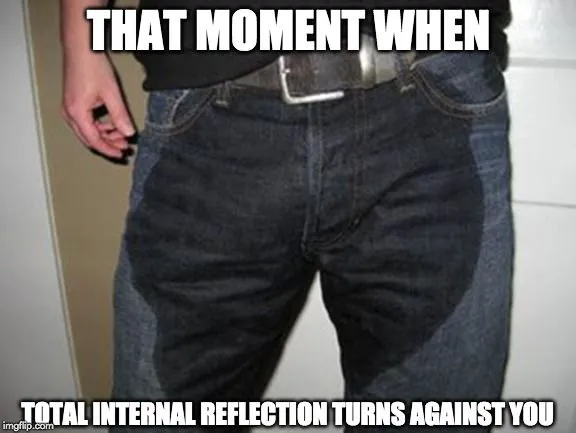
If fewer photons of light bounce off the fabric and return to your eye, then the material will appear to be “darker” in color. The amount of light being reflected by the material is the same, but less of it is being sent back to your eye. As mentioned above, a smooth surface also reflects light in a different way than a rough surface. Adding water to the rough surface of fabric essentially smooths it out. Depending on your angle of observation in relation to the wet surface and the incident light, you may be able to observe a small, bright reflection of the light. Basically, a wet piece of fabric will be darker than a dry piece of fabric, but it will also have the potential to be more “shiny”.
As the fabric dries, more air returns to the pockets of space between the fibers, allowing the incident light to bounce and reflect more freely, rather than being absorbed or re-reflected by any water present on the material.
Do All Wet Things Get Darker?
Clothing is the example we all notice first, but the very same trick plays out on a rained-on sidewalk, a stretch of beach at the waterline, a sheet of paper, a wooden deck, and even a patch of snow churned into slush. In every case the surface looks a shade or two deeper the instant it gets wet, and for exactly the reason we have been describing: a thin film of water traps light that would otherwise have bounced straight back to your eye. Instead of escaping, that light is turned back into the material by total internal reflection, where it takes a longer, more winding path and gives the surface extra chances to absorb it. Fewer photons make it back out, so the surface reads as darker.

There is a neat catch, though, hinted at in the title of the 1988 study that worked out the optics: “Why some things are darker when wet.” Two conditions have to be met. First, the material needs to scatter light, which means it has to be rough and porous, riddled with tiny air pockets that water can flood. Second, it has to absorb at least a little of the light passing through it. Sand, brick, concrete, untreated wood and cotton all tick both boxes, which is why they darken so obviously.
Things that break those rules barely change at all. A pane of glass or a polished car panel is smooth and non-porous, so there are no air gaps for water to fill and nothing to trap. And a surface that is already close to black soaks up nearly all the light while it is dry, leaving little brightness left for the water to steal. Wetness only deepens a color when there is scattered, partly absorbed light for the water to intercept in the first place.
Materials That Truly Change Color When Wet
Everything so far has been a trick of the light: a wet shirt only looks darker, while its dye stays exactly the same. But a handful of materials genuinely swap one color for another when they meet water, and they are worth a mention because they are so often confused with plain old wet-darkening.
The classic example is cobalt(II) chloride. Bone dry, it is a deep blue; as it soaks up moisture from the air its crystals rearrange to make room for water molecules and it turns a rosy pink, fading toward pale pink as things get damper still. Dry it out again and the blue returns. That is why cobalt chloride has long been painted onto humidity-indicator cards and blended into “self-indicating” silica gel, the little desiccant packets whose beads shift from blue to pink once they have drunk their fill of water. Here the water is not just bending light around; it is chemically bonding to the compound and changing the wavelengths it reflects.
A more modern cousin turns up in color-changing umbrellas, swimwear and novelty T-shirts printed with reversible hydrochromic coatings. These start out as an opaque white ink that hides a printed design underneath. Add water and the ink behaves just like the wet fabric from earlier in this article: the liquid fills its microscopic gaps, the coating turns translucent, and the pattern hidden below suddenly shows through. As it dries, the ink clouds back to white and the design disappears again, ready for the next rain shower.
A Final Word
The interaction of light with our physical world and ocular anatomy is a fascinating study in perspective, optics, light and perception vs reality. In the case of fabric colors under dry and wet conditions, the material doesn’t change color when wet, but instead has its reflective capabilities muted or diverted, giving the appearance of a darker shade to an observer.
References (click to expand)
- Why does water make a shirt darker?. West Texas A&M University
- Jae Hyung Lee, Seong Hun Kim, Kwang Ju Lee, Dae Young Lim, & Han Yong Jeon. (2004, March). Determining the Absorption Properties of Split-Type Microfiber Fabrics by Measuring the Change in Color Depth. Textile Research Journal. SAGE Publications.
- Lekner, J., & Dorf, M. C. (1988, April 1). Why some things are darker when wet. Applied Optics. The Optical Society.
- Why Do Things Look Darker When They Get Wet?. PBS North Carolina
- Cobalt(II) chloride. Wikipedia