Thoughts are electrochemical reactions in the brain. The brain holds roughly 86 billion neurons, and a thought is a pattern of electrical and chemical signals passing between them across junctions called synapses. There is nothing tangible to weigh or hold; a thought is the activity itself.
You may have heard that we have tens of thousands of thoughts a day, but that popular figure has no solid research behind it. A 2020 study from Queen’s University that tracked “thought worms” in brain activity put the number closer to 6,200 distinct thoughts per day. Have you ever wondered what they’re made of? And is there a way to measure them? Are we really thinking while doing something or does the brain occasionally leave our life on auto-pilot? Have you ever thought about your thoughts?!

What Are Thoughts?
Thoughts are our perception, ideas and beliefs about the world. This mental cognition is the glass by which we see our existence. It acts as a filter for how we perceive the world. We’ve all heard about “attitude”, which is often a word with a negative connotation. A ‘long-lived’ thought becomes an attitude, and this can be positive or negative.
Why Are Thoughts Important?
Thoughts influence our emotions. Thinking about a tough exam can trigger stress and anxiety within us. Thinking about a loved one can induce feelings of happiness and warmth. Our thoughts then influence our behavior. For example, if you have negative thoughts about dogs, you will be very alert and vigilant when you’re standing near one. You might even try to shoo the dog away. Our collective behavior then makes up our personality. If a=b and b=c, then a=c.
What Are Thoughts Made Of?
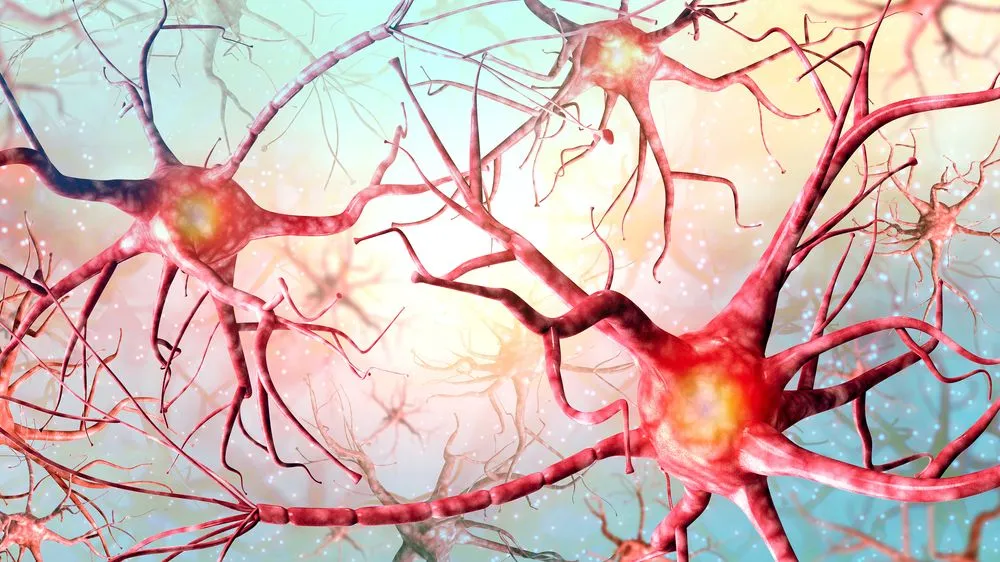
Thoughts are generated in the brain, which is composed of roughly 86 billion nerve cells that transmit impulses through synapses. (The familiar figure of 100 billion was the textbook estimate for decades, until a careful 2009 cell count revised it downward.) In other words, thoughts are electrochemical reactions. What makes them difficult to track is the sheer complexity of the reactions. The firing of neurons can range from roughly one signal per second to several hundred signals per second, with the fastest cells briefly reaching close to 1,000 signals per second.
We humans always underestimate the capacity of our bodies. Can you imagine the amount of neurotransmitters fired while reading this one line? As you’re reading, the photons of these letters are hitting your retina. They are then being detected by the light-detecting cells, which turn into an electrical signal. This electrical signal is carried by the neurons or nerve cells and, like the domino effect, quickly spreads to neighboring neurons. Within a fraction of a second, billions of neurons are activated by this electrochemical signal without you even realizing!
The changes that occur when we emote or change facial expressions can be recognized by brain-imaging tools. However, the process of turning these electrochemical signals into language, shapes and symbols, as well as assigning meaning to a signal, requires more research by neuroscientists.
How Are Thoughts Formed In The Brain?

So we know a thought is electrochemical, but how does one actually get built? It starts with a single neuron reaching a tipping point. A neuron sits at a resting voltage of about -70 millivolts, which means the inside is slightly more negative than the outside. When enough incoming signals nudge that voltage up to roughly -50 millivolts, the cell fires. Neuroscientists call this quick electrical pulse an action potential, or informally a “spike”, and it lasts only about a millisecond.
That spike races down the neuron until it reaches a synapse, the tiny junction where one neuron meets the next. Here the message switches from electrical to chemical. The arriving spike triggers the release of neurotransmitters, chemical messengers that drift across a gap only 20 to 40 nanometers wide and latch onto the next neuron, which then decides whether to fire a spike of its own. A single thought is not one of these events but millions of them, firing in a coordinated pattern across whole networks of neurons.
So what turns a fleeting pattern into a lasting thought or memory? Back in 1949, Canadian psychologist Donald Hebb proposed an idea now boiled down to four words: neurons that fire together wire together. Each time a group of neurons activates as a unit, the connections between them strengthen a little. Repeat the pattern often enough and those cells bind into a neural assembly, so that firing just a few of them can summon the whole group. That is roughly how a thought becomes familiar enough to pop back into your head on cue.
Can We Measure Thoughts?
Well, perhaps not as precisely as we can measure our weight, but there are MRIs that check oxygen levels, dopamine levels or trying to identify brain activity during an invasive surgery.
During neurosurgery, a patient can be kept awake, and since the brain is exposed, neurologists can measure the response of the patient towards any stimulus such as showing a picture or words. This kind of study found that a single neuron can play a very specific role.

However, we can’t always open someone’s brain and do that kind of research! Therefore, functional magnetic resonance imaging (fMRI) is used, which is a non-invasive technique, but it also might not be as precise as an invasive technique. Think of it as viewing a traffic jam from far away, you can’t get a clear picture of any individual car, but you’re aware that there is traffic. Neurons need oxygen to fire signals. Thus, an fMRI detects changes in the oxygen levels in the blood, revealing ‘thought hotspots’.
Researchers at MIT have also developed an MRI sensor that responds directly to dopamine. Dopamine is a brain chemical, or neurotransmitter, that carries messages between neurons, and it plays an important role in learning, motivation, reward and movement. Because a standard fMRI only tracks blood oxygen, a sensor that reacts to a specific chemical offers a far more precise window into what neurons are actually doing.
How Many Thoughts Does The Brain Have In A Day?

You have probably seen the claim that the human brain churns out 60,000 or even 70,000 thoughts a day. It sounds precise, which is exactly why it spread. The trouble is that nobody can find the study behind it. When Discover magazine went looking for the source, the trail led to a vague reference to the National Science Foundation, an agency that funds research rather than doing it, and from there to nothing at all. The figure has simply been copied from one article to the next for years, with no original behind it.
The best real number we have is far smaller. In 2020, psychologists Julie Tseng and Jordan Poppenk at Queen’s University in Canada published a study in Nature Communications that tried to count thoughts directly. Using functional MRI, they tracked what they nicknamed thought worms, stretches of time when the brain settles into one stable activity pattern before jumping to the next. Each jump marks the boundary between one thought and another, a moment earlier research could only guess at from people describing their own minds.
By counting those transitions during rest and while volunteers watched movies, the team estimated that the average person moves through about 6,200 distinct thoughts per day. That is a small fraction of the popular myth, but it comes with something the bigger numbers never had: an actual method you can measure and repeat. So the honest answer to “how many thoughts a day” is not 60,000, and it is not a tidy round figure at all. It is roughly 6,200, give or take, and even that is a first attempt at pinning down something wonderfully slippery.
Are We Consciously Thinking? What Is Our Adaptive Unconscious?
Sometimes there is a catchy song stuck in your head and you can’t help but hum along. Sometimes you drive from home to work without paying conscious attention, but you still manage to take the right turns, even while being completely lost in your thoughts. Cognitive psychologists argue that only a small fraction of our mental processing reaches conscious awareness. The vast majority runs below the surface, which means much of the time we are, in a sense, unconsciously conscious!

That means our brain has adapted our mind and body to perform certain activities without constant awareness. This is called our adaptive unconscious. This adaptive unconscious saves us from making tedious calculations every time we make a turn and control the speed of the car simultaneously. It is a similar concept to muscle memory. Once you learn how to cycle or swim, you can’t really forget it. And you won’t have to maintain the same level of attention as you did when you learnt it the first time.
From the mystery of a billion neurons firing in a second, thoughts making us feel and behave in certain ways, determining our attitude and personality all the way to the unconscious thinking that controls our day-to-day activities, cognitive neuroscience is still only standing on the tip of the iceberg. There are many mysteries to understand when it comes to the functioning of our minds. It is as simple and as infinitely complicated as being human!
References (click to expand)
- Mysteries of the mind - Auburn University. Auburn University
- What are thoughts made of? - MIT School of Engineering |. The MIT School of Engineering
- How are thoughts measured? - MIT School of Engineering |. The MIT School of Engineering
- Changing from negative to positive thinking - Food & Health. Michigan State University
- What Are Thoughts & Emotions?. takingcharge.csh.umn.edu
- Equal numbers of neuronal and nonneuronal cells make the human brain an isometrically scaled-up primate brain. Journal of Comparative Neurology (PubMed)
- Discovery of ‘thought worms’ opens window to the mind. Queen’s University Gazette
- How dopamine drives brain activity. MIT News
- Action potentials and synapses. Queensland Brain Institute, University of Queensland
- Surprisingly simple model explains how brain cells organize and connect. The University of Chicago
- Brain meta-state transitions demarcate thoughts across task contexts exposing the mental noise of trait neuroticism. Nature Communications (PubMed)
- The 70,000 Thoughts Per Day Myth? Discover Magazine