Table of Contents (click to expand)
It is absolutely possible, but you’ll probably lose, or break your ankle in the process.
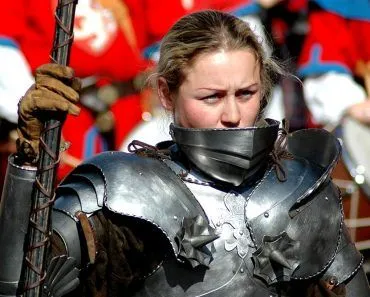
The action movies with women in heels makes for a long list. Black Widow, Catwoman, Wonder Woman, Gomora, and even Nebula does battle in slight wedges.
In real life, people wear heels to appear tall and stately, but our feet usually hate us for it by the end of the day. They aren’t the most comfortable shoes and neither are they the most practical… just think about the times you have fallen, or almost fallen because of them.
So, when films show actors, primarily women, performing daredevil stunts in six-inch stiletto heels, it really makes one question whether any of that is really possible?
Before we delve into the physics of high-heeled fights, it’s important to remember that films aren’t an accurate depiction of real life; some suspension of disbelief is fine. For many fantasy and sci-fi films, we can let some dubious fashion choices off the hook. At times, these fashion choices align with a character’s personality. Just think of Harley Quinn… she would look out of character wearing trainers, in a grey tracksuit combination. Her personality is impractical and outrageous and her costuming reflects that.
With that said, let’s dive into it.
Not All Heels
Not all heels are designed the same. There are wedges, block heels, pumps, and everyone’s favorite, the stiletto, to name just a few. The heel can be attached to a peep toe shoe, a gladiator-style laced shoe, a boot, ordinary oxfords, or even sneakers.
The sky’s the limit…or close to it: the current Guinness record for the tallest commercially available high heels, made by James Syiemiong in 2004, has a 17-inch (43 cm) platform and a 20-inch (51 cm) heel.
Some of these heels are better suited to combat (and comfortable everyday life) than others. In general, the higher the heel and the pointier the heel, the less practical it will be for combat.
Another consideration is whether the shoe is strapped on to the foot or not. No one wants their shoes to fly off their foot while serving a kick to an enemy.
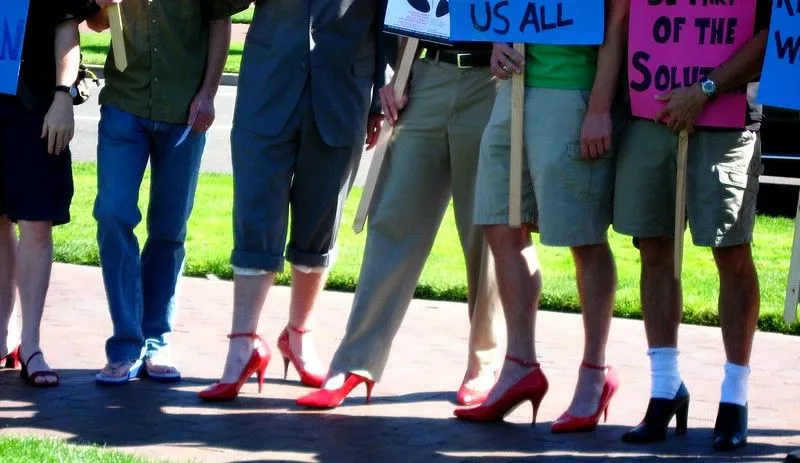
Fighters, especially of the superhero variety, might also not want vulnerable body parts exposed to weapons. The same goes for the legs. Superheroes won’t be able to fight with a broken shin. Boots, especially knee-high boots (like riding boots), provide good protection from murderous arrows and villainous daggers. Even Wonder Woman will leave her arms and thighs exposed, but not her precious shins.
Balance In Heels
Now, how does the heel, either high or low, fare for a fighter? It all has to do with balance.
Standing on our own two feet is inherently unstable. Our center of gravity leans slightly forward, which mean that the body needs to actively work to keep us balanced. This involves a host of the body’s senses: the visual, auditory, vestibular and somatosensory (meaning information from within the body) systems.
Sensory Input
Heels alter the elevation at which your brain is used to experiencing the world; the ground is farther away from your head and your limbs are longer. Your conscious brain knows the reason (the heels), but your senses are still calibrating to this new position. The visual system takes time to adjust to the height difference, as does the vestibular system.

The Ankle And Calf Muscles
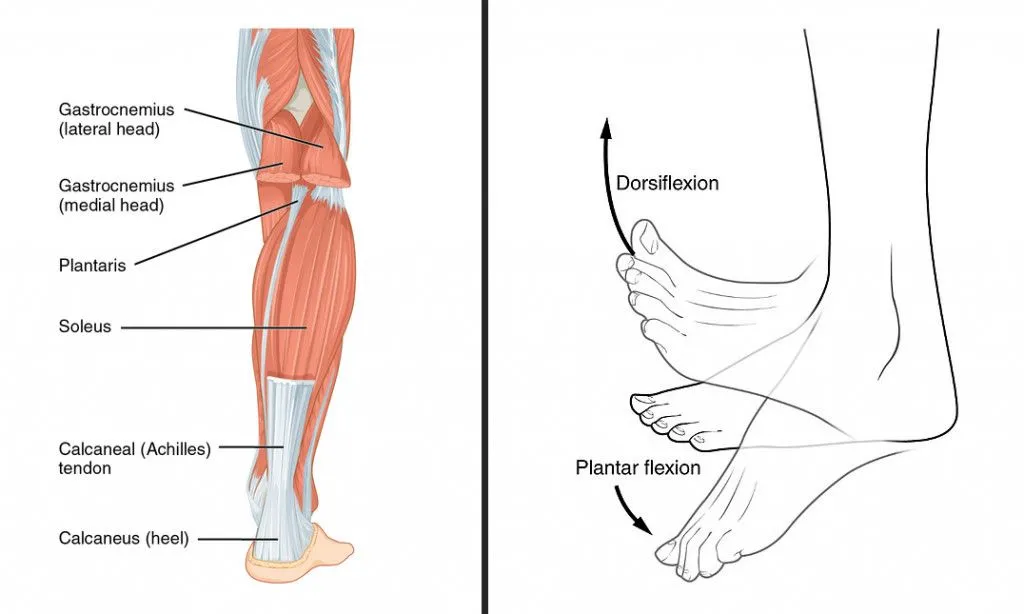
High heels shorten the muscles in the legs, particularly the gastrocnemius and the soleus muscles in the calf. These shortened muscles are the reason your calves look so good when you wear heels, but shortened calf muscles distort how the body maintains balance.
Our center of gravity falls in front of the ankle (when projected vertically). To prevent us from toppling forward, the ankle and the two calf muscles perform something called the plantar flexion.
The plantar flexion is what allows you to point your toes downward, press the gas pedal while driving, balance on your tip toes, and yes, balance in heels. However, habitual heel wearers tend to lose ankle dorsiflexion range of motion (the opposite movement, pulling the toes up), which makes the ankle less adaptable and balance harder to recover when something goes wrong.
The position of the ankle and calf while wearing heels puts added pressure on the knees, which is why people who don’t normally wear heels complain of wobbly knees when they wear them. Pressure on the knees is definitely not an advantage in combat.
The height of the heel also affects the way the leg joints interact with the pelvis region, which all leads back to problems with balance. All muscles and other connective tissue aren’t isolated and their effects can be felt in other connected regions, resulting in a domino effect.
Shorter heels mean longer calf muscles and less strain on the ankle and the knee, which means more mobility.
All this is fine if you’re only concentrating on walking, but imagine running jumping, kicking and being a fearsome fighter. One misstep and now you have a twisted ankle.
Even Distribution Of Weight
A flatter heel will allow a female combatant to distribute her weight more evenly, thereby making her more stable. Block heels and even wedges are therefore a decent choice if you’re going into battle.
Stilettos, however, are not a realistic choice. The needle-like heel means that one must put all their weight on that small point to stay balanced. The chances of falling, or even breaking the heel, are very high. It would be better to be barefoot than to fight in a broken stiletto.
Furthermore, many high heels don’t offer much in terms of arch support. The arch of the foot is a shock absorber and helps prevent the foot from hurting, particularly during hard impacts or landings.
Can You Actually Run In Heels?
Balancing is one thing, but movie heroines rarely stand still. They sprint across rooftops and chase villains down alleys, all while wearing shoes that make the rest of us wobble on flat ground. So can you really run in heels? The honest answer is yes, but slower and at a real cost.

People do it competitively. Guinness World Records even tracks the fastest 100 metres in high heels. The men’s mark stands at 12.42 seconds, set by Andre Ortolf of Germany in October 2023, while the women’s record of 13.557 seconds was set by Denmark’s Majken Sichlau back in 2015. Impressive, but both are well over two seconds off what a world-class sprinter manages in flats, which tells you just how much a heel slows you down.
The slowdown isn’t only about balance; running in heels is simply harder work. In one treadmill study, thirteen women jogged in shoes with heel heights of 1, 4.5 and 7 centimetres (roughly 0.4 to 2.8 inches), and their oxygen consumption and energy expenditure climbed as the heels got taller, rising sharply at 7 centimetres. Taller heels meant burning more energy for the same jog and tiring out faster.
Then there is the injury risk. Each footstrike in a run lands with several times your body weight, and a heel keeps your ankle locked in the pointed-toe position with little room to save a stumble. On flat ground that is a twisted ankle waiting to happen; on a rooftop chase, it is a broken one. So a determined, well-practised person can absolutely run in heels, which is why those stunts look believable, but the physics guarantees they will be slower and one bad step away from the ground.
High Heels As A Weapon
Anything pointy can be a weapon, and heels are no exception to that; just ask Avital Zeisler, a self-defense expert. Her method of self-defense incorporates the heel as a weapon. Its point could be used to inflict damage; in the movies, that would mostly be against the villains, human or otherwise.
If you can overcome the discomfort and the instability of a heel, then the sharp point could serve you to injure your opponent. In a fight sequence, a kick from a pointy heel could definitely do some damage.
And no, the threat is not just movie nonsense. There are medical case reports of stiletto heels causing penetrating skull fractures in assaults. The physics is straightforward, since the tip of a stiletto concentrates a person’s body weight onto a sub-square-centimeter area, generating pressures comparable to a hammer blow. So as a literal weapon, a stiletto is unfortunately credible; as everyday combat footwear, however, it is still terrible.
Does A Heel Stomp Actually Work?
Beyond the dramatic overhead stab you see on screen, there is a far more practical heel move, and self-defense instructors swear by it: the humble downward stomp. Instead of trying to spear an attacker with the point, you drive your heel straight down onto the top of their foot.
The reason it works comes down to anatomy. The long metatarsal bones sit just beneath the skin across the top of the foot, with little muscle to cushion them, and metatarsal fractures are already one of the most common foot injuries seen in emergency rooms. Now add the pressure trick behind a stiletto: a narrow heel funnels your entire body weight onto a tiny patch, the same principle that lets a heel crack a skull. Bring that down hard on someone’s instep and you can realistically break bone.
This is exactly what Avital Zeisler built into her Soteria Method, a self-defense system that trains women to fight back using the heels they are already wearing. Crucially, the aim isn’t a movie-style knockout. As Zeisler describes it, the objective is simply to disrupt the attacker’s thought process, buying you the moment you need to break free and get away. So yes, “heel smashing” is a real thing, only a good deal less cinematic than Hollywood makes it look.
A Final Word
Heels aren’t a great combat footwear choice. Not only do they leave you unsteady on your feet, but they might break, make your feet hurt, and they’re loud, which would probably make it difficult for you to make a stealthy escape.
That being said, if you have no choice in the matter, and you’ve been caught by a villain while in your heels, I’d suggest ditching the shoes entirely and battling with bare feet!
References (click to expand)
- Chien, H.-L., & Lu, T.-W. (2016, May 6). Effects of shoe heel height on the end-point and joint kinematics of the locomotor system when crossing obstacles of different heights. Ergonomics. Informa UK Limited.
- Dakin, C. J., Héroux, M. E., Luu, B. L., Inglis, J. T., & Blouin, J.-S. (2016, March 1). Vestibular contribution to balance control in the medial gastrocnemius and soleus. Journal of Neurophysiology. American Physiological Society.
- Cronin NJ. The effects of high heeled shoes on female gait: a review. Journal of Electromyography and Kinesiology (PMC)
- Highest heeled shoes commercially available (James Syiemiong, 2004). Guinness World Records
- Stewart GD, Bowyer GW (2005). Compound depressed skull fracture caused by a stiletto-heel assault. PubMed
- Fastest 100 metres in high heels (male), Andre Ortolf, 2023. Guinness World Records
- Fastest 100 metres in high heels (female), Majken Sichlau, 2015. Guinness World Records
- Gu, Y.D., & Li, Z.Y. (2013). Effect of Shoes’ Heel Height on the Energy Cost during Jogging. Research Journal of Applied Sciences, Engineering and Technology.
- Metatarsal Fractures. StatPearls, StatPearls Publishing (NCBI Bookshelf)
- Israeli teaches women self-defense with high heels (Avital Zeisler, Soteria Method). Ynetnews