Table of Contents (click to expand)
- The Entire History Of You
- Externally Recording The World Around Us
- The Inside Perspective: Converting Memories To Visuals
- What About Recording Our Dreams?
- Actually Recording Memories
- Can We Boost Memory By Writing Code Into The Brain?
- Applications And Implications Of Memory Recording
- A Future Where We Never Forget?
The Black Mirror “grain” implant from The Entire History of You (S01E03) is not yet possible, but researchers are getting closer. fMRI-plus-AI reconstructions of what subjects see have improved dramatically since 2023 (Takagi & Nishimoto used Stable Diffusion to rebuild seen images), Neuralink began human trials in January 2024, and hippocampal “memory prosthetics” have boosted recall in small human studies. Full HD replay of arbitrary memories, however, is still science fiction.
Black Mirror brought to viewers a dark, futuristic world that often sent chills running down the spine. One particularly eerie episode showed a brain implant that lets you record and view your own memories and those of others. The idea seems game-changing, marvelous…and a bit terrifying.
However, is this actually possible or is it just another improbable science fiction fantasy? Can we, someday, hope to record and rewatch our memories as in Black Mirror?
The Entire History Of You
Memory has been a favorite of science fiction stories past and present, from Total Recall to Blade Runner. The idea of memory recording can be seen in sci-fi classic Brainstorm and the 1995 film Strange Days, among scores of others.
One of the recent and notable portrays of memory recording is the third episode of the first season of Black Mirror titled The Entire History of You.
Like the rest of the series, this episode attempts to show us the dark side of technological advancement. Never forgetting anything might seem like a dream come true, but is it?
Most people in the society of The Entire History of You have implants called ‘grains.’ The implant records everything that is seen and heard by the person perfectly. You can replay your memories—called ‘re-do’s—by using a small remote-like thing. You can even put up your memories on a big screen so that others can see them too.
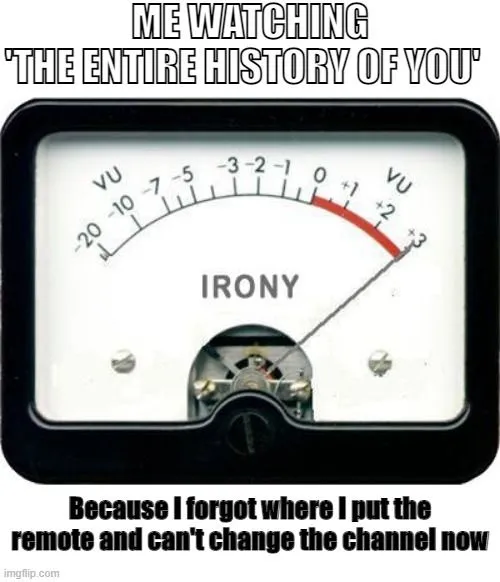
Black Mirror shows us flawless, full-HD memory recordings that can be replayed on-demand at the touch of a button. Suffice to say no one is close to doing that.
But can our future see such technological advances? Well, that depends on how you want to get the results. There are different ways to bring to life the events in Black Mirror.
Externally Recording The World Around Us
Black Mirror tech is actually easier to set up than it seems… if you’re not taking the memory out of the brain, that is.
All you would need is a video and audio recording device implanted in your body, or even a wearable. Smart glasses with recording capabilities are already a thing, and newly rebranded Meta proclaims that their smart glasses will “allow you to record audio and video with just a touch.”
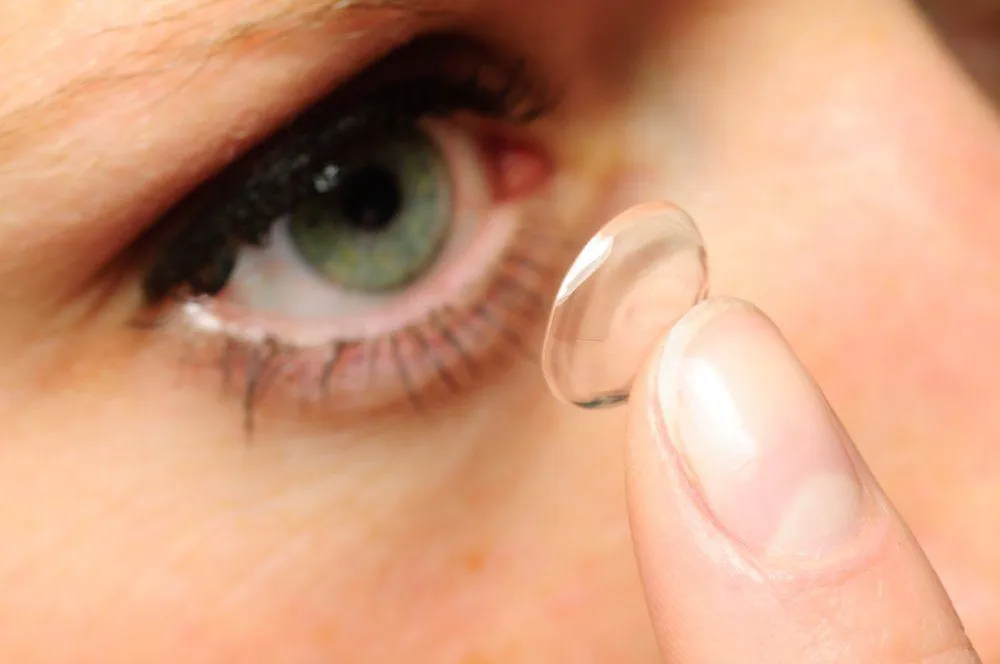
A compact storage device connected to it with a large enough capacity is also all you would need. It could be implanted or carried. Contact lenses or glasses that serve as a viewing screen could be used to rewatch your ‘memories.’ Such lenses are also already being engineered.
The Inside Perspective: Converting Memories To Visuals
The grain implant in Black Mirror suggests that they are not recording memories externally, but internally. This would mean interpreting the images that fall into and are processed by our eyes, and the auditory signals collected by our ears, in order to form a recording of what we perceive.
In 2011, scientists from Berkeley used functional Magnetic Resonance Imaging (fMRI) and computational models to essentially reconstruct dynamic visual images from the brain. They were able to successfully reconstruct clips that people had seen.
The reconstructions are hardly full HD, just barely recognizable. But this could be a potential first step towards recording what we see from inside our minds.
To create a device with capabilities such as that shown in Black Mirror is a long way from this. Whether that is possible is still a question to be answered.
What About Recording Our Dreams?
If we can partly reconstruct what someone is looking at, a natural next question is whether we could capture what they see with their eyes shut. Dreams, after all, are memory and imagination stitched into vivid little films that vanish the moment we wake. Could a scanner catch them before they fade?

In 2013, a team led by Yukiyasu Kamitani at Japan’s ATR laboratories came remarkably close. Publishing in Science, Tomoyasu Horikawa and his colleagues placed three volunteers in an fMRI scanner and woke them repeatedly just as they were drifting into sleep, asking each time what they had just been dreaming about. After more than 200 awakenings per person, the researchers had a catalogue of dream reports paired with the brain activity recorded in the moments before. They then trained machine-learning decoders on each volunteer’s brain patterns while awake and viewing ordinary photographs, and turned those decoders loose on the sleep scans.
The models could tell, better than chance, whether a sleeper was dreaming of something such as a car, a person or a building. Accuracy sat on the order of 60 percent when telling two categories apart, against a 50 percent coin-flip baseline, and climbed higher for very different pairs. Tellingly, the same visual brain regions lit up for a dreamed object as for a real one, which suggests that dreaming and seeing lean on the same neural machinery. It is still a long way from screening last night’s dream like a movie, but it was the first solid evidence that the content of a dream can be read, however faintly, from the outside.
Actually Recording Memories
In the above cases, though, we’re not exactly ‘recording memories.’ We’re simply recording every single moment of the world around us. The distinction is important because they have different applications and implications.
So what about actually recording memories? We can see this in a newer series, Solos. In the final episode of the first season, ‘Stuart,’ Morgan Freeman’s titular character has been accused by Dan Stevens’s Otto of ‘stealing’ memories. The episode portrays memories as similar to intoxicating drugs and Stuart as a ‘memory addict’. Memories are actually being uploaded and downloaded from minds in the series.
Technological developments to improve memory and to assist brain function are already being heavily researched and developed. But will we ever get to a point where actual memories can be recorded, retrieved, and recalled perfectly?
What happens at the molecular level when memory is perceived, stored, recalled, and degraded, is still not entirely clear. The extent of involvement of various components for each process is still being explored. There are components, like glia, whose extent of involvement in brain activities we still haven’t figured out.
Even the existing progress on memory processing is mostly dealing with visual memory, and the working of how sounds and touch are processed remains even more mysterious.
We are not even close to fully forming a map of the brain – the connectome, as it is called.
We have not yet figured out how to get a picture with a good enough resolution that would let us understand the connections in the brain.
Without even fully understanding how the brain works, and how memories are formed and stored, and recalled, we cannot hope to actually record and view memories.
What changed between 2021 and 2026
That said, the gap has narrowed significantly since this article was first written. In 2023, researchers at Osaka University (Takagi & Nishimoto) used functional MRI combined with Stable Diffusion to reconstruct natural images that volunteers were viewing, with quality far beyond the blurry clips of 2011. The same year, a team at UCSF demonstrated a brain-computer interface that decoded speech in real time from a paralyzed patient. And in January 2024, Neuralink implanted its N1 chip in its first human volunteer, Noland Arbaugh. None of this is “record every minute of your life in HD,” but the building blocks are coming together faster than most neuroscientists expected.
Can We Boost Memory By Writing Code Into The Brain?
There is another angle on all this that skips the record-and-replay idea entirely. Instead of reading a memory out, what if you could help the brain lay it down more reliably in the first place? That is exactly what a team from Wake Forest Baptist Medical Center and the University of Southern California set out to test.

In a 2018 study in the Journal of Neural Engineering, researchers led by Robert Hampson worked with eight epilepsy patients who already had electrodes implanted in the hippocampus, the brain’s memory hub, for seizure monitoring. As the volunteers memorized images, USC engineers Theodore Berger and Dong Song recorded the firing patterns that accompanied correct recall and distilled them into a mathematical model (a MIMO, or multi-input multi-output, model). When the patients later tried to remember, the team fed those “correct” patterns back into the hippocampus through the same electrodes.
The nudge worked. Short-term memory scores improved by about 37 percent over each patient’s own baseline, and a harder photo-recognition test taken after a longer delay improved by roughly 35 percent. This was not recording a memory in the Black Mirror sense; it was writing in the brain’s own code for good encoding and letting the hippocampus do the rest. For people living with Alzheimer’s, dementia or head trauma, a prosthesis that props up a failing memory system may prove far more valuable than any high-definition replay of the past.
Applications And Implications Of Memory Recording
All memory degrade and eventually end up forgotten. We don’t reproduce memories, but instead, reconstruct them each time we recall them. This reconstruction is extremely prone to errors and distortions. Even old dreams can sometimes create false memories.
If we all had perfect memory, we would never forget an important meeting or where we put our keys. Crimes would be solved so much more easily.
However, sci-fi stories also show us the dark side of this. We might also get trapped into obsessive loops of memory, trying to solve our every suspicion. Or memory would become an intoxicating drug, resold and stolen by those seeking the “good life”. We would hold grudges forever.
We would also not be able to forget all the bad things in life. It would be so much harder to get over grief and trauma, and those embarrassing moments that made us cringe at ourselves will forever stay with us.

The selective storage of memories could be just as bad. Remember Eternal Sunshine of the Spotless Mind? It may not always end well if we can choose what to remember.
The most terrifying consideration is the danger of privacy becoming non-existent. All-permeating surveillance would become a much easier task. The privacy risk that such devices present is so dangerous that a paper has actually been published on the matter. It details a way to incorporate privacy protection into the grain of The Entire History of You, and such future devices.
However, this technology need not be commonplace. The best thing about research into memory recording and reconstruction is not its applications for all of us. If it becomes real, advancements like this can be game-changing for those affected by Alzheimer’s, dementia, or brain trauma.
If there is a possibility that those afflicted with memory loss can relive or retain their memories, then that possibility is worth making a reality.

A Future Where We Never Forget?
Balancing the ethical and social implications with the advantages of an accessible perfect memory solution is tricky, to say the least. As for its feasibility, it’s unlikely that sci-fi-esque memory recording capabilities will become real in the near future.
Stories like Black Mirror, while showing us the dark side of things, also risk creating a fear of technology that could erect barriers of paranoia to advancement. We should take the lessons from the stories we know to heart, and tread carefully, but also not let a fear of technology and its potential prevent us from changing the world!
References (click to expand)
- Hampson, R. E. et al. (2018). Developing a hippocampal neural prosthetic to facilitate human memory encoding and recall. Journal of Neural Engineering.
- Takagi, Y., & Nishimoto, S. (2023). High-Resolution Image Reconstruction With Latent Diffusion Models From Human Brain Activity. CVPR 2023.
- Metzger, S. L. et al. (2023). A high-performance neuroprosthesis for speech decoding and avatar control. Nature.
- Neuralink. First human implant (January 2024).
- Memory Depiction in the Black Mirror Episode “The Entire History of You.” Psychology Today.
- How are memories formed? Queensland Brain Institute.
- Horikawa, T. et al. (2013). Neural Decoding of Visual Imagery During Sleep. Science.
- Prosthetic Memory System Successful in Humans, Study Finds. Atrium Health Wake Forest Baptist.