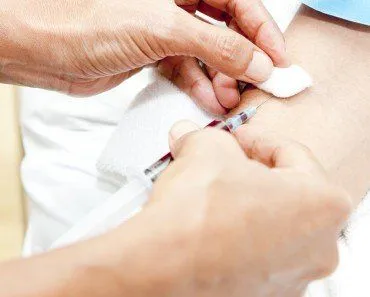
An air bubble in a blood vessel can cause an air embolism, an obstruction to blood flow. In adults, small bubbles (a few millilitres) injected into a vein are usually absorbed harmlessly, while larger volumes (roughly 100–300 mL of air, or about 5 mL per kg of body weight) entering the bloodstream can be fatal. The danger depends on the volume of air, where it lodges (heart, brain or lungs are the worst), and whether it reaches arteries directly. When an embolus blocks an artery in the lungs, it is called a pulmonary embolism.
A popular notion in movies and books is that stabbing a bad guy with an air-filled syringe results in an almost instantaneous – yet painful – death. It is at least painful enough to satiate the sadistic temperament of the victim. However, is death always the case, if ever? Has it ever piqued your interest as to whether the act of injecting an air-filled syringe is actually as dangerous and fatal as commonly portrayed?
The most common answer is that yes, air is harmful if introduced into our blood vessels, but our blood also has air, as does our lungs. Even so, people don’t keep dropping dead in the middle of the street, so what’s the real story?
Circulatory System
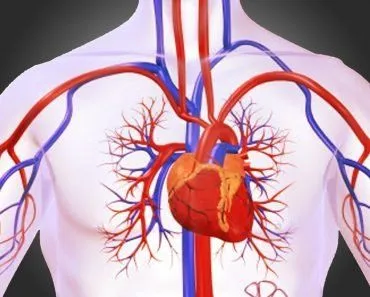
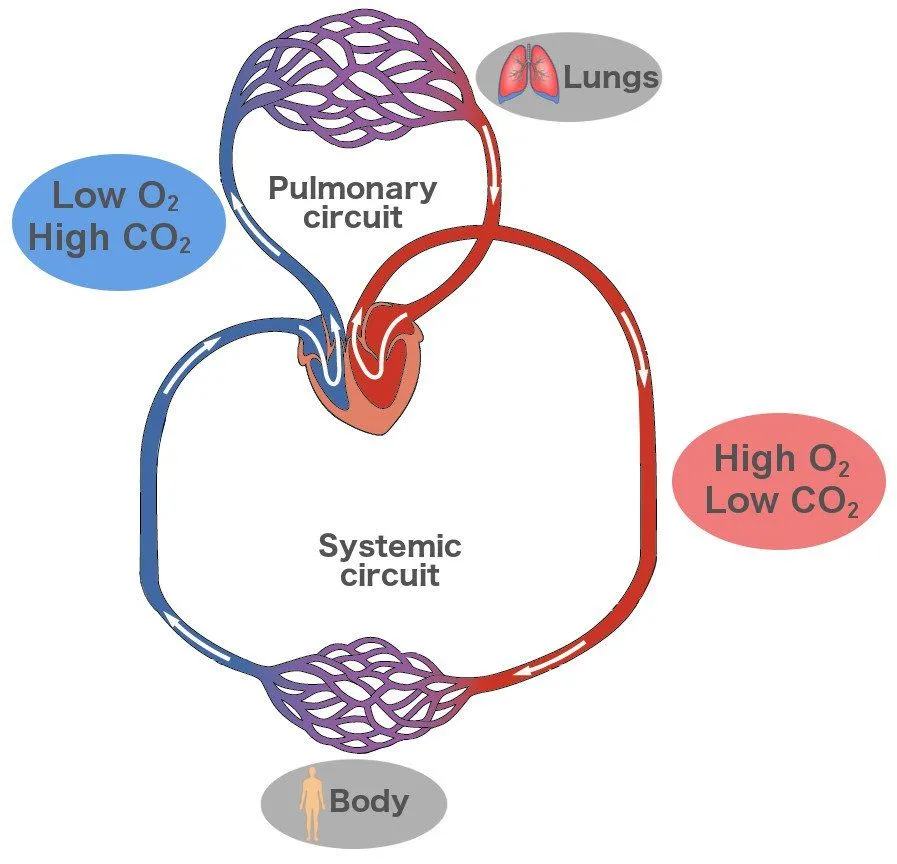
Our body has an enormous network of blood vessels. As is commonly known, they transport blood to and from the organs. Oxygenated blood is pumped out from the left side of the heart (the aorta and its branches) to the rest of the body. Here, the exchange of materials takes place. All the waste products generated by the organs and tissues is passed off to the blood, and the necessary materials required by the tissues to function properly are delivered by the blood.
The blood vessels then transport metabolic waste to the organs that will eliminate it, and return to the right side of the heart. Oxygen is one of the most important requirements for life, so the blood needs to constantly replenish its supply. From the right side of the heart, blood is pumped to the lungs, where it trades CO2 for O2, and then returns to the left side of the heart. From there, the systemic cycle repeats.
Embolism
Think of a road filled with moving cars, trucks and other vehicles. It’s a busy road with moving traffic, but then a vehicle breaks down in the middle of the road. What would then happen to all the vehicles behind it? They would get stuck! This is essentially what happens when any foreign substance enters our blood vessels. The road is the blood vessel, the cars and other vehicles on it are the blood cells, and the vehicle that breaks down is the foreign object. This is called an embolism. The foreign object can be anything from an air bubble or fat globule to a blood clot or microbe.
Injecting an air-filled syringe introduces an air bubble into our blood vessels, which obstructs the progress of our blood cells. However, it isn’t always fatal. The reason? In our above example, if the road had multiple lanes, and if the vehicle that broke down was a bike or cycle, the other vehicles could go around it. It wouldn’t cause much of a problem. However, if it was a single lane road or if the vehicle that broke down was a trailer, then the disruption would be major.
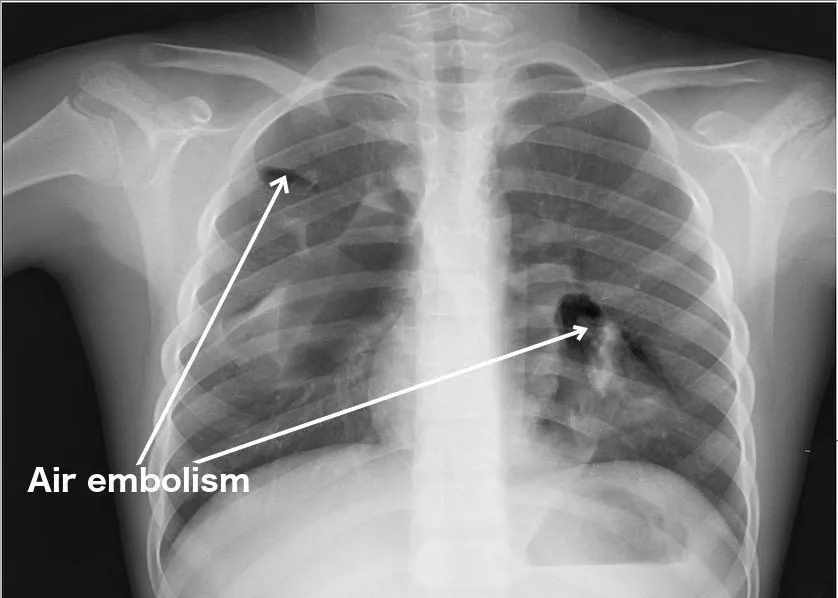
Similarly, depending on the size of the blood vessels and the air bubble, the effects would vary. Not all our blood vessels are the same size. Some vessels, like capillaries, have a very thin diameter, just large enough for one line of cells to pass through. On the other hand, some of them are much wider, like the aorta.
Now, as we said before, our blood also contains oxygen, as do our lungs, but they don’t cause air embolisms. The reason behind this is that the oxygen in our blood is not free. It is bound to a component called hemoglobin, so it doesn’t cause any obstructions. This is also why small air bubbles are not always harmful, as they can be absorbed into the blood. It’s the bigger ones that can’t be absorbed that create the most problems.
Effects Of An Embolism
There are certain factors that decide how harmful or benign an air embolism will be. These are the size of the air bubble, the type of gas that causes the bubble, and its location. We already understand why the size of the bubble is so significant. Oxygen-rich air dissolves into the blood relatively easily, so small bubbles often clear on their own. Gases like nitrogen (the bulk of air at 78%) take much longer to dissolve, which is why nitrogen bubbles released during rapid decompression can cause severe problems for divers (better known as decompression sickness or “the bends.”
Now, let’s look at an extremely important aspect of embolism – the location. Our body cannot function if any of our organs stop working, but some embolisms can cause more damage than others. These specifically are the brain, the heart and the lungs.
An embolism has the capacity to completely cut off the blood supply to a particular organ. Therefore, if it occurs in the blood vessels of the heart, it can potentially cause a heart attack. In the brain, it can cause a paralytic stroke or even brain death. In the lungs, it can cause a pulmonary embolism.
Damage caused due to air embolisms are worsened by the inflammatory response of the body to the bubble.
Therefore, yes, death by injecting an air-filled syringe is possible, but it won’t mean death in every case. The effect is dependent on a number of factors, and will vary, ranging from asymptomatic to fatal.
How Much Air In An IV Is Actually Dangerous?
This is the question that worries most people the moment they spot a few bubbles creeping down their intravenous (IV) drip line: is that little train of bubbles about to kill me? The reassuring answer, backed by clinical reviews, is that the tiny bubbles you normally see in an IV line are almost never enough to cause harm. A small amount of venous air gets broken up and carried to the lungs, where it is simply breathed out, which is why most small venous air embolisms cause no symptoms at all.

The real danger scales with how much air enters and how fast it gets there. For an adult, the estimated lethal dose is on the order of 3 to 5 millilitres of air per kilogram of body weight, which works out to roughly 200 to 300 mL for an average-sized person. Even 50 to 100 mL of air entering the veins in a rapid rush can be enough to destabilise the circulation. To put those bubbles in perspective, the stray air in a drip chamber is a minuscule amount, far below these thresholds, which is exactly why small venous bubbles clear harmlessly. Nurses still tap the tubing to clear it, partly out of caution and partly to reassure the patient.
Rate matters as much as volume. Air trickling in slowly is handled far more easily than the same amount arriving all at once, which can create an “air lock” in the heart. Air that reaches the arteries directly is in a different league altogether: as little as 0.5 mL of air in a coronary artery can trigger a dangerous heart rhythm, and just 1 to 2 mL reaching the central nervous system can be fatal.
What Are The Symptoms Of An Air Embolism, And How Fast Do They Appear?
When an air embolism does turn serious, the timing is its most telling feature. Symptoms usually appear during or immediately after the air enters, right on the heels of the injection, drip, or procedure that let it in. There is rarely a long delay, and that close link between the event and the collapse is one of the clues doctors rely on to recognise it.
When a large venous bubble jams the right side of the heart and the lung circulation, the first signs tend to be sudden breathlessness, chest pain, a cough, and sometimes wheezing or gasping. The heart may race or beat irregularly, blood pressure can fall, and in the worst cases the circulation collapses into cardiac arrest. If the air instead crosses into the arteries and travels to the brain, the picture becomes neurological: confusion, dizziness, blurred vision, weakness, seizures, or loss of consciousness, much like a stroke.
Not every case is dramatic. Studies suggest that around one in ten air embolisms are clinically silent, while up to one in five can be life-threatening. The outcome, once again, comes down to how much air got in, how quickly, and where it finally lodged.
How Is An Air Embolism Treated?
Because a serious air embolism is a medical emergency, treatment begins the moment it is suspected. The first step is the simplest: stop any more air from getting in, whether by clamping the IV line or sealing the entry point. From there, doctors work to move the trapped air somewhere it can do less harm and to help the body reabsorb it.

A classic move is to lay the patient on their left side with the head tilted downward, a position known as the left lateral decubitus, or Durant, position. This encourages a large bubble to float up and settle in the apex of the right ventricle instead of blocking the outflow to the lungs, breaking the “air lock.” Patients are also given 100% oxygen. Breathing pure oxygen both corrects the shortfall of oxygen in the blood and helps the nitrogen inside the bubble diffuse out, so the bubble gradually shrinks. If a central venous catheter already sits near the heart, doctors may try to aspirate the air straight out.
For severe cases, and especially for arterial air embolisms, hyperbaric oxygen therapy is the definitive treatment. Sealing the patient inside a pressurised chamber of pure oxygen physically compresses the bubbles and speeds their reabsorption, and it works best when started within the first four to six hours. In one review of vascular air embolism, about 78% of patients treated with hyperbaric oxygen recovered fully, far more than among those who did not receive it.
References (click to expand)
- Gordy, S., & Rowell, S. (2013). Vascular air embolism. International Journal of Critical Illness and Injury Science. Medknow.
- Gordy, S., & Rowell, S. (2013). Vascular air embolism. International Journal of Critical Illness and Injury Science. Medknow.
- Hwang, Y., & Kim, Y.-J. (2018, May 11). Retrograde Cerebral Venous Air Embolism on Susceptibility-Weighted Imaging. Canadian Journal of Neurological Sciences / Journal Canadien des Sciences Neurologiques. Cambridge University Press (CUP).
- Air embolism - www.aic.cuhk.edu.hk
- Munakomi, S., & Cooper, J. S. Venous Gas Embolism. StatPearls. NCBI Bookshelf, National Library of Medicine.
- Air Embolism: Symptoms, Causes & Treatment. Cleveland Clinic.