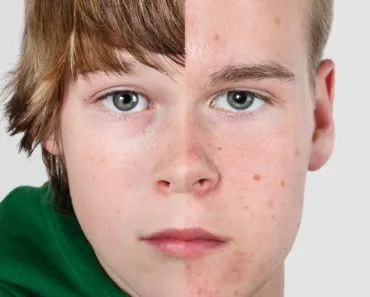
Teenagers act rebellious because the brain's reward and emotion systems mature several years before the prefrontal cortex (which handles judgment and impulse control) finishes developing in the mid-20s. Combined with surging sex hormones, intense sensitivity to peer approval, and the developmental task of forming an independent identity, this neurobiology makes pushing against parents, school and authority both normal and, in moderation, healthy.
If you have a teenage child, then you know how frustrating it can be as a parent; if you don’t have any children, then perhaps you remember your own pubescent pushback against authority. Maybe you took your parents car for a late-night joyride, became a class clown and earned yourself detention or used a fake ID to snag some underage booze. The bottom line is that the behavior of young people generally takes a turn around the teenage years, and the best catch-all word for this behavior is rebellious!

Is there an underlying reason why teenagers across time, culture and geography tend to demonstrate this clearly rebellious change in their behavior?
What Does It Mean To Be Rebellious?
Before digging into the science, it helps to be clear about what the word actually means. To rebel is to break with established customs, or to resist and renounce an authority you once accepted. A rebel, in the everyday sense, is simply a person who refuses to follow the rules or expectations set by whoever is in charge, whether that authority is a parent, a teacher, or society at large. Being rebellious, then, describes an ongoing pattern of pushing back against those rules rather than a single act of defiance.
For a teenager, rebellion almost never means the kind of armed uprising the word can suggest in history books. It usually looks like small, everyday challenges: arguing about curfews, dyeing their hair a color you would never have chosen, questioning long-held family traditions, or insisting on making decisions their parents used to make for them. Psychologists tend to read this ordinary sort of rebellion not as bad behavior for its own sake, but as a signal that a young person is testing the limits of their world and working out where those limits end and where they themselves begin.
Causes Of Teenage Rebellion
Predicting the actions and intentions of teenagers seems like a futile effort, but there is some method behind the madness of these young people. Although every individual’s experience differs, as do the factors acting on them, there are some general underlying causes behind the sometimes stymying behavior of youth in revolt.
Neurological Development
Although human beings are always changing and growing in different ways, one of the most concentrated and dramatic periods of growth and development occur during our teenage years. Not only are the unpredictable changes of puberty happening, which will be explained below, but neurological development is also making leaps and bounds around the approximate years of 13-19. Most notably, the prefrontal cortex of the brain is developing, which is closely linked to personality development, planning, logical reasoning and the structure of speech.
As these skills rapidly sharpen, it is only natural for young people to practice these new abilities. Logical reasoning and a greater capacity for complex reasoning and speech means equates to an ability to argue more effectively. The prefrontal cortex is not the only part of the brain that is evolving during those challenging years; the brainstem, occipital lobe, parietal lobe and cerebellum will also be very different at age 10 than they are at age 20. These areas affect everything from language processing and speech formation to memory capacity, all of which cultivate agency in a young person.
Hormonal Changes
People commonly cite “puberty” as a nebulous reason for teenage rebellion, but what this means in a physiological sense is that teenagers are experiencing a massive flood of new hormones from the hypothalamus. Girls experience an increase in estrogen, while boys get flooded with testosterone. Girls will begin to menstruate, grow breasts, and develop body hair and body odor; boys will develop testicles and pubic hair, along with a lower voice and facial hair.
Their bodies are changing rapidly, and their brains are essentially reacting to new chemicals in real-time. Increased emotions, and higher levels of aggression and spontaneity are understandable, given the complex dance of hormones in the body of a teenager!
Identity Definition
A young child has very little autonomy, which makes sense, given that most children are highly dependent on parents or guardians prior to their teenage years. The food they eat, places they go, toys they play with, and entertainment they consume are essentially chosen by someone else. In the teenage years, as their ability to make their own choices grows, teenagers want to create their own identity. Rather than relying on their parents’ guidance and control, teenagers are experimental, trying new things to determine what fits in their burgeoning personality.
In some cases, young people will swing to the opposite extreme of all they had previously known or been taught—a blatant rebellion. When parents feel exasperated with their teenage child, it is often because they see them getting “off track” or not upholding “family values”. However, this fails to recognize the importance of self-definition and the creation of one’s own identity.
Relationship To Authority
Similar to the point above, young children are under the constant authority and gaze of guardians, in most cases. Children can be disciplined for not going to bed on time, for throwing tantrums, not eating their dinner, drawing on the walls or teasing their younger siblings. The threat or application of discipline is generally effective until the teenage years begin. As teenagers increase their ability to reason, argue and effectively ask “why?”, conflict can erupt. There is less fear of discipline from infallible guardians because teenagers begin to recognize their parents as normal people who are far from perfect.
By acting out against authority, whether that is parents, teachers or the actual police, teenagers are pushing back against the limits that have always been in place. Resentment towards being controlled can develop in these years, driving teenagers to break the rules and experiment with things that had previously been forbidden.
Social Media
Unlike any other generation in the past, today’s teenagers have a huge new factor in their behavior and personality—the Internet, and more specifically, social media. It has become so ubiquitous in our lives that we hardly notice our collective addiction, but its influence is undeniable. Teenagers are traditionally savvy when it comes to new technological advancements, and modern social media and Internet use are not exceptions to this rule.
Our lives and thoughts can now be shared with hundreds, thousands, or millions of people with a single click. There are also billions of websites bearing the collective knowledge, production and behavior of humanity. Along with that incredible level of access and reach are the other issues of the teenage years—challenges to authority, insecurities, sexual exploration, and identity definition, among so many others. Combining a limitless platform with the endless complexity of a teenager’s inner world can create a universe of problematic behavior! Social media has become a new frontier for teenage expression and rebellion, which makes it a new challenge for parents in the present and future.

Seeking Acceptance
A large part of social media obsession is the desire for acceptance (via likes, shares, reputation, viral popularity, etc.), but that desire can manifest in many other ways too! Children are generally “accepted” by their parents and siblings. However, while childhood friends are crucial, the quest for social establishment and acceptance can begin in earnest during the teenage years. If a teenager wants to be accepted by others, they may alter their actions to “fit in”, which can come as a surprise to parents. It is no longer enough to have familial acceptance; teenagers show remarkable fluidity in their behavioral patterns—and even their moral compass—during these developmental years.
Hungry For Attention
Many teenagers crave attention, eager for people to notice their personality and accomplishments, or recognize them as an individual. However, particularly for teenagers with younger siblings, their nascent independence also means receiving less attention from their parents. This may lead teens to seek validation and attention from their peers or other outside sources. This attention-seeking behavior may manifest in dangerous or risky ways, which can not only garner positive attention from peers, but may also earn negative attention from their parents.
The Psychology Of Teenage Rebellion
The causes above each play a part, but developmental scientists have tried to fit them into a bigger picture, and two ideas come up again and again. The first is the dual systems model of the adolescent brain, associated with psychologist Laurence Steinberg and his colleagues. It proposes that the teenage brain runs on two systems that mature on different schedules. A socioemotional system, built around reward and emotion circuits such as the limbic system, becomes highly reactive shortly after puberty and makes rewards, excitement and peer approval feel intensely appealing. A separate cognitive control system, based in the prefrontal cortex, handles planning and impulse control, but it matures slowly and finishes developing only in the mid-to-late 20s, according to the National Institute of Mental Health.

For a few years in the middle of adolescence, there is a gap between a fast, reward-hungry accelerator and a brake that is still being installed. Self-reported sensation seeking tends to rise to a peak in mid-adolescence and then fall away, which is exactly what this imbalance would predict. The second big idea comes from psychologist Erik Erikson, who framed adolescence as the stage of identity versus role confusion, roughly between the ages of 12 and 18. Erikson argued that the central task of the teenage years is answering the question “Who am I?” Teenagers try on different values, styles, friendships and beliefs to build a coherent sense of self, and they naturally begin to weigh their friends’ opinions more heavily than their parents’. In this view, rebellion is often a by-product of the search for identity rather than its goal. Tellingly, Erikson also suggested that trying to force an identity onto a young person can itself provoke rebellion, because it gets in the way of the exploration they need to do for themselves.
At What Age Are Teenagers Most Rebellious?
There is no single birthday when rebellion switches on, but the research does sketch a rough timeline. Because rebellious, risk-taking behavior closely tracks the reward-seeking part of the brain, it usually climbs through the early teenage years, peaks somewhere in mid-adolescence, and then eases off across the late teens and early twenties. As the prefrontal cortex catches up and self-control matures, the urge to test every limit gradually loses its grip.
That timeline is an average, not a rule. Some children start pushing back at 11 or 12, while others barely go through a rebellious phase at all. How intense it becomes, and exactly when, depends on personality, family environment, culture and each young person’s individual pace of development. It is also worth remembering that the end of a rebellious phase does not mean a teenager has stopped growing or changing; it simply means the brain’s accelerator and brake are finally working in closer balance.
How To Deal With Teenagers
As a parent, you may not understand the strange behaviors and actions of your once golden child as they move through their teenage years. However, teenagers don’t necessarily understand it either! Teenagers lack the self-awareness of why they’re acting in a certain way, or about the full scope of the consequences. For example, if a 14-year-old boy is teased for hair on his body in gym, and his voice cracks while reading aloud in class, he may not understand the surges of anger and confusion he feels, nor why he talks back to his mother than night, or picks on his sister before bed.
There are simply too many variables to consider in the life and mind of a teenager. This is not to say that they should be given a blank check for bad behavior, but parents should consider how confusing the teenage years can be. Some of the best ways for parents to manage teenage rebellion is to stay calm and retain control as the authority figure, but also respect the young adult and their individual needs. Listen to their side of issues, set rules that are appropriate for their age and personality, and allow your parenting and disciplinary style to evolve.
What worked with one child may not work with another, and remembering this essence of individuality is important when dealing with a rebellious teen. Focusing on good behavior and working to maintain healthy communication patterns are fundamental approaches parents can take. In serious cases of rebellion—situations that endanger themselves or others—counseling for both parents and teens may help them correct course to healthy behavior.
A Final Word
Being the parents of a teenager is no easy task, but neither is being a teenager! Every family and child is different, but understanding some of the most common causes of teenage rebellion is important. As a parent, trying to see things from your teenager’s perspective will be easier with this knowledge on your side. Remember, the teenage years will eventually end—for better or worse!
References (click to expand)
- Teen rebellion marks subconscious separation from parents. The University of Southern California
- Sherman, L. E., Payton, A. A., Hernandez, L. M., Greenfield, P. M., & Dapretto, M. (2016, May 31). The Power of the Like in Adolescence. Psychological Science. SAGE Publications.
- https://researchspace.auckland.ac.nz/bitstream/handle/2292/24732/11%20Gluckman%20-%20Puberty%20&%20adolescence%20-%20transitions%20in%20the%20life%20course%20[Gluckman].pdf?sequence=6
- Booth, A., Granger, D. A., Mazur, A., & Kivlighan, K. T. (2006, September 1). Testosterone and Social Behavior. Social Forces. Oxford University Press (OUP).
- Rebel - Definition, Meaning & Synonyms. Vocabulary.com
- Strang, N. M., Chein, J. M., & Steinberg, L. (2013). The value of the dual systems model of adolescent risk-taking. Frontiers in Human Neuroscience.
- The Teen Brain: 7 Things to Know. National Institute of Mental Health (NIMH).
- McLeod, S. Erikson's Stages of Psychosocial Development. Simply Psychology.