Table of Contents (click to expand)
Yes, human brains really do contain tiny magnetite (Fe3O4) crystals. They were first reported in 1992 and confirmed in a 2018 University of Munich study of seven brains, which found them concentrated in the cerebellum and brain stem. Scientists don’t yet agree why they’re there: leading hypotheses include an evolutionary remnant of magnetic navigation, environmental pollution, or a byproduct of iron metabolism.
Magneto, the great and powerful mutant, is a legendary hero and villain.
For every X-Men fan, Magneto’s powers are at the top tier when it comes to awesome powers. After all, who wouldn’t want to control metal and magnetic fields by mere mental force? What if that were a possibility in real life?
In 2019, scientists engineered tiny magnetic protein crystals and inserted them into cells. They were able to move these cells from the outside with magnets. Basically, they created magnetic cells! Fascinating, but not very Magneto-esque.
But believe it or not, there may be similar magnetic crystals in the brain!
Magnetite: What Is It And Where Is It Found?
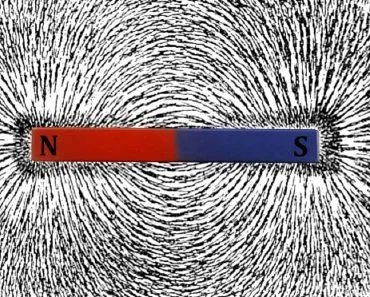
Magnetite is the most abundant naturally occurring magnetic substance. Its chemical formula is Fe3O4 (often written Fe2+Fe3+2O4), making it a peculiar mineral that contains both ferrous and ferric ions.
In nature, it occurs in all types of rocks – igneous, sedimentary, metamorphic, limestone and fumarolic deposits. It is found not only in rocks, but also in living beings.
The fact that bacteria, birds, fish and turtles use the Earth’s magnetic field for navigation purposes is well known. The purpose and existence of the magnetic components in their bodies have also been well researched. Now, while this topic has already been discussed, what about magnetic substances in humans?
Birds and bacteria have magnetic crystals, but do we? Is this a myth or a fact supported by science? And if they’re in our brains, what could be their purpose?
Are There Magnetite Crystals In The Brain?
Magnetite was first discovered in the human brain in 1992. Scientists did not find its presence baffling, as iron is already abundant in human blood. Skeptical and curious scientists wondered whether this was an isolated event or a common occurrence.
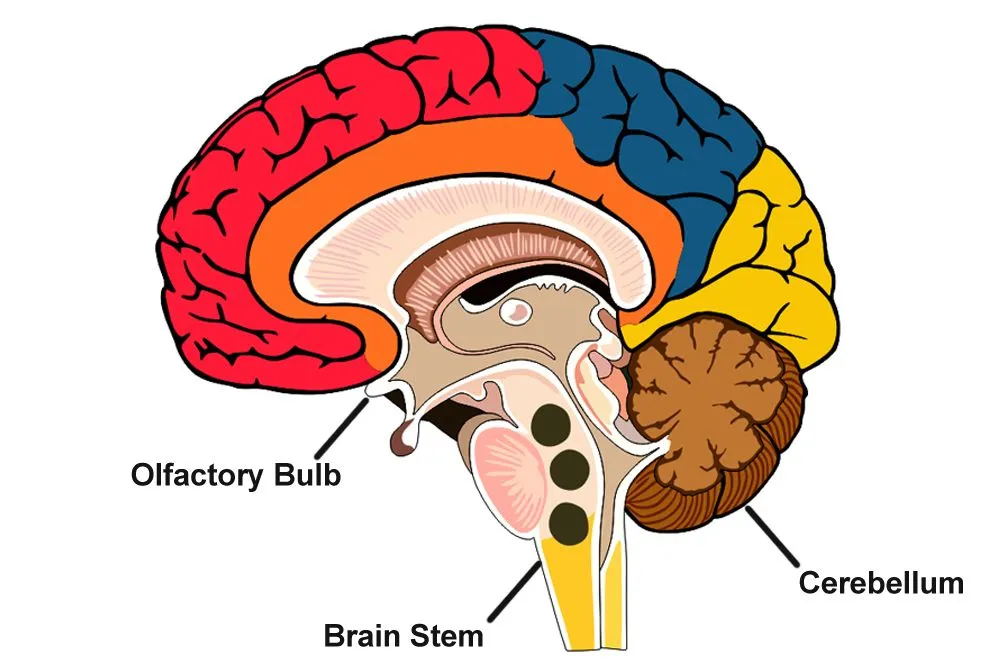
To test this, a team of researchers from the University of Munich conducted a study in 2018 in which they used 822 specimens from seven dissected human brains preserved to retain any magnetic substances. The study revealed the presence of magnetite crystals in the brain, especially in the cerebellum and brain stem. The results were consistent across all the specimens.
How Do Magnetite Crystals Get In The Brain?
The study also attempted to understand whether the origin of the magnetic crystals was internal or external.
Many believe that the origin of the magnetite crystals is external, meaning that they enter the brain from the environment. For example, magnetite nanoparticles can enter the brain via the nose. If this is the case, then one should find that the olfactory bulb, a part of the brain directly above the nose, has the highest concentration of these particles, while the back part of the brain, further away from the nose, would have very few magnetite nanoparticles, as the particles wouldn’t be able to reach there as easily. Furthermore, since everyone breathes the same air, there should be no difference between the presence of such a substance between male and female brains.
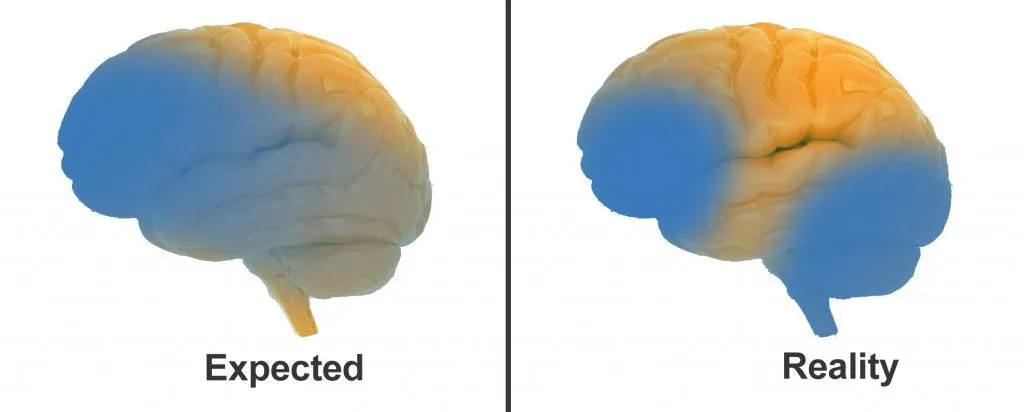
However, researchers found no difference in the amount of magnetite crystals in the front and back of the brain. The results from male and female brains were also not uniform.
Thus, the theory of an external origin could not be supported.
Why Do We Have Magnetite Crystals In Our Brains?
Well, no one knows for sure, but speculation is rife.
Some believe it’s an intrinsic system of navigation that evolution made defunct. Most nomadic groups, especially those who live in extreme environments, are able to navigate effectively without a compass or sunlight.
Some think it is the result of air pollution contamination, while others have linked it to neurodegenerative diseases and aging.

Birds have magnetic crystals in their brains that help them navigate, so could it be possible that humans also have magnetic crystals in our brains?
This was the reasoning behind a study published in 2019. A group of researchers from the California Institute of Technology, the University of Tokyo, and Princeton University tested whether humans could respond reflexively to the Earth’s magnetic field.
Subjects showed significant patterns of neural activity when exposed to magnetic fields in an isolated chamber, meaning that certain areas of the brain began to show signs of activity in response to the magnetic field that the scientists were creating. The isolated chamber ensured that no external source of magnetic interference affected the experiment.
Since most experiments in this area are isolated and the replication rate is low, it would be a leap to conclude that any theory is the most popular, accurate or best.
What Other Crystals Are Found In The Brain?
Magnetite is not the only mineral hiding in your head. If you search for “crystals in the brain,” you will often land on a completely different set of deposits, the kind a doctor might spot as bright specks on a CT scan. Most of them have nothing to do with magnetism, and most are a perfectly normal part of growing older.

The best known is brain sand, or corpora arenacea, which collects in the pineal gland (the pea-sized gland that helps run our sleep cycle). These gritty granules are built mostly from calcium and phosphorus in the form of hydroxyapatite, the same mineral family that makes up our bones and teeth. They are astonishingly common: a 2023 systematic review and meta-analysis pooled dozens of studies and found pineal calcification in roughly 62% of people, becoming more frequent and larger with age. For the vast majority it causes no problems at all, and radiologists actually use brain sand as a handy landmark when reading scans.
Then there are corpora amylacea, tiny spherical bodies just 2 to 20 micrometres across (a fraction of the width of a human hair). Despite the “crystal” label people often give them, they are not calcium at all. They are made mainly of glucose polymers (sugars) with a little protein, which is why they are also called polyglucosan bodies. They pile up steadily as the brain ages, especially near the fluid-filled ventricles and the brain’s outer surface. One leading idea is that they act as microscopic waste bins, trapping cellular debris so it can eventually be cleared away.
Not every deposit is harmless, though. In a rare condition called primary familial brain calcification (historically known as Fahr’s disease), calcium builds up abnormally in the basal ganglia, the movement-control hubs deep in the brain. It can be inherited through any of several genes and may cause problems with movement, speech and mood, although some carriers never develop symptoms at all. It is genuinely uncommon, so a little calcium on a scan is far more likely to be ordinary age-related change than this disorder.
So yes, there really are “crystals” in the brain beyond magnetite. Unlike those magnetic specks, however, these calcium and sugar deposits are visible, fairly well understood, and usually just a quiet sign of a well-used brain.
Can Magnets Affect Your Brain?
Here is the reassuring part: the fridge magnet holding up your grocery list is not doing anything to your thoughts. Its field is far too weak and too steady to reach past the skull and stir up your neurons. But a strong, rapidly changing magnetic field is a very different story, and doctors use exactly that on purpose.

The clearest example is transcranial magnetic stimulation (TMS). A coil is held against the scalp and pulsed with a fast-changing magnetic field. Because a changing magnetic field induces an electric current (the same physics that runs a power station), that pulse sets off a small current inside the brain, enough to depolarize nearby neurons and make them fire. By aiming the coil at specific regions, clinicians can gently turn parts of the brain up or down. The technique is well established: the US Food and Drug Administration first cleared a TMS device for medication-resistant major depression in 2008, and TMS has since been permitted for conditions such as obsessive-compulsive disorder and migraine.
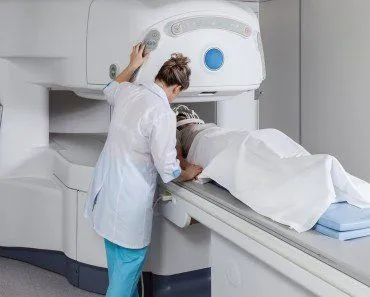
MRI scanners rely on magnets too, and very powerful ones, typically 1.5 to 3 tesla, far stronger than any household magnet. Yet a routine scan leaves a healthy brain completely unharmed. That strength is why staff screen so carefully for metal implants, but the static field itself does not damage brain tissue.
So can magnets affect your brain? Absolutely, but it takes a carefully engineered, changing field to do it, not a household magnet. And even then, the goal is to nudge the brain’s own electrical chatter, not to hand anyone Magneto-style powers.
Magnetic Humans – Truth Or Myth?
So, can these crystals in our brains help us become Magneto? Probably not, considering that we still don’t know what purpose they actually serve in the brain. Currently, the amount of research on this topic is limited. Given the enormous amount of knowledge of this phenomenon in other organisms and the rise in profound research on this topic, we’re not too far away from finally understanding how much these tiny crystals affect our daily lives.
Until then, we’ll leave the ability to control objects with our minds to science fiction.
In the meantime, if you fancy yourself a science fiction read involving animals, magnetite crystals and the Fibonacci sequence, pick up a copy of “The Age of Eden” by James Rollins!
References (click to expand)
- Skinner, H. C. W., & Ehrlich, H. (2014). Biomineralization. Treatise on Geochemistry. Elsevier.
- Wang, C. X., Hilburn, I. A., Wu, D.-A., Mizuhara, Y., Cousté, C. P., Abrahams, J. N. H., … Kirschvink, J. L. (2019, March). Transduction of the Geomagnetic Field as Evidenced from alpha-Band Activity in the Human Brain. eneuro. Society for Neuroscience.
- Maher, B. A., Ahmed, I. A. M., Karloukovski, V., MacLaren, D. A., Foulds, P. G., Allsop, D., … Calderon-Garciduenas, L. (2016, September 6). Magnetite pollution nanoparticles in the human brain. Proceedings of the National Academy of Sciences. Proceedings of the National Academy of Sciences.
- Gilder, S. A., Wack, M., Kaub, L., Roud, S. C., Petersen, N., Heinsen, H., … Schmitz, C. (2018, July 27). Distribution of magnetic remanence carriers in the human brain. Scientific Reports. Springer Science and Business Media LLC.
- Li, T. L., Wang, Z., You, H., Ong, Q., Varanasi, V. J., Dong, M., … Cui, B. (2019, September 25). Engineering a Genetically Encoded Magnetic Protein Crystal. Nano Letters. American Chemical Society (ACS).
- Belay, D. G., & Worku, M. G. (2023). Prevalence of pineal gland calcification: systematic review and meta-analysis. Systematic Reviews.
- Augé, E., Duran, J., Guinovart, J. J., Pelegrí, C., & Vilaplana, J. (2018). Exploring the elusive composition of corpora amylacea of human brain. Scientific Reports.
- Balck, A., Klein, C., & Westenberger, A. Primary Familial Brain Calcification Overview. GeneReviews, University of Washington, Seattle.
- Rizvi, S., & Khan, A. M. (2019). Use of Transcranial Magnetic Stimulation for Depression. Cureus.
- Cohen, S. L., Bikson, M., Badran, B. W., & George, M. S. (2022). A visual and narrative timeline of US FDA milestones for Transcranial Magnetic Stimulation (TMS) devices. Brain Stimulation.