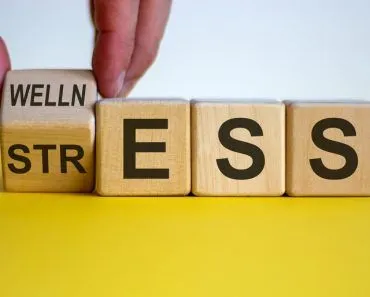
The physiological changes that make up the fight-or-flight response start with the release of adrenaline, which is triggered by the brain’s warning that something dangerous or stressful is about to happen. The release of adrenaline causes rapid and dramatic physiological changes, including heavy breathing, clammy hands, elevated blood pressure, and a faster heartbeat.
Imagine that you’re walking down a dark road late at night, after a fun evening with friends. The wind is blowing through the trees all around you, and the shadows are playing tricks on you – or are they? A trash can lid clatters to the ground and you hear the sound of a glass bottle being kicked. You look around frantically, suddenly feeling as though you’re not alone…
You freeze in place, listening for another sound, but before you know it, you can practically feel your heart beating out of your chest, fast and hard. You haven’t moved; in fact, you’ve hardly breathed, so why is your heart suddenly beating in overdrive? Why does perceived danger make our heart beat so fast?
Short answer: The flight-or-fight response of the human body… and epinephrine.
Our Body’s Secret Bodyguard
Human beings have pretty good reflexes, but there are some things that we let our instincts handle, such as protecting us from danger. Whenever we feel threatened, scared, anxious or panicked, our body goes into what’s known as “fight or flight” mode. The name refers to the evolutionary history of this response. More specifically, when early humans were out hunting and gathering, they may have come across a wild animal or two. At that point, they had two choices – fight or flee. If it was a boar, maybe you would stop and fight, hoping to win yourself a worthy meal. If it was a bear, however, the wiser choice would be to flee.
Although the two options are very different, they both require similar things from the body – namely a burst of energy. If you are suddenly about to engage in extremely intense activity, you want to be prepared, so the body clicks into this learned response – fight or flight.
The physiological changes that make up this response start with the release of adrenaline, triggered by the brain’s warning that something dangerous or stressful is about to happen. More specifically, the amygdala processes the sensory input (e.g., clattering trash can, clinking bottle, footsteps, shadows, etc.) and an emotional response is generated. If that response is fear or the perception of danger, the amygdala sends a signal to the hypothalamus.
The hypothalamus is a crucial aspect of our body’s physiological response because it regulates the autonomic nervous system, which includes the parasympathetic and sympathetic nervous systems. The sympathetic nervous system is where the fight-or-flight response initiates, triggered by the emotional perception of danger. The hypothalamus will then signal the adrenal glands to release epinephrine (adrenaline) into the bloodstream, and you are off to the races… or the battleground!
As that adrenaline surges into your bloodstream, it causes rapid and dramatic physiological changes, including heavy breathing, clammy hands, elevated blood pressure, and yes… a faster heartbeat. The changes don’t stop there, however, you also have small airways that open in your lungs, to ensure enough oxygen is available for the stress ahead. When your brain gets that burst of oxygen, you become alert and aware. Your hearing, vision and other senses are sharpened, as are your reflexes.
Your heart beats faster, not only pushing blood around, but also redirecting glucose throughout the body, providing usable energy to muscles and organ systems. The release of blood sugar is also driven by epinephrine. The same hormone acts on the smooth muscle of your airways, opening the bronchi wider so more oxygen can reach those working muscles.
Some of the other side effects of the fight-or-flight response are less pleasant, and work as signals that something is wrong, rather than as a useful tool to improve your chances of survival. For example, dry mouth, sweating, tension in the shoulders, headaches, lightheadedness, difficulty breathing or the need to urinate don’t sound very helpful if you are about to battle a saber-toothed tiger or outrun a lion.
These are unavoidable symptoms of epinephrine’s other effects on the body, which are extremely important. In other words, we need to get over the fact that having “butterflies in our stomach” makes us uncomfortable. In many cases, the release of adrenaline and the physiological response of the body happens so quickly that we don’t even realize we’re in danger. Fortunately, a few million years of evolution has made our instinctual reactions pretty darn good!
How Fast Does Your Heart Beat When You’re Scared?
So just how fast is your heart racing in that moment of panic? When you are sitting calmly and feeling well, a normal resting heart rate for an adult falls somewhere between 60 and 100 beats per minute. The instant fear floods your system, that number can climb well past the top of the normal range. Doctors call a resting rate above 100 beats per minute tachycardia, and a real fright can send you soaring much higher. During a full-blown panic attack, which runs on the very same fight-or-flight machinery, the heart rate may speed up to 200 beats per minute or even faster.

The engine behind that surge is epinephrine (adrenaline). Adrenaline is a beta-adrenergic agonist, which is a technical way of saying it latches onto beta-1 receptors sitting on the heart. Switching those receptors on makes the sinoatrial node, your heart’s natural pacemaker, fire more frequently, which increases both how fast and how forcefully the heart beats. That is why a single scare can take you from a lazy 70 beats per minute to a pounding gallop in the space of a heartbeat or two.
Here is a detail that surprises a lot of people: a racing heart does not automatically mean sky-high blood pressure. Heart rate and blood pressure are measured separately and do not always move in lockstep, so your pulse can gallop while your blood pressure stays in a perfectly normal range. A jolt of fear or a wave of anxiety is one of the classic reasons your heart can pound away even though the reading on a blood pressure cuff looks completely ordinary.
Why Does Your Heart Feel Like It “Drops” When You Get Scared?
A sudden fright does not only make your heart pound. Plenty of people describe the opposite sensation first: a stomach-lurching feeling that their heart has “dropped” or sunk, as though the floor just fell away beneath them. It is the very same feeling that grabs you at the crest of a roller coaster, in the breathless instant before the plunge.

Your heart is not actually going anywhere, of course. That dropping sensation is your fight-or-flight response announcing itself in your gut. When the alarm sounds, the adrenal glands perched on top of your kidneys pour adrenaline and noradrenaline into the bloodstream, switching on receptors in your blood vessels, muscles, lungs and heart. At the same time, your body reroutes blood away from your stomach and intestines and hits pause on the steady muscular squeezing of digestion (known as peristalsis). Your autonomic nervous system relays all of this through the vagus nerve, a long nerve that runs from the brainstem down to the heart and gut, carrying signals back and forth between your brain and your insides.
The result is that hollow, sinking, “my heart dropped” feeling. It is really your digestive system falling quiet and your organs reacting to a flood of stress hormones, all interpreted by a brain that is suddenly paying very close attention. If you want the full story of that plunging sensation, we have dug into why your stomach drops when you’re anxious in a separate article.
Why Do You Suddenly Notice Your Own Heartbeat When You’re Scared?
Here is something strange about a fright: it does not only speed your heart up, it also makes you keenly aware of every thud. Sitting calmly, most of us never feel our pulse at all. The instant fear takes hold, though, we can suddenly count each beat hammering against the ribs. So why does the very same heartbeat become so loud in our attention?

The answer involves a sense you were probably never taught to name: interoception, the brain’s ongoing read-out of what is happening inside your body, from a full stomach to a pounding chest. Signals traveling up from the heart are turned into conscious feeling largely by a fold of cortex buried deep in each hemisphere called the insula. A 2018 study in Scientific Reports found that one part of it, the mid-insula, becomes active specifically when people pay attention to their own heartbeat, and that the stronger that activity is, the more anxious the person tends to be.
Fear turns the volume on this system right up. When the fight-or-flight response floods you with adrenaline, your attention swings inward and becomes hypervigilant to bodily sensations. Researchers studying generalized anxiety disorder describe an unconscious bias that tugs attention toward the body, so the drumming heart you would normally ignore becomes almost impossible to tune out. It is much the same reason a quiet, racing pulse can feel deafening the moment you start to feel nervous.
For most people, that heightened awareness fades as the danger passes. Sometimes, though, it spins into a loop. In the cognitive model of panic first set out by psychologist David Clark in 1986, a person notices a racing heart, misreads it as a sign of catastrophe such as a heart attack, and that frightening thought triggers even more adrenaline, which drives the heart faster, which seems to confirm the fear. Round and round it goes. It is a striking reminder that the feeling of your heartbeat is not a passive measurement; it is something your brain actively builds, and fear can make it shout.
The Dark Side Of Adrenaline
While a racing heart pumping energy to our legs is a good thing when we’re in real danger, long-term exposure to this sort of anxiety can be very detrimental to the body. Chronic stress and worrying can have the same effect as narrowly avoiding a car crash or running away from a mugger, except that flood of hormones and chemicals is constant. It can result in exhaustion, confusion, oxidative stress in the body, chronic illness and a significantly lowered quality of life.
While the fight-or-flight response can save your life, if your body falls into it too often, it can also shorten your life! The other half of the autonomic nervous system, the parasympathetic nervous system, is responsible for pulling us back from the panic of fight-or-flight, by lowering stress hormone levels once we have detected that the danger has passed. However, this system can get overworked, and stop functioning properly. Some things you can do to help include deep breathing, meditation, relaxation, yoga and even light cardio exercise.
These techniques can ensure that your body’s automatic responses are used properly, and not abused.
Next time you feel your heart start to pound, you’re probably not having a heart attack, but your senses have detected that you’re in some sort of danger. Check out the situation, embrace the surge of energy you feel in your blood, and make the same choice humans have been making for thousands of generations… fight or flee?
References (click to expand)
- Understanding the stress response - Harvard Health. Harvard University
- American Psychological Association. Stress Effects on the Body.(2016).
- All About Heart Rate (Pulse) - American Heart Association
- Panic Attack vs. Heart Attack - Cleveland Clinic
- Beta 1 Receptors - StatPearls, NCBI (NIH)
- Heart Rate and Blood Pressure - Cleveland Clinic
- Why do I get butterflies in my stomach? - The Conversation
- The role of mid-insula in cardiac interoceptive attention and anxiety - Scientific Reports (2018), NCBI (NIH)
- Altered Interoceptive Processing in Generalized Anxiety Disorder - Frontiers in Psychiatry (2019)
- Cognitive theory of panic disorder - The Open University (OpenLearn)