The range of Bluetooth depends on its class and there are three main classes of Bluetooth: Class 1 : transmits at 100 mW with a range of 100 meters. Class 2 : Most Bluetooth headsets and headphones transmit at 2.5 mW with a range of 10 meters. Class 3 : transmits with 1 mW at a range of less than 10 meters.
The range of Bluetooth depends on its class and there are three main classes of Bluetooth:
- Class 1 : transmits at 100 mW with a range of 100 meters.
- Class 2 : Most Bluetooth headsets and headphones transmit at 2.5 mW with a range of 10 meters.
- Class 3 : transmits with 1 mW at a range of less than 10 meters.
I remember exchanging Linkin Park hits on my sliding Sony Ericsson phone with a friend. Later, I “amplified” the sound by forcing it to pass through a cone made by the palm of my hand and imitating a speaker. Before the Internet of Things revolutionized wireless communication technology, Bluetooth technology was THE thing.
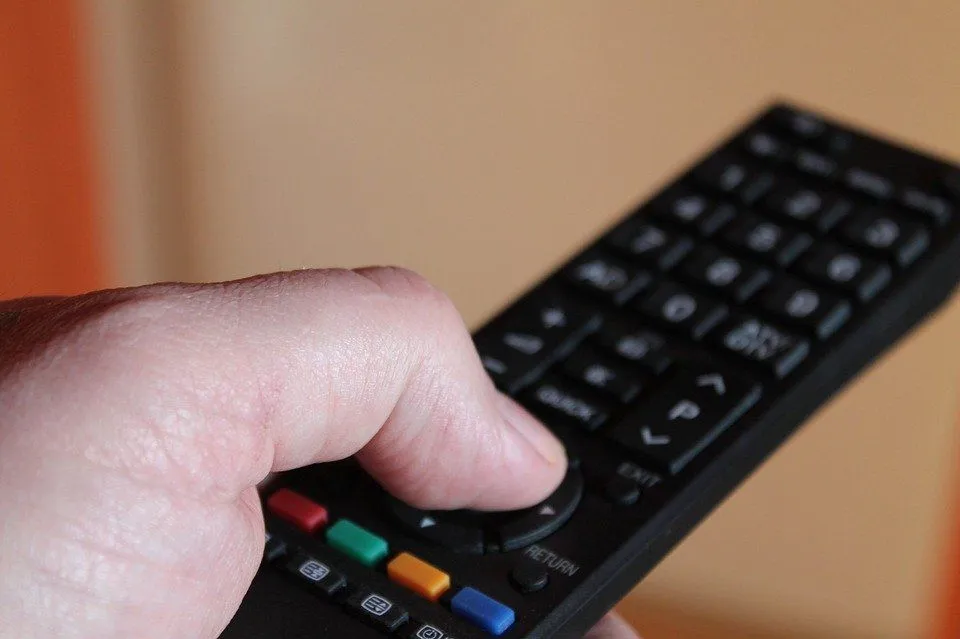
However, Bluetooth was not our first attempt to manipulate a device with another device without a cable; infrared has been used for some time as an alternative to data cables.
Bluetooth only overcame one major disadvantage, eliminating the need to position the viewing direction. Due to this limitation, remote controls cannot change channels if they are not directed at the TV.
While newer wireless technologies have emerged, Bluetooth remains extremely widely used today. It powers wireless headphones, smartwatches, fitness trackers, smart home devices and countless other applications, making it far from obsolete.
It is the unsung hero of our generation who protects us from uncomfortable conversations and confrontations by powering our wireless headphones, as well as one of humanity’s most important inventions – the PlayStation (or Xbox… each to its own). I deliberately avoided

However, take the joystick a little too far away and the red light goes out abruptly. There seem to be a number of distances within which two or a network of devices can comfortably communicate with each other, but as we will find out, this distance is not fixed and is limited by several factors.
Bluetooth Range
Is Bluetooth A Short-distance Technology?
There is a common misconception that although Bluetooth is not a visual connection technology, it can only work over short distances. That’s not true. No… gluing the phone sleeves together would not accelerate the speed of transmitting information between them, just as pressing harder on the joystick buttons will not speed up your car.
Bluetooth or radio waves behave like any other wave, such as sound waves.
How Far Does Bluetooth Reach?
The distance the wave travels depends both on how loud you scream and on the obstacles that surround it, and on the sensitivity of the listener. So the louder you scream, the further the voice will travel, in part due to the hardware – the structure of the voice box, lung capacity, etc.
This means that Bluetooth is power-dependent or, in terms of Bluetooth technology, class -dependent.
Range Depends On The Class Of Bluetooth
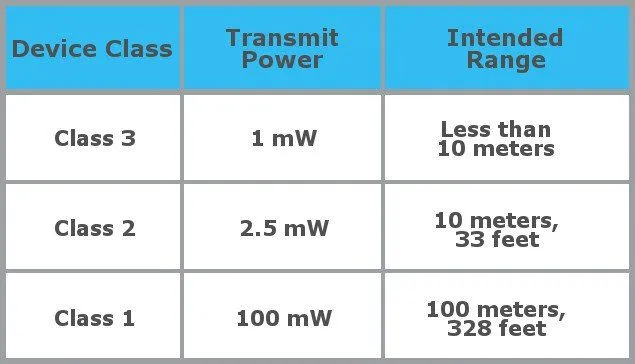
There are three classes that offer three standard intended ranges. Bluetooth range depends on transmit power class: Class 1 (100 mW) reaches ~100 m, Class 2 (2.5 mW) reaches ~10 m, Class 3 (1 mW) reaches under 10 m. Bluetooth 5.0 added a Coded PHY (LE Long Range) that pushes effective range to ~240–400 m line-of-sight.
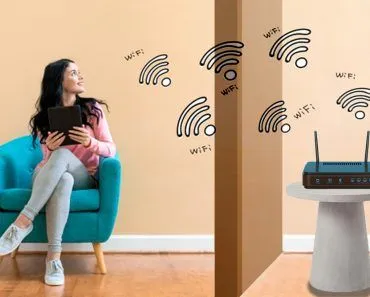
Note that these are intended ranges, and this is where the other part comes in. Ranges can be drastically reduced by obstacles between the two devices, such as walls, which attenuate the signals.
Thus, the range is affected by transmitting power, receiver sensitivity and obstacles near the device.
Bluetooth 5.0 And Beyond
Bluetooth 5.0 (released in 2016) and the latest 5.4 specification (2023) introduced LE Coded PHY (sometimes called “Bluetooth LE Long Range”) which roughly quadruples the achievable range of Bluetooth Low Energy without raising transmit power. In practice, smartphones and headphones still use the standard 1M PHY and stay around 10–30 m indoors and up to 100 m outdoors, but IoT and industrial devices using Coded PHY can achieve 240–400 m of line-of-sight range.
How Far Do Bluetooth Headphones, Earbuds And Speakers Actually Reach?
Here is the number that matters to most of us: the great majority of wireless earbuds, over-ear headphones and portable speakers are Class 2 devices, rated at roughly 10 meters (about 33 feet). That is the figure printed on the box, and it assumes a clear line of sight with nothing in the way.

In a real living room, though, the audio often starts to stutter once you wander 5 or 6 meters from your phone. The gap between the rating and reality is deliberate. Manufacturers cap the transmit power to protect battery life, since pushing a stronger signal drains a tiny cell far faster, and the antenna squeezed inside an earbud is minuscule compared with the one in a laptop or a car. Both choices trade raw range for comfort and runtime.
This also settles a question that trips up a lot of people: if Bluetooth 5.0 can supposedly reach a couple of hundred meters, why do my earbuds cut out halfway across the house? Because your phone and earbuds keep streaming audio over the standard 1M PHY, not the long-range Coded PHY described above. The Coded PHY that quadruples distance is meant for trickle-data Internet of Things sensors, and music simply needs more bandwidth than that mode can spare. In short, the class and power a manufacturer chooses, not the version number on the spec sheet, decides how far your headphones will actually go.
Why Walls, Water And Wi-Fi Shrink Bluetooth Range
Bluetooth rides the crowded 2.4 GHz ISM band, hopping across channels between roughly 2.402 and 2.480 GHz. Waves at this frequency do not bend around solid objects very well, so anything in the path chips away at the signal. The material makes a big difference: wood, glass and plastic are relatively friendly, while brick, plaster and concrete are not, and metal is the worst of all because it reflects the signal like a mirror instead of letting it through.
Water is the sneaky one. Water molecules greedily absorb energy at 2.4 GHz, which is the very reason a microwave oven heats your food at almost exactly the same frequency (around 2.45 GHz). Your body is mostly water, so it behaves like a soft, wet wall. Tuck your phone into a back pocket while your earbuds are in your ears and the music can break up, simply because your torso is now sitting between the transmitter and the receiver.
Then there is the traffic jam. Because 2.4 GHz is unlicensed, Bluetooth shares it with Wi-Fi routers, cordless keyboards, baby monitors and even leaky microwave ovens. To survive the chaos, classic Bluetooth splits the band into 79 channels of 1 MHz each (Bluetooth Low Energy uses 40 wider channels) and performs adaptive frequency hopping, jumping to a fresh channel around 1,600 times every second while steering clear of the frequencies it finds busy. It is a clever dodge, but a home stuffed with walls, bodies and a congested router will still routinely halve the range printed on the box.
Can We Extend Bluetooth Range?
Spatial constraints hamper communication when the devices are part of a larger, widely distributed network. Newer versions of Bluetooth have ranges from about 250 feet to 800 feet, so updating your device seems to be the most lucrative solution.
However, ranges can also be stretched by using signal repeaters, intermediate devices that capture, amplify, and then transmit or repeat signals without distortion. For example, a device with a range of 33 feet that is connected to a 1000 foot repeater can enjoy a range of 1,000 feet.
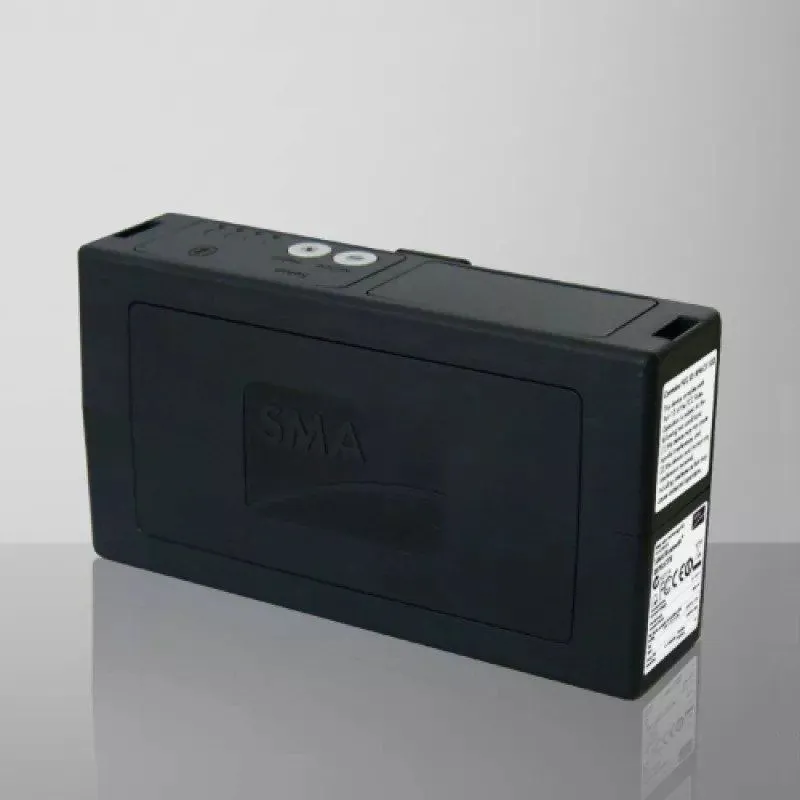
You could also take matters into your own hands. There are several DIY methods you can find on YouTube to extend Bluetooth ranges by tinkering with Bluetooth modules in your device, so take a soldering iron, a couple of screwdrivers and wake up your inner engineer.
Another cost-effective method is to align your devices so that their signals cannot be interrupted by obstacles.
A Word Of Caution
Bluetooth has proven to be very useful and continues to make enormous progress. However, it has faced challenges with security over the years.
In terms of security, Bluetooth was a major setback. Attacks such as BlueSnarfing, which ambushed phones from Nokia and Ericsson, allowed attackers to connect and manipulate devices without authentication.
Nevertheless, its contributions will be appreciated by introverts and revelers for posterity.
References (click to expand)
- Dispelling Common Bluetooth Misconceptions - www.sans.edu
- Welcome to the Mobile Data Management and Applications Website - web.mst.edu
- Bluetooth® Technology Website. bluetooth.com
- Understanding Bluetooth Range - bluetooth.com
- 3 Key Factors That Determine the Range of Bluetooth - bluetooth.com
- Bluetooth Range: How Far Does Bluetooth Reach? - bose.com
- Bluetooth - Wikipedia