Table of Contents (click to expand)
Fingerprints form between roughly weeks 10 and 24 of fetal development, as the rapidly growing skin on the fingertips buckles into ridges under the volar pads. Each fingerprint is shaped by a mix of genetics and the unique in-utero environment (pressure on the womb, amniotic fluid currents, finger movement, blood flow), which is why even identical twins (who share DNA) have different fingerprints. Their use in identifying victims, suspects, and verifying records relies on this individual variation rather than any single, mathematically proven uniqueness rule.
Before I tell you the answer, let’s start by talking about how fingerprints are formed.
What Are Fingerprints?
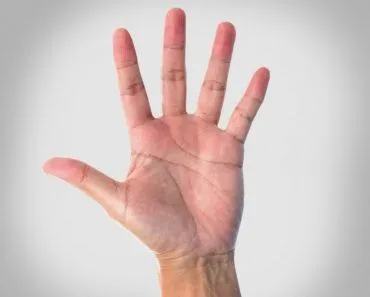
Fingerprints are the tiny ridges and patterns on every finger that you have. These friction ridges are present on your fingertips, palm, toes, and soles! They are also known as ‘dermal ridges’. Fingerprints are completely unique to every individual person.
How Fingerprints Are Formed?
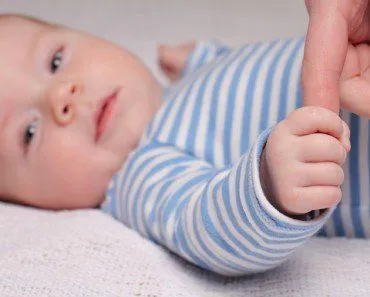
The crux of fingerprint formation lies in the field of developmental biology. Our fingerprints reflect the environment we encountered when our life began. A person’s fingerprints are formed when they are a tiny fetus developing in their mother’s womb. The faint lines you see on your fingers and toes were completely formed by the time you were 6 months old – 3 months before you were born!
Scientists agree that fingerprints begin to develop around the 10th week of pregnancy, but no one is certain of the precise process that creates them.
The most widely accepted theory states that the middle skin layer, called the basal layer, is scrunched between the inner layer (the dermis) and the outer layer (the epidermis). The basal layer grows faster than the other two, causing it to strain against its neighbors.
This straining pressure causes the skin to buckle, resulting in the folding of the epidermis into the dermis. This shows itself in the complex ridge patterns we see on our fingers today. Ridges are the faint lines on the fingertips that create the foundation of a fingerprint.
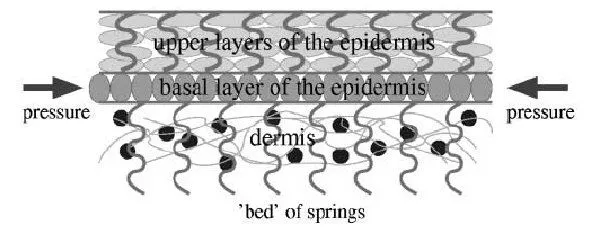
It is precisely because the pattern is encoded at the interface between the dermis and epidermis that it becomes nearly permanent and cannot be destroyed by superficial skin injuries. Having said this, the ridges of fingerprints are particularly susceptible to wear.
Can You Alter Fingerprints?
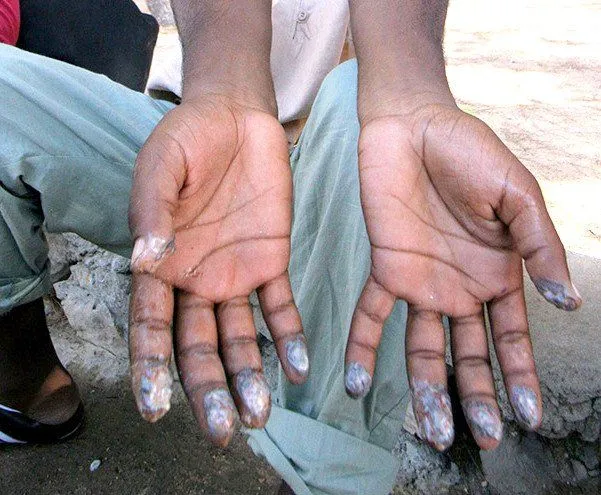
Repeated activity, such as bricklaying, can wear down fingerprints, rendering them inadequate for personal identification. Likewise, some criminals purposely burn off their fingerprints, either with acid or fire, in order to let them move through the criminal world like a ghost. However, in most cases, due to the imprinting of fingerprints in deeper skin layers, once exposed to the abrasive, caustic or hot conditions cease, the fingerprints will eventually grow back.
So Why Do We Actually Have Fingerprints?
If fingerprints are so handy for telling us apart, you might assume that is why we have them. But that is a use humans discovered, not the reason the ridges grew there in the first place. So what is their actual biological job? For a long time the textbook answer was simple: grip. The idea was that ridges work like the tread on a car tyre, biting into surfaces so objects do not slip out of our hands.
That tidy story ran into trouble in 2009. Peter Warman and Roland Ennos slid human fingertips across smooth acrylic and measured how much skin actually touched the surface. The ridges reduced the contact area by about a third compared with flat skin. Because fingertip skin behaves more like rubber than a hard solid (its friction rises and falls with contact area), shrinking that area should lower grip on a smooth surface rather than raise it. In other words, on a glass or a phone screen, the ridges may work against you.

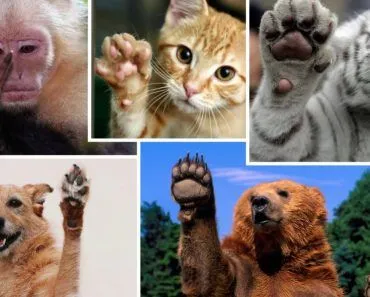
So researchers went looking for what the ridges are genuinely good at, and two answers have held up. The first is touch. Also in 2009, a team led by Georges Debrégeas built a sensor the size of a fingertip and found that ridges turn a sliding motion into vibrations whose frequency (set by how fast you move divided by the spacing of the ridges) lands right in the band that the deep-lying Pacinian corpuscles are most sensitive to. Those are the receptors that let you feel fine texture, so the ridges act like a built-in amplifier that tunes touch signals for your nervous system. The second is moisture control. A 2020 study found that the furrows between ridges regulate sweat, draining away excess water yet holding on to just enough to soften the skin, so your grip stays optimal whether your fingers start out bone dry or a little damp. And in case you were wondering, we are not the only animals with prints.
Why Are Fingerprints Unique? Can Identical Twins Have The Same Fingerprints?
Fingerprints are set in stone by the time a fetus reaches 17 weeks. Fingerprint pattern formation consists of two components: developmental and genetic. The ridge pattern development not only depends on genetic factors but also on unique physical conditions. So even if identical twins are genetically similar, the pressure faced by the fetus in the womb can affect their fingerprints. Even the difference in the length of umbilical cord can make changes to the fingerprints. So ya, identical twins could fool everybody with their looks, but they ain’t fooling the fingerprint test!
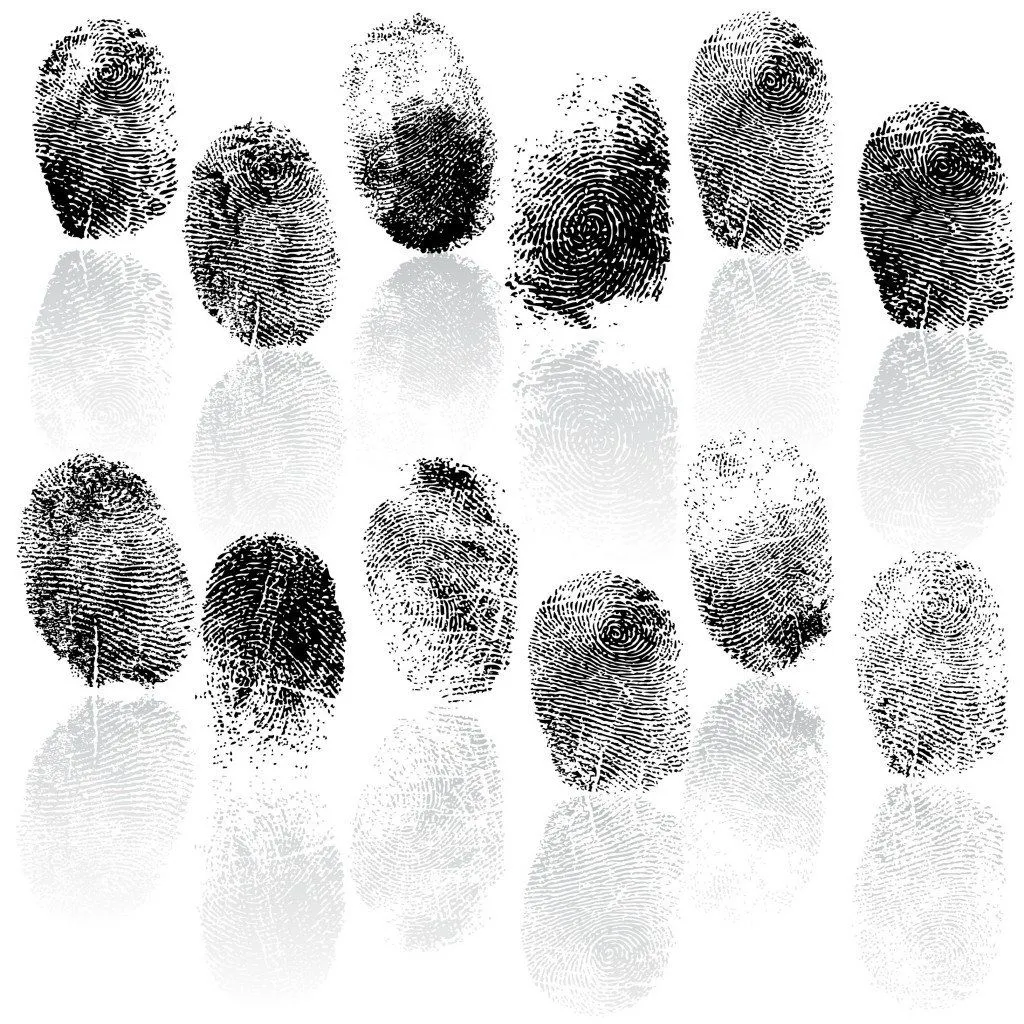
Innumerable environmental factors are thought to influence the formation of fingerprints, including blood pressure, oxygen levels in the blood, nutrition of the mother, hormone levels, the exact position of the fetus in the womb at particular times, the exact composition and density of the amniotic fluid that’s swirling around the fingers of the fetus as they touch surrounding structures, and the pressure with which they touch their surroundings. These myriad variables decide how each individual ridge is formed.
The level of activity of a fetus and the general chaos of the conditions of the womb prevent fingerprints from developing exactly the same way in any two fetuses. The entire development process is so chaotic that, over the entire course of human history, there is virtually no chance that the exact same pattern formed twice. What this means, though, is that fingerprints are different on every finger of your hand, they’re different on the same fingers of opposite hands, and even the fingerprints of identical twins are different from each other.
Are There Any Applications For This Unique Quality?
Identification Of A Suspect In A Crime
One major use of fingerprinting is related to criminal investigations. Formed by a combination of the sweat and oil from the skin coming between the fingertip pattern and a surface, fingerprints can often be used to identify the perpetrator of a crime. Fingerprints are used to identify unknown victims, witnesses or suspects, to verify records, and most importantly, as links between a suspect and a crime.
Even when there is no suspect in a crime, fingerprints can help develop leads and provide clues about the criminal’s size, sex, and occupation. Small prints tend to be made by smaller people, while fingerprints on a wall indicate a suspect’s height. Even the absence of prints may be a key factor. Suicide scenes, for example, should never show any signs of attempts to wipe prints away.
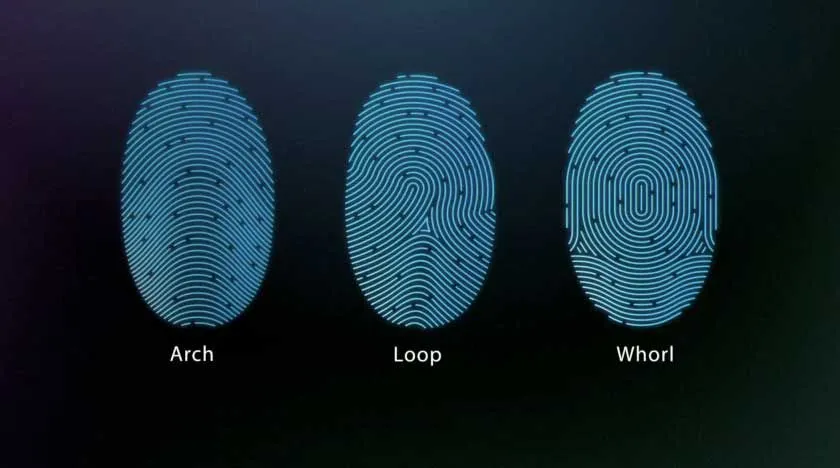
For classification purposes, experts divide fingerprint ridge patterns into three basic classes: Arches, Loops, and Whorls. Each class can be further divided into numerous sub-categories. Fingerprints also show slight racial variation. People of African ancestry tend to have a multitude of arches, people of European background have many loops, and those of Asian descent have a fairly high frequency of whorls.
Dactyloscopy
Known as dactyloscopy, a system of fingerprint identification was developed from the work of Sir Francis Galton by Sir Edward R. Henry. Nowadays, fingerprinting is used across the entire world and has many valuable applications. Between the years 1901 and 1910, many countries began using fingerprints for identification. In 1924, the Identification Division from the FBI, in the USA, started using fingerprints for identification.
Are Fingerprints Really Unique?
We have said it a few times now: no two fingerprints are alike. In everyday life that holds up beautifully, and prints are different enough between people (and even between your own ten fingers) to tell us apart. But here is a question worth sitting with. Has anyone ever actually proven that every fingerprint on Earth is one of a kind? Strictly speaking, no.
Nobody has ever compared a large enough slice of the human population to show that no two prints could ever match. What examiners really do is line up tiny features called minutiae: the points where a ridge ends, splits in two, or forms a short island. When enough of these agree between two prints, and none of them clearly clash, the examiner concludes that both came from the same finger.

The catch is that this is a judgement, not a measurement. A run of high-profile reviews (the 2009 report from the US National Academy of Sciences, a 2012 working group at the National Institute of Standards and Technology, and a 2016 report from the President’s Council of Advisors on Science and Technology) all reached the same conclusion. A fingerprint examiner can confidently rule out most of the population as the source of a print, but there is no scientific basis for claiming that a print can be traced to one specific person and nobody else. So it is fairest to treat ‘unique’ as an extremely reliable working assumption, built on more than a century of experience, rather than a mathematically proven law.
A Word Of Caution
However, something that needs to be remembered is that several factors can contribute to inaccurate identification. First of all, no two fingerprints or impressions are precisely alike. Second, fingerprints collected at crime scenes are often imperfect and are frequently either partial, smudged or dirty prints. Third, at some point, people are involved in the identification process, which leaves the entire system open to human error.
In other words, even fingerprint examination is not a foolproof way to identify a person, particularly if that person is actively trying to fool you!

References (click to expand)
- Where Do Fingerprints Come From? - Smithsonian Magazine. Smithsonian
- Fingerprint - Wikipedia. Wikipedia
- Why do we have fingerprints or 'prints' on only our palms and feet? Is there a difference between the types of the skin? - UCSB Science Line. The University of California, Santa Barbara
- Fingerprints are unlikely to increase the friction of primate fingerpads - Journal of Experimental Biology
- The role of fingerprints in the coding of tactile information probed with a biomimetic sensor - Science (via PubMed)
- Fingerprint ridges allow primates to regulate grip - Proceedings of the National Academy of Sciences
- Fingerprint Source Identity Lacks Scientific Basis for Legal Certainty - American Association for the Advancement of Science