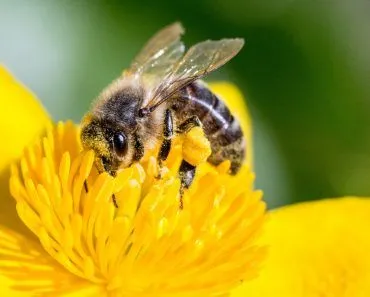
Yes, bees can get drunk. Flower nectar normally has too much sugar for yeasts to ferment, but rain dilutes it just enough to let alcohol form. Foraging bees that drink the resulting "boozy" nectar fly erratically, lose their bearings, and sometimes die. Hive guards even refuse drunken returnees at the door.
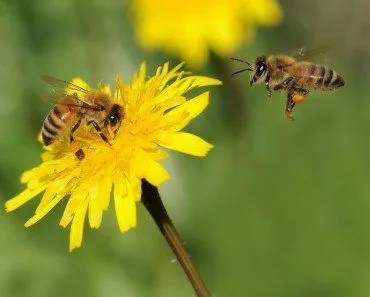
Honey bees are well-known performers of the “waggle dance”, a form of dance language the bee uses to communicate with its fellow friends, although since they’re worker bees, let’s call them colleagues. However, there’s another move you’ll see a bee do when it occasionally guzzles some fermented nectar, gum or fruit punch, and then clumsily flies out of the flower bar. At that point, it’s pretty evident that it’s drunk!
Yes, honey bees are surprisingly good at holding their liquor, which sets them apart from many other invertebrates. In laboratory experiments, foragers will keep drinking sugar solutions spiked with ethanol concentrations as high as 20% — vastly stronger than anything they would actually encounter in nature, where fermented nectar usually tops out at well below 1% alcohol.
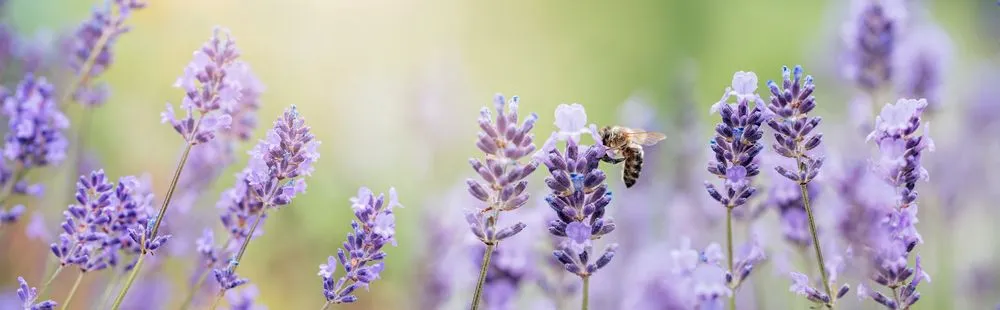
When Flowers Turn Into Microbreweries
To begin with, flower nectars don’t normally ferment. Their sugar concentration is high, which does not allow any microbes, such as yeast, to grow, so the nectar remains as it should. Come rainfall, and this perfect little mechanism goes haywire. The nectar starts to absorb moisture and thus gives way to yeast, which can now turn nectar into booze.
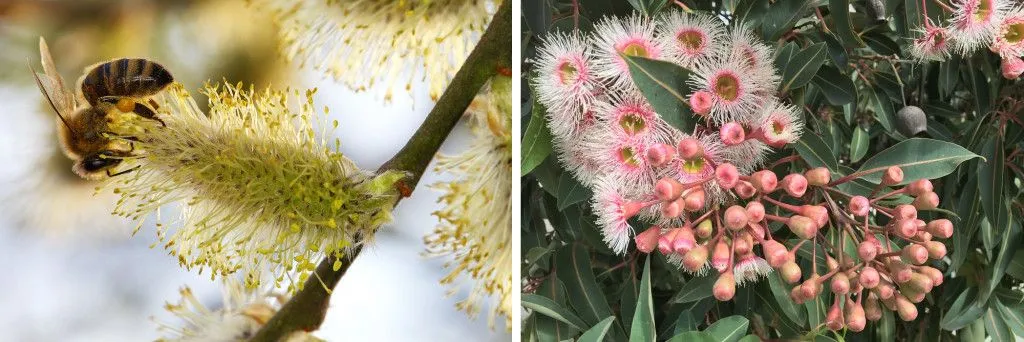
Rainfall and humidity can skyrocket during winter, but luckily, bees avoid foraging at this time, as winter means short and cold days. Autumn and spring, however, become ‘happy hours’, as the warm climate can be interspersed with humidity, and the rate at which nectar ferments can increase.
Bottlebrushes, Lemon-scented gums and Banksias, among others, treat their visiting bees to some unexpected day drinking. White gum, otherwise known as the Wandoo tree’s nectar, is reputed to cause death in its visitor bees due to excessive fermentation.
What Effect Does Booze Have On Bees?
When bees approach a flower as they normally would and drink their fill, little do they know the kind of nectar that remains enclosed in the flower. Getting drunk on a cocktail of bottlebrush nectar sends the bee’s brain into a spiral. Ethanol belongs to a group of chemical substances that includes other toxic plant biochemicals. Upon fermentation, these chemicals become more pronounced and affect the bee’s brain. If present in excess, they can even be fatal.
Scientists estimate that alcohol can cause hangovers in the bees that last as long as 48 hours. A neurotransmitter (signaling molecule secreted by brain cells) called octopamine, gets affected in the process. This makes the bees aggressive, negatively affects their foraging, and messes with their power to discriminate between odors.
They become disoriented, zig-zagging about in the air, until they hit an object and end up sprawled out on the ground. Many die from intoxication.
Studies conducted on bees has shown that alcohol consumption has a similar affect on bees as it does on humans. Their blood ethanol level shows a spike as they become more and more drunk. They move much slower, and as they became more intoxicated, they became less mobile and tend to turn upside down.
It’s interesting to note that drunk bees also tend to stick their tongues out. Whether it continues to wobble about in the air or lie on its back and wiggle away depends on the level of intoxication it has reached. If they are mildly drunk, they continue to fly; if they’ve had a little more than they should’ve, they sprawl themselves on the ground. Unfortunately, if they’ve gone all in and gotten drunk against their better judgment, they will lose their way back home and eventually die.
No Drinking And Buzzing
Drinking may be socially acceptable in human societies, but in the world of bees, it is strictly prohibited.
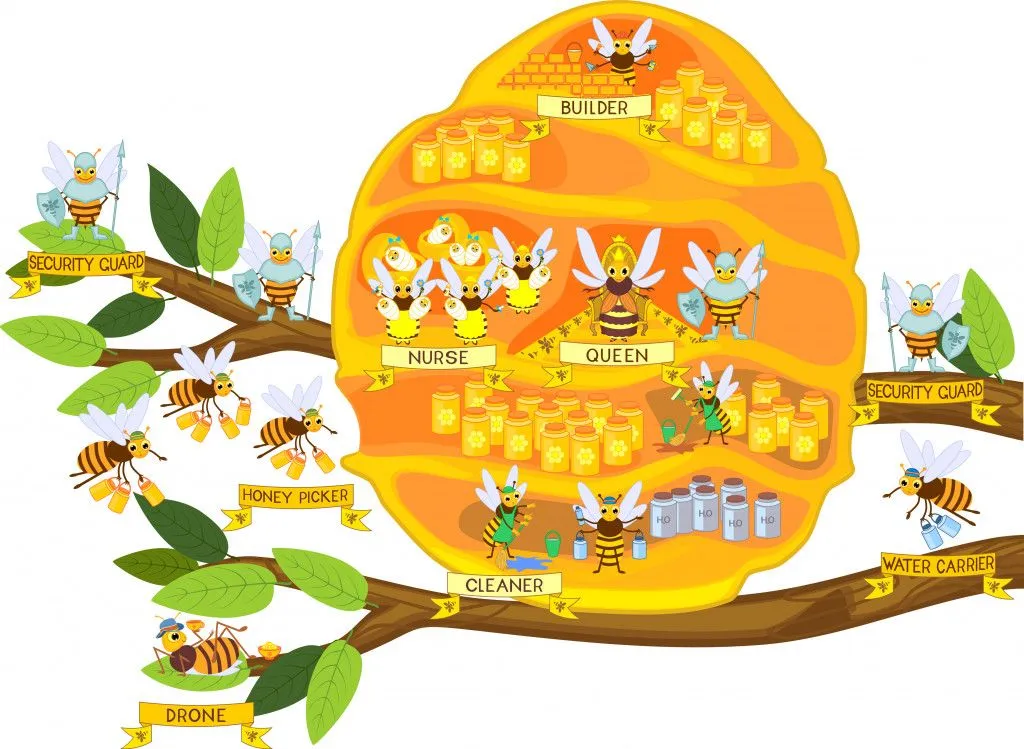
When inebriated or drunken bees somehow manage to stumble back home to their hives, they are greeted by their guard-like sisters at the entrance. If they fail the ‘breath test’, they get ‘bounced’ to the curb! Research shows that the guards sense something fishy in the way drunken bees ‘waggle’ and they immediately throw them out of the hive as punishment.
This type of strict bee society doesn’t tolerate any funny business amongst its workers, and violators of their no-booze rule will have their legs bitten off. Such damnation serves as a good lesson to other bees of the colony. This act of the guards is somewhat justifiable because, if the drunken bees’ nectar were to be turned to honey, it could potentially paralyze the entire hive.
All the poor worker bee does is work for its short and limited life, but any kind of enjoyment—be it laziness or alcohol imbibing—somehow leads to its inevitable death.
Scientists think that since bees behave very similar to the way humans do when they’re drunk, that bees can act like research models to study alcoholism and its effects. In fact, bees have been given a drug that prevents drinking called Antabuse, which has worked its magic on bees as well as it does on humans. Today, bees are even being used in some anti-alcohol drug test phases, before human trials begin.
Aside from bees, birds, bats, butterflies and even tree shrews are often seen becoming drunk on fermented foods.
Do Bees Get Drunk On Pollen, Or Only Nectar?
It is a fair question, because a foraging bee hauls home pollen as well as nectar. The short answer is no: pollen does ferment, but not into the kind of booze that leaves a forager staggering. The alcohol trouble is a nectar problem, because only nectar is a sugary liquid that airborne yeasts can turn directly into ethanol.

Pollen takes a very different route. Once a worker packs those bright pollen loads into a comb cell and tops them off with a little nectar and saliva, hive microbes get to work. This is a mixed lactic acid fermentation, the same broad process that turns milk into yogurt and cabbage into sauerkraut. Lactic acid bacteria and specialised yeasts drop the pH of the packed pollen from about 4.7 to roughly 4, which effectively pickles the stash and keeps it edible for months. The end product is “bee bread,” the colony’s protein pantry, not a shot of spirits.
So a bee arriving home with heavy pollen baskets is carrying groceries, not liquor. If that same bee is also weaving drunkenly through the air, the culprit is fermented nectar sloshing in its honey stomach, not the pollen stuck to its legs.
Can Bees Get High On Anything Besides Alcohol?
Alcohol is not the only mind-altering chemical a flower can slip into a bee’s drink. Plants lace their nectar with all sorts of compounds, and some of them act on the insect brain in ways that look startlingly familiar to us.

Take caffeine. It occurs naturally in the nectar of Coffea (coffee) and Citrus flowers, and it is not there by accident. In a 2013 study in Science, honey bees rewarded with a caffeine-spiked sugar solution were three times as likely to remember a flower’s scent a day later as bees given plain sugar. The dose sits just below the level a bee can taste as bitter, so the plant is quietly dosing its pollinators with a memory booster to keep them loyal. Nicotine pulls a similar trick: at the trace concentrations found in tobacco and lime-tree nectar, bumblebees learn flowers faster and keep returning even after the reward has run dry, an “addiction-like” loyalty the plant exploits.
Researchers have gone further and handed bees a genuinely hard drug. When scientists dabbed low doses of cocaine onto foraging honey bees, the bees came home and danced harder, exaggerating the waggle dance that advertises a food find even when the food was distinctly mediocre. Take the cocaine away and they slumped into a withdrawal-like dip in learning. The drug acts on octopamine, the very same reward-signaling molecule that alcohol scrambles, which is exactly why bees have become a surprising stand-in for studying human addiction.
Can The Honey Get Humans Drunk, Too?
Here the tables turn. Fermented nectar can leave a bee reeling, but honey itself has a far older reputation for intoxicating the beekeeper, and it has nothing to do with alcohol.

The classic example is “mad honey,” known in Turkey as deli bal. When bees forage on certain rhododendrons, especially Rhododendron ponticum and Rhododendron luteum around the Black Sea, they gather nectar containing natural toxins called grayanotoxins, and those toxins pass straight into the honey. In people, grayanotoxins jam open the voltage-gated sodium channels in nerve and heart cells and drive up vagal tone. According to a 2012 review in Cardiovascular Toxicology, the result is a dose-dependent mix of dizziness, sweating, nausea, a plunging blood pressure and a dangerously slow heartbeat, and in serious cases a heart block that needs hospital treatment. The effect is old news: Greek soldiers were reportedly laid low by wild honey as far back as 401 BCE.
Ordinary supermarket honey carries none of this, because it blends nectar from countless plants and dilutes any single toxin to harmless levels. Mad honey is a deliberate, single-source product still sold in parts of Turkey and Nepal. So while a bee cannot get you drunk, the right flower can still make its honey pack a serious punch.
A Final Word
Flowers that bloom in late autumn or early winter are to blame for the rise in bee drunkenness. During these months, the water mixes with the sugars in the nectars, causing them to ferment. Alcohol causes bees to fly in no particular direction, meaning that they are no longer capable of performing their bee duties properly. Drunk bees face serious punishment and torture from their hive mates. There’s no grounding for these bees, they’re straight up banished from their homes, or physically maimed.
The English word "drunk" doesn’t actually come from Greek — it descends from Old English druncen, the past participle of drincan ("to drink"). But the Greeks did have a related idea: meli (μέλι, "honey") is also the root of "mead," the fermented honey drink humans have been getting tipsy on for thousands of years. Bees, in other words, were in on the alcohol game long before we were.
References (click to expand)
- Ratnieks, F. L. W., & Shackleton, K. (2015, April 1). Does the waggle dance help honey bees to forage at greater distances than expected for their body size?. Frontiers in Ecology and Evolution. Frontiers Media SA.
- LL Stephenson. Inducing Ethanol Tolerance in Free-Flying Honey Bees ( .... escholarship.org
- Miler, K., Kuszewska, K., Privalova, V., & Woyciechowski, M. (2018, June 7). Honeybees show adaptive reactions to ethanol exposure. Scientific Reports. Springer Science and Business Media LLC.
- Matias, D. M. S., Leventon, J., Rau, A.-L., Borgemeister, C., & von Wehrden, H. (2016, November 22). A review of ecosystem service benefits from wild bees across social contexts. Ambio. Springer Science and Business Media LLC.
- Herrera, C. M., & Pozo, M. I. (2010, February 10). Nectar yeasts warm the flowers of a winter-blooming plant. Proceedings of the Royal Society B: Biological Sciences. The Royal Society.
- Intoxicated Honey Bees May Clue Scientists Into Drunken .... Science Daily
- The Complex Life of the Honey Bee. Purdue University
- Abramson, C. I., Fellows, G. W., Browne, B. L., Lawson, A., & Ortiz, R. A. (2003, April). Development of an Ethanol Model Using Social Insects: II. Effect of Antabuse® on Consumatory Responses and Learned Behavior of the Honey Bee (Apis Mellifera L.). Psychological Reports. SAGE Publications.
- Wright, G. A., et al. (2013). Caffeine in Floral Nectar Enhances a Pollinator's Memory of Reward. Science.
- Barron, A. B., Maleszka, R., Helliwell, P. G., & Robinson, G. E. (2009). Effects of cocaine on honey bee dance behaviour. Journal of Experimental Biology.
- Baracchi, D., et al. (2017). Nicotine in floral nectar pharmacologically influences bumblebee learning of floral features. Scientific Reports.
- Jansen, S. A., et al. (2012). Grayanotoxin Poisoning: 'Mad Honey Disease' and Beyond. Cardiovascular Toxicology.
- Detry, R., Simon-Delso, N., Bruneau, E., & Daniel, H.-M. (2020). Specialisation of Yeast Genera in Different Phases of Bee Bread Maturation. Microorganisms.