Table of Contents (click to expand)
- Smoking Bees: An Ancient Practice
- How Does Smoke Affect The Bees?
- Are Bees Afraid Of Smoke, Or Does It Put Them To Sleep?
- Do Bees Have Lungs, Or Does The Smoke Suffocate Them?
- How Did The Notre Dame Bees Survive The 2019 Fire?
- The Design Of A Bee Smoker
- How Bee Smokers Work
- Can You Use Smoke To Get Rid Of Bees?
Smoke doesn’t hurt or kill honey bees. It calms them so beekeepers can safely inspect the hive. It masks the bees’ sense of smell so they can’t pass intruder alarm pheromones to one another, and it triggers a fire-survival response that makes them gorge on honey. The bees recover their normal pheromone sensitivity within roughly 10 to 20 minutes after the smoke clears.
Who doesn’t love the warm, sweet sundrops stored in jars? Honey is one of the only healthy foods that tastes heavenly.
But have you ever wondered how beekeepers steal this ambrosia from the stingy (pun intended) clutches of honey bees?
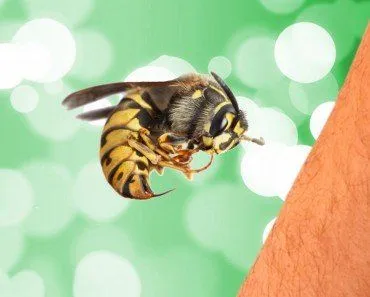
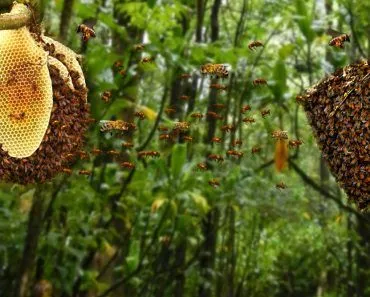
To protect their honey, a valuable treasure, a small class of worker bees guards the bee colony like bouncers. Approach the hive, and the guard bees will sound the alarm, recruiting bees who hum and sting furiously at you to defend their home, even if it means sacrificing their lives.
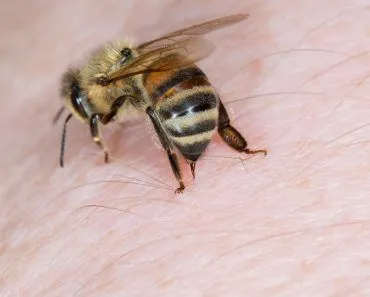
Yes, honey bee workers die after stinging a mammal, because their barbed stinger tears free from the abdomen. (Queens have smooth stingers and can sting repeatedly, drones can’t sting at all, and most other bees, like bumblebees, survive stinging just fine.)
This is why beekeepers use a special technique to protect themselves from the bees as they tend to the hive or harvest honey: they pass the smoke through the hive.
Smoking Bees: An Ancient Practice
Beekeepers use a bee incense device designed to produce smoke by smoldering various fuels, using pine needles, wood shavings, paper egg cartons, pellets, rotten wood, dried cow manure, and so on.
Before this newfangled bee smoker was invented, early humans had already figured out that smoke pacified bees. Ancient Egyptian artwork dating back nearly 4,500 years appears to show beekeepers using smoking pots near beehives.
In remote hills of Nepal, beekeepers use smoke to collect psychotropic honey from dangerously located colonies hanging on the sides of cliffs.
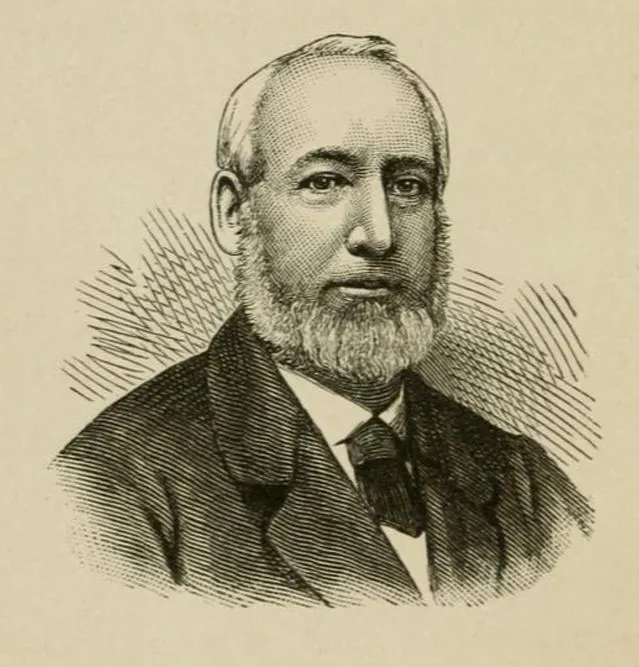
In 1873, American beekeeper Moses Quinby invented the modern bee smoker, a tin burner with a bellows attached to puff air through smoldering fuel. Quinby never patented the design; a few years later, Tracy F. Bingham refined it into the shape beekeepers still use today.
Due to advances in science and research and the wisdom gained from them, experts believe that the smoke pacifies the bees in two ways: it impedes their sense of smell and triggers their survival response.
How Does Smoke Affect The Bees?
Suppresses The Pheromone
The sense of smell is how bees communicate with one another. Whenever guard bees detect danger, they release an alarm pheromone, principally isopentyl acetate (also called isoamyl acetate), from glands near the sting. A pheromone is a substance secreted by an animal that causes a specific reaction in another individual of the same species. A second compound, 2-heptanone, was long lumped in as an alarm pheromone, but a 2012 study by Papachristoforou and colleagues showed it’s actually released from the mandibular glands during a bite and acts as a fast local anesthetic on small pests like Varroa mites and wax moth larvae.
Isopentyl acetate triggers an alarm response in the hive, readying defenders to stage an attack against the intruder. Beekeepers report a distinctive smell when they’ve been stung. Isopentyl acetate happens to be the same ester that gives ripe bananas their scent, which is why old-school beekeepers warn against eating bananas near the hive.
The smoke masks the smell of the secreted pheromones and prevents other bees from being alerted to an intrusion. (Visscher and colleagues found smoke depresses bees’ olfaction in general, not just their response to alarm pheromones, but the alarm-signal disruption is what matters for the beekeeper.)
Creates The Illusion Of A Forest Fire
Another explanation for the calming effect is that bees interpret smoke as a sign of a forest fire and switch into survival mode.
In response, they gorge themselves on honey. The older idea was that they were stocking up to abscond and build a new home elsewhere, but this has been challenged, since a gravid queen can’t easily fly off and colonies with brood rarely abscond. Research on wild Cape honey bees in fire-prone fynbos (Tribe et al., 2017) suggests instead that the gorging builds a survival reserve to outlast the post-fire forage shortage, while propolis “firewalls” lining the nest cavity help protect the colony in place. Either way, it’s a sensible investment: it takes roughly 6 to 8 pounds of honey for bees to make a single pound of wax, so a full crop is precious.
With the bees busy stuffing themselves, the beekeeper can inspect the hive or collect honey.

Now, let’s look at the technical details of the bee smoker and try to understand how it works to calm the bees.
Are Bees Afraid Of Smoke, Or Does It Put Them To Sleep?
Two ideas get repeated a lot: that bees are afraid of smoke and flee in a panic, and that smoke sedates them, like a whiff of anesthetic that puts the whole hive to sleep. Neither is quite right.

Bees do not feel fear the way you flinch at a loud bang. Smoke works through chemistry and instinct, not terror. It masks the alarm pheromone (isopentyl acetate) so guard bees cannot rally the colony, and it switches the bees into their fire-survival routine of gorging on honey. The result looks like calm, but it is really a hive that has been quietly thrown off-message.
And the bees are certainly not asleep. In a 2018 study in the Journal of Insect Science, Stephanie Gage and colleagues filmed the sting response of bees with and without smoke. The bees still curled their abdomens, separated their abdominal plates, and extended their stingers at the same rate whether they were smoked or not, so smoke did not slow them down or knock them out. What dropped was the venom droplet released during a sting, which is part of the chemistry that broadcasts the alarm to nestmates. In other words, a smoked bee can still sting; it is just far less likely to raise a chemical war cry and summon the mob. Once the air clears, normal service resumes within roughly 10 to 20 minutes.
Do Bees Have Lungs, Or Does The Smoke Suffocate Them?
There is one worry almost everyone has on first hearing about any of this: if a beekeeper is pumping smoke into a box packed with insects, why doesn’t the whole colony choke? The answer is that a bee has no lungs to choke with.

Bees breathe through spiracles, small openings arranged along the sides of the thorax and abdomen. Each one is a valve, worked by tiny muscles that contract to close it or relax to open it, which is why an insect can simply shut its airways when conditions demand it (they do this routinely to limit water loss). It is the same plumbing that lets a decapitated cockroach keep breathing. Air taken in at a spiracle diffuses into a branching network of tubes called tracheae, which subdivide again and again into microscopic tracheoles. At those blind, moist tips, oxygen dissolves and passes directly into the cytoplasm of the cell next door. Where the tubing lacks its spiral cuticle reinforcement, it balloons out into air sacs holding a reserve of air. Working in the Journal of Experimental Biology in 1954, L. Bailey traced these currents in a live bee: when it is busy producing metabolic CO2, air streams in at the first thoracic and abdominal spiracles and leaves through the propodeal spiracles.
Now notice what is absent. A bee’s respiratory system is plumbed separately from its circulatory system, and its blood carries no oxygen at all. That single fact is what makes a mouthful of smoke survivable. Carbon monoxide, which is released during the combustion of just about anything, is dangerous to us because it binds hemoglobin with roughly 200 times the affinity of oxygen, forming carboxyhemoglobin and leaving the tissues starved of the oxygen they need. A bee has no hemoglobin, so that entire route is closed to the gas.
That is not the same as saying carbon monoxide is harmless to insects. Baker and Wright (1977) held seven-spot ladybirds and stick insects in low concentrations of it and found the gas does eventually kill them, by combining with their respiratory enzymes rather than with a blood pigment. But it was slow work: every insect survived exposures shorter than 10 days, and even then it took 18 days to kill 75% of them. A few puffs from a smoker, or even a few hours under a burning roof, sit nowhere near that.
How Did The Notre Dame Bees Survive The 2019 Fire?
On 15 April 2019, the roof of Notre-Dame de Paris caught fire. Somewhere in the coverage, a detail surfaced that stopped people short: there were bees up there. Three hives, roughly 60,000 bees apiece and some 180,000 in total, had been kept on the cathedral since the spring of 2013 as part of a Paris-wide push to rebuild the city’s bee numbers.

They lived. Beekeeper Nicolas Géant, who had tended the hives since they were installed, found the colonies alive days afterward, with bees flying in and out.
It is tempting to credit that entirely to the fact that bees have no lungs, and that genuinely is part of it: the hives almost certainly filled with smoke, and smoke alone was never going to asphyxiate them. But the hives were not in the spire or up on the burning main roof, as the story often gets retold. They sat on the roof above the sacristy, just beneath the rose window on the cathedral’s south side, roughly 30 meters (about 100 feet) below the roof that was alight. Géant’s own explanation leaned on that gap, because beeswax melts at 63 °C (145.4 °F). “The wax would have melted and glued the bees together, they would have all perished,” he said. The colonies came through because the heat never reached them, and because the smoke that did reach them was something their bodies are built to shrug off. (Géant also told reporters the smoke had made his bees drunk and put them to sleep. As Gage’s filming showed, that part is folklore: smoked bees are not sedated.)
Wild colonies pull off the same trick unaided, and the Cape honey bee work mentioned earlier puts numbers on it. After a fire swept the fynbos of South Africa’s Table Mountain National Park, Tribe and colleagues (2017) examined 17 wild nests and found every single colony had survived. Their propolis walls, resin barriers between 1.5 and 40 mm thick sealing off the nest opening, had physically retarded the fire, while the bees inside did exactly what a smoked hive does: gorged on honey and retreated to the furthest recess of the cavity, then lived on that reserve for about three weeks until the burnt landscape began to flower again.
The Design Of A Bee Smoker
The design of the modern-day bee smoker is simple. The smoker can come with a bellow attached on the side and a spout on top to direct the smoke precisely.
Smoking Fuel
To get the smoke started, you need two things: a starter and fuel.
As the name implies, the starter is any material that catches fire quickly and will remain burning long enough till you add fuel. Newspapers, cardboard strips, or pine cones can be used as starters.
To get the bee smoker going, you light up the starter and put it inside the can of the bee smoker, over which kindling would be stuffed.
Some beekeepers may only use fuel to start the smoke, but this requires more skill.
For the fuel, you’ll need small, thin pieces of an object that lights easily and remains lit for an extended time. Pine needles work well for this purpose. Other alternatives are wood shavings, dried cow manure, hamster bedding, dried shredded leaves, and laundry lint. You should avoid using chemical-based fuel, as these chemicals can mix in the smoke. The chemicals can be toxic, and you don’t want your bees or yourself to inhale toxic smoke during this delicate process.
How Bee Smokers Work
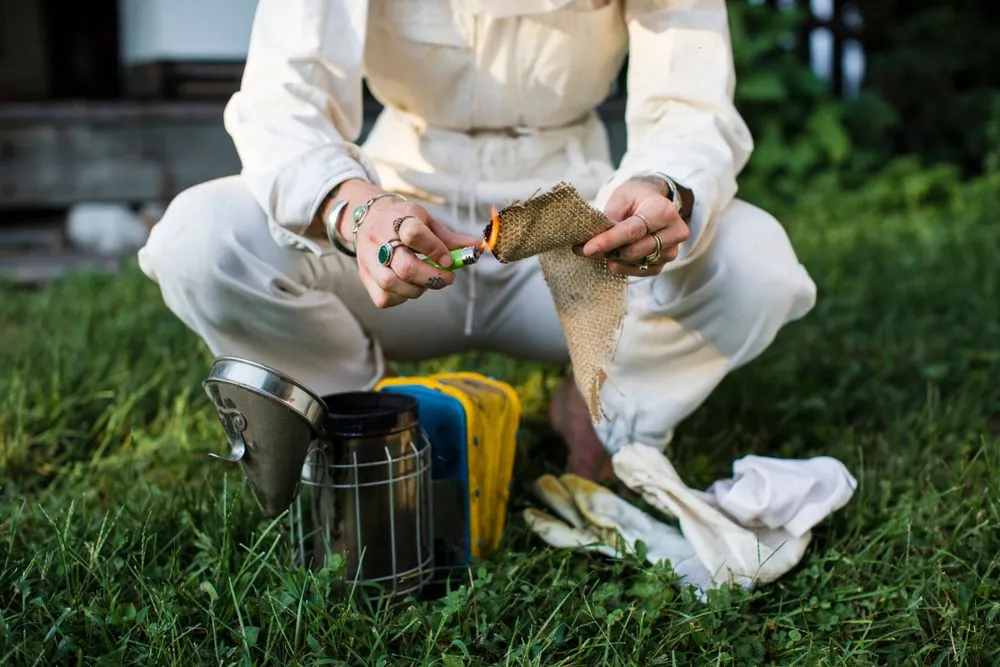
The functioning of a bee smoker is quite simple. First, you take a starter, such as a piece of newspaper, crumple it, and light it. You throw this ignited starter into the can. Now, you take a handful of burning fuel, like wood shavings, and stuff it over the burning starter in the can.
Then, you pump the bellows to push oxygen into the burning starter. As you pump, you see smoke coming out of the spout.
When you tip more “fuel” into the canister and pump the bellows, you will hear a typical woof-woof sound when the fuel ignition starts burning well.
Be careful how you package the fuel. If you push it too far down, it can obstruct the airflow from the bellows, making it difficult to keep your bee smoker running and smoking for long.
Does The Smoke Calm The Bees? And Is It Safe For The Bees?
Beekeepers have used this technique for generations since it doesn’t have long-term side effects on the bees’ health. The smoker is safe for the bees, and they regain their pheromone sensitivity roughly 10 to 20 minutes after the smoke dissipates. In wildfire-prone regions, some beekeepers now also use flame-free alternatives: diluted liquid smoke sprays, sugar-water mists, or commercial smokeless calming products such as Apimil that masks alarm pheromones with essential-oil compounds.
The smoke calms the bees, and they become easier to work with. This reduces the likelihood that the beekeeper may crush a bee, which would agitate the bees.
Precautions When Using A Bee Smoker
However, beekeepers do have to be careful with the tools they use for smoking.
They must try to keep the spout at least five inches away from the bees while smoking. Very hot smoke or a stray flame can singe a bee’s wings and damage the membrane, and although chitin doesn’t actually melt at smoker temperatures, the bees themselves die from sustained heat above roughly 45–50 °C.
Most beekeepers say it is better to smoke less than more. Excessive smoking can contaminate the honey and wax. Once again, avoid any chemical ignition material, as it would be toxic for bees and beekeepers. This includes wood with paint on it.
The smoker can get hot. Although modern bee smokers are equipped with a protective wire closure around the can, it is still a bit risky as fingers can slip through the cage and come into contact with the very hot can, leading to burns. Professional beekeepers hold the smoker by the bellows or attach a hook to hold the smoker.
Also, the beekeeper needs to be wary about keeping the smoker on any surface. Since the bottom is hot, the material beneath the smoker could melt or burn. Also, avoid placing the smoker on sand or debris as the hot air passing from the bellows could pull them towards the can. This, in turn, could clog the smoker.
Can You Use Smoke To Get Rid Of Bees?
If smoke calms a hive, it is tempting to think you could simply smoke an unwanted colony out of a wall, chimney, or roof space. Unfortunately, it does not work that way, and trying it can be genuinely dangerous.

Smoke only buys the same brief lull that beekeepers rely on. It does not repel bees or convince an established colony to pack up and leave. A colony that has moved into a cavity has already chosen its nesting site and invested enormous effort in building wax comb, raising brood, and storing honey, so it will not abandon all of that over a little smoke. As North Carolina State Extension bluntly puts it, the bees have "found the perfect place to set up their hive and have no intention of leaving." Once the smoke clears, they are back to normal within minutes, often crankier than before.
There is a fire hazard too. Setting a smoldering fire next to a wall void or roof cavity packed with dry comb, wax, timber, and insulation is a good way to start a house fire, and the smoke can push agitated bees straight into your living space.
The methods that actually work are a cut-out, in which a beekeeper or removal specialist opens the cavity and physically removes the comb and bees, or a trap-out, a one-way screen cone that lets bees leave but not return. Killing the colony with insecticide is a last resort, because the abandoned honey and wax left behind can ferment, melt, and attract a fresh wave of pests. In short, smoke is a tool for managing bees, not for evicting them.
Careful application of a bee smoker while adhering to all these precautions can greatly facilitate the honey harvest process.
So, don’t feel too guilty next time you open the honey jar. No bees have been harmed to make it!
That being said, you’ve just stolen a bunch of their food by clouding their senses with smoke and letting them gorge on their own honey.
References (click to expand)
- Tan, K., Dong, S., Li, X., Liu, X., Wang, C., Li, J., & Nieh, J. C. (2016, March 25). Honey Bee Inhibitory Signaling Is Tuned to Threat Severity and Can Act as a Colony Alarm Signal. (L. Chittka, Ed.), PLOS Biology. Public Library of Science (PLoS).
- Visscher, P. K., Vetter, R. S., & Robinson, G. E. (1995, January). Alarm pheromone perception in honey bees is decreased by smoke (Hymenoptera: Apidae). Journal of Insect Behavior. Springer Science and Business Media LLC.
- Handling bees - Mid-Atlantic Apiculture Research and ....
- Kritsky, G. (2015). The Tears of Re: Beekeeping in Ancient Egypt. United Kingdom: Oxford University Press.
- Gage, S. L., Ahumada, F., Rivera, A., Graham, H., & DeGrandi-Hoffman, G. (2018). Smoke Conditions Affect the Release of the Venom Droplet Accompanying Sting Extension in Honey Bees (Hymenoptera: Apidae). Journal of Insect Science. Oxford University Press.
- Why Smoking Soothes the Stressed-Out Bee Hive. Entomology Today, Entomological Society of America (2018).
- Tribe, G., Tautz, J., Sternberg, K., & Cullinan, J. (2017). Firewalls in bee nests - survival value of propolis walls of wild Cape honeybee (Apis mellifera capensis). Naturwissenschaften. Springer.
- Bailey, L. (1954). The Respiratory Currents in the Tracheal System of the Adult Honey-Bee. Journal of Experimental Biology, 31(4), 589-593. The Company of Biologists.
- Respiratory System. ENT 425 - General Entomology. North Carolina State University.
- Honey Bee Anatomy. Honey Bee Research Centre, University of Guelph.
- Baker, G. M., & Wright, E. A. (1977). Effects of carbon monoxide on insects. Bulletin of Environmental Contamination and Toxicology, 17(1), 98-104. Springer.
- Palmeri, R., & Gupta, V. Carboxyhemoglobin Toxicity. StatPearls. NCBI Bookshelf.
- Honey Bees on Notre-Dame’s Roof Survived the Fire. Smithsonian Magazine.
- Frequently Asked Questions about Removing Honey Bees from Structures. NC State Extension Publications.