Vultures can eat rotten meat without falling sick because they have an extraordinarily acidic stomach (the bearded vulture’s drops to about pH 1, strong enough to dissolve bone and even lead pellets), an immune system tuned to handle a heavy pathogen load, and skin and gut microbes that out-compete dangerous bacteria. These combined defences let them safely process anthrax, Yersinia pestis, rabies and the other nasties that hide in a carcass.
Imagine having the superpower of never getting sick. Your arch nemeses—the viruses, bacteria, and parasites of Earth that threaten the life of organisms like you—would be powerless against the superior protection of your body. Well, meet the bird with this superpower—the vulture.
Vultures frequently eat dead creatures, and often the rotting flesh of an animal. They’ll clean up leftovers of other predators, or eat an animal that died of illness or old age that other predators might not want to consume, hence the name “garbage collectors”.
For vultures, pathogens like Bacillus anthracis (anthrax), Yersinia pestis (the bubonic plague that ravaged Europe in the Middle Ages) and the rabies virus, all of which can cause severe illness in humans and other animals, don’t pose any threat.
So, how do these flying scavengers deal with these pathogens? Why don’t they get sick?
Old World Vultures Vs New World Vultures
There are two types of vultures: Old world vultures and New world vultures. Though both of them eat putrid flesh, they have different names because they aren’t related.
Old World vultures, such as the cinereous vulture and the bearded vulture, are close cousins of other predatory birds like eagles and hawks (family Accipitridae). New World vultures, such as the black vulture and the turkey vulture, sit in their own family Cathartidae; older textbooks lumped them with storks based on DNA-hybridisation work from the 1980s, but modern molecular phylogenetics places them closer to hawks and eagles too.
Convergent Evolution
Though their families are different, they both evolved to look similar and have similar feeding habits. When this happens in nature, it is called convergent evolution.
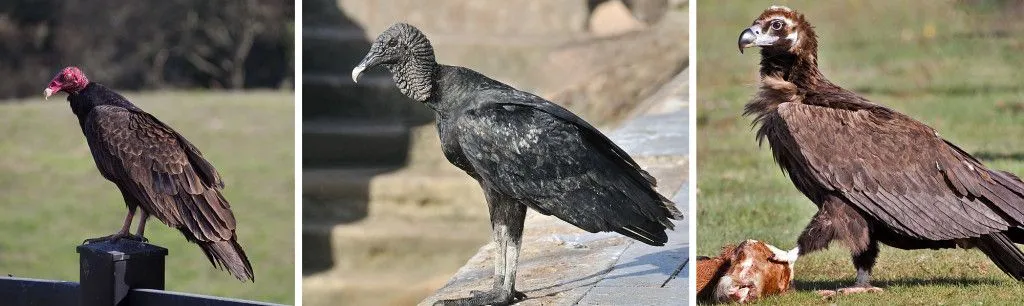
So, while combining vultures into one group based on their diet and appearance may simplify things, scientifically, they’re often studied with their evolutionary family tree in mind.
With that, let’s look at what makes these animals so resilient to disease.
Vulture’s Powerful Stomach Acid
The stomach isn’t only a blender made of muscle, it is also a blender made of muscle with it own anti-pathogen weapon, stomach acid. The food we usually eat, either cooked or uncooked, has some microbes on or in it. Stomach acid is the first step to annihilating these infiltrators. Those that make it past the stomach’s acid (a human’s stomach acid is a 2 on the pH scale) can cause disease, take up residency in the gut as a mostly peaceful member of the gut’s microflora, or get excreted from the system.
The vulture’s stomach is an ironclad barrier. Nothing beats it.
The bearded vulture has a stomach pH of 0.7! That is so acidic that the bird can even digest bones! Very few animals can digest bones because the protein that composes bones—collagen—is hard for enzymes to break down. Based on this, one could assume that other vultures may have similarly acidic stomachs.
In fact, the vultures’ stomach acid is so strong that it can even dissolve lead bullets with which an animal has been shot. Though the vulture can tolerate biological threats, its body cannot survive lead toxicity, so eating a lead bullet might end up giving the bird lead poisoning.
Immune System Of Vultures
However, a corrosive stomach doesn’t explain the vulture’s resistance to pathogens. For any sneaky bacteria that manage to survive the hellish conditions of a vulture’s stomach are confronted with the vulture’s immune system.
A study published in the journal Genome Biology found that the genes of the cinereous vulture differ from closely from related predatory birds in terms of acid secretion, immune system, and respiration. This indicates that evolution may have pushed vultures to develop systems that could better deal with high load of pathogens.
We don’t know the exact mechanism of how the vulture’s immune system K.O.s pathogens, but researchers hope that studying the immune system of vultures and other scavengers could help us understand how our own immune system deals with pathogens, and perhaps give rise to new treatment strategies.
The Microbes Of Vultures
That said, not all microbes are the villains, and it is not in an animal’s best interest to destroy all microbes. Some microbes are good guys who live in or on multicellular living things. Their hosts give them food or protection or just space to live, and the bacteria, in return, provide the host with nutrients or prevent any villains from infecting the host.
The vulture has a bunch of microbial friends, or at the very least, non-enemies, that protect the vulture from getting infected.
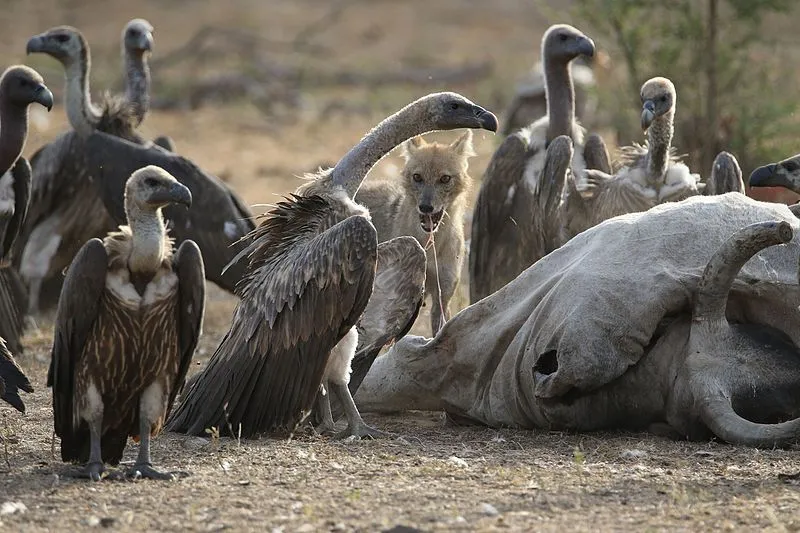
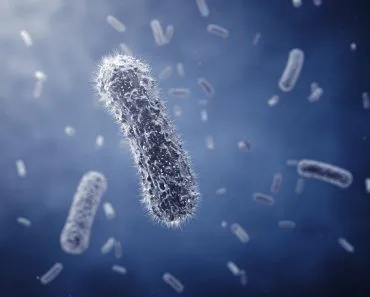
There are two bacteria, in particular, that researchers have found in the guts of black and turkey vultures: Clostridia and Fusobacteria, both of which cause diseases in many vertebrates.
Clostridia is a type of anaerobic bacteria (bacteria that don’t need oxygen to breathe) that is often found in the soil, while fusobacteria can cause periodontal disease and tonsillitis. In the vulture’s gut, they are found in abundance.
Researchers aren’t sure why two pathogenic bacteria are part of the vulture’s gut community, or why the vulture doesn’t get sick because of them. One hypothesis is that the bacteria are not of the pathogenic strain, while another hypothesis suggests that they prevent other pathogenic bacteria from causing disease.
But the gut isn’t the only area of their body with microbes. The face of the vultures, the part that buries itself into the meat, getting coated in the rotting flesh and sometimes feces of the dead animal, has its own abundant and variable community of microbes. Some of these microbes seem to offer the vultures additional protection.
A study looking into the skin of black and turkey vultures found a bacteria called Acinetobacter calcoaceticus on the vulture’s face. The bacteria produces phenol, a chemical that is commonly used to disinfect things, and which serves to, in part, disinfect the vulture’s face.
They also found a bacteria called Hylemonella gracilis, which has been shown to prevent growth of Yersinia pestis, the bacteria that caused the bubonic/black plague. Along with that they found phages, a virus that hosts on bacteria, on the skin of the vultures.
Are Vultures Detritivores Or Scavengers?
People tend to lump every animal that eats dead things into one bucket, so it is worth clearing up a common mix-up: vultures are scavengers, not detritivores. Both groups help clean up the dead, but they go about it in very different ways.

A detritivore physically swallows particles of detritus, the crumbly bits of decaying plant and animal matter (and even feces) that collect in soil and sediment, and digests them internally. Earthworms, millipedes, woodlice, springtails and dung beetles are the classic examples. Vultures do something quite different. They are obligate carrion scavengers, which means they feed almost entirely on the carcasses of larger dead animals, tearing off flesh rather than sifting through soil.
Neither group should be confused with decomposers such as bacteria and fungi, which break material down chemically at a microscopic scale. Vultures, hyenas and crows are scavengers; earthworms and their tiny cousins are the detritivores. If you want to meet the true clean-up crew of the forest floor, our guide to what detritivores are and the role they play is the place to start.
Are Vultures Cannibals? Do They Eat Other Vultures?
Given that a vulture will happily strip the flesh from almost any dead animal it finds, you might expect it to treat a dead vulture the same way. Surprisingly, it usually does not.

Black vultures, one of the most abundant scavengers in the Americas, refuse to feed on the carcasses of other black vultures, and observers report that the birds actually appear frightened by them. Because black vultures often gather at roadsides to feed on roadkill, plenty of them are struck by cars, yet naturalists who have examined thousands of these roadside carcasses have not recorded a single case of one black vulture eating another. The one exception on record was a carcass partly submerged in water, where the dead bird was probably no longer recognizable as a vulture.
This aversion is strong enough to be useful to people. Wildlife managers exploit it by hanging a vulture effigy near an unwanted roost to frighten the flock into moving on. So while vultures are the ultimate opportunists at any other carcass, genuine cannibalism among them is rare rather than routine.
Can Humans Eat Vulture (Or Buzzard) Meat?
This question comes up a lot, partly because of a naming quirk. In much of North America the turkey vulture is nicknamed the “buzzard” or “turkey buzzard”, whereas in the Old World a “buzzard” is a completely different bird, a hawk of the genus Buteo. So when someone in the United States asks whether you can eat a buzzard, they are usually asking about a vulture.

The short answer is no, and not only for reasons of taste. In the United States, vultures are protected under the Migratory Bird Treaty Act of 1918. It is illegal to take, kill or possess turkey vultures, their eggs or any of their body parts, right down to a single feather, without a federal permit. Hunting one for the pot simply is not allowed.
There is a biological deterrent too. Everything that makes a vulture so good at its job, namely a diet of rotting carcasses laden with the anthrax, plague and other pathogens described above, is exactly what you would not want to build a meal around. Vulture meat has never been a traditional food in the West, and the bird’s own defenses are tuned to survive a menu that would sicken us. In short, the buzzard is far better left to its clean-up work than served on a plate.
A Final Word
With a stomach comparable to Dante’s lowest circle of hell, an army of specialized immune cells, and an impenetrable unit of microbes, the vulture is extremely well-adapted to eating decaying food.
We should thank the vulture, and other scavengers, because without their roles as nature’s cleanup crew, there would probably be a lot more disease around. They help to complete the circle of life, and keep it spinning!
And yet, despite all these adaptations, the one threat the vulture’s acid stomach cannot beat is human chemistry. South Asia’s vultures collapsed by more than 95% in the 1990s and 2000s after the veterinary painkiller diclofenac, used in cattle, caused fatal kidney failure when scavenged. Bans on diclofenac and a switch to the vulture-safe meloxicam have helped Nepal’s populations recover, but India’s have stabilised rather than rebounded, and a newer drug, flunixin, has emerged as the next concern. The science of why vultures are so well-defended only makes how easily we can poison them all the more sobering.
References (click to expand)
- Bearded vulture - Wikipedia. en.wikipedia.org
- An update on the Asian Vulture Crisis - Hawk Conservancy Trust (2026). hawk-conservancy.org
- Roggenbuck, M., Bærholm Schnell, I., Blom, N., Bælum, J., Bertelsen, M. F., Sicheritz-Pontén, T., … Hansen, L. H. (2014, November 25). The microbiome of New World vultures. Nature Communications. Springer Science and Business Media LLC.
- Zepeda Mendoza, M. L., Roggenbuck, M., Manzano Vargas, K., Hansen, L. H., Brunak, S., Gilbert, M. T. P., & Sicheritz-Pontén, T. (2018, October 11). Protective role of the vulture facial skin and gut microbiomes aid adaptation to scavenging. Acta Veterinaria Scandinavica. Springer Science and Business Media LLC.
- Chung, O., Jin, S., Cho, Y. S., Lim, J., Kim, H., Jho, S., … Paek, W. K. (2015, October 21). The first whole genome and transcriptome of the cinereous vulture reveals adaptation in the gastric and immune defense systems and possible convergent evolution between the Old and New World vultures. Genome Biology. Springer Science and Business Media LLC.
- DVM,, M. A. C., Oliveira, P. A., Brandão, R., Francisco, O. N., Velarde, R., Lavín, S., & Colaço, B. (2016, September). Lead Poisoning Due to Lead-Pellet Ingestion in Griffon Vultures (Gyps fulvus) From the Iberian Peninsula. Journal of Avian Medicine and Surgery. Association of Avian Veterinarians (AAV).
- Scavenger - Wikipedia. en.wikipedia.org
- Black Vulture Food Habits - Avian Report. avianreport.com
- Turkey vulture - Wikipedia. en.wikipedia.org
- Vultures - Internet Center for Wildlife Damage Management. icwdm.org