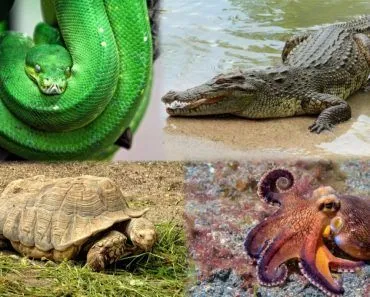
Scientists estimate the age of animals by reading the body for clues: tooth and bone wear seen on X-rays, graying fur and wrinkling skin, and clouding eyes. In fish and shellfish, they count annual growth rings in tiny ear bones (otoliths) or shells. A skin test that measures pentosidine, a chemical that builds up with age, works across many species.
Have you ever wondered, how old is your Persian cat that sits on the couch like royalty? Or do you know when exactly Bruno was born? I’m sure you must be thinking to yourself that how does it matter? Because for you, Bruno is happy irrespective of when his birthday is celebrated.
However, when it comes to scientists, the age of an animal is of importance. Especially for scientists studying any aspect of the ecosystem and its interaction, knowing the age of the animal in study becomes very crucial. Easier said than done.
Although wanting to know the animal’s age might sound like a simple idea, it isn’t so. Age is just not a number when it comes to animals because different animals age differently. This is one of the major obstacles posed in front of scientists and thus there is no uniform age-grading method that is generalized to all animals. However, there are some general cues that help in estimating the age of an animal to quite an extent.
Why Do Scientists Need To Know Animals’ Age?
Before we jump into the idea of ‘age-determining’, let us address an important question: Why do scientists need to know the age of an animal in the first place? Knowing the age of an animal is of prime importance when studying biodiversity, or ecosystems at large. Global warming, extensive human activity, increase in pollution leading to the destruction of animal habitat has led to an increase in the number of endangered species. Thus, scientists are aiming at studying animal populations very closely in order to curb the risk of animals going extinct. This can be done by maintaining a significantly healthy population of those animals.
For the same, scientists need to know the number of (sexually) mature organisms that are capable of reproduction, in that particular animal population. Not just this, but scientists also keep a tab on the number of juvenile organisms who will reach maturity. These animals will then be able to reproduce in the near future, ensuring a thriving population of that particular species. In such cases, knowing the age of animals becomes very crucial.
How Do Scientists Evaluate An Animal’s Age?
Now that we know why the age-determining of animals is carried out, let us now understand how it is done. Zoologists oftentimes take X-rays to examine the animal skeletal structure. Bones have several growth markers and the condition of the bones could also tell approximately the age of the animal. Teeth are also very helpful in determining the animal’s age. In some animals, adult teeth appear at a certain age. Thus the presence of adult teeth could point out the age of the animal. Like bones, the condition of the teeth can help in determining the age. Decayed and worn out teeth indicate advanced age.
Flange
Scientists also look for characteristic features. For example, in orangutans, scientists look for a feature called the ‘flange.’ The flange or cheek pads are present in sexually mature, dominant males, so their appearance tells scientists the orangutan has reached adulthood. However, this method of determining the age of the orangutan isn’t rock-solid. Flanges develop at wildly different ages, anywhere from around 14 to over 30, and some mature males stay flange-free for years until a dominant male disappears from the area. So a missing flange doesn’t necessarily mean a young animal.

Skin
Skin also helps as a major cue. Like us, some animals also wrinkle with age. Since female orangutans don’t develop flanges, the wrinkles on their skin can give away their age. Lucky for us, there are no anti-aging creams available in the animal kingdom!
Fur
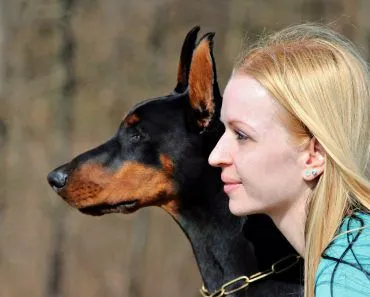
For those animals that have fur, their coat can help in determining their age. In dogs, the muzzle gets grayer with progressing age. When it comes to cats, the fur becomes dull and brittle over time. This holds true for all cats, ranging from house cats to big cats in the wild. As they grow older their fur coats become less shiny. But scientists cannot rely on less lustrous fur coats alone.
Eyesight And Hearing
Thus they take visual cues from the animal’s body condition. Muscles become less toned as animals age. The ribs become prominently visible in aged animals. Older animals have pronounced movements due to deteriorating hearing and visual capabilities.
Impaired eyesight and hearing also indicate the progressing age. Strong cues are seen when it comes to dogs, as cloudiness is observed in their eyes as they progress with age. However, white circles are seen around a young orangutan’s eyes which disappears post-weaning. Thus it is said that there is no standard way to determine the age of all organisms. It changes from one organism to the other.

Otoliths
Dead fish give away their age as easily as possible owing to their tiny ear bones called otoliths. Otoliths have annual growth rings like that of trees which can be counted in order to know the age. The age of clams can be determined by counting the annual rings too. The catch is that otoliths sit deep inside the skull, so counting their rings usually means the fish has to be sacrificed first. To age fish without killing them, scientists tag live ones after injecting a dye that leaves a dated mark inside the otolith, then recapture them later, and newer near-infrared scanning of otoliths is making the whole process faster.
What do you think about the octopus? How is its age determined? Well, the age of these soft-bodied creatures is very difficult to determine, as they have no bones. Initially, scientists thought that they could make judgments depending upon the size of the octopus. But size as a factor is subject to change and hence this method of assessment proved unreliable. While the age of various species of squids and cuttlefish, close relatives of octopuses, are determined by the daily growth increments within their statoliths (analogues to fish otoliths), the same cannot be done with octopuses. This is because octopus statoliths are fragile structures with no visible growth increments.
Octopus beaks were taken into consideration for calculating their age. However, the beaks being used for feeding makes them prone to wearing out and eroding. This could lead to miscalculation of age. The most appropriate method for octopus aging to date is the Stylet increment analysis (SIA). In this method, the ‘stylet’ (a small internal shell-like structure in the mantle) of the octopus helps in determining its age.
Novel Prospects For Animal Age-determination:
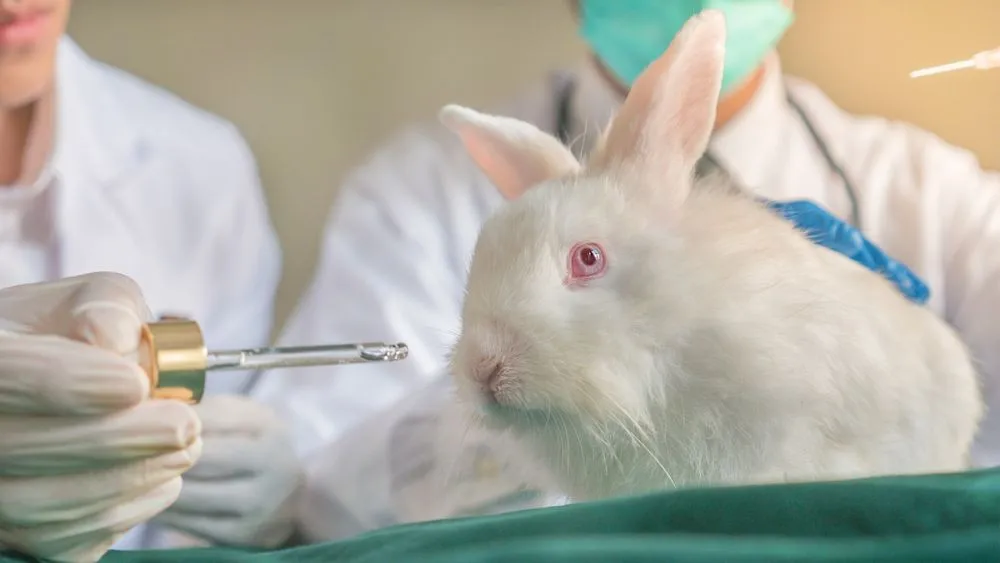
In current times, where scientists are constantly analyzing the planet’s biodiversity, marking endangered species, and studying animal population growth, knowing the exact age of animals is of utmost importance. For the same reason, scientists have come up with what is called ‘skin test.’ The test detects pentosidine (a chemical in the body), which is a biomarker for so-called ‘advanced glycation end’ products (AGEs).
These are substances that form in the body as a result of aging and their amounts can indicate an animal’s age. AGEs tests are already being done for various animals. This test involves taking a small sample of the animal’s skin. In this method, scientists can capture animals, take a tiny sample of their skin, and then set them free. This method does not harm animals.
How Do You Tell A Lion’s Age?
Lions are a good example of how researchers stack several clues on top of one another. The clearest one is right on the animal’s face: its nose. Cubs start life with soft pink noses, and as a lion ages, black freckles spread across the nose pad until much of it turns dark. In 2004, Karyl Whitman, Craig Packer and their colleagues, writing in the journal Nature, photographed 32 wild male lions of known age in Tanzania’s Serengeti and Ngorongoro Crater and found that the share of black pigment on the nose climbs steadily as the animal gets older. As a rough rule of thumb, a male whose nose is about half black is usually at least five years old.

The mane tells a similar story. A young male is bald as a cub, sports a scruffy ‘mohawk’ as a teenager, grows a full mop-top in his prime, and thins out again in old age. Researchers also read the teeth, which stain yellow and wear down over the years, along with the scars and the sagging lower lip that older lions pick up from a lifetime of fighting.
No single feature is foolproof. The nose-darkening schedule can vary from one lion population to another, so field biologists weigh the nose, mane, teeth and body condition together before settling on an age. Getting it right matters, because wildlife managers use these estimates to set hunting rules that spare younger males and keep populations stable.
How Do You Convert An Animal’s Age Into Human Years?
This is probably the question you really came here with: how old is your pet in ‘human years’? For decades the popular answer was to multiply by seven, but veterinarians now agree that the old ‘one dog year equals seven human years’ rule is a myth. Animals sprint through childhood and then slow down, so a flat multiplier gets the early years badly wrong.
Dogs finally got a proper formula in 2020, when researchers at the National Institutes of Health and the University of California, San Diego published a study in the journal Cell Systems. By comparing chemical ‘methylation’ tags that accumulate on DNA with age in 104 dogs (mostly Labrador retrievers) and in humans, they arrived at a logarithmic conversion: human age = 16 × ln(dog age) + 31. By that math, a one-year-old dog is already like a 31-year-old person, and a four-year-old dog is closer to 53. The catch is that the numbers lean heavily on Labradors, and different breeds age at different rates.
Cats are more consistent. According to the American Veterinary Medical Association, a cat reaches the equivalent of about 15 human years by the end of its first year and roughly 24 by the end of its second, then ages about four human years for every calendar year after that. So a two-year-old cat is already a young adult rather than a toddler. The takeaway is the same one scientists keep bumping into: there is no tidy, one-size-fits-all conversion, because every species keeps its own clock.
With the advancement in science, more such methods are to be discovered in the near future. Till then if you wish to know Bruno’s age, you could just run your fingers through his fur or look into his eyes!
References (click to expand)
- How Old Is That Lion? A Guide to Aging Animals. National Geographic
- New skin test determines age of wild animals to help control .... The American Chemical Society
- What a Gray Muzzle May Say About Your Dog. The American Council on Science and Health
- Doubleday, Z. A., White, J., Pecl, G. T., & Semmens, J. M. (2011, August 16). Age determination in merobenthic octopuses using stylet increment analysis: assessing future challenges using Macroctopus maorum as a model. ICES Journal of Marine Science. Oxford University Press (OUP).
- Whitman, K., et al. (2004). Sustainable trophy hunting of African lions. Nature.
- How to Age a Lion. Panthera Field Notes
- NHGRI researchers reframe dog-to-human aging comparisons. National Human Genome Research Institute
- Senior Pet Care (FAQ). American Veterinary Medical Association