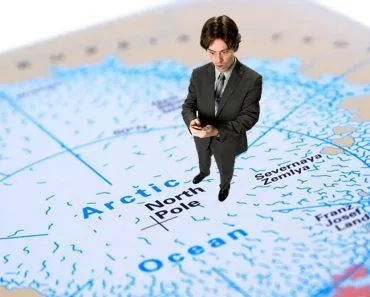
Yes – when conditions are right, dogs preferentially align their bodies along the north–south magnetic axis to defecate or urinate, and they actively avoid the east–west axis. A 2013 study in Frontiers in Zoology found this only happens during the roughly 20% of daylight when the geomagnetic field is undisturbed. The likely reasons are magnetoreception linked to a dog's homing ability and to scent-marking of their fixed territories, though the exact sensory mechanism is still under investigation.
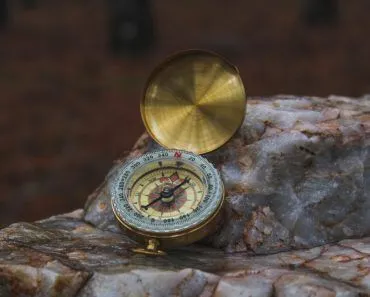
Next time you take your dog out for a walk, along with the poop bags and a leash, keep a compass handy too! As soon as your pup gets ready to do its business, check out which of the four cardinal directions they’re facing.
Most of the time, they’ll be pointing North… weird, right?
Why do they do this, and more importantly, do other animals show similar directional orientation?
The Earth’s Magnetism
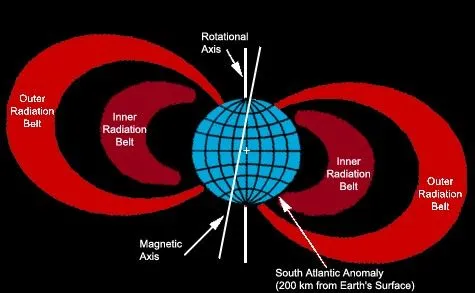
Our planet, like most others, has a magnetic field that radiates outwards from the magnetic poles. Simply put, it is caused by swirling whirlpools of liquid metal in the outer core, which lies about 1,800 miles (~3000 km) below the surface of the earth. These swirling metals create electrical currents that generate and maintain a magnetic field.
The magnetic axis of the Earth is slightly offset from the geographic axis by 11.2 degrees, while Magnetic North is situated near the geographic South Pole, and vice versa. The North & South Poles have those names because regular compass magnets will point their north towards geographic North (i.e., magnetic South; remember that opposite poles attract), while the compass magnet’s south will point towards geographic South (or magnetic North).
The field fluctuates regularly, even daily, and is only said to be ‘calm’ for about 20% of daylight hours. It is strongest near the poles and weakest at the equator (Source).
The presence of the magnetic field plays a major role in ensuring the survival of life on Earth. The strong field around our planet interacts with the solar winds and prevents them from reaching the surface of the planet. These solar winds would otherwise completely erode the atmosphere and water, consequently making conditions inhospitable for any type of life.
Scientists speculate that Mars lost its water and atmosphere when its magnetic field disappeared, and the lack of a magnetic field is also why Venus does not support life.
Poop And Its Relation With The Axis
If you notice your dog turning around a few times before urinating, defecating or even sleeping, they are, in fact, recalibrating their internal GPS with the Earth’s magnetic axis. They are more likely to point due North during the 20% of daylight when the magnetic field of the Earth is most calm. Moreover, even when the field fluctuates, they seem to actively avoid the East-West axis.
The reasons why they do this are still under debate. Researchers speculate that it is related to their extraordinary homing ability (to find their way back on their own… remember Lassie?), and also to their territoriality.
Dogs have fixed territories, and they keep a mental map of the areas they inhabit or visit. Urine and stool contain a lot of information about an individual, such as age, sex, fitness, disease and whether they are ready to mate or not. When they urinate or defecate, they align themselves with the axis. This might better help them mark their territories and remember their cornerstones (Source).
How do they know which way is North? Researchers are still not sure, but two possibilities exist.
Either they consciously sense the magnetic field through smell, taste, sound or other senses, or they passively react to physiological cues, such as “feeling better” or more “comfortable” facing one direction than others.
Nonetheless, it has been established that dogs, like some other animals, are magnetoreceptive and are therefore able to sense the Earth’s magnetic field. Further studies are working on understanding the finer aspects of this fantastic instinct.
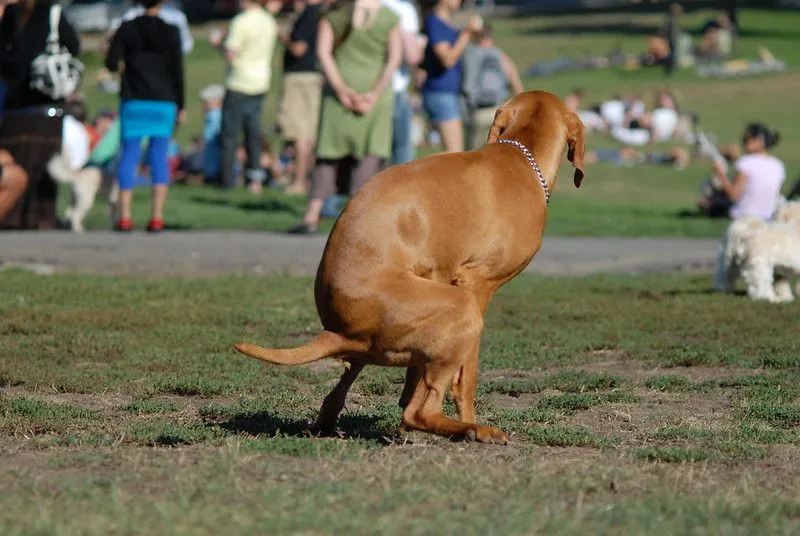
Why Do Dogs Circle Before They Poop?
That spinning routine before your dog squats is about more than just lining up with the magnetic axis. According to Dr. Mary Burch, a certified animal behaviorist with the American Kennel Club, the habit traces back to your dog’s wild ancestors, and several instincts are probably layered on top of one another.

One reason is safety. Squatting leaves an animal exposed, so turning in a full circle lets a dog scan its surroundings and pick a spot where it feels secure before getting into a vulnerable position. A second reason is simple ground preparation: much like circling before lying down, a few turns flatten tall grass and push aside sticks or stones, which also keeps the mess from clinging to their fur.
Scent-marking plays a part too. Dogs carry scent glands between their paw pads and near the anus, so scratching and circling smears their personal signature across the ground, leaving a note for the next dog about who passed by. And of course, some of that turning is the magnetic recalibration we just met, as the dog settles onto the calm North-South axis. In other words, there probably isn’t one single answer. Your dog is checking for danger, tidying the ground, marking its patch and aligning its internal compass, all in a few quick spins.
Can Dogs Really Sense Magnetic Fields?
If aligning to poop sounds far-fetched, a 2020 study offers some of the strongest evidence yet that dogs carry a built-in compass. Researchers led by Kateřina Benediktová and Hynek Burda fitted 27 hunting dogs from ten breeds with GPS collars and cameras, then released them to chase scents through Czech forests and find their own way back, logging 622 trials.

The dogs came home using one of two strategies. Some relied on tracking, retracing their outbound path almost step for step. Others used scouting, striking out on a brand-new route back to their owner. Here is the striking part: before setting off on a scouting run, many dogs first paused and trotted about 20 meters (18 m on average) along the North-South magnetic axis, no matter which way home actually lay.
The researchers think this short run is the dog taking a “compass reading” to get its bearings. Dogs that performed it tended to find a more direct, efficient route home than those that skipped it. Because the Earth’s magnetic field is steady and available everywhere, it makes an ideal reference for an animal crossing unfamiliar ground, much as migrating birds read the same field to cross continents. So yes, the evidence increasingly suggests dogs really can sense the magnetic field, and not just when nature calls.
What About Other Magnetically Sensitive Organisms?
A large variety of organisms use different mechanisms to detect and use the Earth’s magnetic poles to align themselves in space.
Migration is the best example of a phenomenon that demonstrates exceptional magnetoreceptive navigation. Did you know that birds can migrate thousands of miles, sometimes without stopping or taking a break?! In fact, one very interesting study suggests that birds can actually “see” the Earth’s magnetic field, and migrating birds are said to “reset” their compass every evening. That’s how they can travel such long distances, but always reach the correct destination, even without Google Maps to tell them the way!
Bees are known to have magnetic abdomens that can sense magnetic fields, an ability that has been tested using a strong permanent magnet. They use this to find their way home and also to repeatedly visit a discovered food source. This ability is also known to be present in grazing cattle and deer. Studies have confirmed that grazing cows will more or less face towards the Earth’s magnetic North—similar to pooping dogs!
Whales, sea turtles, fruit flies, salamanders and many other species of reptiles, amphibians, birds, mammals and invertebrates are magnetically sensitive. There’s even a type of bacteria called magnetotactic bacteria that can orient themselves along Earth’s magnetic field! Magnetoreception in animals is an interesting and vast field that still demands a huge amount of study.
So, next time you’re watching a dog spinning in circles before pooping, you may find yourself asking, “What other fascinating secrets do you hold?”
References (click to expand)
- (2013) Dogs are sensitive to small variations of the Earth's magnetic .... Frontiers in Zoology
- Thank Earth's magnetic field for water that gives you life - ANU. The Australian National University
- Ashour, A. A., & Price, A. T. (1965, September 1). Night-Time Earth Currents Associated with the Daily Magnetic Variations. Geophysical Journal International. Oxford University Press (OUP).
- Begall, S., Červený, J., Neef, J., Vojtěch, O., & Burda, H. (2008, September 9). Magnetic alignment in grazing and resting cattle and deer. Proceedings of the National Academy of Sciences. Proceedings of the National Academy of Sciences.
- Birds Can "See Earth's Magnetic Field - National Geographic. National Geographic
- Benediktová, K., et al. (2020). Magnetic alignment enhances homing efficiency of hunting dogs. eLife
- Why Do Dogs Spin Before They Poop? American Kennel Club