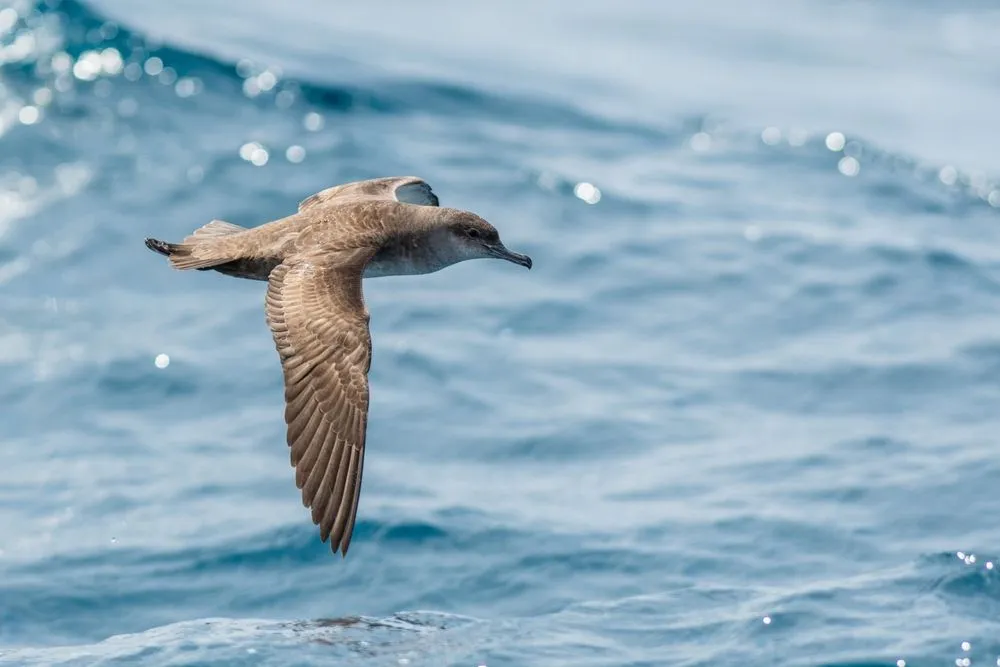
During strong typhoons, streaked shearwaters fly toward the eye of the storm rather than away from it. GPS tracking by researchers at Swansea, Leeds, and Nagoya universities showed the birds chase the calm center to avoid being blown onshore, where they risk crashing into land. With weaker storms, they simply fly around them.
Imagine yourself as a Japanese farmer. The government has sent you a warning of an approaching typhoon. As you run to take shelter, you notice the oddest thing out at sea; you see a few sea birds flying straight into the storm. Sounds baffling, but it actually does happen and this article will explain exactly why!
Scientists from the UK and Japan certainly felt baffled when they studied these birds and this odd behavior. In a 2022 study, researchers from Swansea University, the University of Leeds, Nagoya University and the Nagoya Institute of Technology fitted GPS trackers to streaked shearwaters, a species of pelagic seabird that nests on Awashima Island in the Sea of Japan, and sifted through 11 years of tracking data. But what exactly are pelagic seabirds?
Pelagic Seabirds
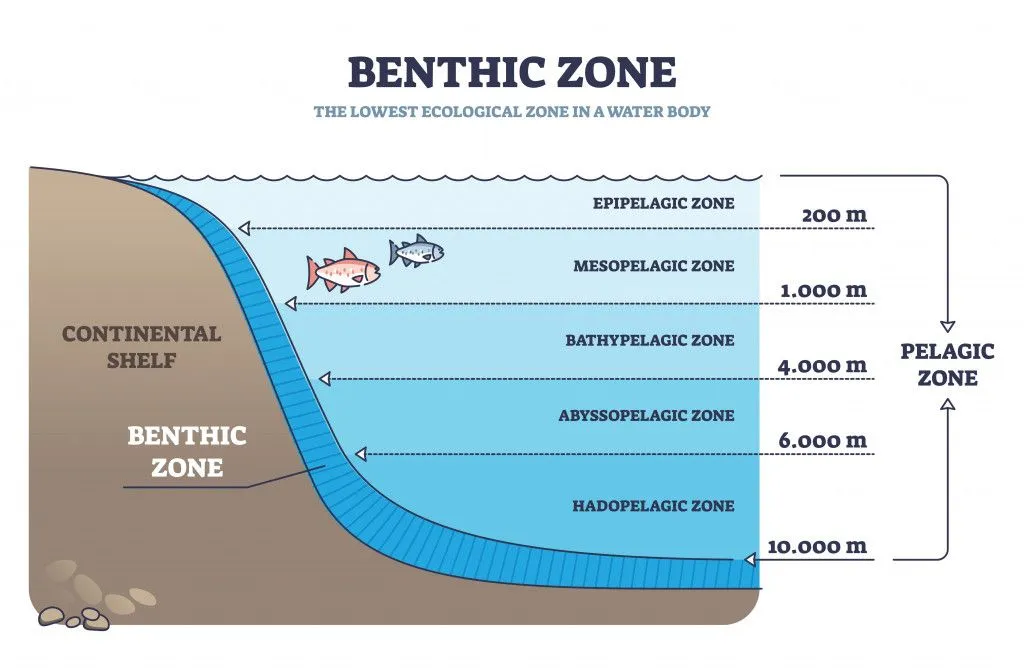
When talking about biology, pelagic refers to a region of the ocean known as the “open ocean”. Normally, pelagic only refers to the water column away from the shore (beyond coastal waters), but in this special case, it also refers to animals, such as birds, that depend on these waters for food.
Pelagic seabirds have many characteristics; they take much longer to mature, and reproduce at lower rates. However, to counter that, they also have a far longer lifespan than most birds (streaked shearwaters live for decades, and the record-holding Manx shearwater was still going strong past 50 years of age). These are all characteristics that evolved because pelagic seabirds spend the majority of their lives at sea. Research shows that shearwaters can spend up to 15 days at a time at sea!
But the ocean is not free of its own perils and difficulties. There are many large predators, tough conditions and the worst of all, frequent storms!
How Bad Are These Storms?
These are not just regular downpours. There is no sitting by your window with a hot cup of coffee or tea as you look wistfully out the window. The storms I’m talking about are full-scale hurricanes (or typhoons, or cyclones, since the terminology differs for the same phenomenon depending on where in the world it forms). These storms cause billions of dollars worth of damage and claim thousands of lives every year.
The interesting thing about a cyclone is its structure. The wind at the edges is relatively slower, but as you go towards the middle, the wind speeds increase drastically. Then, the oddest thing occurs, right in the middle of the storm, the winds become incredibly calm. This calm region is called the eye of the storm.
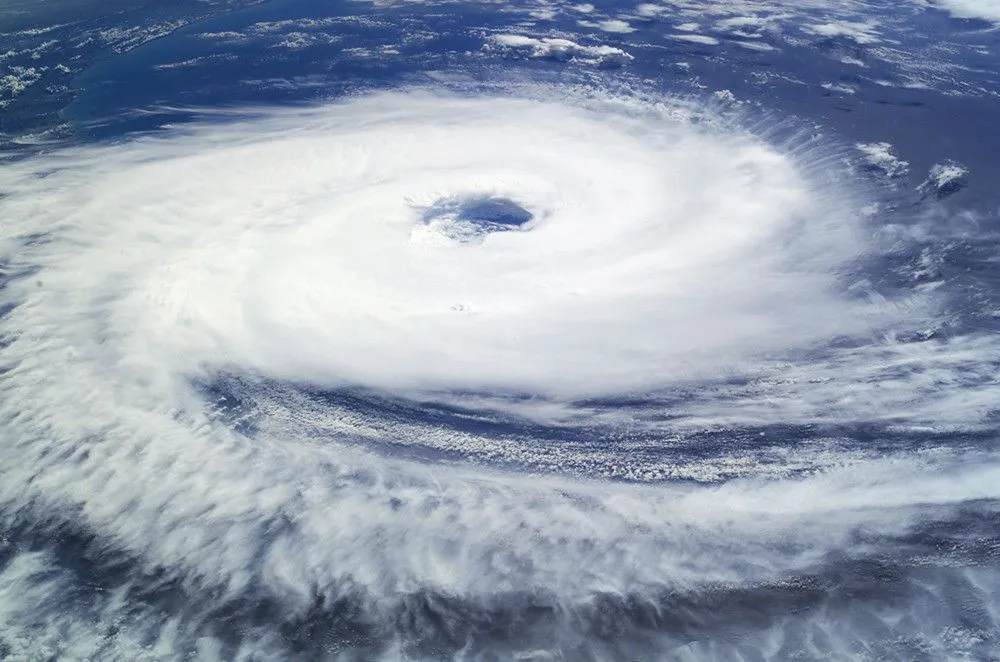
Hurricanes are formed over hot water regions near the equator. You can read about the science behind their formation in an article here. These storms are extremely destructive and, on the Saffir-Simpson scale, carry sustained winds from 119 km/h (74 mph) for a Category 1 storm to over 252 km/h (157 mph) for the most violent Category 5.
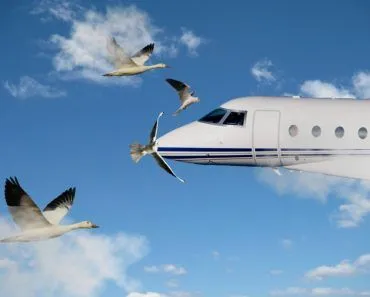
These winds are extremely dangerous to birds. A bird that lives near land would seek shelter, but for a seabird, it’s a completely different story. What if the bird is far out at sea when the storm occurs?
Surviving The Storm
There are many ways for pelagic seabirds to survive the storm. The easiest is quite obvious: they avoid it altogether, sometimes deviating from their regular path by hundreds of kilometers. During tropical cyclones, great frigatebirds have been recorded detouring as far as 600 km (roughly 370 miles) from their usual foraging grounds to skirt the storm.
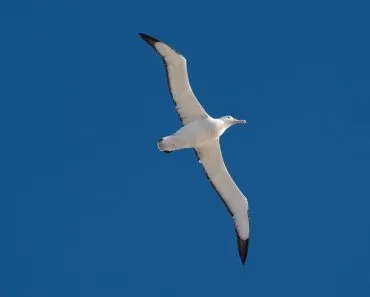
Shearwaters, on the other hand, are quite the daredevils. If the winds were weaker in strength, the birds will simply fly away, but if the winds are very strong, the birds do the most bizarre thing. They fly right towards the eye of the storm.
Upon further analysis of the data, it was found that the birds were most likely to head into a storm when its center was nearby. In the five strongest cyclones, about a quarter of the tracked shearwaters came within 60 km of the eye, and some shadowed that calm center for up to eight hours. Initially, the scientists wondered whether the birds were simply exploiting the strong winds to fly. These birds have large wings and could ride those winds to glide without flapping, which would save them energy.
However, energy savings alone didn’t fully explain the behavior. The bigger clue was where the storms would push the birds. Cyclones in the Northern Hemisphere spin counterclockwise, so a shearwater that stayed put risked getting swept up in the strong onshore winds trailing behind the eye and driven over land. By chasing the calm eye instead, the birds kept pace with the storm and stayed out at sea. On land, there is the danger of being dashed against trees, buildings and cliffs, but out over open water there is nothing to crash into, making the eye the safer bet.
Can Birds Get Trapped In The Eye Of A Hurricane?
Shearwaters make a deliberate choice to chase the eye, but plenty of other birds end up there by pure accident. When a bird is caught in the outer bands of a hurricane, it can be swept inward through the spiralling winds until it stumbles into the strange calm at the center. Once there, getting out means punching back through the eyewall, which holds the fastest winds of the entire storm. Rather than fight that wall, many birds simply give up and travel along with the eye, effectively becoming stowaways inside the hurricane.

According to the National Audubon Society, birds caught up in a storm meet one of a few fates: some hunker down and ride it out, some are displaced toward the coast, and some are “entrained,” meaning they are caught within the storm system and carried far inland. Strong-flying seabirds such as sooty terns, bridled terns, brown noddies and tropicbirds are especially prone to this, and they can wind up hundreds of kilometers from the ocean.
Being trapped is exhausting. A bird locked inside the eye cannot land on the water to rest or feed, and it may be carried for a day or more until the storm weakens over land. When the hurricane finally falls apart, these worn-out travellers are dropped wherever they happen to be, often onto inland lakes and reservoirs. Birdwatchers know this well; after a big storm, they rush to these spots hoping to see ocean birds that have no business being so far from the sea. It is a rare silver lining to an otherwise destructive event.
Where Do Land Birds Go During A Storm?
Out on the open ocean, a shearwater has nowhere to hide, so it has evolved bold tactics to deal with a storm. Birds on land face a very different problem. A backyard cardinal or a woodpecker cannot outrun a hurricane, so the vast majority of them do the sensible thing: they stay put and hunker down until the worst has passed.

The National Audubon Society notes that birds seeking shelter from strong wind and rain will cling to tree branches, tuck themselves into cavities and holes, or take refuge on porches, under eaves, under parked vehicles and even inside human-built structures. Woodpeckers and small songbirds grip tightly to a sturdy trunk or bury themselves deep in a dense thicket, picking the most sheltered spot they can find and simply waiting it out.
Food is the other worry. Foraging becomes almost impossible in driving rain and howling wind, so birds may feed intensively in the calmer hours before a storm arrives, topping up their energy reserves for the lean day ahead. This is also why bird lovers are encouraged to keep feeders stocked in the run-up to a big storm, then bring them indoors before the winds get strong enough to turn a feeder into a flying projectile.
How Do Birds Know A Storm Is Coming?
All of this raises an obvious question: how does a bird know a storm is on the way in the first place? It turns out they come equipped with a remarkably sensitive internal barometer. Birds are famously good at reading their surroundings, from sensing Earth's magnetic field to navigate to feeling tiny shifts in air pressure, and a falling barometer is one of nature's most reliable warnings that bad weather is coming.

Researchers at Western University's Advanced Facility for Avian Research put this to the test by placing white-throated sparrows in a sealed chamber and artificially lowering the air pressure to mimic an approaching storm. As Jessica Metcalfe and her colleagues reported in the journal Animal Behaviour in 2013, the birds responded to the drop in pressure by heading straight for their food and eating right away, rather than preening and hopping about as they normally would. In short, they sensed the change and started fuelling up.
Pressure is not their only cue. Storms also produce infrasound, extremely low-frequency sound waves that travel hundreds of kilometers, far below the range of human hearing. Birds can pick up these distant rumbles, which may help explain how some species react a full day or more before a storm actually reaches them. Between their built-in barometer and their sensitivity to infrasound, birds often know the weather is turning long before we do.
Conclusion
When looking at the data, we find that young, inexperienced shearwaters are more vulnerable to these storms and are often injured, blown ashore (or “wrecked”), or killed by them. Juveniles haven’t yet developed the same sense of the landscape that adults rely on to navigate, which hints that handling storms well, and making the split-second decisions that keep them safe, is something these birds get better at as they age.
It’s worth noting that shearwaters aren’t the only birds that read the weather. Land birds tend to do the opposite and flee well ahead of a storm: GPS-tagged golden-winged warblers in the United States once detoured around 1,500 km (roughly 930 miles) to dodge a tornado-spawning storm system, apparently tipped off by the low-frequency infrasound the storms gave off days in advance. Different birds, very different strategies.
There is still a lot more that scientists must learn about these birds and their peculiar behavior. We have only scratched the surface of their behavior, but hopefully, with time and more data, we can learn more about how these birds react to these destructive storms.
Understanding these birds’ behavior could even help us when it comes to predicting storms and taking the necessary precautions to protect human life!
References (click to expand)
- Lempidakis, E., Shepard, E. L. C., Ross, A. N., Matsumoto, S., Koyama, S., Takeuchi, I., & Yoda, K. (2022). Pelagic seabirds reduce risk by flying into the eye of the storm. Proceedings of the National Academy of Sciences.
- How do hurricanes form? National Ocean Service, NOAA.
- NWS JetStream - Tropical Cyclone Structure. The National Weather Service
- Bennet, D. G., Horton, T. W., Goldstien, S. J., Rowe, L., & Briskie, J. V. (2019). Flying south: Foraging locations of the Hutton's shearwater (Puffinus huttoni) revealed by Time-Depth Recorders and GPS tracking. Ecology and Evolution. Wiley.
- Ricklefs, R. E. (1990). Seabird Life Histories and the Marine Environment: Some Speculations. Colonial Waterbirds. JSTOR.
- Weimerskirch, H., & Prudor, A. (2019). Cyclone avoidance behaviour by foraging seabirds. Scientific Reports, 9, 5400.
- Streby, H. M., Kramer, G. R., Peterson, S. M., Lehman, J. A., Buehler, D. A., & Andersen, D. E. (2015). Tornadic Storm Avoidance Behavior in Breeding Songbirds. Current Biology.
- Hurricane Disaster Relief for Birds: What to Expect and How to Help. National Audubon Society.
- How Do Hurricanes Affect Birds? National Audubon Society.
- Metcalfe, J., Schmidt, K. L., Bezner Kerr, W., Guglielmo, C. G., & MacDougall-Shackleton, S. A. (2013). White-throated sparrows adjust behaviour in response to manipulations of barometric pressure and temperature. Animal Behaviour, 86(6), 1285-1290.