Table of Contents (click to expand)
Yes — the proportions of nutrients shift as fruit ripens. Starches convert into simple sugars (a green banana is mostly starch; a ripe one is almost pure sugar), and vitamin C and many antioxidants rise. Minerals (potassium, magnesium, etc.) and total calories barely change. So a ripe banana isn’t really “more nutritious,” it’s mostly just sweeter and easier to digest.
When you go to the grocery store and re-stock your house with fruits and vegetables, it’s hard not to feel like you’re making a heathy choice for the week ahead. As we all know, fruits and vegetables are a critical part of a healthy diet, and provide a wide range of essential nutrients, from key vitamins and minerals to antioxidants, sugars and dietary fiber.
 However, as that week progresses, your fruit may continue to ripen, often changing color or firmness over time. Bananas are perhaps the best and most visually demonstrative example of this, but all fruits undergo a ripening process (sometimes on the vine, and sometimes after being picked). This has led many people to wonder whether those physical changes in a fruit also affect its nutritional content. In other words, is there a nutritional difference between ripe and unripe fruit?
Why Do Fruits Ripen?
Before we dig into the details of what happens during ripening, we should take a look at why the process occurs at all. First of all, a fruit is effectively a container for the seeds of a plant, and develops from a flower. Basically, when a flower releases its pollen, this is done in order for other plants to be fertilized. Pollen is taken from the male part of a plant and brought to a female part of the plant. When this is completed, fertilization can begin and the flowers will begin to drop off.
Fertilization leads to the development of plant seeds, which need to be protected as they develop. The fruit that develops around the seeds will provide this protection, while also acting as the distribution tool for the seeds to grow. For example, after fertilization, a fruit will begin to grow around the seeds, but that fruit is said to be “underripe” until the seeds are fully developed and capable of growing into another plant if given the right soil and climatic conditions.
 The ripening process is a form of growth, as well as a defense mechanism. When a plant is unripe, it will often be sour, overly fibrous, or even toxic to consume. Animals won’t want to eat that sort of fruit, and will therefore leave it alone. Once a fruit becomes “ripe”, it will often be sweeter, more colorful, and generally more appealing to a potential consumer. When the animal eats this sweeter, more attractive fruit—whether it is a bird, squirrel, bear, human or any other creature—it will then deposit those seeds elsewhere, after they pass through their digestive tract or are disposed of on the ground. By that point, the seeds will be viable and can grow into a new plant!
Why Does Unripe Fruit Taste Sour, And What Triggers Ripening?
If you have ever bitten into an unripe banana or a green mango, you know the experience can be sour, bitter and mouth-puckeringly astringent. That flavor is no accident. An unripe fruit is loaded with organic acids and with astringent compounds called tannins, which act as natural antifeedants that discourage animals from eating the fruit before its seeds are ready. It also stores much of its energy as starch rather than sugar, so there is very little sweetness to enjoy yet.

So what flips the switch from sour and green to sweet and colorful? For a large group of fruits, the answer is a single gas: ethylene. Ethylene is a plant hormone that acts as the master trigger of ripening. Fruits that respond to it (including bananas, apples, tomatoes, peaches and avocados) are called climacteric fruits, and when they begin to ripen they release a sudden burst of ethylene. Better still, that burst is self-amplifying, so a little ethylene prompts the fruit to make even more of it. This is precisely why a single ripe banana can speed up the ripening of an entire bunch, and why sealing fruit in a paper bag traps the gas and hurries things along.
Once ethylene gets going, it switches on a whole toolkit of enzymes. Some break down the organic acids while others lock up the astringent tannins, so the sour, puckering edge fades. Others hydrolyze starch into simple sugars, delivering that familiar sweetness. Cell-wall enzymes such as polygalacturonase dismantle the pectin that holds the fruit firm, which is why ripe fruit turns soft. Finally, the green chlorophyll is degraded, revealing the yellow, orange and red pigments (carotenoids and anthocyanins) that were hiding underneath all along. In other words, the color change you notice on the outside is really the visible signal that all of this chemistry is happening on the inside.
What Does Ripening Do To A Fruit?
As mentioned above, the ripening process often consists of a change in color, firmness and sweetness, all of which can signal that a fruit is ready to be eaten. Those physical changes are also reflected in a nutritional shift — primarily an increase in sugars. Many underripe fruits have a high starch content, which can make the fruit bitter or inedible, but as the fruit ripens, those starch molecules are converted into sugars.
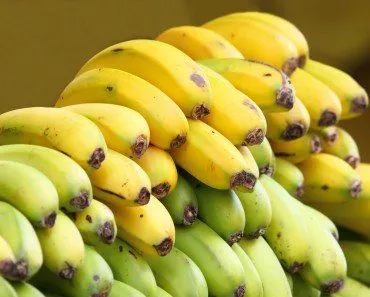
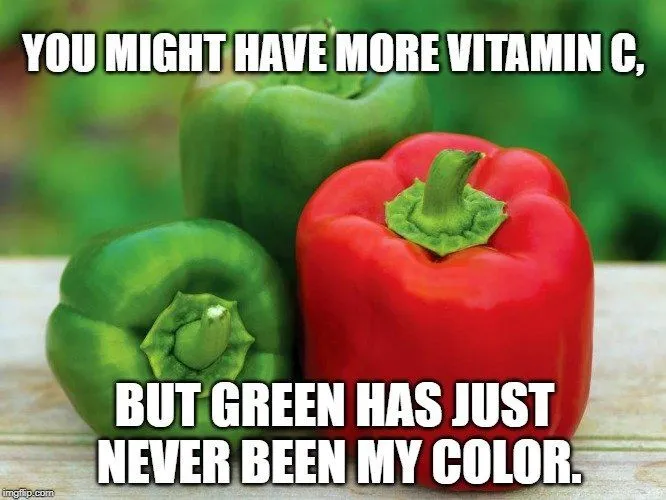
The easiest example of this is a banana; green and underripe bananas do not have the recognizable sweetness and softness of a ripe banana. The conversion of starch into sugar gives the banana a higher percentage of sugar, as well as a better texture for eating and including in recipes. Sugar content is the most notable nutritional change between unripened and ripened fruit, but it’s not the only one. Vitamin C, for example, has been shown to increase as you allow peppers and tomatoes to develop to full ripeness.
In many other fruits, the antioxidant concentration will also improve as a fruit ripens. Considering that these are critically important nutrients for our body’s defenses, particularly against cancer and other forms of oxidative stress, getting more antioxidants in ripe fruit is definitely a good thing! That being said, this isn’t completely true across the board; some antioxidants (e.g., anthocyanins) will increase, while other antioxidant classes (e.g., phenolic compounds) will drop as a fruit ripens.
The good news, for those who love green bananas or green tomatoes, is that the nutritional change is rather minor. The calorie count of fruits does not change once they are picked from a tree, only the form that those calories take. Furthermore, mineral content rarely changes throughout the ripening process, so a green banana will still pack a potassium punch, even if it lacks the typical sweetness.
Is Fruit Ripening A Physical Or Chemical Change?
This one turns up in a lot of science classrooms, and the short answer is that ripening is a chemical change, not a physical one. A physical change (like ice melting into water) rearranges a substance without creating anything new, and it can usually be reversed. Ripening does neither. As a fruit ripens, brand-new molecules are formed: stored starch is broken down into glucose, fructose and sucrose, organic acids are dismantled, chlorophyll is degraded, and firm pectin is converted into softer, soluble forms. These are genuine chemical reactions that make and break molecular bonds.
The clearest proof is that you cannot undo it. Once a green banana has turned sweet and spotted, there is no putting the starch back or restoring the sour green flavor, whereas melted ice can simply be refrozen. Food scientists even demonstrate the shift with a drop of iodine, which stains the starch in an unripe fruit inky black but barely reacts once that starch has been chemically converted into sugar. So while the softening and the color change look like surface, physical differences, they are really the outward signs of chemistry happening inside the fruit.
Does Ripe Fruit Have More Calories Than Unripe Fruit?
Because ripe fruit tastes so much sweeter, it is easy to assume it must be more fattening, but that is one of the most common misconceptions about ripening. Once a fruit has been picked, its total calorie count barely moves. Ripening reshuffles the form of the carbohydrate rather than the amount of it. Starch and sugar are both carbohydrates, and each one supplies roughly 4 calories per gram, so when starch is converted into sugar the energy content stays almost exactly the same. A ripe banana is not really higher in calories than a green one, it has simply swapped stored starch for free sugar.
What does change is the balance between the two. A green banana is rich in resistant starch, a type of carbohydrate that behaves much like fiber, resisting digestion in the small intestine and releasing its energy slowly. As the fruit ripens, that resistant starch falls away and free sugars climb, which is why ripe fruit tastes sweeter and can raise blood sugar a little faster. For reference, one medium ripe banana carries about 110 calories, 28 grams of carbohydrate, 15 grams of naturally occurring sugar, 3 grams of fiber and 450 milligrams of potassium. So if you are asking whether ripe fruit has more sugar, the answer is yes; if you are asking whether it has more calories, the honest answer is basically no. Curious how that fruit sugar stacks up against the sugar in sweets? We break it down in our look at the difference between sugar in fruits and sugar in candies.
What Are The Stages Of Banana Ripeness?
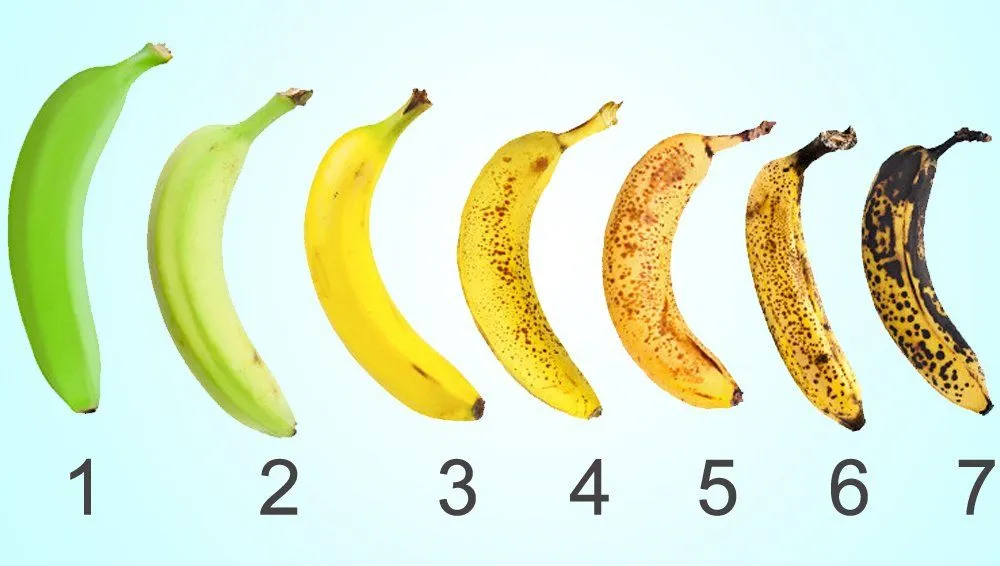
Because bananas are the poster child for ripening, growers actually grade them on a standard banana ripeness scale, a seven-point chart based on the color of the peel. It runs from a firm, fully green fruit at stage 1, through pale green (stage 2), green-yellow (stage 3), yellow with green tips (stage 4) and bright yellow (stage 5), all the way to a fully ripe banana flecked with brown “sugar spots” at stage 7.

The scale is really a map of the starch-to-sugar conversion happening inside. At stage 1 the pulp is mostly starch with almost no free sugar (studies put reducing sugars at well under 1 percent), but by the spotted end of the scale those sugars can climb to nearly 15 percent of the pulp. That is why the eating experience is so different from one end to the other. A firm stage-3 or stage-4 banana is starchier, less sweet and steadier on blood sugar, which makes it handy for cooking. A bright-yellow, just-ripe banana is the classic snacking sweet spot, and a heavily spotted stage-7 banana is the softest and sweetest of all, which is exactly why bakers save their brownest bananas for banana bread and smoothies. Those same peel colors are also a window into the pigment chemistry, as we explain in why bananas change color as they ripen.
A Final Word
Rather than focusing on the ripeness of fruit to try and manipulate your diet into being healthier, consider the many other factors that can affect the quality and nutritive value of your food, such as whether a fruit is in season, or if it has been frozen. Some other factors to think about include the fruit’s time to market, as well as the temperature and humidity it has been exposed to during the shipping process. Eating ripe fruit is almost always more enjoyable, from a taste perspective, and it should have the same or a greater effect on your health as eating an underripe fruit.
While it may be true that ripe fruits have more sugar—a potential issue for diabetics trying to watch the glycemic index of their foods—the majority of fruits have a low GI score. Even bananas, with a glycemic index of 51, are considered safe for diabetic patients. Some of the higher GI fruits, such as watermelon, cantaloupe, mango, papaya, pineapple and other exotic fruits, can be eaten in moderation, in conjunction with talking to your doctor about your specific case and sugar intake. Generally speaking, the benefits of eating ripe fruit, regardless of your belief system, far outweigh the cons!
References (click to expand)
- Does Sugar Content Rise as Fruit Ripens?. livestrong.com
- Does Underripe Fruit Offer Less Nutrition?. The New York Times
- The Glycemic Index Table of Fruits Vegetables. healthyeating.sfgate.com
- Jenkins, D. J., Wolever, T. M., Taylor, R. H., Barker, H., Fielden, H., Baldwin, J. M., … Goff, D. V. (1981, March 1). Glycemic index of foods: a physiological basis for carbohydrate exchange. The American Journal of Clinical Nutrition. Elsevier BV.
- Gierson, D., & Kader, A. A. (1986). Fruit ripening and quality. The Tomato Crop. Springer Netherlands.
- Ethylene and its crosstalk with hormonal pathways in fruit ripening. Frontiers in Plant Science
- Non-invasive determination of surface features of banana during ripening. PMC, National Library of Medicine
- Bananas. The Nutrition Source, Harvard T.H. Chan School of Public Health
- Ripening. Wikipedia