Table of Contents (click to expand)
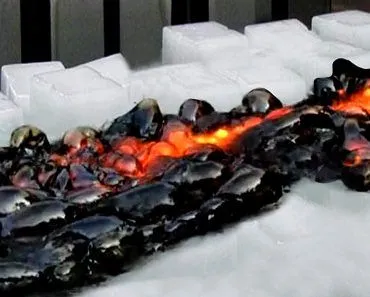
Submarine volcanoes form at three settings: where two tectonic plates collide and one subducts beneath the other, where two plates diverge along a mid-ocean ridge, and where a plate slides over a mantle hotspot. In each case, magma generated in the upper mantle rises through the seafloor and solidifies rapidly when it contacts cold seawater, slowly building a volcanic cone.
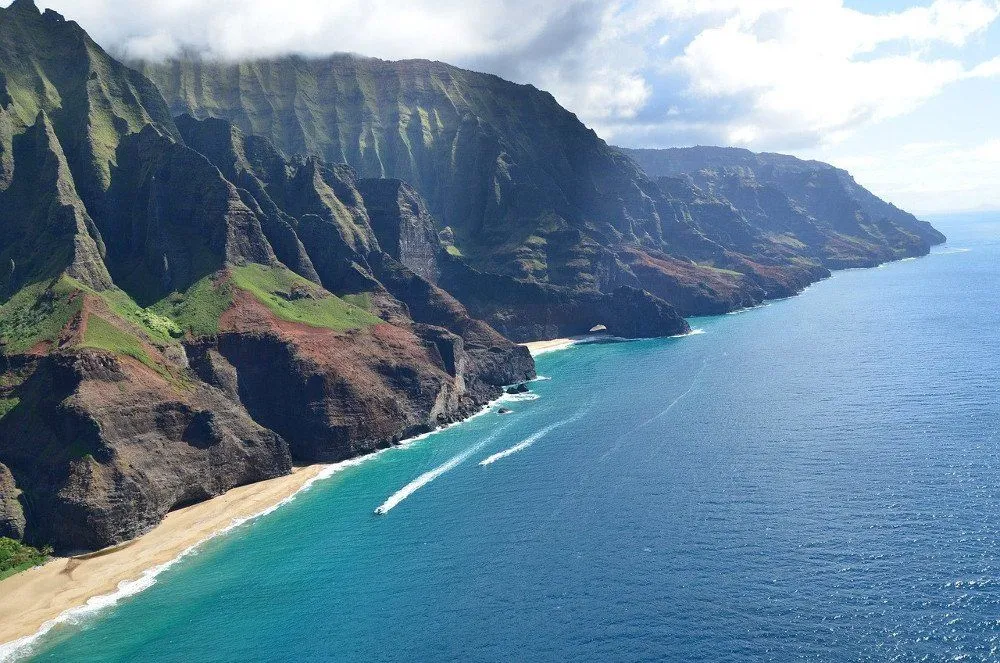
More often than not, Hawaii is found scribbled in the upper half of every globetrotter’s bucket list. The tropical islands are admired for their sumptuous beaches, the blue water that embraces its shores, and the dreamy nights mottled with countless stars. This is the stuff of vacations, of detaching from the monotony of dreary, mechanical cities.
The islands are also famous for volcanoes. Geology will tell you that these islands, replete with volcanoes, have experienced a tremendous amount of volcanic activity, but that’s not the whole story. The eight main Hawaiian islands erupted from volcanoes themselves — the islands are actually solidified lava that effused from undersea vents, from a chain of underwater or submarine volcanoes.
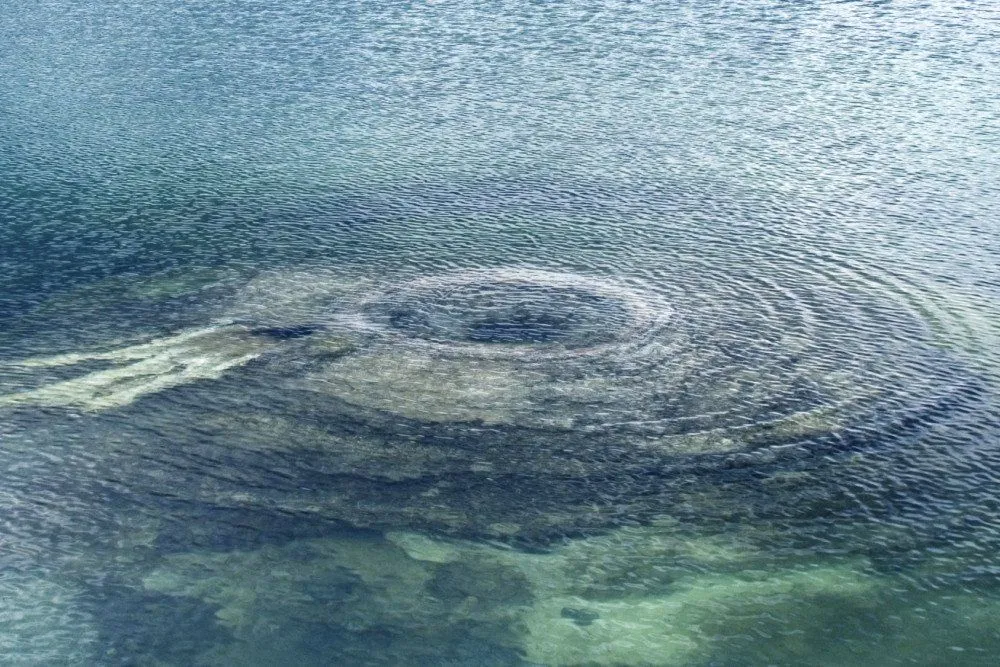
For obvious reasons, submarine volcanoes seem rarer than terrestrial volcanoes. However, these volcanoes are the most productive volcanoes on the planet. Almost 75% of Earth’s annual magma is pumped by submarine volcanoes. These volcanoes are taller than surface volcanoes, yet, even though an estimated 100,000 submarine volcanoes rise more than a kilometer above the seafloor (out of perhaps 25 million smaller volcanic features), geologists have seldom captured one erupting.
It’s not just that these volcanoes are underneath oceans; they are so notoriously elusive because they are hidden thousands of meters deep, where the pressure is so severe that the lava vomited by the volcano can’t even boil the water, such that hydrophones (microphones for sounds in water) are unable to detect them. Still, we study the launched debris because it offers us valuable insights into how heat and chemicals are transferred to the most unusual and mysterious ecosystems on the planet.
Submarine volcanoes are formed the same way that terrestrial volcanoes are: either when tectonic plates collide or when they separate.
Convergent Volcano
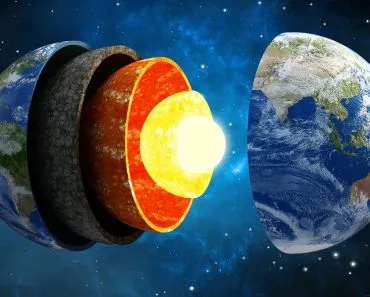
The convergence of tectonic plates is governed by various forces, such as Earth’s rotational force and tidal forces asserted by the gravity of Earth, the moon and the Sun. When two plates converge and collide, the heavier plate subducts or slides below the lighter plate, thereby forming a trench. As the descending slab heats up, it releases water trapped in hydrated minerals, which lowers the melting point of the overlying mantle wedge. The resulting magma (generated in the upper mantle, not the outer core) rises through cracks toward the seafloor as pressure above it drops.
Over time, the accumulating magma rises to the edge until eventually, it erupts into the water. However, due to the almost inexhaustible water and crushing pressure around the vent, the magma immediately solidifies upon reaching the surface. As lava is progressively solidified and accumulated, a mountain is sculpted around the vent.
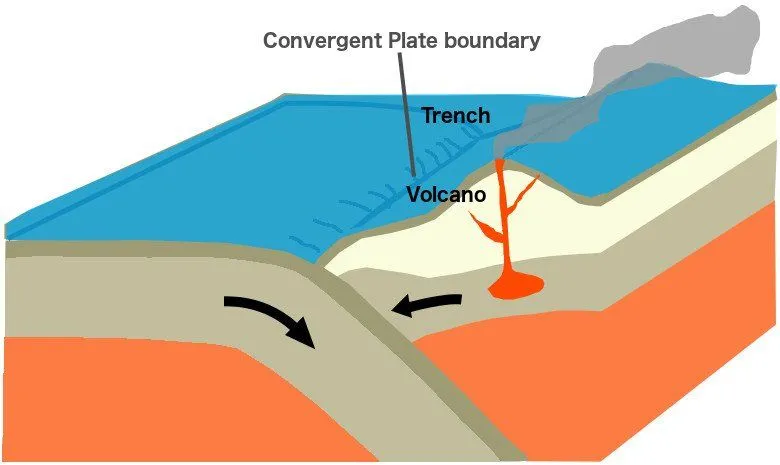
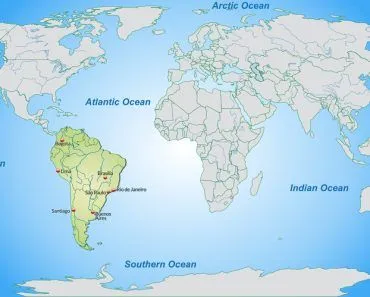
Such a volcano can be formed when two oceanic plates converge or when an oceanic and a continental plate converge. Aleutian, Kuril, Japanese and Mariana are examples of submarine volcanoes formed when two oceanic plates collided, more precisely, plates below the Pacific Ocean. Whereas, the western coast of South America is a settlement that developed when the oceanic crust’s Nazca plate slid under the South American plate.
Divergent Volcanoes
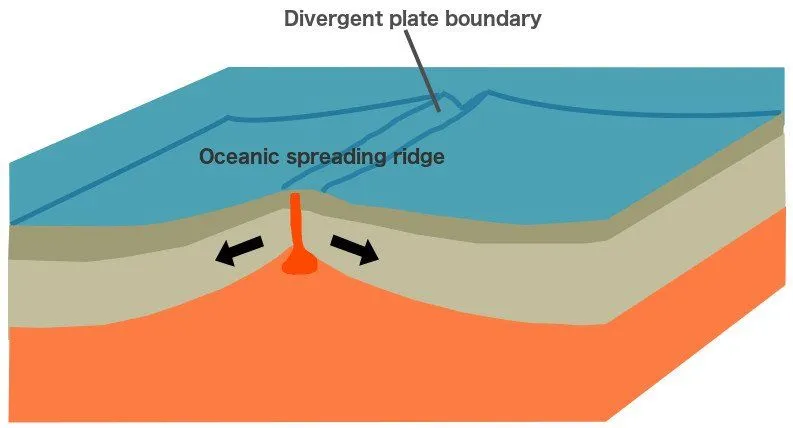
A submarine volcano can also be created when two plates separate or diverge. The lava underneath the plates then squeezes and rises through the void created by the rift. Diverging plates are primarily driven apart by mantle convection beneath them, with extra help from ridge push at the spreading center itself and slab pull at distant subduction zones.
Typical of submarine volcanoes, the rising magma eventually emanates from the vent and solidifies instantly as it contacts the water above. Gradually, the solidified layers pile up and form a mountain. Over a period of millions of years, the ragged structures can build upon one another and ascend so high that they protrude from the water’s surface and form volcanic “islands”.
The rate of such an evolution is compounded when the rate at which the magma effuses is increased. Larger islands like the islands of Hawaii floating on the Pacific Ocean are formed on what are called “hot spots”. These are spots on plates that experience tremendous volcanic activity because a plume of hot rock rising from deep in the mantle feeds a persistent supply of magma up through the plate, so the lava spurts like water spurts from a hole in a filled bottle. The lava streams upwards and solidifies immediately, forming a thick layer that settles on the ocean floor.
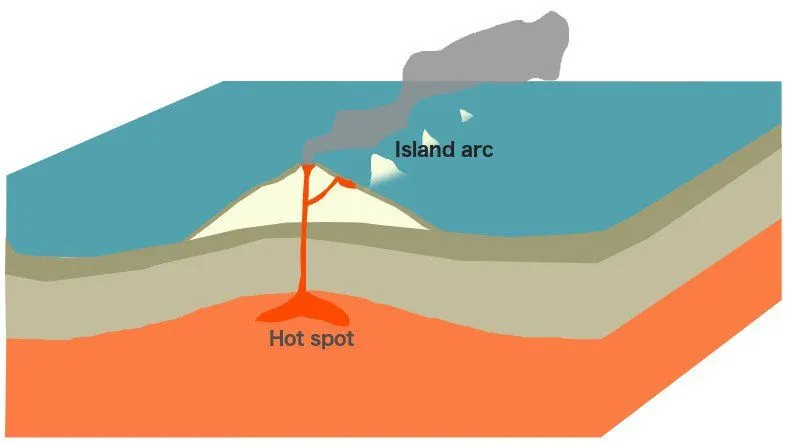
Subsequently, as the plate moves forward, so does the plume of magma, thereby causing a trail of thick, stacked layers, of islands, to form, such as Hawaii’s neighboring islands. This chain of islands is known as a hotspot chain (specifically, the Hawaiian-Emperor seamount chain), not to be confused with an island arc, which forms at a subduction zone like the Aleutians or Marianas. In fact, it is predicted that a new island, Kamaʻehuakanaloa (formerly Lōʻihi, renamed by the Hawaii Board on Geographic Names in 2021), is currently developing roughly 30 kilometers south of Hawaiʻi Island. Its summit still sits nearly a kilometer below the sea surface, so it is expected to breach the waves only in another 10,000 to 100,000 years. Perhaps an addition to the bucket list?
How Does the Magma in Hawaii’s Underwater Volcanoes Form?
Hawaii is the odd one out. Its submarine volcanoes sit nowhere near the edge of a plate; they brew in the middle of the vast Pacific plate, thousands of kilometers from the nearest boundary. Geologists call such a place a hotspot, and it is a third way to build a volcano, one that owes nothing to plates colliding or splitting apart.

Beneath a hotspot lies a mantle plume, a slender column of unusually hot rock that rises from deep in the mantle toward the underside of the plate. The mantle here is solid rock rather than a pool of liquid fire, so the magma has to be manufactured on the way up. As the plume climbs, the pressure squeezing it falls, and lowering the pressure also lowers the rock’s melting point. Through this process, called decompression melting, the hot rock begins to melt as it nears the base of the plate and produces fresh magma. What emerges is a runny, low-silica basaltic lava that oozes out gently rather than erupting explosively.
Crucially, the plume stays roughly fixed while the Pacific plate slides northwest above it at about 5 to 10 centimeters a year. Each volcano is gradually carried off its magma supply, falls dormant, and a fresh one is born over the hotspot. That slow conveyor belt is what strings the Hawaiian islands and the drowned seamounts trailing behind them into the long Hawaiian-Emperor chain pictured above. Unlike a subduction-zone volcano, a hotspot needs neither trapped water nor a plate boundary to melt rock; it simply needs a hot plume and a plate for the magma to rise through.
What Happens When Lava Meets Seawater?
All through this article the lava keeps “solidifying instantly” the moment it meets the ocean. But it does not just freeze into a shapeless lump. Deep underwater, erupting basalt takes on a distinctive and telltale shape known as pillow lava.

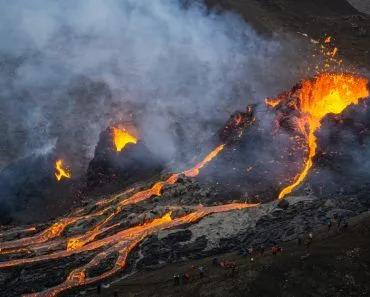
When a lobe of molten lava pushes out of a vent, the cold seawater chills its outer skin almost at once, wrapping it in a thin, glassy crust while the inside stays hot and fluid. Lava keeps flowing in and inflates the lobe like a balloon until the pressure cracks the crust, and a fresh tongue of lava buds out (much like toothpaste from a tube) to start the next pillow. Repeated thousands of times, this budding piles up mounds of rounded, interconnected lobes, each usually a fraction of a meter to about a meter across.
Because they pave the globe-spanning mid-ocean ridges, these pillow basalts are among the most abundant volcanic rocks on Earth’s surface. Where the quenching is more violent, the brittle glassy rinds shatter into a jumble of angular fragments called hyaloclastite. To a geologist, a slab of ancient pillow lava sitting high and dry on land is an unmistakable clue that the rock once erupted beneath the sea.
References (click to expand)
- Submarine Volcanoes - volcano.oregonstate.edu
- Submarine Volcanoes - NOAA Ocean Exploration
- Pillow lava - NOAA/PMEL. The Pacific Marine Environmental Laboratory
- Hot Spot Volcanism - National Geographic Education
- Pillow Basalts - U.S. National Park Service
- How Volcanoes Work: Interaction of Lava and Water - San Diego State University