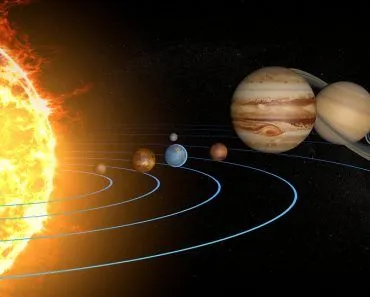
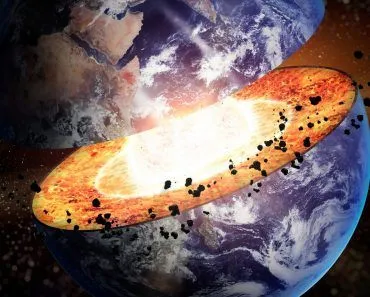
Heat from the Sun reaches the Earth by radiation, the only mode of heat transfer that works across the vacuum of space. Sunlight crosses the roughly 150 million km gap in about 8 minutes and 20 seconds. On a cloudy day you feel less of that warmth because thick clouds reflect much of the incoming sunlight back to space before it can reach the ground.
Have you ever aspired to shine as bright as the Sun, bringing warmth and comfort to the lives of your loved ones? The Sun is not only one of the major sources of energy for us on Earth, but it is also a classic symbol of hope and optimism in our lives. It is millions of kilometers away from us, yet it never fails to fulfill its duty of providing us with heat and light, which are vital sources of life on Earth.
Imagine yourself bathing in the Sun. The streaks of sunlight soothe your feet and you feel cozy and warmed. Suddenly, clouds hover above and block the sunlight. You can’t feel the soft touch of warmth anymore. At that point, you may have wondered how it is possible for the Sun’s warmth to travel such a large distance to the Earth, yet have that warmth be blocked by the clouds…
To understand the scientific answers to these questions, let’s start with the basics. Heat flows from a body at a higher temperature to one at a lower temperature. This process of heat transfer continues to occur until both the bodies reach the same temperature, known as thermal equilibrium.
Three Different Mechanisms Of Heat Transfer:
1) Conduction
Have you ever burnt your palm accidentally while taking a dish out of the microwave? The culprit was thermal conduction.
In this process, heat, in the form of kinetic energy, is transferred from higher temperature regions to lower temperature regions that are in contact. It doesn’t involve the actual movement of the molecules from one place to another, but simply the agitated molecules pass their energy to the adjacent molecules. This process continues to occur until both the regions reach the same temperature, again, known as thermal equilibrium.
This is the simplest form of heat transfer, and mainly occurs in solids. Thermal conduction is also called diffusion.
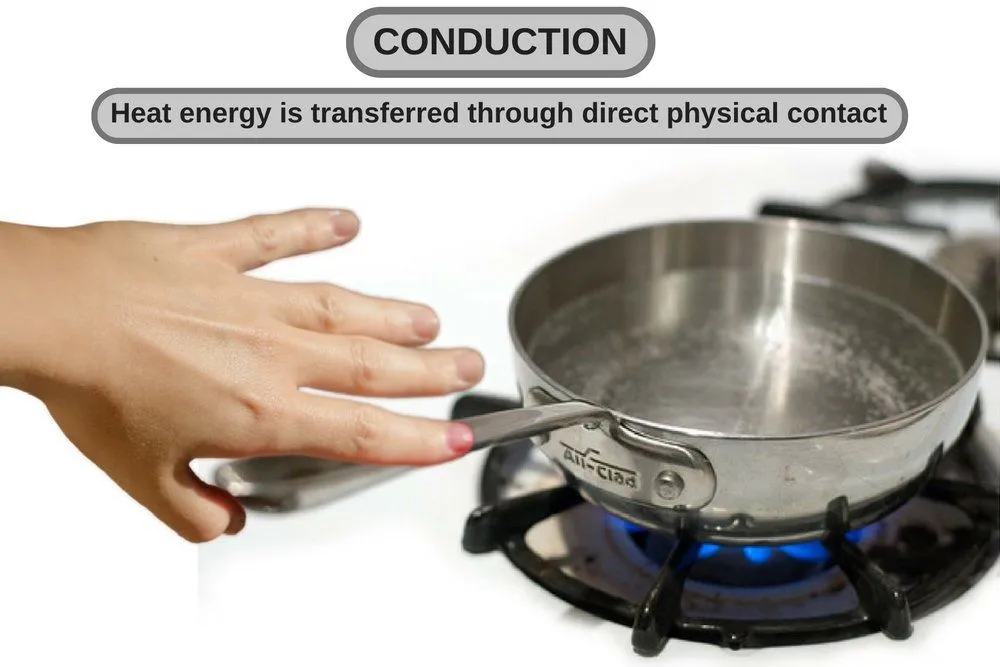
For instance, the chocolate in your hand melts because the heat from your hand is transferred to the chocolate through conduction and raises the temperature of the chocolate, causing it to melt.
2) Convection
Do you like to watch the tea leaves move upwards while making tea? Convection is the process responsible for this meditative phenomenon.
In this process, heat is transferred by the actual movement of the molecules throughout the fluid (liquid and gas) due to differences in the densities of hot and cold fluid. This continuous flow of molecules forms a current within the fluid.
When a fluid is heated, the molecules near the heat source gain energy and start moving faster. Since they get heated and become less dense, they begin to move upwards. The heavier, colder molecules occupy their vacant spaces and the process continues. In this way, a current is established within the fluid.
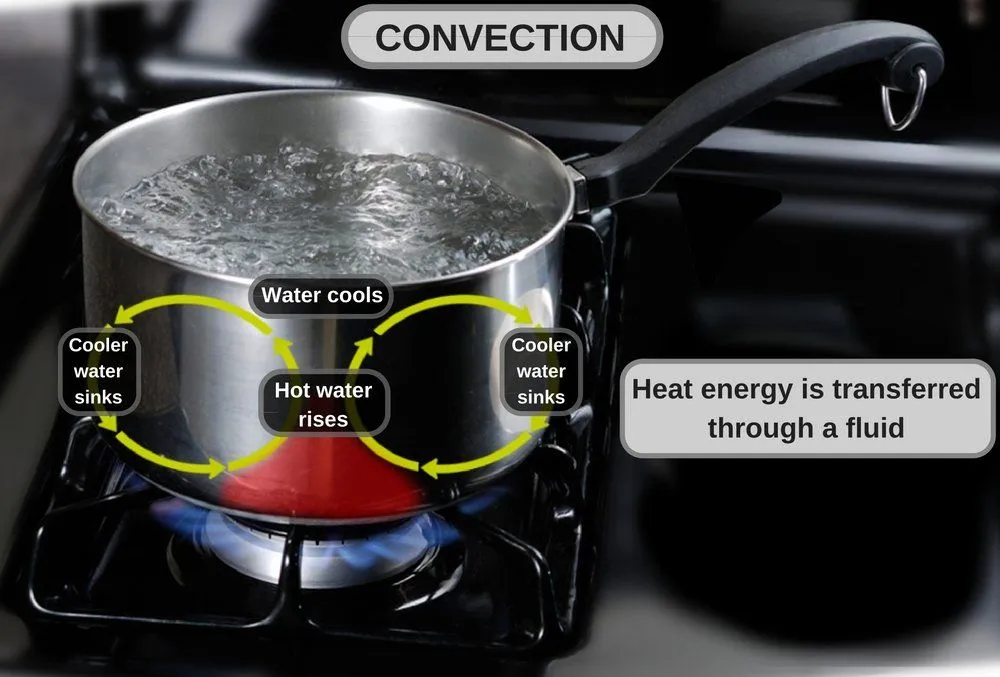
For instance, land and sea breezes occur due to convection that is caused by temperature differences between the land and the sea; these, in turn, lead to temperature differences in the air above the land and the sea.
3) Radiation
You can feel the warmth of a campfire, even if you are sitting a little ways from it. Radiation helps in the transfer of heat in this case.
In this process, the transfer of energy occurs by the means of photons (packets of energy) in electromagnetic waves. Electromagnetic waves like light, microwaves, and infrared radiation need no medium for propagation. They are absorbed by a body without any physical contact.
How Does The Sun’s Warmth Reach The Earth This Far?
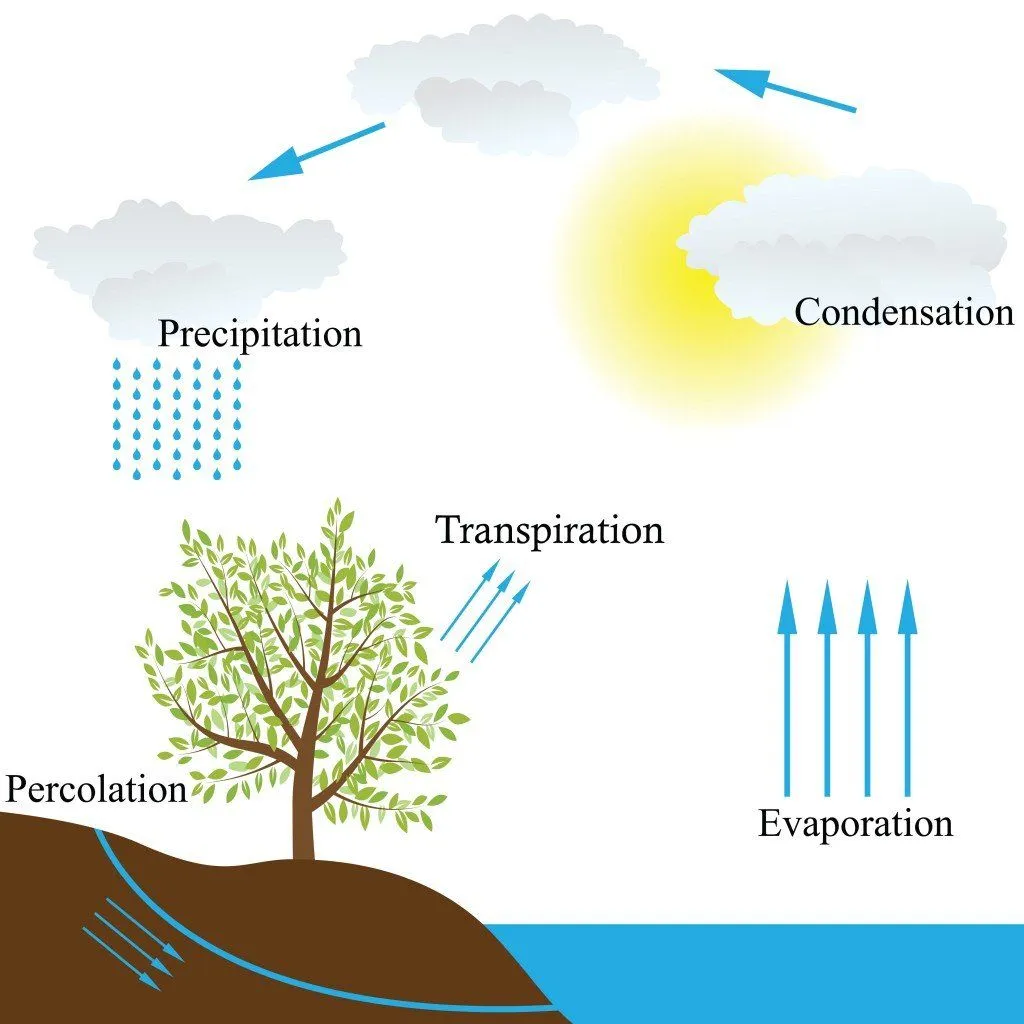
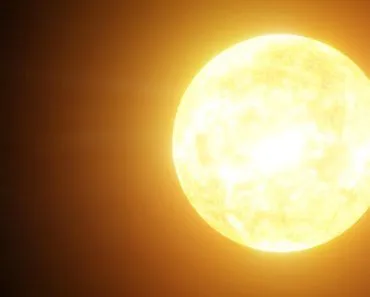
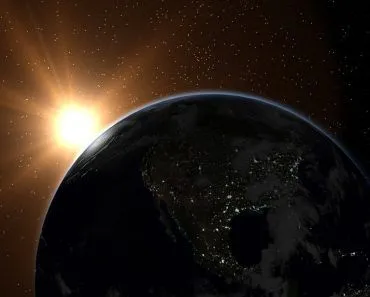
Radiation is the phenomenon through which the heat from the Sun reaches us by propagating through the vacuum of space. Conduction and convection both need matter to carry energy, and the roughly 150 million km between the Sun and the Earth is very nearly empty, so radiation is the only option. Travelling at the speed of light, this energy reaches the Earth in about 8 minutes and 20 seconds. Once it arrives in the Earth’s atmosphere, conduction and convection take over and help distribute that warmth throughout the planet.
Why Can’t The Sun’s Warmth Reach Us Through Cloud Cover?
To answer this question, we need to understand the term ‘thermal insulation’.
Thermal Insulation
Thermal insulation is the process of creating a barrier between hot and cold bodies to prevent the transfer of heat energy.
Materials that help in insulation are known as insulators. Heat energy cannot flow through insulators, thus restricting transmission.
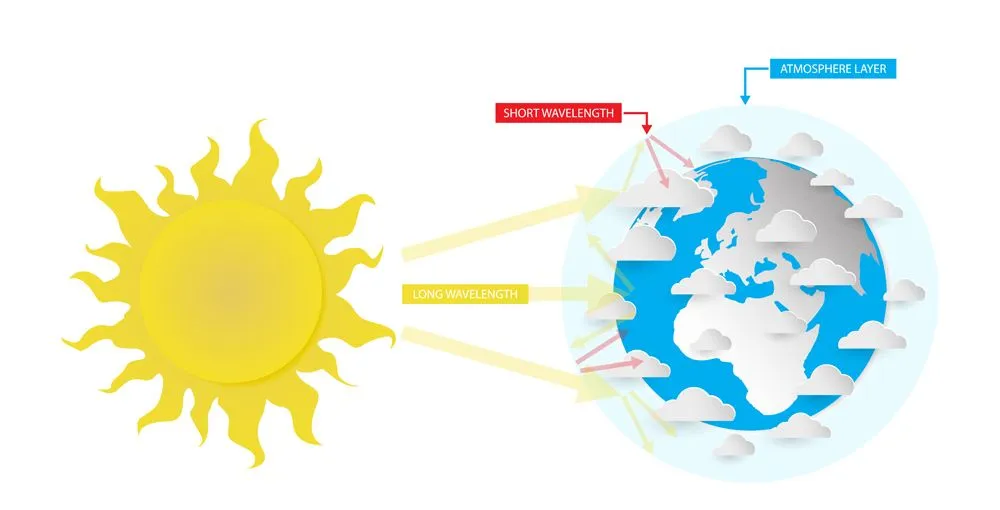
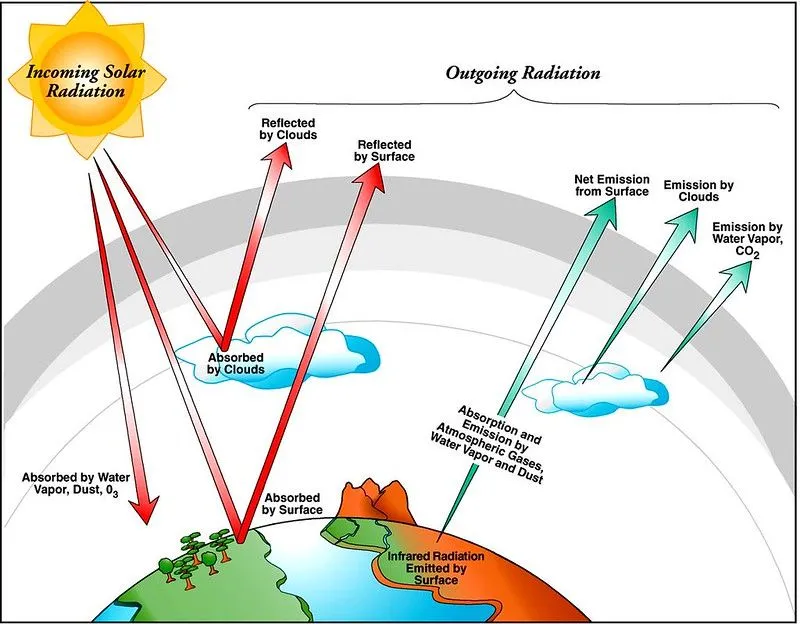
During the day, though, the main reason you don’t feel the Sun’s warmth under a cloud isn’t insulation, it’s reflection. Thick, low clouds are bright and have a high albedo, meaning they bounce a large share of the incoming sunlight straight back to space before it ever reaches the ground. With less solar energy getting through, the surface (and you) stay cooler. That’s why a passing cloud feels like someone dimmed the lights.
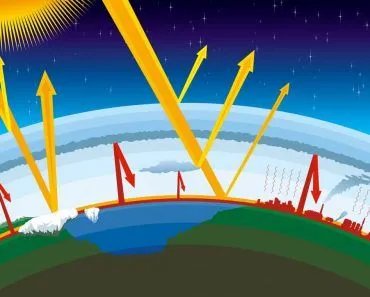
The insulating effect of clouds shows up mostly at night. Once the Sun sets, the warm ground radiates its heat back upward as invisible infrared. A blanket of cloud absorbs much of that escaping heat and re-radiates part of it back down, trapping warmth near the surface. This is why cloudy nights tend to stay milder than clear ones, when heat escapes freely into space. So clouds work both ways: by day they shade us by reflecting sunlight away, and by night they keep us warmer by holding heat in.
Does The Sun Warm The Air Directly?
Here is a surprise: on its way down, sunlight barely warms the air at all. The two main gases in our atmosphere, nitrogen and oxygen, are almost transparent to visible sunlight, so most of it sails straight through. Only about 23% of the incoming solar energy is soaked up within the atmosphere itself (by water vapor, dust, and ozone), while roughly 48% travels all the way down and is absorbed by the ground and the oceans. In other words, the air is heated mostly from below, not from above.

Once the sunlit surface warms up, it hands that heat to the thin layer of air resting on it through conduction, and convection then carries the warmth upward. As the UCAR Center for Science Education puts it, “Rays of sunshine heat the ground. Then the ground heats the lowest part of the atmosphere.” This bottom-up heating quietly explains a couple of everyday puzzles. It is why the peaks of tall mountains stay cold and snowy even though they poke a little higher toward the Sun: the surface heating fades and the air grows thin with altitude. It is also why the hottest stretch of the day usually arrives in the mid-afternoon rather than at noon. Even after the Sun slips past its highest point, the ground keeps banking heat and feeding it to the air for hours, so temperatures go on climbing well past midday.
How Do Clouds And Water Vapor Act Like Insulators?
We have seen that clouds shade us by day and keep us warmer at night, but that second trick has a famous name: the greenhouse effect. When the warmed surface of the Earth radiates its heat back upward, it does so as invisible infrared. Certain gases in the air are very good at catching exactly those wavelengths. Carbon dioxide and methane are the well-known ones, but the biggest player by far is ordinary water vapor.

According to NASA, water vapor is the Earth’s most abundant greenhouse gas and is responsible for about half of the planet’s entire greenhouse effect. It absorbs the heat radiated from the ground and stops much of it from escaping to space, re-radiating part of that energy in all directions, including back down toward the surface. Clouds, which are made of tiny liquid water droplets, do much the same thing. This is why clouds and water vapor are often described as acting like insulators: they do not warm the Earth by making new heat, they simply slow the loss of the heat the surface is already trying to shed. Strip that blanket of water vapor away and far more of the Sun’s warmth would leak straight back into the cold of space each night.
A Final Note
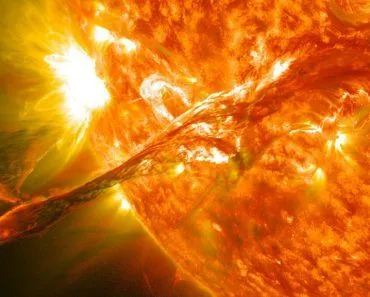
For centuries, the Sun has been worshipped as a God, and a provider of life on this planet. The energy that we derive from the Sun is life-sustaining. This energy is generated by the process of nuclear fusion. At high temperature and pressure, hydrogen nuclei fuse to form one helium atom, releasing a tremendous amount of heat and light.
A little bit of scientific inquiry into everyday phenomena and happenings can give you a deeper understanding of your surroundings, so continue your search for knowledge and learning!

References (click to expand)
- Levenspiel, O. (1984). The Three Mechanisms of Heat Transfer: Conduction, Convection, and Radiation. The Plenum Chemical Engineering Series. Springer US.
- The Sun's Energy: An Essential Part of the Earth System. UCAR Center for Science Education.
- Clouds and Radiation. NASA Earth Observatory.
- Climate and Earth's Energy Budget. NASA Earth Observatory.
- How Sunshine Warms the Earth. UCAR Center for Science Education.
- Steamy Relationships: How Atmospheric Water Vapor Amplifies Earth's Greenhouse Effect. NASA Science.
- The Seasons, the Equinox, and the Solstices. NOAA National Weather Service.